Writing non-fiction is an argument, but fiction's my first love: Arundhati Roy
The author said fiction is the connective tissue between many things.
By PTI |
Agencies
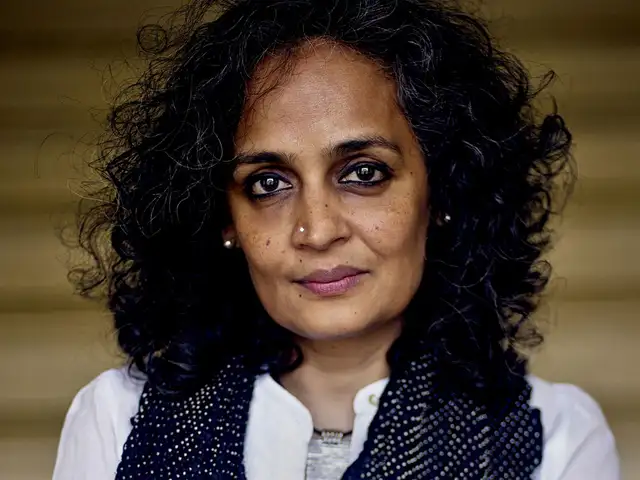
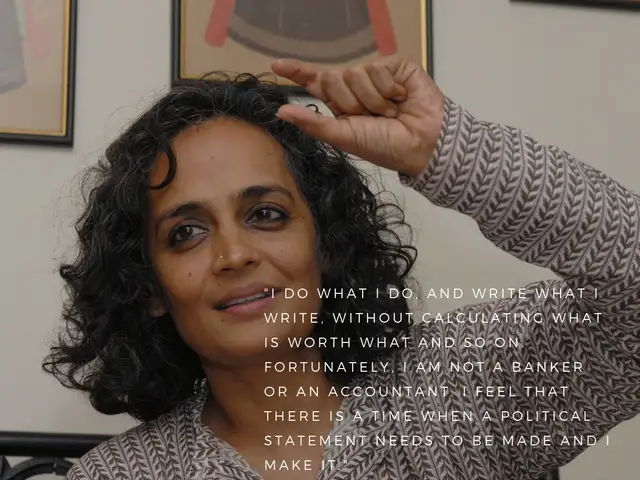
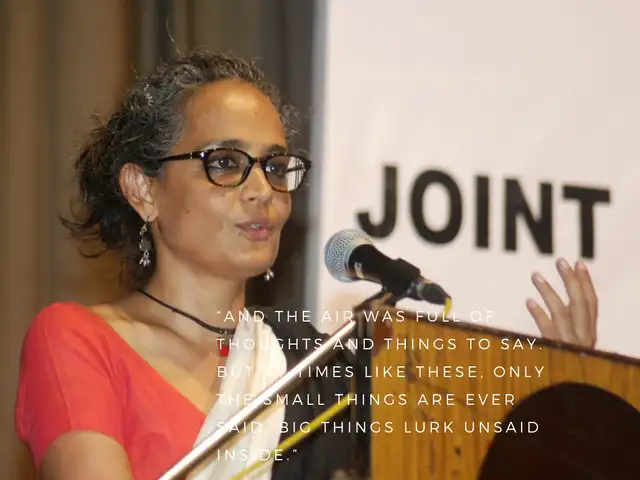
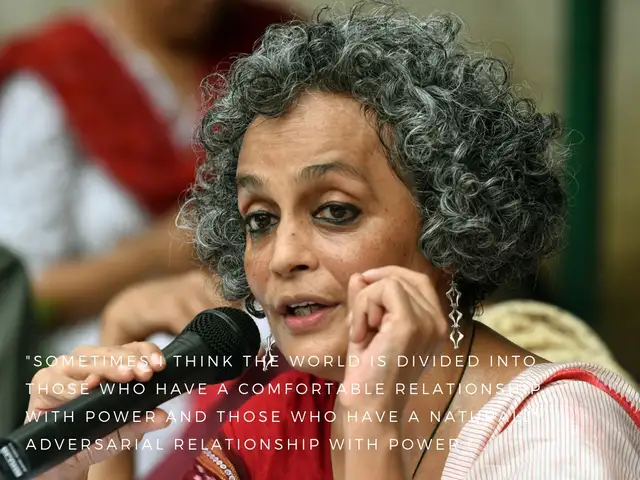
NEW DELHI: She writes poetic prose, employs redolent metaphors and evokes utmost admiration for her novelistic virtues. Arundhati Roy is anything but a boring author.
The 1997 Booker Prize-winner, who is equally at ease writing scathing essays, says she is a "disciplined writer" whose heart lies in fiction as it is a "connective tissue" between many things which are sometimes looked at or studied in isolation.
"Much of my non-fiction writing is an argument, but fiction is where you create a universe through which you invite a reader to walk. It is much more complex. For me, it is the most satisfying thing. When I write fiction, I feel like I am using all my skills, it delights me the most," Roy told PTI in an interview.
"It is only fiction that transcends what is increasingly being divided into subjects. Fiction is the connective tissue between so many things which are sometimes looked at or studied in isolation. It allows you not to isolate things," she said.
Best known for her debut novel 'The God of Small Things' which won the 1997 Man Booker Prize and catapulted her into fame, Roy came out with her second work of fiction 'The Ministry of Utmost Happiness' in 2017 after a hiatus of twenty years. The second novel which was longlisted for the 2017 Man Booker Prize has been received well and is already translated into nearly 50 languages, including Hindi and Urdu.
ADVERTISEMENT
The Hindi and Urdu translations of Roy's second novel have been done by Rajkamal Prakashan Samuh. They will be launched on February 2. Manglesh Dabral has done the Hindi translation "Aapar Khusi ka Gharana" and Arjumand Ara's Urdu translation is titled "Bepanah Shadmani Ki Mumlikat".
"The response was far beyond my expectation. For me, it has been years of experimenting with a form of novel, and which I knew was complex and cannot be consumed in one read," Roy said.
Noting that her experiment with a new form was "intentional", the 57-year-old author said she attempted to write something which would satisfy her "own complicated mind".
"I have never been somebody who wants to deliver what is expected of me. For me, the more important thing was my own ambitions as a fiction writer. I am sure some people were disappointed, but writing is not about satisfying everybody. It is your own inquiry that you have to follow," she said.
ADVERTISEMENT
"This was an attempt to deal with something more complex. 'The God of Small Things' is about a family and people understand those coordinates, whereas 'The Ministry of Utmost Happiness' starts out with a shattered heart, it starts out with people who are strange to normal people... It is a more complex book and needs many many readings," she said.
Roy, who is quite often extolled for her lyrical description, credits renowned writers like William Shakespeare and Rudyard Kipling for it, saying it is her early readings of their work which "makes one hear my language rather than just see it".
ADVERTISEMENT
"Language is my friend. Every time I am able to write to close the gap between language and thought, the blood flows easier in my veins. That is why I think I am always writing," she said.
A major part of Roy's second novel is set in Kashmir. She has written about its longstanding conflict in her essays, but feels only fiction can do justice to its story. "Right from the first time I started going to Kashmir, I realised that only fiction can deal with it. The fiction writer in me started going round and round. You can't tell it (story) through human rights reports or journalistic accounts," she said.
Quotable Quotes By Author & Comrade Arundhati Roy
1/6
Suzanna Arundhati Roy or Arundhati Roy is best known for the award-winning novel 'The God of Small Things' (1997) and for her involvement in environmental and human rights causes. As she turns 57, here's a look at some of her quotes.
Suzanna Arundhati Roy or Arundhati Roy is best known for the award-winning novel 'The God of Small Things' (1997) and for her involvement in environmental and human rights causes. As she turns 57, he..
Read More
Though trained as an architect, Arundhati Roy had little interest in design; she dreamed instead of a writing career. After a series of odd jobs, including artist and aerobics instructor, she wrote and co-starred in the film 'In Which Annie Gives It to Those Ones' (1989) and later penned scripts for the film 'Electric Moon' (1992) and several television dramas.
Though trained as an architect, Arundhati Roy had little interest in design; she dreamed instead of a writing career. After a series of odd jobs, including artist and aerobics instructor, she wrote a..
Read More
In 1997 Roy published her debut novel, 'The God of Small Things'. The semiautobiographical work departed from the conventional plots and light prose that had been typical among best-sellers.
Composed in a lyrical language about South Asian themes and characters in a narrative, her novel became the biggest-selling book by a non-expatriate Indian author and won the 1998 Man Booker Prize for Fiction.
In 1997 Roy published her debut novel, 'The God of Small Things'. The semiautobiographical work departed from the conventional plots and light prose that had been typical among best-sellers. Composed..
Read More
Roy’s subsequent literary works largely consisted of politically oriented non-fiction. Among her publications were 'Power Politics' (2001), 'The Algebra of Infinite Justice' (2002), 'War Talk' (2003), 'Public Power in the Age of Empire' (2004), 'Field Notes on Democracy: Listening to Grasshoppers' (2009), 'Broken Republic: Three Essays' (2011), and 'Capitalism: A Ghost Story' (2014). In 2017 Roy published 'The Ministry of Utmost Happiness', her first novel in 20 years.
Roy’s subsequent literary works largely consisted of politically oriented non-fiction. Among her publications were 'Power Politics' (2001), 'The Algebra of Infinite Justice' (2002), 'War Talk' (2003)..
Read More
Roy was active in various environmental and human rights causes, often putting her at odds with Indian legal authorities and the country’s middle-class establishment.
She drew criticism for her vocal support of Maoist-supported Naxalite insurgency groups, views she summarised in the volume 'Walking with the Comrades' (2011).
Roy was active in various environmental and human rights causes, often putting her at odds with Indian legal authorities and the country’s middle-class establishment. She drew criticism for her vocal..
Read More
In recognition of her outspoken advocacy of human rights, Roy was awarded the Lannan Cultural Freedom Award in 2002, the Sydney Peace Prize in 2004, and the Sahitya Akademi Award from the Indian Academy of Letters in 2006.
In recognition of her outspoken advocacy of human rights, Roy was awarded the Lannan Cultural Freedom Award in 2002, the Sydney Peace Prize in 2004, and the Sahitya Akademi Award from the Indian Acad..