Workplace cell phone activity drops during pandemic; people avoid going to grocery stores, parks
The study suggests that phone location data can identify areas of COVID-19 spread.
By PTI |
Getty Images
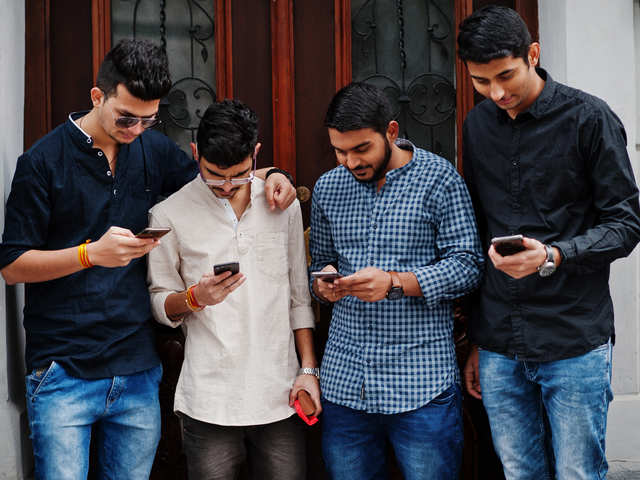
The data shows visits to the workplace dropped significantly, along with a decline in visits to retail locations - such as stores and restaurants - and transit stations.
WASHINGTON: Publicly available cell phone location data could be used to better estimate COVID-19 spread, and inform decision-making when it comes to shutdowns and reopening, according to a US study. The research, published in the journal JAMA Internal Medicine, shows that counties in the US with a greater decline in workplace cell phone activity during stay-at-home orders showed a lower rate of COVID-19 infections.
"It is our hope that counties might be able to incorporate these publicly available cell phone data to help guide policies regarding re-opening throughout different stages of the pandemic," said the study's senior author, Joshua Baker, an assistant professor at the University of Pennsylvania.
"Further, this analysis supports the incorporation of anonymised cell phone location data into modelling strategies to predict at-risk counties across the US before outbreaks become too great," Baker said.
The researchers, including the study's lead author Shiv T Sehra, an assistant professor at the Harvard Medical School, used location data from cell phones -- which were de-identified and made publicly available by Google -- to analyse activity across up to 2,740 counties in the US between early January and early May 2020.
This data was broken up into locations where the activity took place, ranging from workplaces, to homes, retail stores, grocery stores, parks, and transit stations, they said.
Roughly between 22,000 and 84,000 points of data were analysed for each day in the study period. The idea was to compare where cell phone activity took place as a proxy to show where people, themselves, spent their time.
ADVERTISEMENT
This data was compared between two time periods: the first in January and February, before COVID-19's outbreak in the US, then mid-February through early May, during the virus' initial surges and when stay-at-home orders were enacted.
More work can be done to vet cell phone data to see if they can be specifically used to predict COVID-19 hotspots and guide decision-making. The researchers noted an increase in time spent at home, while visits to the workplace dropped significantly, along with a decline in visits to retail locations -- such as stores and restaurants -- and transit stations.
They saw that in counties where there was initially a higher density of cases, visits to workplaces, as well as retail locations and transit stations, fell more sharply than counties less affected by COVID-19.
ADVERTISEMENT
At the same time, in these counties, there was a more prominent spike in activity at homes, the researchers said.
They saw that the counties where workplace activity fell the most had the lowest rates of new COVID-19 cases in the days that followed.
ADVERTISEMENT
Lag-times of 5, 10 and 15 days were observed to allow time for COVID-19's incubation period, but the lower infection rates held across the range.
Baker hopes more work can be done to vet cell phone data to see if they can be specifically used to predict COVID-19 hotspots and guide decision-making.
"It will be important to confirm that cell phone data is useful in other stages of the pandemic beyond initial containment," Baker said.
"For example, is monitoring these data helpful during the reopening phases of the pandemic, or during an outbreak?" he said.
Keeping Your Phone Clean, And Safe, In The Time Of Coronavirus
1/5
Holding hands, an affectionate gesture with romantic undertones, has become taboo in the time of the coronavirus. Handshakes, too, have been outlawed in the boardroom as well as stadiums - and after closing a deal, folks now pick up their phones and send each other formal emails.
Lovers in parks sit on benches, their hands skidding across smartphone screens, sending emoji-laced messages. However, exercising one’s primary tactile organs to communicate through gestures might not be as dangerous as using a mobile phone.
Holding hands, an affectionate gesture with romantic undertones, has become taboo in the time of the coronavirus. Handshakes, too, have been outlawed in the boardroom as well as stadiums - and after ..
Read More
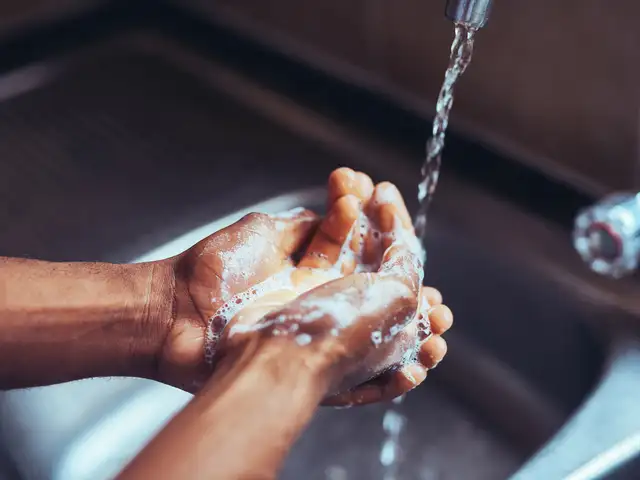
The World Health Organization has explained how people should wash their hands to safeguard against infection and to prevent the spread of the coronavirus. However, the benefits of smearing hands with sanitizers is an exercise in futility if people then pick up their phones and expose themselves to germs all over again.
The World Health Organization has explained how people should wash their hands to safeguard against infection and to prevent the spread of the coronavirus. However, the benefits of smearing hands wit..
Read More
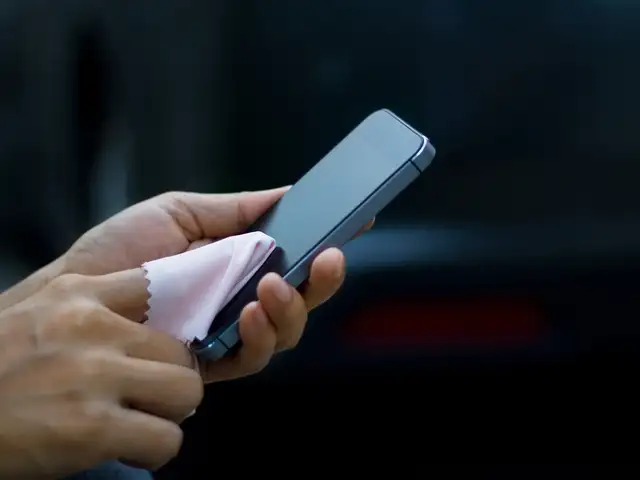
Phone screens are a hotbed of different types of germs. Phone hygiene, therefore, becomes an imperative to ward off contagious germs. Apple recommends using felt cloth, the type used to clean spectacles.
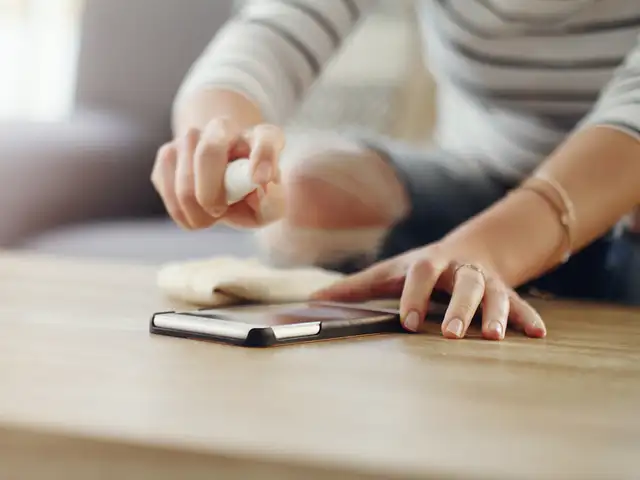
The iPhone 7 and upwards, which are water-resistant, can be cleaned using a cloth dabbed with soapy water, as long as the different orifices of the devices are covered. Other manufacturers do not specify water-tolerance, but most new models are partially resistant to fluids, meaning that cleaning your phone display with a wet cloth is the least you could do.
Phone screens are a hotbed of different types of germs. Phone hygiene, therefore, becomes an imperative to ward off contagious germs. Apple recommends using felt cloth, the type used to clean spectac..
Read More
Samsung and Apple advise against using cleaning fluids as they could potentially damage fingerprint-resistant coatings on their screens. Some new phones have in-display fingerprint sensors which make the task of cleaning your phone more complex. However, this could be remedied by using a screen protector, which in turn, could be wiped clean using diluted alcohol.
The back and sides of the phone should also be cleaned thoroughly. Germs will invariably accumulate on phone screens. The best possible remedy seems to be washing one’s hands before and after touching one’s phone, especially when in public spaces or commuting to work.
Samsung and Apple advise against using cleaning fluids as they could potentially damage fingerprint-resistant coatings on their screens. Some new phones have in-display fingerprint sensors which make..
Read More
Users given to making a lot of phone calls are advised to use headphones or Bluetooth earphones to prevent the germs on phone screens from coming in contact with their faces. Bluetooth earphones aren’t germ-proof either, but their exteriors can be cleaned with cotton swabs dipped in antiseptic fluids or isopropyl alcohol.
Be careful to not get any inside your audio device as it could damage the circuitry. Boozy headphones can make one grin from ear to ear.
Users given to making a lot of phone calls are advised to use headphones or Bluetooth earphones to prevent the germs on phone screens from coming in contact with their faces. Bluetooth earphones aren..