When on Mars, look like the Martians do
Homo sapiens not born on Earth may eventually evolve into Homo galactus.
By ET Bureau |

Getty Images
Fictional Martians with their bulbous heads and scaly green skin may not be stranger than the truth. In fact, it is not surprising at all that some scientists now believe humans not born and bred on Earth may end up looking suspiciously like sci-fi Martians thanks to the different conditions in space and on other planets.
Even on Earth, humans have evolved from hominids to Homo sapiens, and, in the process, also changed pretty dramatically in appearance when millennia ago they journeyed out of Africa to different parts of the globe. So, any forays further outwards away can legitimately be expected to impact the conventional human characteristics.
The first non-Earthling babies are still very far off because of ethical legal issues, but the prospect of space births can obviously not be ruled out when humans seek permanent abodes on the Moon, Mars and beyond.
Without gravity to keep everything in place, the human body changing shape is not a spaced-out conjecture for long-term non-Earth dwellers. Nor is the prospect of skin evolving differing colours and textures to deal with higher ultra-violet rays beyond the Earth’s atmosphere implausible.
Indeed, it may not be far-fetched to speculate that future generations in space will eventually become several different species altogether: Homo spatium and Homo galactus, perhaps.
Even on Earth, humans have evolved from hominids to Homo sapiens, and, in the process, also changed pretty dramatically in appearance when millennia ago they journeyed out of Africa to different parts of the globe. So, any forays further outwards away can legitimately be expected to impact the conventional human characteristics.
The first non-Earthling babies are still very far off because of ethical legal issues, but the prospect of space births can obviously not be ruled out when humans seek permanent abodes on the Moon, Mars and beyond.
Without gravity to keep everything in place, the human body changing shape is not a spaced-out conjecture for long-term non-Earth dwellers. Nor is the prospect of skin evolving differing colours and textures to deal with higher ultra-violet rays beyond the Earth’s atmosphere implausible.
Indeed, it may not be far-fetched to speculate that future generations in space will eventually become several different species altogether: Homo spatium and Homo galactus, perhaps.
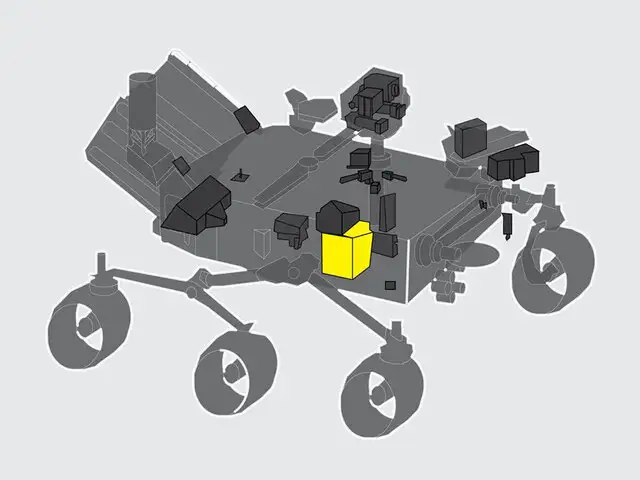
NASA is working on a Mars Oxygen In-Situ Resource Utilisation Experiment (MOXIE) that will let future explorers produce oxygen from the Martian atmosphere for breathing. The carbattery-sized instrument does this by collecting carbon dioxide from the Martian atmosphere and electrochemically splitting the molecules into oxygen and carbon monoxide molecules.

ADVERTISEMENT
Download
The Economic Times Business News App for the Latest News in Business, Sensex, Stock Market Updates & More.
The Economic Times Business News App for the Latest News in Business, Sensex, Stock Market Updates & More.
ADVERTISEMENT


