Unhealthy coconut oil, beef ban, Maggi row: Food controversies that didn’t fail to amuse us this decade
Indians love a good food controversy.
By ET Online | Updated:
Agencies
Several food controversies made headlines in the last 10 years.
Food is such an integral part of our lives, and we all love a good controversy that shakes us to the core.
From our very own Maggi ban to the coconut oil controversy, this last decade saw few such food products that made headlines.
Coconut oil: Bane or boon?
Contrary to Indian belief, Karin Michels, an epidemiologist at the Harvard T.H. Chan School of Public Health, called coconut oil as 'one of the worst things you can eat' and 'pure poison' during her 2018 lecture in German, titled 'Coconut oil and other nutritional errors'. She stated that coconut oil contains a high proportion of saturated fat, increases LDL cholesterol (bad cholesterol) levels, and enhances risk of cardiovascular disease in her lecture.
Her lecture invoked a lot reaction by her fellows and other health experts. Another doctor at Harvard School of Public Health, Walter C Willett, wrote in the Harvard Health Letter that 'coconut oil is not all bad' as it boosts good cholesterol, which is also called HDL.
The 'healthy fats' found in coconut oil protect overall health. Several famous Indian nutritionists slammed Michels's claims and spoke of the benefits of coconut oil, terming it as one of the healthiest oils since ancient times.
ADVERTISEMENT
India's beef with beef ban It all started in mid-2017. In May 2017, the BJP-led Environment Ministry imposed a nationwide ban on sale and purchase of cattle sold at animal markets for slaughter.
This was one of the biggest controversies that left the country in splits as beef continues to be apart of many local cuisines in India. Within two months, the Supreme Court suspended the ban which offered relief to the leather and beef industries.
While 18 states have banned cow slaughter, there is no restriction in states like Kerala, Assam, Arunachal Pradesh, Mizoram, Meghalaya, Nagaland, Tripura and West Bengal.
ADVERTISEMENT
Maggi ban The 2-minute joy of cooking Maggi noodles came to an end in 2015 when Nestlé pulled the product off the shelves.
When the Food Safety And Drug Administration (FSDA) Lucknow found excessive lead content and Monosodium Glutamate (MSG) (while the packet read 'No MSG') in few Maggi Noodles samples, the trouble for the India's favourite noodle company began. Nestlé India tried to fight these claims and said that the product only contained natural MSG. The issue made the public vary, and several states like Delhi, Gujarat, Goa, Karnataka and Tamil Nadu banned the product, breaking the hearts of many Maggi lovers around the country.
ADVERTISEMENT
Around 27,000 tonnes of Maggi was destroyed after the product was taken off the shelves. While the product was recalled, Nestlé continued to claim that Maggi was safe. Around 27,000 tonnes (27,000K kilogram) of the product was destroyed, and the food giant suffered massive losses. The company later challenged FSSAI's claims in the Bombay High Court. The product returned to the stores after the restriction was lifted. The company also removed the 'No added MSG' tag from its packets.
US bans Indian snacks Adding to the trauma caused by Nestlé India's Maggi, in 2015 the U.S. Food and Drug Administration (FDA) rejected the import of Haldiram Snacks over high levels of pesticides, mold and bacteria. According to the USFDA, Haldiram products were ‘unfit for consumption’, and cookies, biscuits and wafers were banned.
Earlier in 2014, the US federal agency had banned Haldiram products when they found pesticides in them.
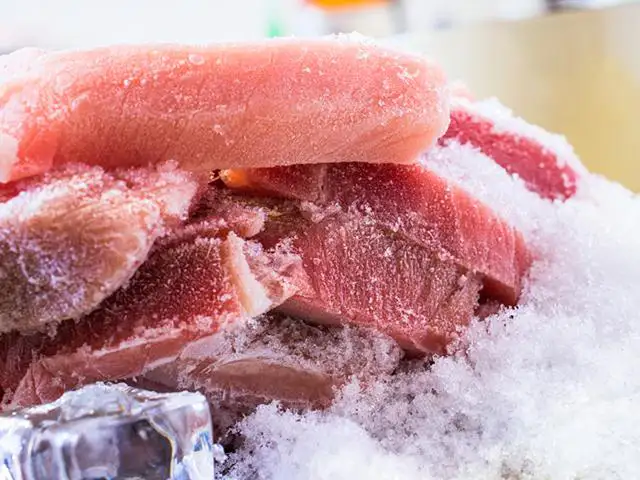
Red meat causes cancer In 2015, the World Health Organization came out with a report which said processed meats like bacon, ham and sausages cause cancer. Cancer Research UK further clarified that the chemicals present in processed meat (either from the beginning, during the processing or when cooked) can increase the risk of cancer by damaging the cells. Any meat that goes through salting, curing, fermentation, smoking, to enhance flavour or improve preservation is processed.
A study by the National Institute of Cancer Prevention and Research on Cancer shows that 11,57,294 lakh new cases are registered in India every year, and 7,84,821 people succumbed to the disease in 2018.
Here are certain lifestyle changes that can keep cancer away.
A study by the National Institute of Cancer Prevention and Research on Cancer shows that 11,57,294 lakh new cases are registered in India every year, and 7,84,821 people succumbed to the disease in 2..
Read More
Being overweight and obese raise risk for breast, colorectal, oesophageal, uterine, pancreatic and kidney cancers.
It is important to manage your weight. Be as lean as possible without becoming underweight.
It is essential to be physically active. Workout for at least 30 minutes every day to stay fit.
Being overweight and obese raise risk for breast, colorectal, oesophageal, uterine, pancreatic and kidney cancers.
It is important to manage your weight. Be as lean as possible without becoming unde..
Read More
Avoid sugary drinks as much as possible. Limit consumption of high-calorie and salty foods. Also stay away from food items processed with salt.
Avoid sugary drinks as much as possible. Limit consumption of high-calorie and salty foods. Also stay away from food items processed with salt.
Smoking remains the largest preventable cause of throat and lung cancers in the world. Avoid smoking and second-hand smoking.
Smoking remains the largest preventable cause of throat and lung cancers in the world. Avoid smoking and second-hand smoking.
Alcohol consumption plays an important role in getting various cancer types. Risk of breast cancer is also increased by alcohol — the more you drink, the more likely you get the disease. It is also strongly linked to mouth and upper throat cancers. If you drink alcohol, limit your daily intake.
Alcohol consumption plays an important role in getting various cancer types. Risk of breast cancer is also increased by alcohol — the more you drink, the more likely you get the disease. It is also s..
Read More
Eat a variety of vegetables, fruits, whole grains and legumes.
Don’t use supplements unless prescribed
Eat a variety of vegetables, fruits, whole grains and legumes.
Don’t use supplements unless prescribed
Diet high in red and processed meats contribute to bowel cancers. Limit consumption of red meat and avoid processed meats.
Diet high in red and processed meats contribute to bowel cancers. Limit consumption of red meat and avoid processed meats.
It’s necessary for mothers to exclusively breastfeed their babies up to six months.
It’s necessary for mothers to exclusively breastfeed their babies up to six months.
After treatment, cancer survivors should follow professional recommendation to prevent secondary cancer.
After treatment, cancer survivors should follow professional recommendation to prevent secondary cancer.
The WHO report said that every 50 gram portion of processed meat (which comes to less than two slices of bacon) eaten daily increases the risk of colorectal cancer by about 18%, according to an analysis of data from 10 studies. It also said high-temperature cooking methods generate compounds in the food that may contribute to carcinogenic risk, but it has limited evidence.
This WHO report left the worldwide population in panic. It was more of a realisation for people than a controversy, encouraging them to reduce consumption of processed meat. Cancer Research UK also suggested that cutting down the intake of processed meat consumption will reduce the risk of bowel cancer.
Business News › Magazines › Panache › Unhealthy coconut oil, beef ban, Maggi row: Food controversies that didn’t fail to amuse us this decadeText Size:AAA