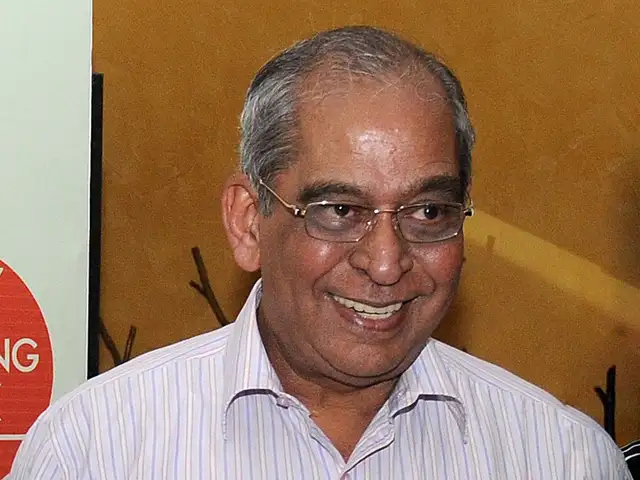
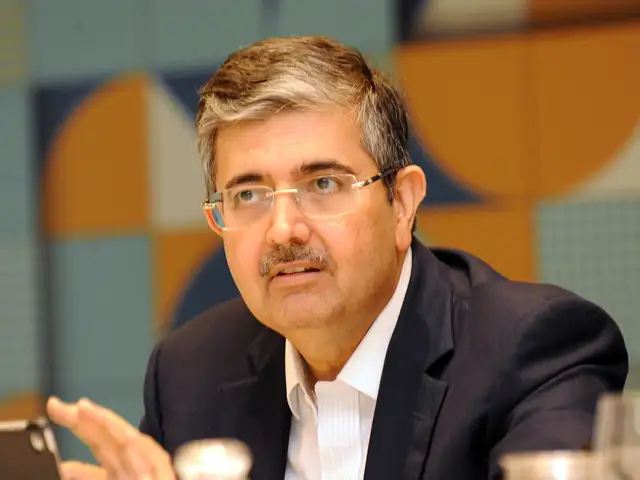
Uday Kotak feels bankers need humility to make it big

The Kotak Mahindra Bank MD credits his middle-class values for personal and professional growth.

BCCL
Uday Kotak said that not only does he personally believe in these three values, he stresses on them even for the running of his company.
Kotak Mahindra Bank MD Uday Kotak shares the mantras that have helped him personally and professionally.

Uday Kotak is a constant feature on the billionaire list, but the Kotak Mahindra Bank MD credits the middle-class values that he has grown up with for his personal and professional growth. “The most important thing I have learnt in life is common sense and middle-class values. And that is the bedrock of all of us,” Kotak said at an economic meet in Mumbai recently.

During the talk, Kotak referenced a question he was asked at the World Economic Forum last year — What will the bank of the future be? “The bank of the future needs three human qualities: First is prudence, which means no excessive leverage. Second is no complex products, so simplicity. And third, humility since bankers believe they are masters of the universe because they manage other people’s money. The fact is exactly opposite,” Kotak said.


Kotak said that not only does he personally believe in these three values, he stresses on them even for the running of his company. “Banking is a highly leveraged business. And therefore, bankers need humility. That’s why the three qualities — prudence, simplicity and humility — are crucial, certainly for banking and for anything in our day to day lives,” he said.

Addressing concerns about the current economic environment in the country, Kotak said it was going through a cleansing and purging process. “Business in India happened in a particular manner for a long time. The rules of the game were different. They have changed. Business, in general, has taken a little longer time to recognise the new rules of the game. It is moving towards survival of the fittest,” he said.
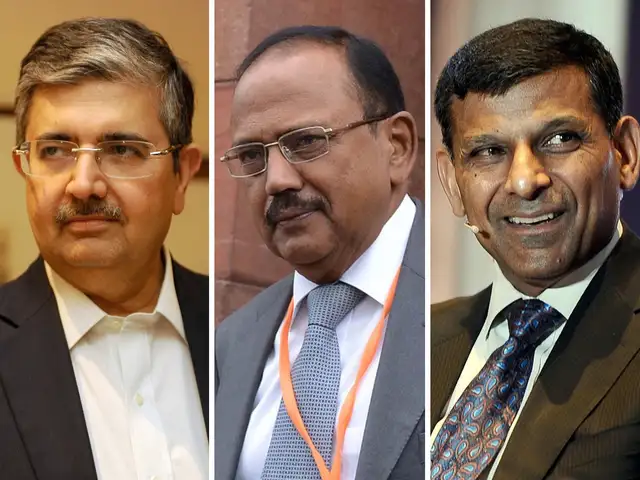
Words Of Wisdom: When Uday Kotak, Ajit Doval, Raghuram Rajan Spoke About Economy, Leadership & Life Goals
1/7

The Lalit Doshi Memorial Lecture (LDML), instituted in the name of the eponymous former civil servant, has been hosted in Mumbai annually since 1995.

On Monday, August 5, Uday Kotak became the 25th speaker to deliver it. The LDML speaker club is an illustrious one (even though the absence of any female speakers in the list is jarring).

Here’s a look at what past speakers have spoken about in the address:
The Lalit Doshi Memorial Lecture (LDML), instituted in the name of the eponymous former civil servant, has been hosted in Mumbai annually since 1995. On Monday, August 5, Uday Kotak became the ..
Read More
Uday Kotak, MD, Kotak Mahindra Bank

“Let us embrace digital. That will transform India’s finance like nothing else we have seen in the past. And lastly, in that context is a less cash India. India’s desire for cash just doesn’t seem to be going down. It shocks me when I am told at many stores, small stores, including in the city of Mumbai, so I can’t even comment on what must be happening across semi urban or rural areas. Most of the times you are asked the question, ‘How do you want to pay..bill ya bina bill?’ We are still not getting out of that mindset of cash as the basis for dealing. Therefore anything that makes us a less cash economy is useful. It is also surprising to me that the levels of currency in circulation that we are back to. It is almost equal to, on a percentage basis, to pre-demonetisation levels. We need to change that.”
Uday Kotak, MD, Kotak Mahindra Bank “Let us embrace digital. That will transform India’s finance like nothing else we have seen in the past. And lastly, in that context is a less cash India. India’..
Read More
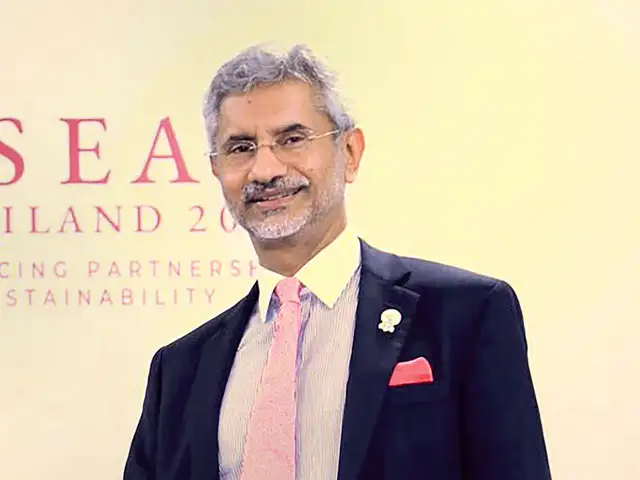
Dr S Jaishankar, current Minister of External Affairs in the Government of India

“There is absolutely nothing wrong with aspiring to stake a greater claim in different domains. Among our aspirations we should strive to realize is permanent membership of the UN Security Council. But in the interim, there are milestones that mark a journey towards a greater global management role. Joining different international and regional groupings and mechanisms is one such step. Becoming a member of technology export control regimes is another related measure. Taking the initiative to undertake humanitarian and disaster relief operations — as we did in Nepal or Yemen — also makes sense. Playing a constructive role in important global negotiations, whether on climate change or on sustainable development goals, is part of this shift. A sharper willingness to articulate our interests and be resolute in its pursuit is also necessary. Such an India cannot have a herd mentality or rely on abstention as a default position on tricky issues. There will be choices we have to make, sometimes even within a region or between friends.”
Dr S Jaishankar, current Minister of External Affairs in the Government of India “There is absolutely nothing wrong with aspiring to stake a greater claim in different domains. Among our aspiration..
Read More
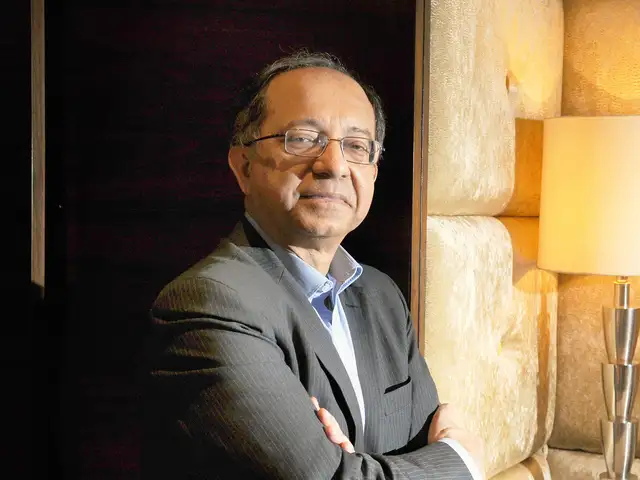
Kaushik Basu, former chief economist of the World Bank

“I want to mention two areas where India can do very well, if the government creates an enabling atmosphere. This is bit of a China-style policy of identifying special sectors and making them vanguards for the whole economy. First, India can be a hub for higher education in the world. People will come not just from developing countries, Africa, Asia, Latin America, but from United States and Europe. Come to India, four years of excellent education, much cheaper than in rich countries, and then you go back…The other sector where India is already doing well but can do better is providing healthcare services for the world. Health-care is extremely expensive in today's world. India can provide this at a much lower cost.”
Kaushik Basu, former chief economist of the World Bank “I want to mention two areas where India can do very well, if the government creates an enabling atmosphere. This is bit of a China-style poli..
Read More
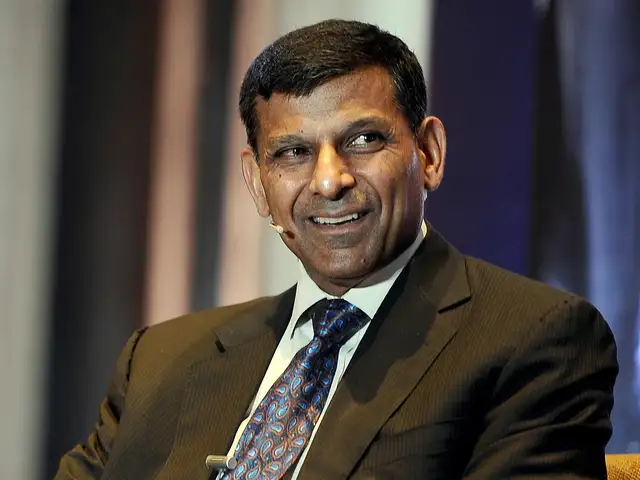
Raghuram Rajan, former RBI governor

“Undoubtedly, cash transfers will not resolve every problem, nor are they uncontroversial. A constant refrain from paternalistic social workers is that the poor will simply drink away any transfers. In fact, studies by NGOs like SEWA indicate this is not true. Moreover, one could experiment with sending transfers to women, who may be better monitors and spenders of the cash. Some argue that attaching conditions to cash transfers – for example, they will be made provided the recipient's children attend school regularly – may improve the usage of the cash. The danger of attaching conditionality is that if the monitor is corrupt or inefficient, the whole process of direct benefits transfers, which aims to by-pass the existing structure, can be vitiated. Nevertheless, it will be useful to monitor usage carefully where automation is possible, and automatically attach further benefits to responsible usage.”
Raghuram Rajan, former RBI governor “Undoubtedly, cash transfers will not resolve every problem, nor are they uncontroversial. A constant refrain from paternalistic social workers is that the poor ..
Read More
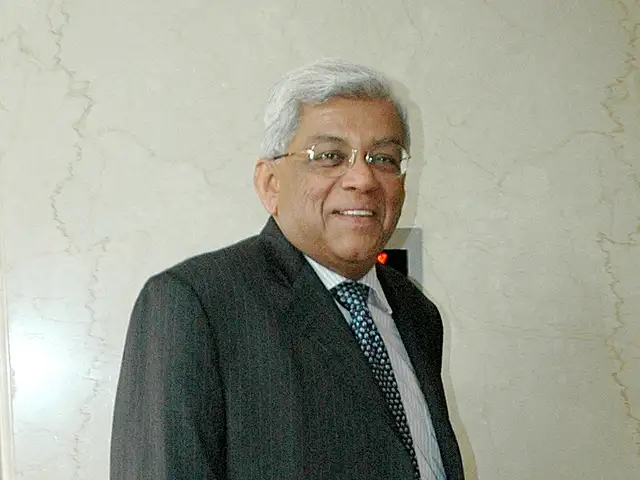
Deepak Parekh, chairman, HDFC Ltd

“Leadership, however, is that intangible quality that eludes any single description. To my mind leadership invo lves an art form, rather than a pure science, since it includes the subjective element of the individual himself. Leadership therefore, has different facets, and leaders tend to have a distinct and separate personality and ideology and a plethora of styles. I would hence like to postulate leadership to be a function of administrative and managerial talent, with an overlay of a risk taking ability, the ability to anticipate and react to an emerging environment, and most of all, to have the charisma to inspire willing followers.”
Deepak Parekh, chairman, HDFC Ltd “Leadership, however, is that intangible quality that eludes any single description. To my mind leadership invo lves an art form, rather than a pure science, since..
Read More
N Vaghul, former chairman, ICICI

“Is it possible for you to imagine a person who is a stithapragyna in a sense that he treats praise and abuse at the same level, treats happiness and misery as equal. Even if one does not complete the final process of eradicating the I consciousness the improvement in the quality of life is still worth the effort. So the relevance of the spiritual values in modern life really comes to this. Whether you believe in the ultimate goal or not, whether you believe in the spiritual dimension or not, the process of transcendence of the gross mind improves the quality of your life. When the critical mass of the society, were to achieve even this limited goal, the transformation of the society will begin.”

Source: Speech transcripts available here
N Vaghul, former chairman, ICICI “Is it possible for you to imagine a person who is a stithapragyna in a sense that he treats praise and abuse at the same level, treats happiness and misery as equa..
Read More

ADVERTISEMENT
Download
The Economic Times Business News App
for the Latest News in Business, Sensex, Stock Market Updates & More.
READ MORE
ADVERTISEMENT

READ MORE:

LOGIN & CLAIM

50 TIMESPOINTS

Related Companies

More from our Partners

Loading next story
Business News › Magazines › Panache › Uday Kotak feels bankers need humility to make it big
Text Size:AAA
Success
This article has been saved

*

+