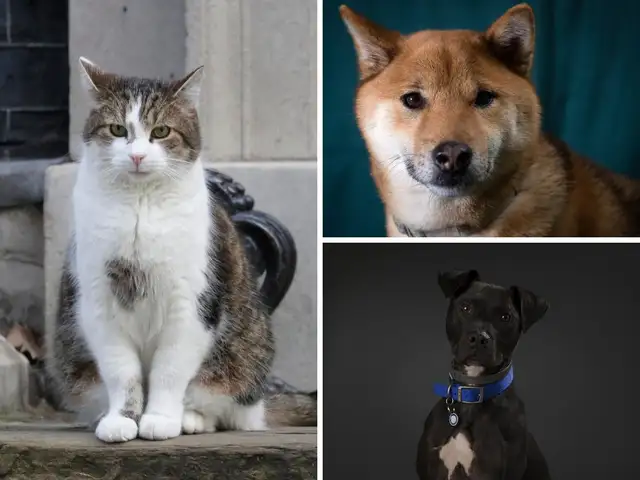
Two NY cats are the first pets in the US to test positive for coronavirus
The cats, from different parts of the state, are showing only mild symptoms and are expected to be fine.
By AP | Updated:
AP
The cats' symptoms included coughing and slightly runny noses. (Representative image)
NEW YORK: Two pet cats in New York state have tested positive for the coronavirus, marking the first confirmed cases in companion animals in the United States, federal officials said Wednesday.
The cats, which had mild respiratory illnesses and are expected to recover, are thought to have contracted the virus from people in their households or neighborhoods, the U.S. Department of Agriculture and the federal Centers for Disease Control and Prevention said.
The finding, which comes after positive tests in some tigers and lions at the Bronx Zoo, adds to a small number of confirmed cases of the virus in animals worldwide.

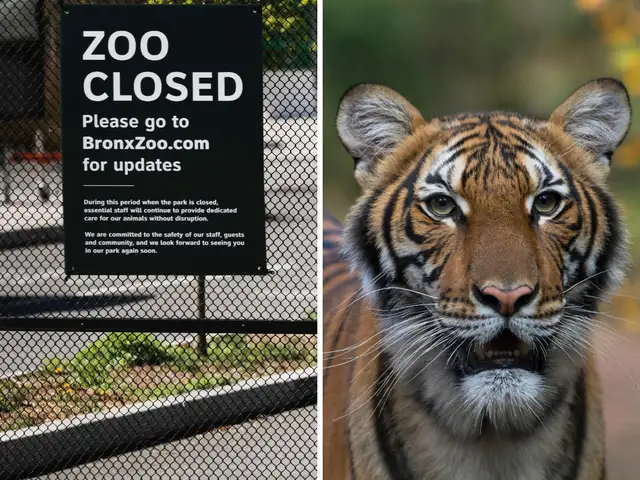
Nadia, a 4-year-old female Malayan tiger at the Bronx Zoo, had tested positive for coronavirus disease. U.S. authorities, including the nation's top infectious disease expert, Dr. Anthony Fauci, say that while it appears some animals can get the virus from people, there's no indication pets are transmitting it to human beings.
``Now, obviously, is that impossible? I mean, biologically, no, anything is possible,`` Fauci said. ``But there's no evidence whatsoever that we've seen from an epidemiological standpoint that pets can be transmitters within a household.''
ADVERTISEMENT
Dr. Casey Barton Behravesh, a CDC official who works on human-animal health connections, stressed that there's no need for pet owners to panic, or rush to test their animals.
``We don't want people to be afraid of pets,'' Barton Behravesh said. ``There's no evidence that pets are playing a role in spreading this disease to people.''
Still, the CDC is recommending that people prevent their pets from interacting with people or animals outside their homes - by keeping cats indoors and dogs out of dog parks, for instance.
Coronavirus testing for pets isn't recommended unless an animal has been exposed to a person with COVID-19 and the animal has symptoms of the disease, and tests have ruled out more common possible causes, said Dr. Jane Rooney of the USDA. Veterinarians who think testing is warranted are supposed to contact state officials to decide.
ADVERTISEMENT
Barton Behravesh said the animal tests are done at veterinary labs and use different chemicals than human tests, which have been in short supply during the crisis.
The American Veterinary Medical Association says pets can stay in homes where a person has COVID-19, so long as the animal can be cared for.
ADVERTISEMENT
``In this emergency, pets and people each need the support of the other,'' the group said in a statement Wednesday.
For most people, the coronavirus causes mild or moderate symptoms, such as a fever and cough that clear up in two to three weeks. For some, especially older adults and people, it can cause more severe illness, including pneumonia, and can be fatal.
Scientists studying the virus have been looking closely at links between human and animals. While a consensus is still evolving, the leading theory is that infection among humans began at an animal market in China, probably from an animal that got the virus from a bat.
Scientists are working to understand the potential for transmission to animals in homes, farms and elsewhere. So far, it doesn't appear that livestock or poultry are susceptible, Rooney said.
The two cats live in different parts of the state; the USDA and CDC wouldn't say where specifically.
The first cat fell ill about a week after a person in its household had a short respiratory illness, though the person's ailment wasn't confirmed to be COVID-19, Barton Behravesh said. The animal goes outdoors at times and might have come into contact with an infected person in the area, she said.
The second cat's owner tested positive for COVID-19 before the cat became sick, officials said. Another cat in the same home hasn't shown any signs of illness.
The cats' symptoms included coughing and slightly runny noses, officials said.
The agencies have recommended that any pet owners with COVID-19 avoid petting, snuggling or other contact with their animals as much as possible, including wearing a face covering while caring for them.
There have been a handful of reports outside the U.S. of pet dogs or cats becoming infected after close contact with contagious people, including a Hong Kong dog that tested positive for a low level of the pathogen in February and early March. Hong Kong agriculture authorities concluded that pet dogs and cats couldn't pass the virus to human beings but could test positive if exposed by their owners.
A tiger at the Bronx Zoo had what was believed to be the first confirmed coronavirus case in an animal in the U.S. or a tiger anywhere. The 4-year-old Malayan tiger, named Nadia, was tested after starting to showing signs of illness on March 27, 11 days after the zoo closed to the public because of the virus.
Three other tigers and three lions later showed symptoms. Tests subsequently confirmed they all had the virus, as did another tiger that shares their exhibit but didn't show any signs of illness, the zoo said Wednesday.
All the affected cats are doing well, with good appetites and much less coughing, the zoo said.
Zoo officials said they believe the animals were exposed by a keeper who had the virus but wasn't showing symptoms at the time. Staffers who work with the cats have since started wearing infection-protection garb.
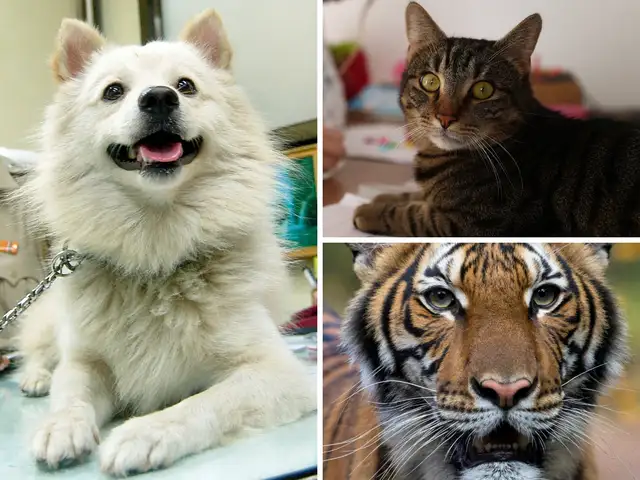
The World Health Organization (WHO) for the longest time believed that coronavirus cannot infect pets like dogs or cats.
In less than a month, several reports of various animals contracting the diseases made the WHO pause and think about their stance. The reports suggest that this deadly virus can break the species barrier and move around.
WHO's intergovernmental animal health body - World Organisation for Animal Health (OIE) - confirmed that there is a possibility that some animals can get infected through close contact with infected humans.
OIE said that studies are under way to understand the issue better and that it is still too early to say whether pets could be the intermediate host in the transmission of the COVID-19.
While they are urging anyone who has become sick to limit contact with pets, we look at all the animals who contracted the disease from humans.
(Representative Image)

The World Health Organization (WHO) for the longest time believed that coronavirus cannot infect pets like dogs or cats.In less than a month, several reports of various animals contracting the diseas..
Read More
Warning! This might upset all dog lovers out there.
The first animal in the world to test positive for coronavirus was a 17-year-old dog which had to be kept under mandatory quarantine in Hong Kong since February 26. The news got grim when the owner revealed that the canine passed away on March 16 - less than a week after he was declared Covid-19-free and released from the government facility.
He was sent home after testing negative, but it was not clear if the virus was the reason for the animal's death. The 60-year-old owner, who also recovered from her Covid journey after being in quarantine, had refused an autopsy of his pet to determine cause of death.
The Pomeranian had been through five tests and all returned 'weak positive' for the new virus.
The last two tests - carried out on March 12 and 13 - 'proved the dog's samples were negative'.
(Representative Image)
Warning! This might upset all dog lovers out there.The first animal in the world to test positive for coronavirus was a 17-year-old dog which had to be kept under mandatory quarantine in Hong Kong si..
Read More
Days after the death of the world's first animal detected with Covid-19, another case emerged in Hong Kong, again, where a German Shepherd living in the Pok Fu Lam area had tested positive for coronavirus during a screening campaign.
While the dog was asymptomatic, his mixed-breed sibling who was living in the same house had tested negative. Both canines were put under quarantine along with their owner who had tested positive as well.
(Representative Image)
Days after the death of the world's first animal detected with Covid-19, another case emerged in Hong Kong, again, where a German Shepherd living in the Pok Fu Lam area had tested positive for corona..
Read More
During a screening campaign carried out on 17 dogs and eight cats living in contact with people carrying the virus, where two canines tested positive, other pets animals like a cat and three dogs were also placed at the animal keeping facility in Hong Kong.
Apart from the Pomeranian which died, the other three animals - an exotic shorthair cat, a Shiba Inu and a mongrel - were also tested negative for the deadly virus, according to reports.
(Representative Image)
During a screening campaign carried out on 17 dogs and eight cats living in contact with people carrying the virus, where two canines tested positive, other pets animals like a cat and three dogs wer..
Read More
Coronavirus didn't spare the felines. In late March, a pet cat was found infected with Covid-19 in Belgium, and it was believed that it contracted the virus from the people it was living with. The corona cat suffered from transitory respiratory and digestive problems after contracting the infection.
To shock you further, the Chinese researchers from Harbin Veterinary Research Institute revealed in a study that cats are not only susceptible to contracting the deadly virus, but could also pass it on to other cats.
However, the study said that other animals such as dogs (despite two known positive cases worldwide), chicken and pigs weren't susceptible like ferrets and cats.
Back home, in an interesting development, authorities have even warmed up to feline lovers. In Kerala, the High Court on April 6 allowed a permit to a cat owner to drive around town in his car amid lockdown to buy food (seven kg biscuits) for his pets.
(Representative Image)
Coronavirus didn't spare the felines. In late March, a pet cat was found infected with Covid-19 in Belgium, and it was believed that it contracted the virus from the people it was living with. The co..
Read More
Another resident of the cat family, a 4-year-old female Malayan tiger, Nadia, tested positive for the novel coronavirus on April 6. The tigress, who lives at the Bronx Zoo in New York with six other big cats, is said to have contracted the deadly virus by an asymptomatic zoo keeper.
Nadia's sister, Azul, and two Amur tigers had also developed a dry cough and loss of appetite.
This case came as a shocker as this was believed to be the first known case of an animal infected with COVID-19 in the US, raising questions about human-to-animal transmission of the virus.
Another resident of the cat family, a 4-year-old female Malayan tiger, Nadia, tested positive for the novel coronavirus on April 6. The tigress, who lives at the Bronx Zoo in New York with six other ..
Read More
Along with the 4-year-old Nadia, three African lions had also developed a dry cough and decrease in appetite. While they did not contract the virus, it was reported that they were expected to recover soon.
The deep-chested cats were put under veterinary care, and were seen bright, alert and interactive with the zookeepers at the Bronx Zoo in New York.
(Representative Image)
Along with the 4-year-old Nadia, three African lions had also developed a dry cough and decrease in appetite. While they did not contract the virus, it was reported that they were expected to recover..