For the second section of the cable that links Cabane (2500m) to Scex Rouge (3000m), Freddy Nock set off on a bicycle for 367 meters, breaking his own previous record of 72.5 meters, this time at a height of 175.4 meters!
Tightrope walker, Freddy Nock has done it again. The acrobat who already has 22 world records for acrobatics to his name has now added three more. On June 23, Freddy showcased three extraordinary performances at the Glacier 3000 Air Show presented by Show-On in Switzerland and surprised himself by adding 3 new records for balancing acrobatics in The Guinness Book of World Records to his amazing long list of achievements.
Awesome threesome Freddy walked in three sections on the Gondola cables. He first tight-walked a distance of 40 meters on the steepest section of the Col du Pillon cable car in his favourite style, with his balance bar and no security, on a slope of 39.1° at its peak. This is the steepest incline ever walked on a tightrope, surpassing his own record set in China in 2015, registered at 38.06°. Artist Ramon Kathriner, opened the show with his famous Wheel of Death act, lasting almost 5 minutes at the altitude of 2500 meters.
For the second section of the cable that links Cabane (2500m) to Scex Rouge (3000m), Freddy set off on a bicycle for 367 meters, breaking his own previous record of 72.5 meters, this time at a height of 175.4 meters! For the last section Freddy walked blindfolded on the cable for 151.1 meters, which has never been attempted before. The acrobat surpassed himself in these performances on the Air Show.
All for one Another highlight of the show were acrobat artists Sheila Nicolodi, Ramon Kathriner, and David Maillard who also participated in the Air Show and performed at unprecedented heights and altitudes, to honour artists around the world who are unable to practice during this global health crisis. Artist David Maillard, who literally threw himself under the gondola, facing the 200 meters below him, solely attached by his arms firmly clinging to his aerial straps. Artist Ramon Kathriner, opened the show with his famous Wheel of Death act, lasting almost 5 minutes at the altitude of 2500 meters. Followed by French speaking Swiss, David Maillard, who literally threw himself under the gondola, facing the 200 meters below him, solely attached by his arms firmly clinging to his aerial straps. Later in the day Sheila Nicolodi achieved the highest performance of her career, twirling around the pole dance bar, set up for this occasion opposite the Peak Walk by Tissot at a 3000 meters altitude.
ADVERTISEMENT
Sheila’s act was accompanied by music from the top of the Botta restaurant Glacier des Diablerets, where the ephemeral trio, Ramon Kathriner at the piano, DJ Michel Cleis, and Jazzman and actor Troy Anderson, were playing in a impressive formation, the piano facing an breath-taking void. Director of Glacier 3000, Bernhard Tschannen is still amazed by what just happened before his eyes: “We are happy to have been able to make our facilities available for a noble cause, during a period that has also severely impacted us. What these professionals have just achieved is simply indescribable”.
The Miles That Made Milestones: Running Records Set By Eliud Kipchoge, Sergey Bubka
1/6
Eliud Kipchoge’s two-hour marathon run won’t count as an official record. But it was the first time a human achieved the feat. Here are some other landmarks from track and field events.
(Image: AP)
Eliud Kipchoge’s two-hour marathon run won’t count as an official record. But it was the first time a human achieved the feat. Here are some other landmarks from track and field events.(Image: AP)
Though it’s Bob Hayes who’s credited with running the first 100-metre dash in under 10 seconds — a 9.9 second sprint in 1963, this too was an unofficial timing. Hayes, who also broke the official world record at the 1964 Tokyo Olympics, held the record for four years before fellow American runner Jim Hines improved it.
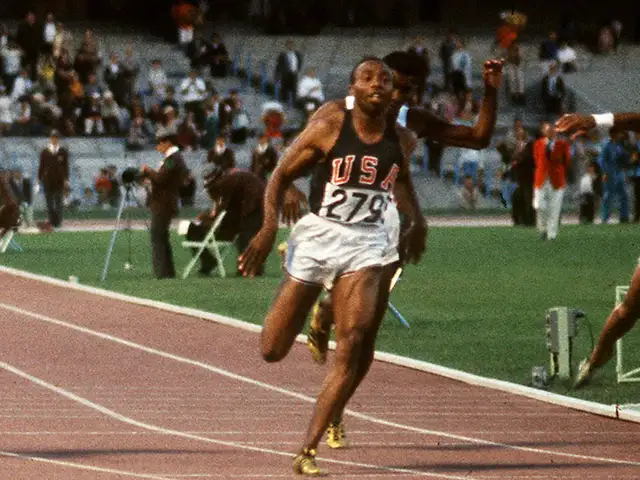
At the 1968 Mexico Olympics, Arkansas boy Hines ran 100 metres in 9.95 seconds, making it the new world record and the first time the 10-second mark was officially breached. Today, the record belongs to Usain Bolt who’s himself broken the record thrice, lowering it from 9.74s to 9.58s, which he ran at the world championships in Berlin in 2009.
(Image: AFP)
Though it’s Bob Hayes who’s credited with running the first 100-metre dash in under 10 seconds — a 9.9 second sprint in 1963, this too was an unofficial timing. Hayes, who also broke the official wor..
Read More
In pole vault, a height ceiling of six metres (19 feet) was considered unattainable. Until Ukraine’s Sergey Bubka came along, setting numerous world records. In July 1985, he became the first man to clear six metres in Paris, while three years later, in 1988, he managed 6.06 metres. Between 1984 and 1988, Bubka had raised the world record by 21 centimetres, a greater gain in four years than what had been achieved in the previous 12. He continued breaking his own records until 1994, when he jumped 6.14 metres. This would stand for over 20 years, until 2014, when Frenchman Renaud Lavillenie jumped 6.16 metres, incidentally in Bubka’s native Donetsk, with the 51-year-old in attendance.
In pole vault, a height ceiling of six metres (19 feet) was considered unattainable. Until Ukraine’s Sergey Bubka came along, setting numerous world records. In July 1985, he became the first man to ..
Read More
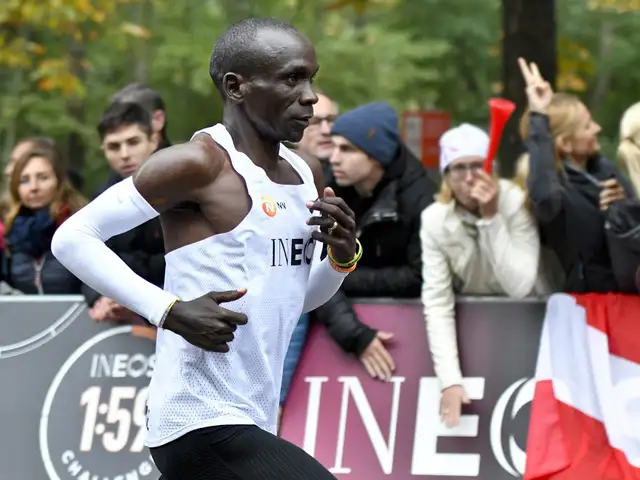
Kenyan runner Kipchoge last month became the first person to run a 42-kilometre marathon in under two hours, after he completed the distance in 1:59:40. This is considered among the most enduring of long-distance running accomplishments. To put this timing in perspective, he ran at an average speed of 4.35 minutes for a mile. And kept doing it over 26 times. However, the timing wouldn’t be counted as official. The event wasn’t a competition, and was held for Kipchoge alone. In addition, he was also assisted by a team of runners (pacekeepers). What time he might have run had it not been for them is anybody’s guess. However, the official world record for the fastest marathon does belong to the same Eliud Kipchoge, a 2:01:39 time he set at the 2018 Berlin Marathon.
(Image: AFP)
Kenyan runner Kipchoge last month became the first person to run a 42-kilometre marathon in under two hours, after he completed the distance in 1:59:40. This is considered among the most enduring of ..
Read More
The mile isn’t often considered in today’s metric athletics world as a unit denoting athletic supremacy, but it wasn’t always so. In the 1950s, the mile (1,600 metres) was considered the pinnacle and to run it under four minutes was considered nigh impossible.
Briton Roger Bannister, who had come fourth in the 1952 Olympics in the 1,500 metre run, got there first. He ran in 3:59.4, to break the world record at Iffley Road in Oxford and shatter the psychological ceiling. Six weeks later, John Landy brought it down to 3:58.0. By the end of the decade, it was down to 3:54.5, while the current record stands at 3:43.13, set by Hicham El Guerrouj in 1999.
The mile isn’t often considered in today’s metric athletics world as a unit denoting athletic supremacy, but it wasn’t always so. In the 1950s, the mile (1,600 metres) was considered the pinnacle and..
Read More
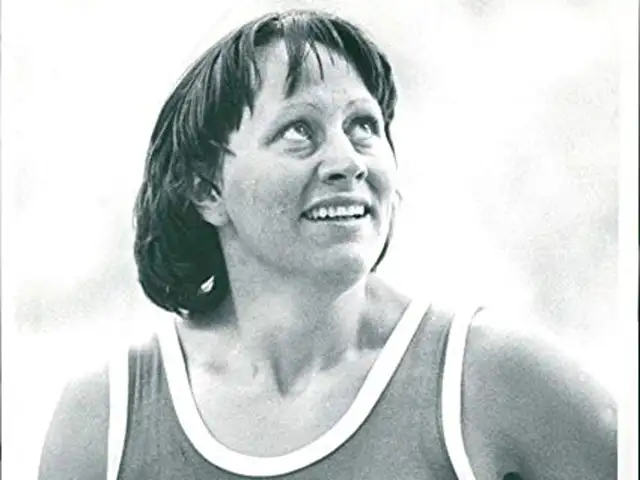
On the women’s side of the draw, the 11-second mark for the 100-metre dash was considered unbreakable until as recently as 1973. It was East German sprinter Stecher who became the first woman to run a 10.9 second race. However, several of Stecher’s records would later come under a cloud, after it was revealed that East Germany conducted a statesponsored drug programme.
In fact, the drug menace would continue to plague women’s 100-metre running, as subsequent record holder Florence Griffith Joyner also faced doping allegations.
(Image: www.amazon.com)
On the women’s side of the draw, the 11-second mark for the 100-metre dash was considered unbreakable until as recently as 1973. It was East German sprinter Stecher who became the first woman to run ..