This Indian expat bagged a cash prize worth $2.7 mn at Big Ticket, Abu Dhabi

The second price of 100,000 dirhams was won by Indian expat Binu Gopinathan.

Agencies
Big Ticket is the largest and longest running monthly raffle draw for cash prizes and luxury cars in Abu Dhabi.
DUBAI: An Indian expat won a staggering USD 2.7 million in a monthly raffle in the UAE, a media report said Tuesday.

Sanjai Nath R, who had purchased the ticket at Big Ticket Abu Dhabi, was announced the winner on Monday of the bumper prize, 10 million dirham (USD 2.7 million), the Khaleej Times reported.

While Nath won the first prize, five other Indian expats were in the top 10 winning list of the raffle, the report said.


The second price of 100,000 dirhams was won by Indian expat Binu Gopinathan, it said.

Shipak Barua from Bangladesh won the luxurious Land Rover Series 16 in the raffle, the report added.

Last month, Shojith KS, an Indian national from Sharjah, became first prize winner of the after winning 15 million dirhams (USD 4.08 million).
ADVERTISEMENT

Big Ticket is the largest and longest running monthly raffle draw for cash prizes and luxury cars in Abu Dhabi.

Tickets can be purchased online or at Abu Dhabi International Airport, Al Ain Duty Free and City Terminal Abu Dhabi.
Lifting The Lid On A Priceless Collection: 400 Pieces Of Ancient Indian Treasures To Be Auctioned In NY
1/6

A dagger of an emperor, an ornate pen case and a 17th century necklace of the Nizam. These are among the 400 pieces of ancient Indian treasures and Mughal jewels set to go under the hammer in New York on June 19.

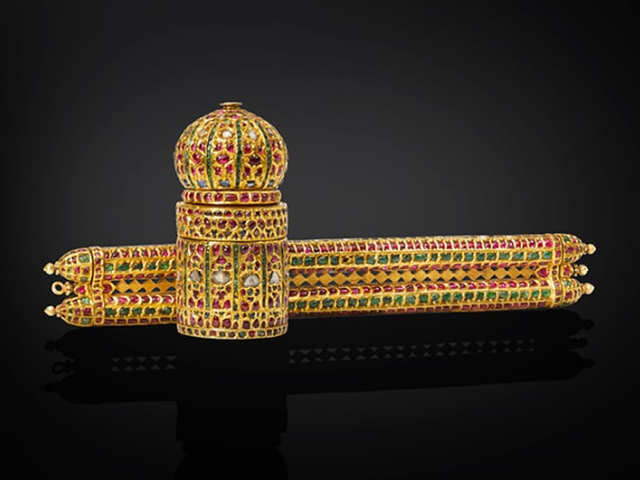
It is a known fact that during the reign of the Mughal dynasty, jewelled pen case and inkwell sets were presented to persons of utmost distinction. This emerald, ruby and diamond-set pen case and inkwell has the engraving of a sacred swan or hamsa under the inkwell. It is dated back to the late 16th century and is said to have originated in the Deccan region.
A dagger of an emperor, an ornate pen case and a 17th century necklace of the Nizam. These are among the 400 pieces of ancient Indian treasures and Mughal jewels set to go under the hammer in New Yor..
Read More

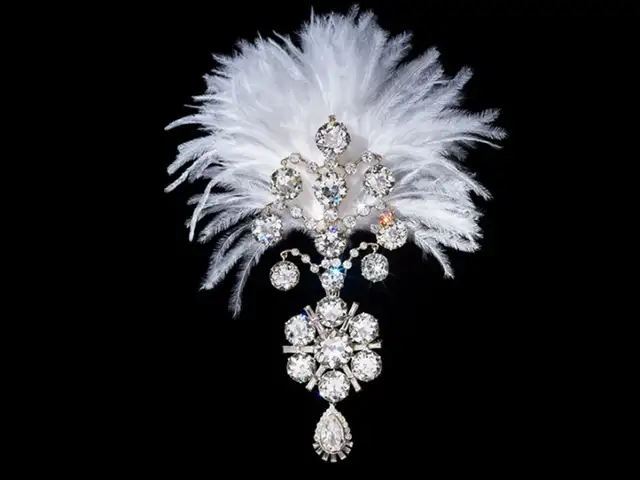
The Belle Époque diamond jigha was made in 1907 and remodelled around 1935. The ornament is set with old baguette and pear-shaped diamonds. It is made of white gold. On the reverse is a plume holder. The lower part of the ornament is detachable and can be worn as a brooch, according to the Christie’s website. The total weight of the diamonds in this turban ornament is approximately 152.60 carats.

The Belle Époque diamond jigha was made in 1907 and remodelled around 1935. The ornament is set with old baguette and pear-shaped diamonds. It is made of white gold. On the reverse is a plume holder...
Read More

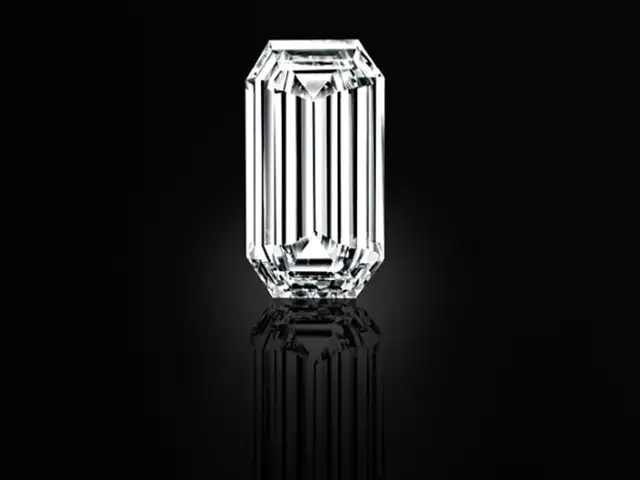
The Mirror of Paradise is a D-colour internally flawless diamond of 52.58 carats. The diamond was found in the Golconda region in South India.

Until the 1730s, India was known to be the world’s supplier of diamonds. Many of the world’s famous diamonds — the Koh-i-Noor, the Regent and the Hope diamonds — were found in the riverbeds of the Deccan region.

The Mirror of Paradise is a D-colour internally flawless diamond of 52.58 carats. The diamond was found in the Golconda region in South India.Until the 1730s, India was known to be the world’s suppli..
Read More

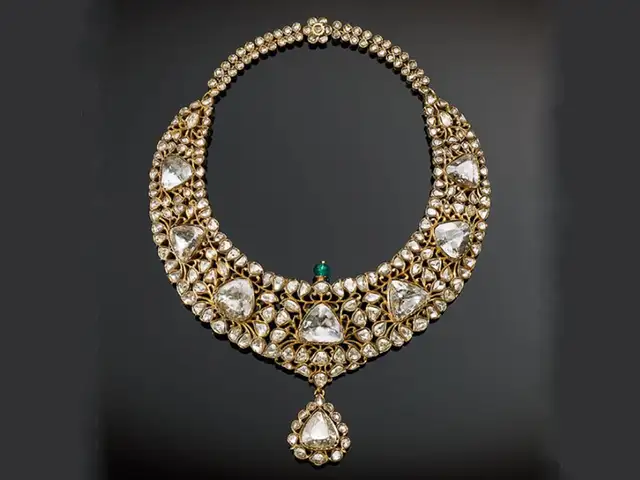
The Nizam of Hyderabad necklace is a magnificent piece from the late 19th century. It is made of gold with seven large foiled triangular diamonds, each framed in an openwork panel of kundan-set diamond leaves, says Christie’s. At front centre is a triangular diamond pendant surrounded by 12 diamond leaves, mounted on an inner edge with a melon-cut emerald bead.

The Nizam of Hyderabad necklace is a magnificent piece from the late 19th century. It is made of gold with seven large foiled triangular diamonds, each framed in an openwork panel of kundan-set diamo..
Read More

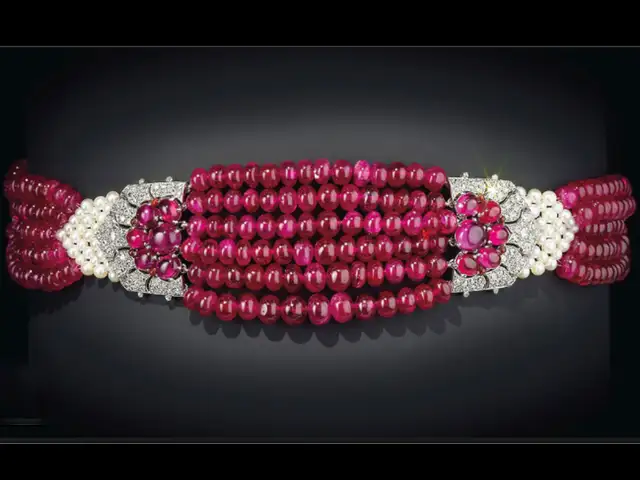
This piece of jewellery is a magnificent example of the fusion between the East and the West. The necklace was commissioned by Maharaja Bhupinder Singh of Patiala. It was created by Cartier in 1931. This ruby, pearl and diamond necklace is just one example of Maharaja Bhupinder Singh’s long relationship with the house of Cartier. It has 292 ruby beads weighing 356.56 carats, interspersed with panels of 132 threaded pearls, caught at each side with clasps of 120 diamonds and rubies set in platinum, each clasp formed of a cluster of six cabochon claw-set rubies. The necklace was restored and restrung by Cartier Tradition in 2012.

This piece of jewellery is a magnificent example of the fusion between the East and the West. The necklace was commissioned by Maharaja Bhupinder Singh of Patiala. It was created by Cartier in 1931. ..
Read More

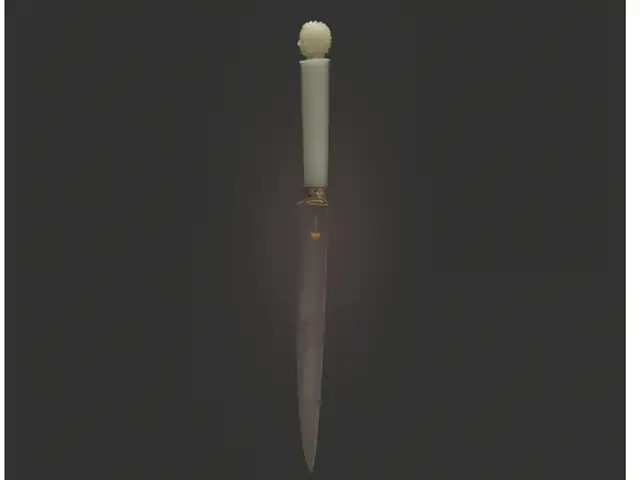
The ornate jade-hilted dagger was commissioned by Jahangir, the fourth Mughal Emperor of India, in the early 17th century. The carved youth’s head on the hilt is speculated to be based on an ivory representation of Jesus.

Upon Jahangir’s death in 1627, the blade passed on to his son and successor, Shah Jahan, who reworked the blade and added two Mughal inscriptions to it — a royal umbrella and a fish. In the 1850s the dagger was also owned by Samuel FB Morse, the creator of the eponymous code and inventor of the telegraph, who was also an art collector.


(All images: christies.com)

The ornate jade-hilted dagger was commissioned by Jahangir, the fourth Mughal Emperor of India, in the early 17th century. The carved youth’s head on the hilt is speculated to be based on an ivory re..
Read More

Download
The Economic Times Business News App
for the Latest News in Business, Sensex, Stock Market Updates & More.
READ MORE
ADVERTISEMENT

READ MORE:

LOGIN & CLAIM

50 TIMESPOINTS

More from our Partners

Loading next story
Business News › Magazines › Panache › This Indian expat bagged a cash prize worth $2.7 mn at Big Ticket, Abu Dhabi
Text Size:AAA
Success
This article has been saved

*

+