This exoplanet, twice the size of the Earth, may have right conditions for life
It has been suggested that K2-18b would be more like a smaller version of Neptune.
By PTI |
iStock
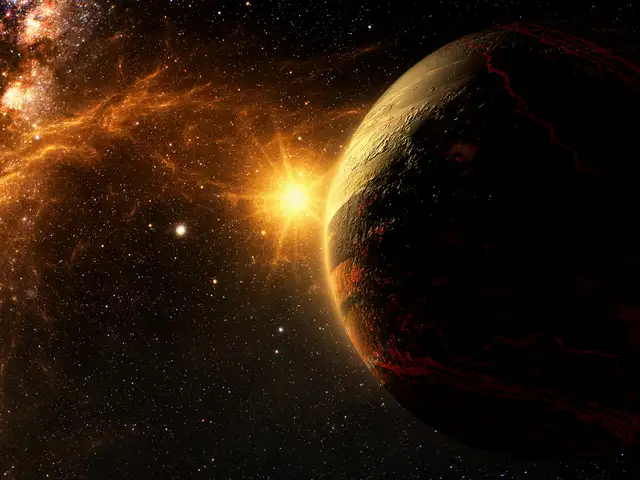
K2-18b is 2.6 times the radius and 8.6 times the mass of Earth, and orbits its star within the habitable zone, where temperatures could allow liquid water to exist. (Representative image)
LONDON: An exoplanet more than twice the size of the Earth may have the right conditions to host life, say scientists led by an Indian-origin astronomer, opening the search for potentially habitable planets significantly larger than the Earth, but smaller than Neptune.
The researchers from the University of Cambridge in the UK used the mass, radius, and atmospheric data of the previously identified exoplanet K2-18b, which is 124 light-years away.
The study, published in The Astrophysical Journal Letters, determined that it is possible for the planet to host liquid water at habitable conditions beneath its hydrogen-rich atmosphere.
K2-18b is 2.6 times the radius and 8.6 times the mass of Earth, and orbits its star within the habitable zone, where temperatures could allow liquid water to exist, the researchers said.
The planet was the subject of significant media coverage in 2019, as two different teams reported detection of water vapour in its hydrogen-rich atmosphere.
However, the extent of the atmosphere and the conditions of the interior underneath remained unknown, they said.
ADVERTISEMENT
Apophis Can Wipe Out A Country: A Look At Every Massive Asteroid That Has Hit Earth
1/5
A monster asteroid - named Apophis after the Egyptian 'God of Chaos' - is likely to swoosh past Earth, but there is a slight chance that it may hit the planet.
The bigger-than-Eiffel Tower asteroid, weighing around 27 billion-kg, could leave a crater impact of 1.6 km wide in diameter and 518 metre deep. It has the capacity of an 880 million tonne TNT explosion that can wipe out large cities or even an entire country.
First spotted in August 2006, the ‘hazardous’ asteroid was initially named 2006 QQ23.
Meanwhile, the European Space Agency recently released a 'risk list' of 878 asteroids that are likely to cause a massive impact on Earth in the next 100 years.
Here's a look at all the asteroids Earth has braved.
A monster asteroid - named Apophis after the Egyptian 'God of Chaos' - is likely to swoosh past Earth, but there is a slight chance that it may hit the planet.The bigger-than-Eiffel Tower asteroid, w..
Read More
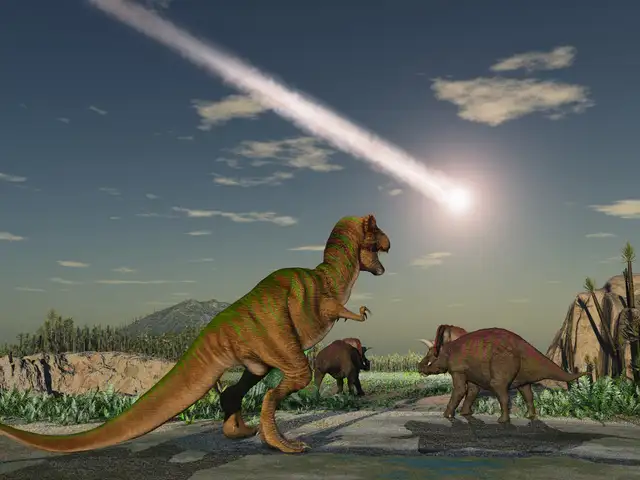
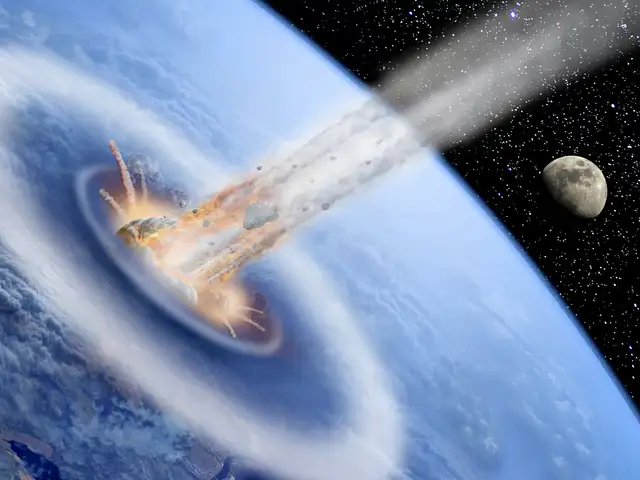
This is the famous asteroid impact that hit Earth approximately 66 million years ago in the present-day town of Chicxulub in Mexico's Yucatan Peninsula state, during the end of the Cretaceous period.
The asteroid was between 11-81 km in diameter. Its impact caused a 180 kilometre wide crater, making it one of biggest known impactors on Earth. The asteroid heated organic matter in rocks and ejected it into the atmosphere, forming soot in the stratosphere. Soot is a strong, light-absorbing aerosol that caused global climate changes that triggered the mass extinction of dinosaurs, ammonites, and other animals, and led to the macroevolution of mammals and the appearance of humans.
The Apophis asteroid is relatively smaller in size compared to this one.
This is the famous asteroid impact that hit Earth approximately 66 million years ago in the present-day town of Chicxulub in Mexico's Yucatan Peninsula state, during the end of the Cretaceous period...
Read More
In March or April of 1490, China's Qingyang city experienced the Ch'ing-yang air burst. The meteor shower may have occurred because it got disintegrated from an asteroid after entering the atmosphere. While there hasn't been any confirmation, it is believed that the meteor shower may have caused a large number of casualties.
In March or April of 1490, China's Qingyang city experienced the Ch'ing-yang air burst. The meteor shower may have occurred because it got disintegrated from an asteroid after entering the atmosphere..
Read More
On June 1908, Russia's Podkamennaya Tunguska River in Yeniseysk Governorate, which is now now Krasnoyarsk Krai, saw a large explosion. With three casualties and an impact stretch of over 2,000 sq km, the carter - the circular, bowl-shaped depression on the surface of the Earth - was never found.
The researchers believe that the object was disintegrated about 5-10 km before hitting the surface. Considered as Earth's largest impact event, its size was estimated somewhere between 50 metre and 190 metre, depending on the speed at which it travelled. Its energy was estimated to be 1,000 times greater than the Hiroshima atomic bomb attack, knocking down around 80 million trees due to the shock wave, which was capable of wiping out a metropolitan city.
On June 1908, Russia's Podkamennaya Tunguska River in Yeniseysk Governorate, which is now now Krasnoyarsk Krai, saw a large explosion. With three casualties and an impact stretch of over 2,000 sq km,..
Read More
This superbolide (a meteor brighter than the moon that radiate energy due to friction or pressure, and exploded after entering the atmosphere) entered our planet's atmosphere on February 2013 over southern Ural region in Russia's Chelyabinsk Oblast. An approximately 20-metre asteroid turned into a fireball, emitting light brighter than the Sun that was visible from a distance of up to 100 km.
While the atmosphere absorbed most of the object's energy, it resulted in major shock waves that shattered glass, damaged buildings and even caused 1,500 injuries. If the energy wasn't absorbed, the impact could have been 26-33 times greater than the nuclear blast at Hiroshima.
With over 12,000K – 13,000K kg heavier than France's Eiffel Tower, this is the biggest natural object that entered the atmosphere ever since the 1908 Tunguska impact.
This superbolide (a meteor brighter than the moon that radiate energy due to friction or pressure, and exploded after entering the atmosphere) entered our planet's atmosphere on February 2013 over ..
"Water vapour has been detected in the atmospheres of a number of exoplanets, but even if the planet is in the habitable zone, that doesn't necessarily mean there are habitable conditions on the surface," said Nikku Madhusudhan from Cambridge, who led the new research.
"To establish the prospects for habitability, it is important to obtain a unified understanding of the interior and atmospheric conditions on the planet - in particular, whether liquid water can exist beneath the atmosphere," Madhusudhan said. Given the large size of K2-18b, it has been suggested that it would be more like a smaller version of Neptune than a larger version of the Earth.
A 'mini-Neptune' is expected to have a significant hydrogen 'envelope' surrounding a layer of high-pressure water, with an inner core of rock and iron, the researchers said. If the hydrogen envelope is too thick, the temperature and pressure at the surface of the water layer beneath would be far too great to support life, they said.
ADVERTISEMENT
The new study showed that despite the size of K2-18b, its hydrogen envelope is not necessarily too thick and the water layer could have the right conditions to support life.
They used the existing observations of the atmosphere, as well as the mass and radius, to determine the composition and structure of both the atmosphere and interior using detailed numerical models, and statistical methods to explain the data.
ADVERTISEMENT
The researchers confirmed the atmosphere to be hydrogen-rich with a significant amount of water vapour.
They also found that levels of other chemicals such as methane and ammonia were lower than expected for such an atmosphere.
The researchers noted that whether these levels can be attributed to biological processes remains to be seen.
They used the atmospheric properties as boundary conditions for models of the planetary interior.
The research team explored a wide range of models that could explain the atmospheric properties as well as the mass and radius of the planet. This allowed them to obtain the range of possible conditions in the interior, including the extent of the hydrogen envelope and the temperatures and pressures in the water layer.
"We wanted to know the thickness of the hydrogen envelope - how deep the hydrogen goes," said Matthew Nixon, a PhD student at Cambridge University.
"While this is a question with multiple solutions, we've shown that you don't need much hydrogen to explain all the observations together," said Nixon.
The researchers found that the maximum extent of the hydrogen envelope allowed by the data is around 6 per cent of the planet's mass, though most of the solutions require much less.
The minimum amount of hydrogen is about one-millionth by mass, similar to the mass fraction of the Earth's atmosphere, they said.
A number of scenarios allow for an ocean world, with liquid water below the atmosphere at pressures and temperatures similar to those found in the Earth's oceans, the researchers noted.
This study opens the search for habitable conditions and bio-signatures outside the solar system to exoplanets that are significantly larger than the Earth, beyond Earth-like exoplanets, they said.
Moving To Mars Made Easy: 7 Must-Haves For Survival On The Red Planet
1/7
NASA is working on a Mars Oxygen In-Situ Resource Utilisation Experiment (MOXIE) that will let future explorers produce oxygen from the Martian atmosphere for breathing. The carbattery-sized instrument does this by collecting carbon dioxide from the Martian atmosphere and electrochemically splitting the molecules into oxygen and carbon monoxide molecules.
NASA is working on a Mars Oxygen In-Situ Resource Utilisation Experiment (MOXIE) that will let future explorers produce oxygen from the Martian atmosphere for breathing. The carbattery-sized instrume..
Read More
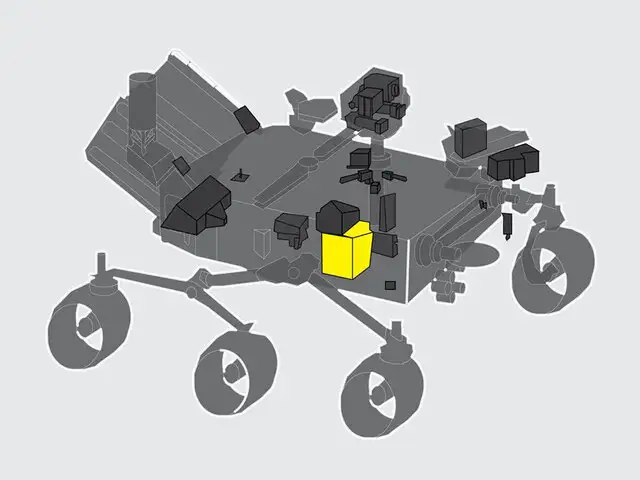
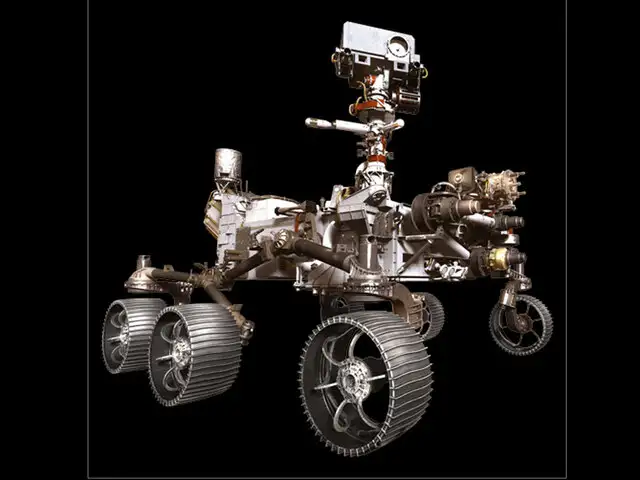
NASA’s Mars 2020 rover, its latest robotic mission to the Red Planet, will include technology to explore ancient life on Mars. It will be the first of its kind to collect samples of the Martian surface, caching them in tubes that could be returned to Earth on a future mission. Mars 2020 will carry a ground-penetrating radar to study the Martian surface.
NASA’s Mars 2020 rover, its latest robotic mission to the Red Planet, will include technology to explore ancient life on Mars. It will be the first of its kind to collect samples of the Martian surfa..
Read More
Non-profit organisation The Planetary Society launched LightSail 2, the first spacecraft propelled solely by sunlight recently. It will use a solar sail that’s a large square of a very thin film which is ultra-light and can propel the craft by the pressure of photons (particles of electromagnetic radiation) emanating from the Sun. The thrust provided by these photons is tiny — but it’s also unlimited.
Non-profit organisation The Planetary Society launched LightSail 2, the first spacecraft propelled solely by sunlight recently. It will use a solar sail that’s a large square of a very thin film whic..
Read More
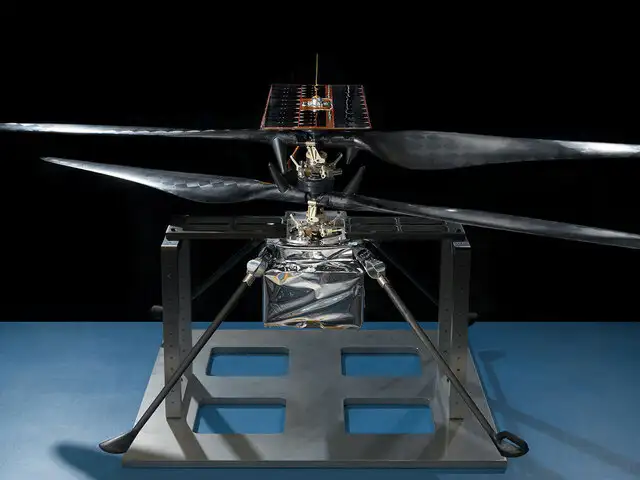
NASA’s Mars Helicopter — the first vehicle that will attempt to establish the viability of heavier-than-air vehicles flying on another planet — is on the final phase of testing. While the helicopter carries no science instruments, it can transport small payload. It has a built-in camera that can capture high-resolution images to document the difficult-to-reach destinations of the Red Planet.
NASA’s Mars Helicopter — the first vehicle that will attempt to establish the viability of heavier-than-air vehicles flying on another planet — is on the final phase of testing. While the helicopter ..
Read More
NASA and Ball Aerospace & Technologies Corp of Boulder, Colorado, are collaborating on a Green Propellant Infusion Mission, which seeks to improve overall propellant efficiency while reducing the handling concerns associated with the highly toxic fuel, hydrazine. The non-toxic, rosé-coloured liquid could fuel the future in space and propel missions to Mars or other worlds.
NASA and Ball Aerospace & Technologies Corp of Boulder, Colorado, are collaborating on a Green Propellant Infusion Mission, which seeks to improve overall propellant efficiency while reducing the han..
Read More
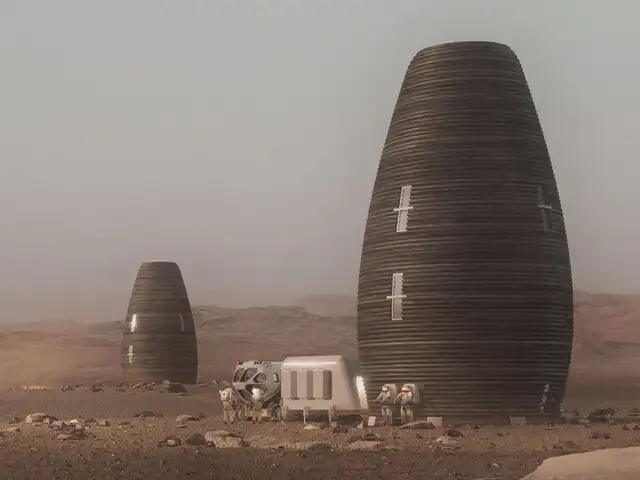
The 15-foot vertical, human-centric 3D-printed habitat Marsha is the most realistic prototype that can support human life on Mars. The pods feature hatches that deploy space suits and a docking port for a Mars rover. The exterior has a double coated shell that keeps the internal temperature consistent, and it is made using materials found naturally on the Red Planet.
The 15-foot vertical, human-centric 3D-printed habitat Marsha is the most realistic prototype that can support human life on Mars. The pods feature hatches that deploy space suits and a docking port ..
Read More
To help engineers design spacesuits to shield astronauts from Mars elements, NASA will send five samples of spacesuit material along with one of Mars 2020’s science instruments, nicknamed Sherloc. Scientists will use Sherloc, as well as a camera that photographs visible light, to study how the materials degrade in ultraviolet radiation.
- Text by Rajarshi Bhattacharjee
To help engineers design spacesuits to shield astronauts from Mars elements, NASA will send five samples of spacesuit material along with one of Mars 2020’s science instruments, nicknamed Sherloc. Sc..