There's a reason behind Paytm OTP right at the end of an SMS. And Vijay Shekhar Sharma confirms it's deliberate
The founder also mentioned that Paytm saw a reduction in OTP-sharing after this move.
By ET Online | Updated:
BCCL
Vijay Shekhar Sharma revealed that placing the OTP at the end of the message discouraged fraudsters.
NEW DELHI: As social distancing becomes the norm, online payments have emerged as the safest option (with zero human contact) in a world affected by the coronavirus outbreak. While digital payments have made life simple, there also lies a risk of online fraud if one is not careful enough.
And digital payments app, Paytm, seems to have kept that in mind while building its user SMS interface. Replying to a tweet, founder Vijay Shekhar Sharma explained the method to the madness behind the one-time-password (OTP) message which displays the six-digit pin right at the end of the SMS during a transaction.
If you have been one of the many customers bothered by this feature, be assured that it is not a tech bug and a (deliberate) feature.
In a reply to Instahyre Founder Aditya Rajgarhia on Twitter, the 41-year-old entrepreneur revealed that this was a conscious effort to discourage fraudsters. "We figured that whenever fraudsters call a gullible customers, it is very easy for them to share OTP. We put it at the end of the warning message so that (customers) don’t share OTP," he wrote.
He also mentioned that after having implemented this move, Paytm saw a reduction in OTP-sharing.
This OTP sharing at end of message is deliberate. We figured that whenever fraudsters call a gullible customers, i… https://t.co/dQmb2lJE6g
Rajgarhia said that the OTP appears at the end of the message which forces the user to open the message. He also said that it is easy for the user to copy the OTP from the message snippet or notification if it appears in the first few words.
The query came in by the advanced hiring platform founder after the Paytm boss had spotted a technical glitch in the international news agency Bloomberg's mobile app version. He shared a 14-second short video that showed him facing difficulty in accessing the lower sections of the menu panel. "To sign in, in browser is not an easy thing," his tweet read.
He said that he was surprised that no one had experienced this problem yet. He further stated that the app needs to find a solution to this.
I am surprised that someone in @Bloomberg did not face this problem yet and solved it. To sign in, in browser is n… https://t.co/iFslp2i3dL
On Thursday, news reports suggested that the digital payments firm had recorded around a four-fold jump in payments received by merchants in its new ledger service amid the pandemic. The amount of payments recorded in its e-ledger service Business Khata has crossed Rs 1,500 crore in about four months.
ADVERTISEMENT
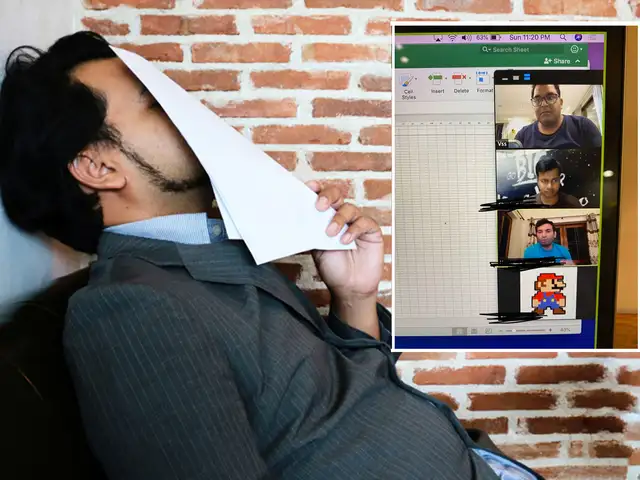
Tired Of Never-Ending Working From Home Shift? 4 Tips To Maintain A Work-Life Balance
1/6
Working from home has become the new normal as companies try to minimise disruptions and keep operations running as close to normal as possible. But with most of us working from home, the lines between "work" and "home" could become quickly blurred.
A few weeks ago, Paytm founder Vijay Shekhar Sharma took to Twitter to announce that he had been so wrapped up in Zoom meetings (inset from Sharma's Twitter account) that he forgot it was Sunday. And that seems to be the case with most entrepreneurs who are dealing with investor pressure and the stress of a looming economic slowdown.
Working from home has become the new normal as companies try to minimise disruptions and keep operations running as close to normal as possible. But with most of us working from home, the lines betwe..
Read More
In a recent media interview, Zerodha CEO Nithin Kamath (L) confessed, “I start work around 8.30 am and work till I sleep. I am definitely overworking, so are a few of my colleagues.”
“I had assumed that there would be more family time than before (but) the opposite has happened. Maybe I am spending lesser time than before because the boundary between work and personal time has disappeared. That said, daily I work out with my wife and play music with my son, and enjoy a drink with my brother and father once in a few days.”
If you find yourself in a similar situation as Kamath or Paytm's Vijay Shekhar Sharma (R), here are a few practical ways you can quickly establish boundaries.
In a recent media interview, Zerodha CEO Nithin Kamath (L) confessed, “I start work around 8.30 am and work till I sleep. I am definitely overworking, so are a few of my colleagues.”“I had assumed t..
Read More
Working from home can be invasive to your personal life. Without scheduled work hours, work can creep into your home life and just as personal errands can creep into work hours. To avoid this, start and end your workday at the same time every day. Don’t mix household chores into work hours and vice-versa.
Working from home can be invasive to your personal life. Without scheduled work hours, work can creep into your home life and just as personal errands can creep into work hours. To avoid this, start ..
Read More
Studies have shown that having a designated workspace helps put your brain into work mode and enhances productivity. If you can’t set aside a designated workspace (due to a space crunch), try to create barriers in other ways. For example, use your laptop for work calls/meetings and use your phone to check social media or chat with friends. Having different devices for different purposes will help your brain switch from work to play mode.
Studies have shown that having a designated workspace helps put your brain into work mode and enhances productivity. If you can’t set aside a designated workspace (due to a space crunch), try to crea..
Read More
A shutdown ritual is a set routine of actions that you perform at the end of each workday to finalize your day and signify that your workday is done. Cal Newport, the author of Deep Work, initiated it as a New Years’ resolution to get the most of his relaxation time.
“It has worked better than I imagined. I’ve basically eliminated stressful work-related thoughts from my evenings and weekends. This has really improved my ability to relax and focus on other things,” he wrote on his website.
Some activities you can include in your shutdown ritual are preparing a to-do list for the next day, going for a walk, signing up for an evening fitness class among others. The goal isn’t what you do but that you do something to replace and simulate your commute, which is a built-in shutdown ritual.
A shutdown ritual is a set routine of actions that you perform at the end of each workday to finalize your day and signify that your workday is done. Cal Newport, the author of Deep Work, initiated i..
Read More
One way to ensure that you’re not blurring the lines between work and home is to create a no-work zone for at least an hour before you go to bed and after you wake up. This will keep your mind ample time to properly recharge.
Research shows that what you do before you go to sleep has an impact on the quality of sleep, and your engagement, your ability to focus, the next day. Passive leisure activities, like watching TV or reading a book, were associated with better sleep than doing something like answering work emails.
One way to ensure that you’re not blurring the lines between work and home is to create a no-work zone for at least an hour before you go to bed and after you wake up. This will keep your mind ample ..
Business News › Magazines › Panache › There's a reason behind Paytm OTP right at the end of an SMS. And Vijay Shekhar Sharma confirms it's deliberateText Size:AAA