'The Mandalorian' a treat for all 'Star Wars' fans, creator promises surprises in every episode
'The Mandalorian' runs on Walt Disney Co's new Disney+ streaming service.
By PTI |
The first episode ended with the Mandalorian finding a character that looks like a baby version of the Jedi Master Yoda from 'Star Wars' films.
LOS ANGELES: 'The Mandalorian' creator Jon Favreau and cast members debuted the 'Star Wars' series on Wednesday at a red-carpet event for fans and promised more surprises following the reveal of an unexpected new character in the first episode.
'The Mandalorian,' which runs on Walt Disney Co's new Disney+ streaming service, is the first live-action series set in the galaxy far, far away that was first seen on screen in the 1977 movie 'Star Wars'.
The series stars Pedro Pascal as a bounty hunter sent on a sensitive mission. The first season will run for eight episodes.
"There are lots of surprises in the show. Part of what is fun about doing eight episodes is that each one could have a surprise and twist," Favreau said in an interview at the premiere in Hollywood.
The audience was composed largely of fans, some of whom carried bounty-hunter helmets.
ADVERTISEMENT
The first episode, released on Tuesday, ended with the Mandalorian finding a character that looks like a baby version of the Jedi Master Yoda from 'Star Wars' films.
It was unclear how the baby may be related to Yoda or fit into the story, sparking debate among fans.
Favreau and cast members did not shed much light at Wednesday's premiere. Disney is releasing 'Mandalorian' episodes weekly starting on Friday.
"You have to see the shows to figure out who this baby Yoda really is, and what he is all about, or even if he is really a baby Yoda," said Carl Weathers, who plays Greef Carga, a man who gives bounty assignments to the Mandalorian.
ADVERTISEMENT
"He has his own name, and he is very interesting and very knowledgeable and very cute," Weathers said. "I never use that word, but he is a cute little guy."
Dragonfly, Astrobee & Lemur IIb: Nasa Is Shooting For The Stars With Robo-Astronauts
1/8
Space agency NASA is developing different technologies to unveil the mysteries of deep space.
Space agency NASA is developing different technologies to unveil the mysteries of deep space.
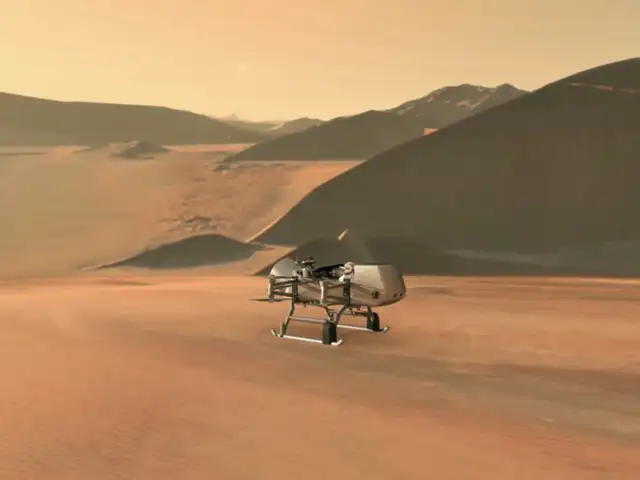
The Dragonfly will fly off in 2026 and arrive at Saturn’s icy moon Titan in 2034 looking for signs of life. Dragonfly marks the first time NASA will fly a multi-rotor vehicle on another planet — it has eight rotors and flies like a large drone. During its 2.7-year baseline mission, the drone will explore diverse environments from organic dunes to the floor of an impact crater.
(Image: www.nasa.gov)
The Dragonfly will fly off in 2026 and arrive at Saturn’s icy moon Titan in 2034 looking for signs of life. Dragonfly marks the first time NASA will fly a multi-rotor vehicle on another planet — it h..
Read More
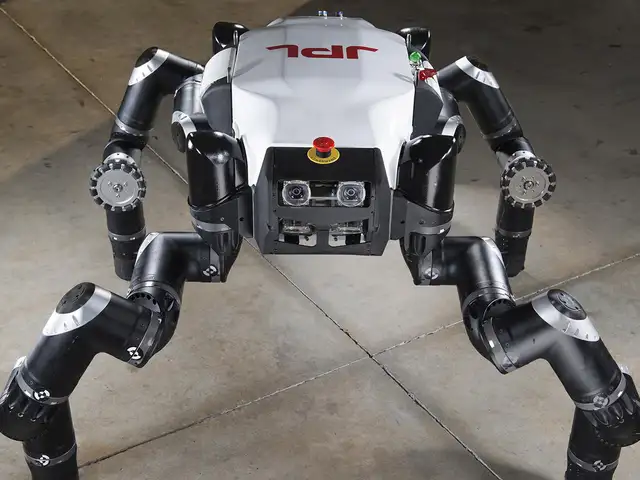
Originally built for disaster-relief, this ape-like robot developed at NASA’s Jet Propulsion Laboratory has been modified to move in extreme environments like Saturn’s moon Enceladus. RoboSimian can walk on four legs, crawl, move like an inchworm and slide on its belly like a penguin.
(Image: www.jpl.nasa.gov)
Originally built for disaster-relief, this ape-like robot developed at NASA’s Jet Propulsion Laboratory has been modified to move in extreme environments like Saturn’s moon Enceladus. RoboSimian can ..
Read More
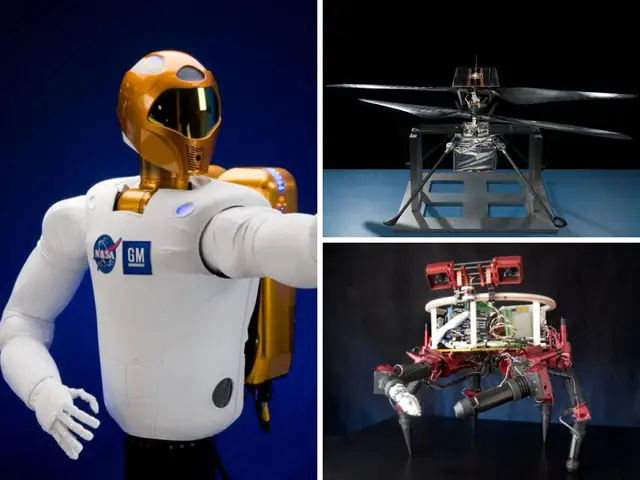
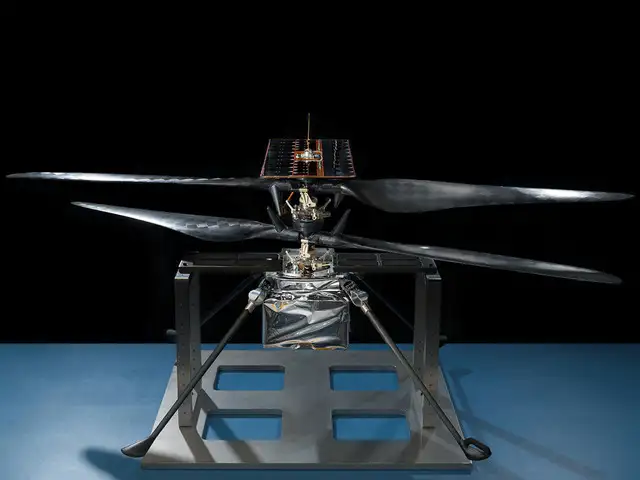
The Mars helicopter is a small, autonomous rotorcraft that will travel with the agency’s Mars 2020 rover mission, scheduled to launch in July 2020, to demonstrate the viability and potential of heavier-than-air vehicles on the Red Planet. “The Mars Helicopter holds much promise for our future science, discovery, and exploration missions to Mars,” said NASA Administrator Jim Bridenstine.
(Image: www.nasa.gov)
The Mars helicopter is a small, autonomous rotorcraft that will travel with the agency’s Mars 2020 rover mission, scheduled to launch in July 2020, to demonstrate the viability and potential of heavi..
Read More
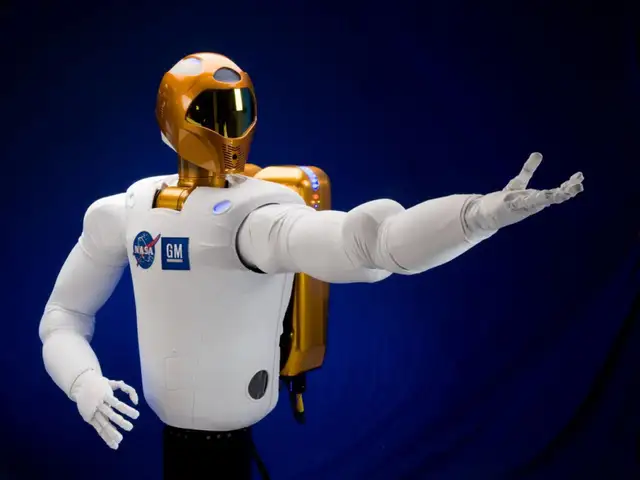
NASA’s Robonaut 2 was the first humanoid robot ever sent to space in 2011. It spent about four years on the space station before it had a hardwire malfunction in 2015. NASA retrieved it in 2018. After a round of repairs, the Robonaut 2 is now set to return to the space station again. It is made up of multiple component technologies, like vision systems, image recognition systems, sensor integrations, tendon hands, control algorithms, and more.
(Image: https://robonaut.jsc.nasa.gov)
NASA’s Robonaut 2 was the first humanoid robot ever sent to space in 2011. It spent about four years on the space station before it had a hardwire malfunction in 2015. NASA retrieved it in 2018. Afte..
Read More
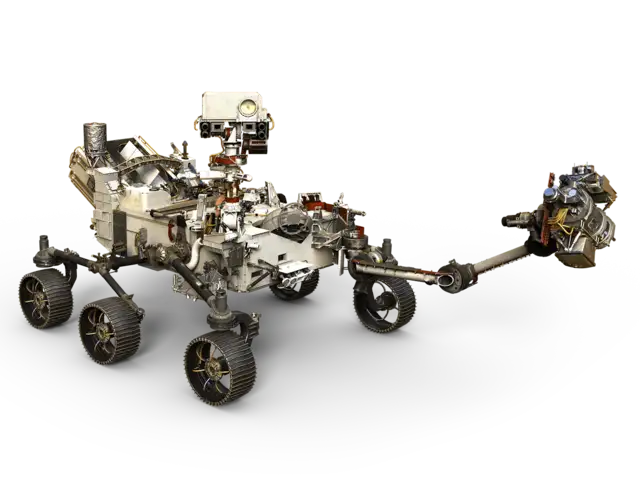
NASA’s yet-tobe-named Mars 2020 is an advanced rover currently being assembled. It will explore and investigate the Jezero crater on Mars and beyond. The nuclearpowered rover will collect and study soil and rock samples that formed in habitable environments of Mars and may preserve signs of past microbial life.
(Image: https://mars.nasa.gov)
NASA’s yet-tobe-named Mars 2020 is an advanced rover currently being assembled. It will explore and investigate the Jezero crater on Mars and beyond. The nuclearpowered rover will collect and study s..
Read More
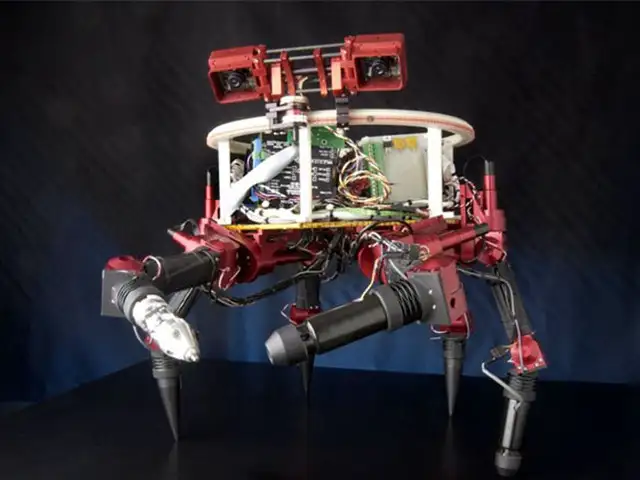
This four-limbed robotic system is being developed with several aspects of climbing. The technologies developed on this platform will be used to build an advanced system that will climb vertical and overhangs slopes while remaining stable as it works.
(Image: https://www-robotics.jpl.nasa.gov)
This four-limbed robotic system is being developed with several aspects of climbing. The technologies developed on this platform will be used to build an advanced system that will climb vertical and..
Read More
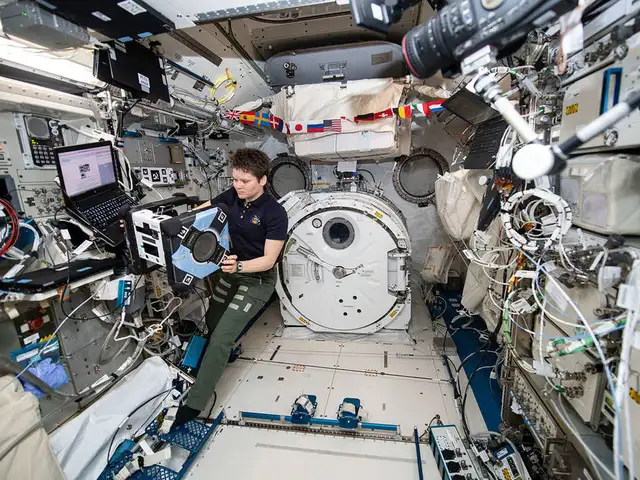
NASA has developed three new robotic teammates to work alongside astronauts on the International Space Station as they help to advance research. Astrobee, NASA’s new free-flying robotic system, aims to help astronauts reduce the time they spend on routine duties like carrying inventory, documenting experiments etc.
Astrobee (free-floating cubes) quick-facts:
- The three robots are named Honey, Queen and Bumble
- The robots are shaped like cubes 12.5 inches wide
- When needed, the robots can return to their docking station and recharge their battery power
- Each floating robot carries a perching arm that allows it to grasp station handrails and assist the astronauts
(Image: www.nasa.gov)
NASA has developed three new robotic teammates to work alongside astronauts on the International Space Station as they help to advance research. Astrobee, NASA’s new free-flying robotic system, aims ..