Smriti Irani (L) with Jahnvi Kapoor (R). (Image: Smriti Irani/Instagram)
Auntie has long been an awkward term. In Rupert Christiansen’s quirky study, The Complete Book of Aunts, he notes that in addition to insinuating age, it often adds layers of class and race. Vikram Doctor reports.
Smriti Z. Irani can be a polarising figure. But few would have not felt a shred of sympathy when she wrote on Instagram of “the someone shoot me moment” when a young person, Janhvi Kapoor in her case, “sweetly apologises for calling you aunty.”
This is a moment that has come to us all – or which we await with dread. And as Irani notes, it is worse when the person who calls you aunty (or uncle) then apologises profusely since that acknowledges that your reclassification to an older, presumably, less relevant generation really matters to you. ‘Aunty’ is annoying, but it is the apology that really twists the knife.
A post shared by Smriti Irani (@smritiiraniofficial) on
Irani is, in any case, hardly unfamiliar with this labelling. In 2016 a newspaper headline called her ‘Aunty National’, a somewhat laboured pun that was promptly called out for being sexist. As many noted, men who took the sort of passionate positions she did were never denigrated in this kind of fakely intimate way.
Auntie has long been an awkward term. In Rupert Christiansen’s quirky study, The Complete Book of Aunts, he notes that in addition to insinuating age, it often adds layers of class and race: “In Britain, it has historically been a word and a concept more prevalent among the working class; the middle class has tended to be more particular about distinguishing an honorary auntie from a blood-related aunt.”
ADVERTISEMENT
Christiansen writes that the Oxford English Dictionary records ‘auntie’ as used for African-American women, perhaps slightly older servants, like Mammy in Gone With the Wind.
In 1984 the Times of India (ToI) noted a similar usage in communist China where ‘auntie’ meant a maidservant. The superficial respect presumably concealed an inequality of work that was at odds with communist ideology: “Senior party officials have, of course, long had the benefit of domestic help, but today others can apply for aunties at the newly set up Housework Service Co.”
The Indian usage of auntie has evolved rather differently. Before it took on the slightly mocking tone given to it today, auntie managed to combine both respect and familiarity. Far from being used downwards, it was used where respect was required, but not the level of formality which demanded a word like ‘ma’am’. Christiansen quotes one view that it emerged when “middle and upper-middle class children who go to Englishmedium schools address their friends’ mothers as Auntie.”
The diplomat PL Bhandari, writing in ToI in 1991, but recalling earlier decades, neatly illustrates this elite and clubby world when he writes how Vijaylakshmi Pandit, Jawaharlal Nehru’s sister, who was posted to head several Indian embassies, was affectionately called ‘Auntie Ambassador’ by his daughters.
ADVERTISEMENT
But as time progressed the usage spread beyond just these narrow circles to the wider world, until it reached today’s tendency where everyone from neighbourhood kids to auto rickshaw drivers and security guards use auntie, regardless of the shock it gives those addressed this way.
This indicates perhaps that auntie fills a real need. At the start of his book Christiansen notes that the basic term, aunt, is not that universal: “not all languages have bothered to develop a single word to describe a mother’s or father’s sister.” Many languages, as with many in India, developed different terms for maternal and paternal relatives in order to make clear the different community obligations or duties that attached to them: all the variants of dada-dadi, kaka-kaki, phua-phuphi and so on.
ADVERTISEMENT
Christiansen quotes the anthropologist Jack Goody to explain how undifferentiated terminology of aunt and uncle “developed first in the late Roman Empire, then spread through the Romance languages, reaching England with the Norman Conquest.” This delinking from specific family linkages freed aunts to become aunties, older ladies who were addressed with some respect, but also some intimacy.
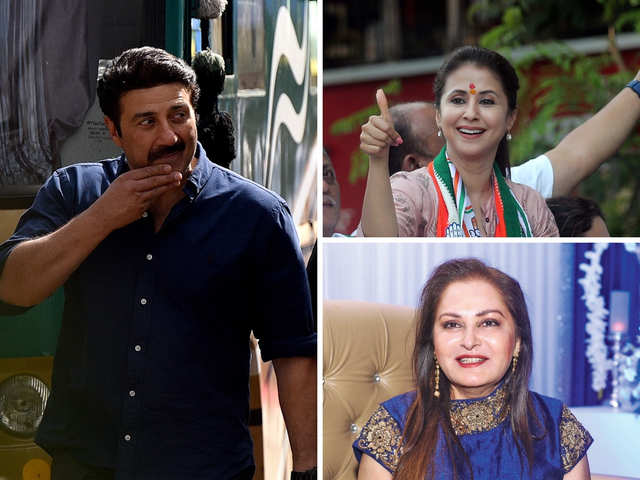
Poll-Pourri: Sunny Deol, Urmila & Other Stars Who've Joined Politics
1/20
It's counting day today and all eyes are on the political scoreboard. From seasoned to the newbies, a bunch of stars are trying their luck at the polls today. Actor-producer Sunny Deol, Urmila Matondkar and Gautam Gambhir are hoping to score on their debuts today.
Here are some film stars who have dabbled in politics over the years.
It's counting day today and all eyes are on the political scoreboard. From seasoned to the newbies, a bunch of stars are trying their luck at the polls today. Actor-producer Sunny Deol, Urmila Mat..
Read More
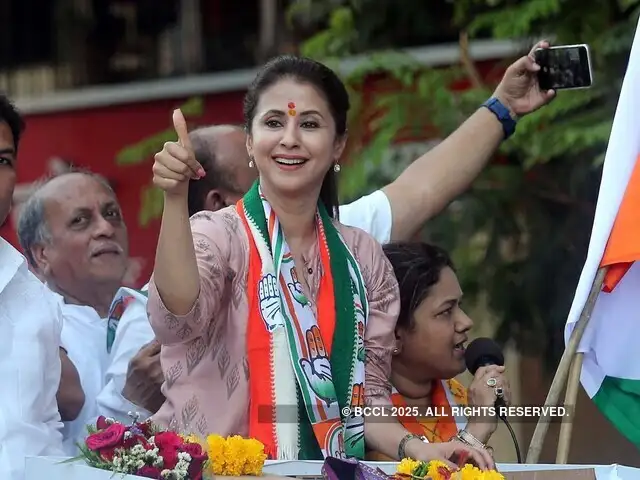
Weeks before the 17th Lok Sabha elections kicked off, actress Urmila Matondkar shook hands with the Indian National Congress (INC). The 45-year-old actress was welcomed in the party by Congress chief Rahul Gandhi.
The 'Rangeela' actress, who is contesting from the Mumbai North constituency against BJP MP Gopal Shetty, is hoping to score a victory.
Weeks before the 17th Lok Sabha elections kicked off, actress Urmila Matondkar shook hands with the Indian National Congress (INC). The 45-year-old actress was welcomed in the party by Congress chi..
Read More
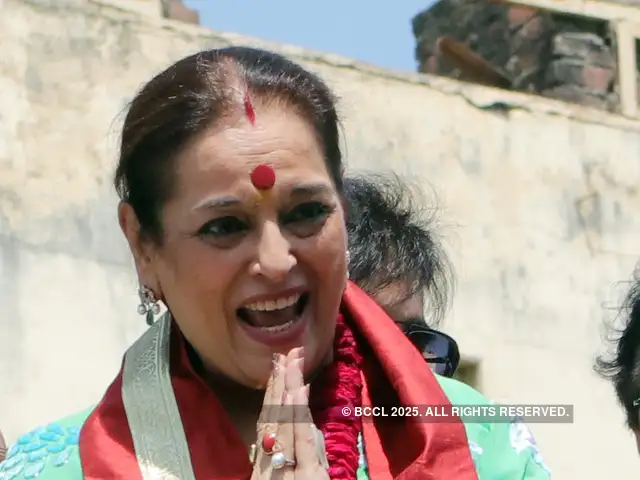
Actress Poonam Sinha, wife of actor Shatrughan Sinha, became a part of the SP in April this year. The 69-year-old is trying her luck against BJP leader and Home Minister Rajnath Singh from Lucknow.
Actress Poonam Sinha, wife of actor Shatrughan Sinha, became a part of the SP in April this year. The 69-year-old is trying her luck against BJP leader and Home Minister Rajnath Singh from Lucknow.
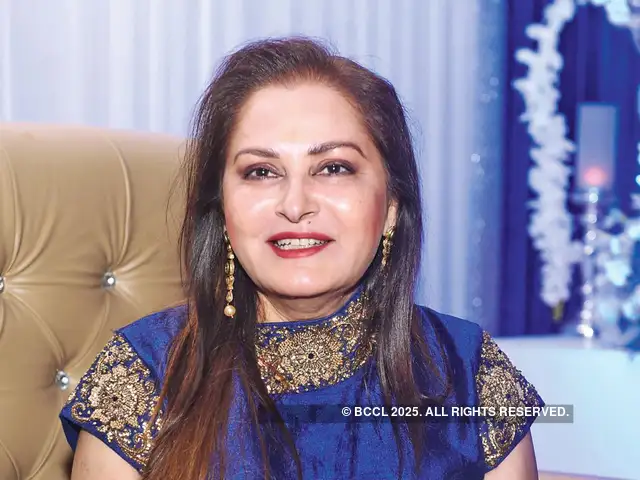
Actress-turned-politician Jaya Prada's ongoing political career kicked off in 1994 when she joined the Telugu Desam Party (TDP). In 2004, the 57-year-old became a part of the Samajwadi Party (SP). However, in 2010, she was expelled due to anti-party activities.
In March this year, Prada joined BJP. She is set to take on her friend-turned-foe, SP's Azam Khan, from Rampur today.
Actress-turned-politician Jaya Prada's ongoing political career kicked off in 1994 when she joined the Telugu Desam Party (TDP). In 2004, the 57-year-old became a part of the Samajwadi Party (SP). ..
Read More
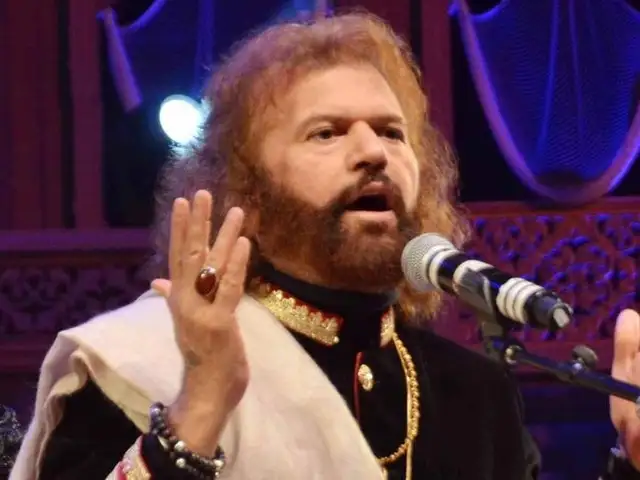
Singer Hans Raj Hans first stint with politics was in 2009 when he joined the Shiromani Akali Dal (SAD). He resigned from the party in 2014. Two years later, in 2016, he joined the Congress party. However, he did not feel welcome in the Rahul Gandhi-led party. In the same year, he switched to the BJP.
In the 17th Lok Sabha polls, the singer is competing against Congress's Udit Raj from North-west Delhi.
If he proves victorious today, he will be one of the leading Dalit faces from the party.
Singer Hans Raj Hans first stint with politics was in 2009 when he joined the Shiromani Akali Dal (SAD). He resigned from the party in 2014. Two years later, in 2016, he joined the Congress party. ..
Read More
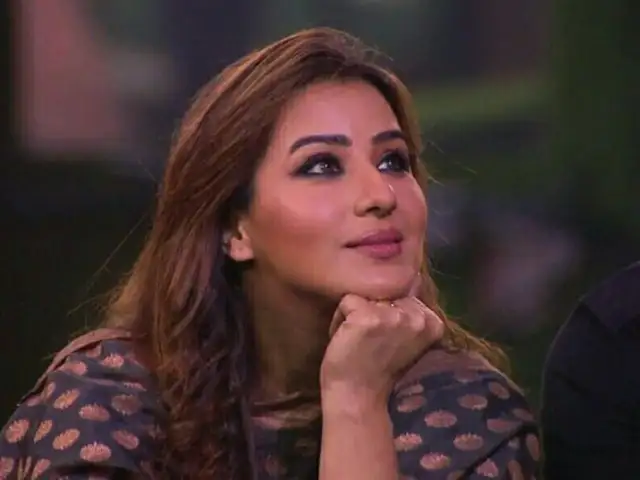
'Bhabiji Ghar Par Hai' actress Shilpa Shinde joined the Indian political scene this year. Before confirming the news, she had to face heavy trolling on social media.
Few weeks later, the 41-year-old confirmed that she was keen on contesting the elections on a Congress ticket from Mumbai.
The 'Bigg Boss 11' winner's fate in politics will be decided today.
'Bhabiji Ghar Par Hai' actress Shilpa Shinde joined the Indian political scene this year. Before confirming the news, she had to face heavy trolling on social media.
Few weeks later, the 41-year..
Read More
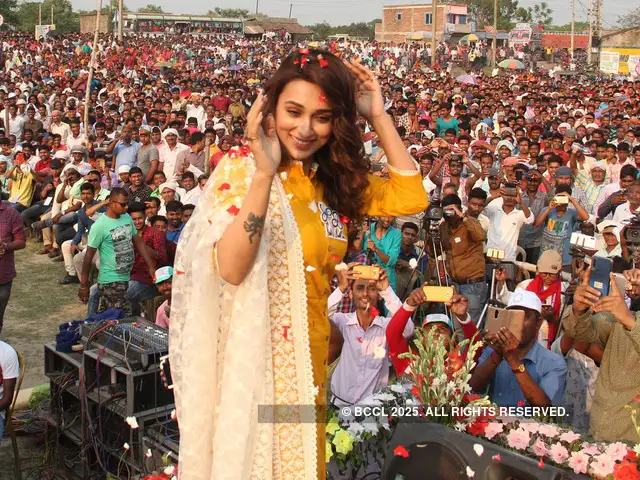
Bengali actress Mimi Chakraborty debuted in the Indian political scene this year. The 30-year-old contested elections from Jadavpur constituency on a Trinamool Congress ticket (TMC).
Today's results could either mark the beginning of her political career or put it to an end to it altogether.
Bengali actress Mimi Chakraborty debuted in the Indian political scene this year. The 30-year-old contested elections from Jadavpur constituency on a Trinamool Congress ticket (TMC).
Today's res..
Read More
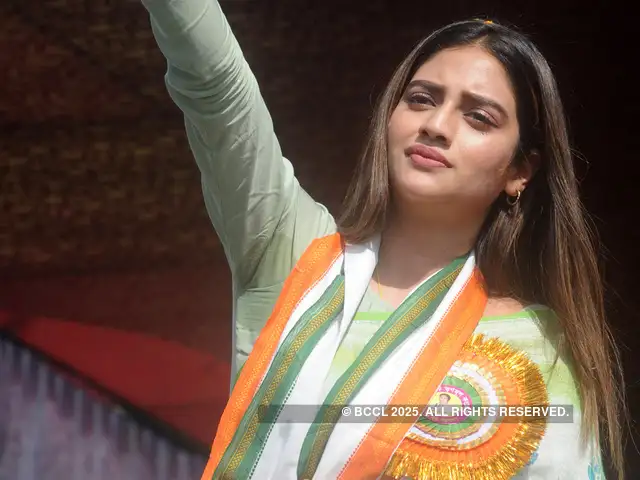
Another popular star of Bengali cinema who walked into the political world is Nusrat Jahan.
The 28-year-old contested Lok Sabha elections from the Basirhat constituency in South Bengal.
Now, the results will tell if the actress is set to embark on a political career or not.
Another popular star of Bengali cinema who walked into the political world is Nusrat Jahan.
The 28-year-old contested Lok Sabha elections from the Basirhat constituency in South Bengal.
Now, ..
Read More
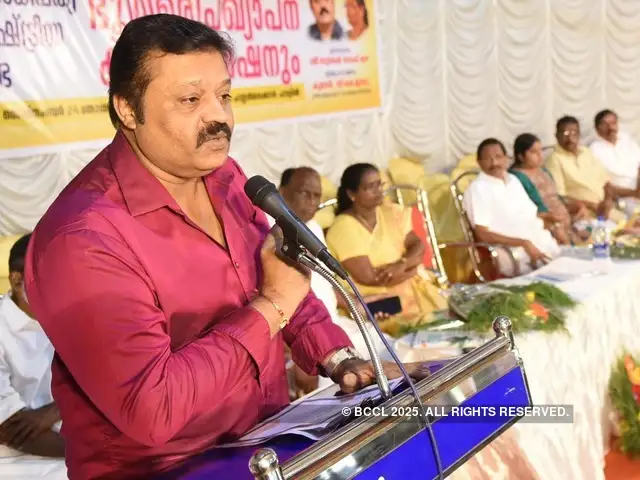
Malayalam star Suresh Gopi has had a rather long political career starting from his college days itself.
The 60-year-old, who was an active member of the Communist Party of India (Marxist) (CPIM), was sworn as an MP for the Rajya Sabha in 2016. Later in the same year, Gopi joined the BJP.
This year, Gopi contested from Thrissur constituency. Today's poll results will tell what's next on the actor's to-do list.
Malayalam star Suresh Gopi has had a rather long political career starting from his college days itself.
The 60-year-old, who was an active member of the Communist Party of India (Marxist) (CPIM..
Read More
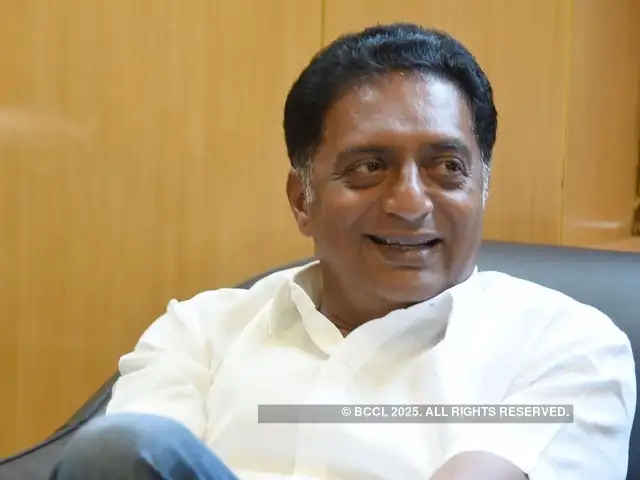
Actor, director and producer Prakash Raj stepped into the world of politics in 2017. The 54-year-old initiated a political movement with the hashtag #justasking after the assassination of journalist Gauri Lankesh.
This year, the 'Dabangg 2' actor contested as an independent candidate from Bengaluru central. He was pitted against Congress's Rizwan Arshad.
Going by the results, the actor is currently trailing in his constituency.
Actor, director and producer Prakash Raj stepped into the world of politics in 2017. The 54-year-old initiated a political movement with the hashtag #justasking after the assassination of journalis..
It was this balance, combined with the specifically English origin, that expanded the usage in India. Auntie could be used in contexts where an Indian term would have been inappropriate, since the family linkage didn’t exist, or a bit too intimate, as with simpler terms like behenji, didi, akka or edathi, all broadly meaning elder sister.
As Nergis Dalal noted, writing in ToI in 1987, about how servants and delivery boys were increasingly using auntie and uncle: “Perhaps the use of those two words offers a passport from one human to another – an easy accessibility producing the feeling of social equality.” Viewed this way the ascent of uncle and auntie is a positive step away from the Rajera obsequiousness of sahib and memsahib.
Dalal also suggests where the change has come from. When she admonishes her servant girl for calling a neighbour ‘uncle’ “she looked at me bewildered: ‘But everyone says it,’ she said, ‘even on TV. What does it mean?’” When Dalal explains it means chacha “she was aghast. She certainly wouldn’t dream of addressing the doctor as ‘chacha’ but uncle was an English word, incomprehensible, culturally endorsed and transcending all class barriers, making her feel more like the people she watches on television.”
The sociolinguist expert Probal Dasgupta has taken this usage and made it a neat metaphor for India’s relationship with English. It is not a mother tongue, he argues, but not an entirely strange one either: “We conclude that English is ‘not one of us’, but an important presence that one must be polite to, and Auntie is the way we express our politeness in our current social conjuncture; so the term ‘Auntie Tongue’ best expresses what English is to its users in India.”
It is a useful metaphor since it suggests both what aunties can accomplish. A mother tongue has unique value, for shaping how we think and understand the world, but it doesn’t have to be the only way. Sometimes a different language can help us think in ways that are different and useful to help us grow.
The use of auntie as a respectfully friendly term shows how we can use a word from a different language to help us make connections that our native tongues might have constrained.
And that in a way is the value of what actual aunties do too. They use their intimate, yet slightly distanced links to help push us in ways we need to go. Christiansen’s book is a celebration of the aunts who have helped their nieces and nephews, whether related by blood or affection, to develop in ways that parents might not or could not have provided.
Like all things, English in India included, these links can be abused. In 2005 ToI reported the startling story of Kidnap Aunty, a lady who had used her friendliness with neighbours’ kids to facilitate the kidnapping of one of them. ‘Auntie’ has been a synonym for the madams who run brothels and during the era of hard Prohibition illegal drinking shops were run by aunties who stocked the booze beneath their beds. Anyone who reads PG Wodehouse will get a crash course on the awfulness of aunts.
Yet such antagonistic aunties are more than balanced by the benign kinds, and some of the most entertaining examples aren’t exactly aunties at all. Christiansen notes how easily aunties lend themselves to drag, with men dressing up and passing as them.
The eternally popular play Charley’s Aunt features a famous one, but today you are as likely to find them on YouTube.
The popular Pammi Aunty character is one example, and for a diasporic counterpart there is Aunty Sheila from South Africa. Ssumier Pasricha, the actor who created and plays Pammi Aunty has no doubt about why she is popular: “It’s because she tells the truth. She says what people really feel but might not want to say – and she has no problem saying it.”
It helps, of course, that she’s funny and doesn’t mind doing it with face mask, hair in towel and nightie all openly presented to the world, but it stems from honesty and lack of inhibition and that is what we look to aunties for.
Kirron Kher (L), Karan Johar (R) Being an auntie is an attitude, says Pasricha, and it doesn’t even have to be limited by gender: “Kirron Kher is an aunty, and so is Karan Johar!” It might seem a shock to be anointed as an auntie, but once you get over it a whole world of auntie-lead audacity could lie ahead.