Stephen Hawking once warned us about AI, said it could end human race
In the last few years, the physicist repeatedly warned us about the threat of climate change, population burden and hostile aliens.

NEW DELHI: Eminent astrophysicist Stephen Hawking, who died today, had warned that the efforts to develop artificial intelligence ( AI) and create thinking machines could spell the end of the human race.
Hawking, known for his work on black holes and relativity, was regarded as one of the most brilliant theoretical physicists since Albert Einstein.
He was suffering from amyotrophic lateral sclerosis, more commonly known as Lou Gehrig's disease since he was 20.
Despite being told that he had just two more years to live in 1963, Hawking continued to make path breaking contributions to science till the age of 76.
In the last few years, Hawking repeatedly warned about the threat of climate change, artificial intelligence, population burden and hostile aliens.
"The development of full artificial intelligence could spell the end of the human race," the cosmologist told BBC News in 2014.
In an interview last year with the WIRED magazine, Hawking said AI will eventually reach a level where it will essentially be a "new form of life that will outperform humans".
"I fear that AI may replace humans altogether. If people design computer viruses, someone will design AI that improves and replicates itself. This will be a new form of life that outperforms humans," he told the magazine.
The renowned physicist maintained that while the primitive forms of AI had proven very useful, he feared the consequences of creating something that can match or surpass humans.
"It would take off on its own, and re-design itself at an ever-increasing rate," he had said.

Hawking also warned that due to climate change, Earth will become a sizzling fireball by 2600 and humanity will become extinct.
He declared that humans must "boldly go where no one has gone before" if we fancy continuing our species for another million years.
The astrophysicist believed that humans will need to colonise another planet within the next 100 years to survive climate change, asteroid strikes, and overpopulation.
He had also warned that the aggressive instincts of humans, coupled with the fast pace of growth in technology may destroy us all by nuclear or biological war, adding that only a 'world government' may prevent this impending doom.
Hawking believed that humans may lack the skills as a species to stay alive amidst the challenges of climate change, population burden and misuse of technology.
"Humans, who are limited by slow biological evolution, couldn't compete, and would be superseded," he said.
The scientist believed a new space programme should be worked on urgently by the science community "with a view to eventually colonising suitable planets for human habitation."
"I believe we have reached the point of no return. Our earth is becoming too small for us, global population is increasing at an alarming rate and we are in danger of self-destructing," the cosmologist said.
Hawking also warned against announcing our presence to any alien civilisations, especially to those more technologically advanced than humans.
"Our first contact from an advanced civilisation could be equivalent to when Native Americans first encountered Christopher Columbus and things 'didn't turn out so well'," Hawking said in a film.
Also performing a hypothetical flyby of Gliese 832c, a potentially habitable exoplanet located 16 light years away, Hawking noted, "One day we might receive a signal from a planet like Gliese 832c, but we should be wary of answering back."
Despite his misgivings, Hawking invested in the Breakthrough Initiative's project focusing on space exploration and the search for life in the Universe.The Economic Times Business News App for the Latest News in Business, Sensex, Stock Market Updates & More.
Related Articles
 Quote of the day by Stephen Hawking: 'When the going gets tough, the tough...' Life lessons on hardships, success and human nature by popular English theoretical physicist2026-06-10T20:32:46Z
- Quote of the day by Stephen Hawking: “If time travel is possible, where are the tourists from the future?” - How a simple question by the genius scientist challenges the possibility of time travel in real life2026-05-31T22:57:49Z
- Quote of the day by Stephen Hawking: 'It is all right to make mistakes; nothing is...' Life lessons on perfection, blunders and human behavior by popular English theoretical physicist2026-05-27T11:31:24Z
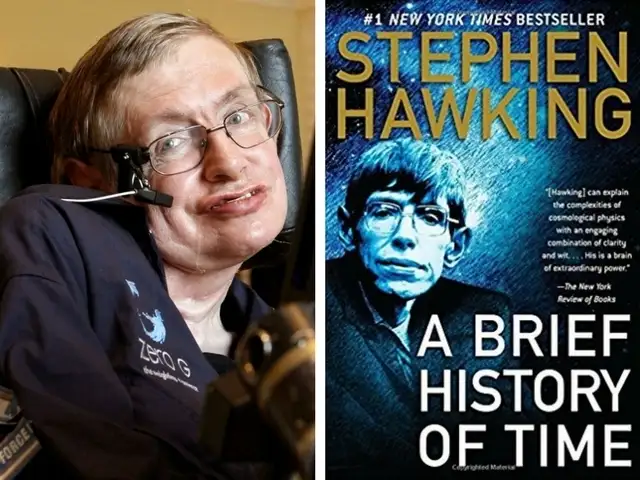
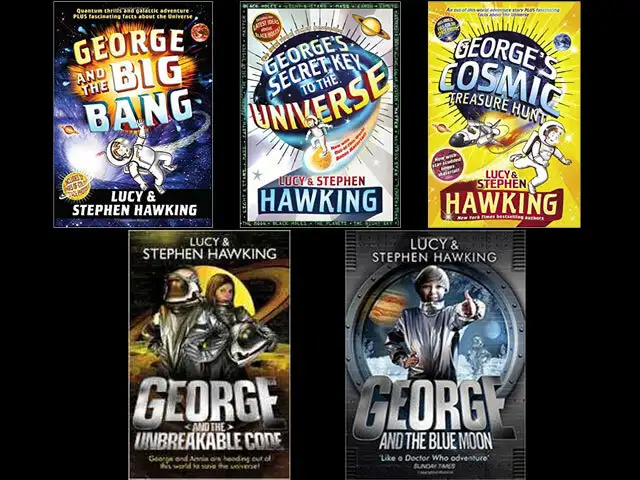
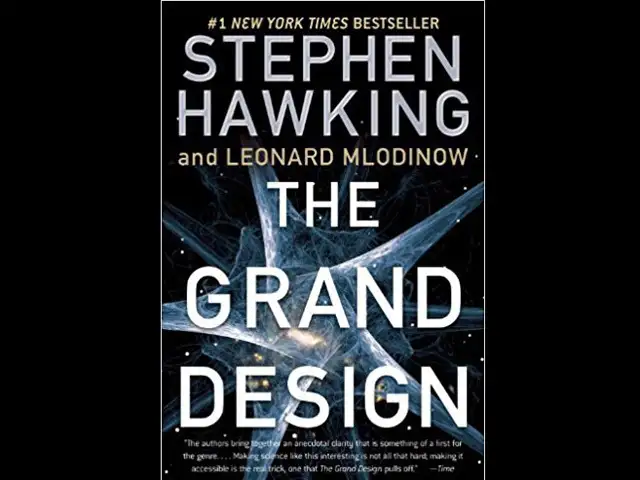
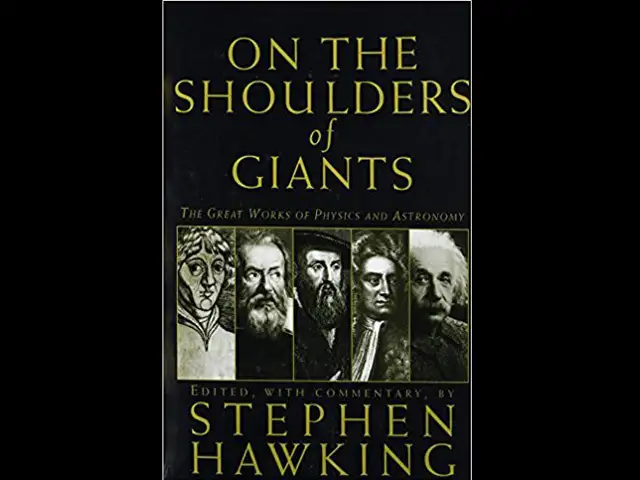
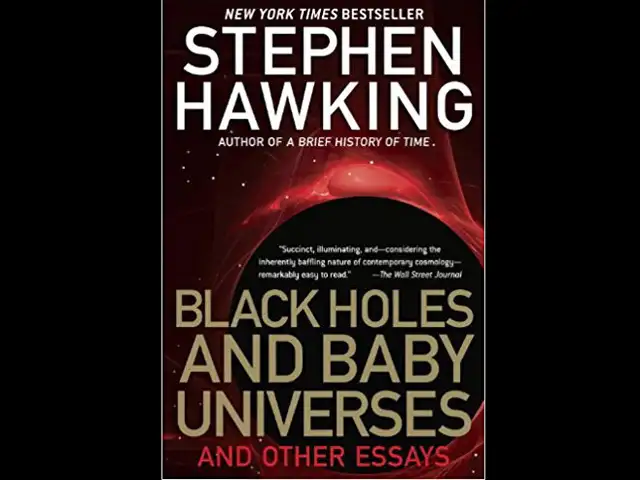
The physicist is best known for his best-selling 1988 classic 'A Brief History of Time: From the Big Bang to Black Holes,' which was intended to help people without a strong scientific background understand key questions of physics and human existence. In it, he discusses the origins of the universe and its future. Among his other books are:
(Image: Reuters & www.hawking.org.uk)