Balajee Sowrirajan shares his love for photography and nature as well as how he is trying to spend his time amidst the pandemic.
We all know people around us who have rediscovered their hobbies or even learnt to do something new during the lockdown. While being healthy remained everybody's priority, most of us found comfort in our homes with our families and things that brought joy like gardening, reading, cooking, virtually connecting with friends and more. Balajee Sowrirajan, Managing Director, SSIR's passion is to capture wildlife, it demands him to be outdoors. But that has not been possible in 2020 given the pandemic.
"I really missed indulging in it, however I did spend more time with my German Shepherd, Shadow and welcomed a Shih Tzu, Milo to our home. I really enjoyed capturing candid moments of their activities. One of my favourite wildlife shots was in Bandipur, in the summer of 2013. This picture was taken when one of the tigers started walking towards me. The tiger soon was at an arm's length from me, while I stood there frozen. The tiger then looked at me, walked to my side and lay down. This was when I realised that tigers are not as aggressive as we make them to be. At least thankfully this tiger wasn't. Currently, I am thinking of new destinations for my next adventure once the pandemic is over," he told ET Panache.
Hobby high
During the early part of Sowrirajan's life, he enjoyed spending time in wildlife sanctuaries.
"They were my favourite getaways, an escape from the humdrum of city life. What started as leisure, slowly turned into a passion for nature and wildlife. I loved exploring diverse terrains, as it gave me the chance to observe and capture (digitally) majestic creatures in their natural habitat. At the time, I had one of those small soap box cameras (glad that technology evolved). Over the years my passion for travel, nature and wildlife photography grew, I got a good DSLR, worked on honing my craft, and visited many national parks in India. Initially it was about being close to nature and taking a great shot, however over the years my focus has also evolved. Today, more than the technicality of the photography, it is about how do I convey the meaning in my photographs and share a message with people around me," he said.
During the early part of Balajee Sowrirajan's life, he enjoyed spending time in wildlife sanctuaries. Stress save
ADVERTISEMENT
On a regular workday, Sowrirajan is busy with reviews, talking to employees and managing stakeholder and business priorities. "Travelling and wildlife photography always gives me the much-needed break where I can pause, connect with nature and just enjoy and be in the moment. There is a different joy in getting fresh air, admiring the beauty of natural wonders and visualising my photographs. It has also helped me to be more patient and observant as you have to observe your surroundings, understand animal behaviour, and patiently wait to hopefully get that perfect shot which tells a story. Being close to nature has made me more aware of our impact on wildlife, have more empathy towards them and learn how in my small ways I can contribute to nature," he said.
Life learning There is a lot that we humans can learn from nature and wildlife. One of Sowrirajan's favourite learnings is from a tiny Siberian bird, Buschat. It is as small as a sparrow and migrates from Siberia to the South of India every winter, traveling nearly 4000 kilometers and even passing the Himalayas non-stop.
"I am inspired by the grit of this bird, how it survives despite having a lot of limitations. There is a lot of inspiration around us, we have to just observe," he ended.
Picture Perfect: Try Trick Photography With Your Smartphone
1/5
Your phone camera is a lot more capable than you think.
While it may not offer as much control as a DSLR yet, you can use you phone to capture photos with amazing trick effects.
ET tells you tips and apps to get unique captures using your phone camera.
Your phone camera is a lot more capable than you think.
While it may not offer as much control as a DSLR yet, you can use you phone to capture photos with amazing trick effects.
ET tells you tips a..
Read More
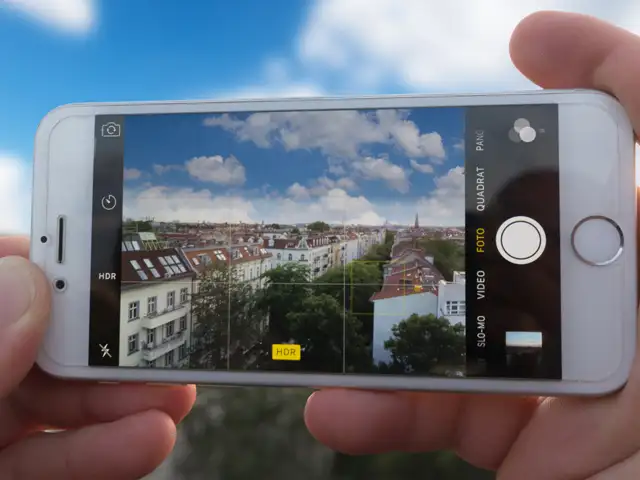
The idea behind HDR or High Dynamic Range is to enhance detail in an image (especially the shadows and darker areas) and make it appear more vibrant.
Typically, this is done by taking multiple photos with different exposure level and then combining them into one. On a majority of smartphones today, the HDR feature is built into the camera interface so you don’t need a separate app.
In case your smartphone does not have HDR feature, try an app called ‘A Better Camera’ by Almalence — it offers HDR for both stills and videos. iPhone users can enable or disable Auto HDR in the camera settings.
Head to Settings > Camera and you will see the option of Auto HDR along with the option to save the normal photo in addition.
The idea behind HDR or High Dynamic Range is to enhance detail in an image (especially the shadows and darker areas) and make it appear more vibrant.
Typically, this is done by taking multiple phot..
Read More
Tilt Shift lets you take miniature photos and is ideal for shooting cars or a cityscape from atop a building. It is important that you find the right place to shoot and make sure that the area you keep in focus has lots of bright colours to make it stand out.
Android users can try the Tilt-Shift Camera app by mrgnpza. This free app lets you adjust the focus area and lets you choose between linear or circular zones.
Various apps such as Instagram, Snapseed and Pixlr also offer the option to add the tilt-shift effect. If case you are an iOS users and want better control, you can get the Glass Tilt Shift app which costs US $2.99.
Tilt Shift lets you take miniature photos and is ideal for shooting cars or a cityscape from atop a building. It is important that you find the right place to shoot and make sure that the area you k..
Read More
You’ve probably seen photos with beautiful light trails or a photo of a waterfall/river in which the water appears to be in motion. This is done by a technique called long exposure which requires control over the shutter speed.
In auto mode, any camera (including a DSLR) will tend to keep the fastest shutter speed that freezes everything in place. You will need to slow the shutter down with a manual mode. The first thing to keep in mind is that your camera needs to be steady — placing on a flat surface or stand/tripod is best.
Android users can check if the smartphone has a Pro/Manual mode. If yes, then open it and increase the shutter speed (make it a second or more). Next, go to the ISO setting and select the lowest available value. That’s it, you just need to find a subject — you can use a highway, shoot stars or even do light painting by pointing a light towards camera and moving it around in the air.
You will need to experiement with different shutter speeds for different scenarios. In case your Android phone does not have a manual mode, you can use apps like Long Exposure Camera 2 or Camera FV-5 Lite.
iOS users can use the Live Photo feature to create long exposure photos. Just enable Live in the camera interface and take a photo. Head to the Gallery, tap the photo you have taken and swipe-up — you will see four options including long exposure. Select it and your photo will be converted to one with a long exposure.
This might not give you the best results each time as the shutter speed is not that long. Alternatively, you can try out third party apps such as LongExpo, Slow Shutter Insta and Ultra Slow Shutter Cam.
You’ve probably seen photos with beautiful light trails or a photo of a waterfall/river in which the water appears to be in motion. This is done by a technique called long exposure which requires co..
Read More
In a panorama sequence, you can take a wideangle panorama with your subject appearing multiple times in the frame for a cool looking shot. Since almost all smartphones today come with a panorama mode, you don’t need to install any extra app.
Start shooting a panorama from one corner with your subject standing in one pose. Once you have panned enough to have the subject out of the frame, stop moving and let your subject circle around behind you to a new position in the frame.
Repeat this process a few times in a single panorama photo and you will get a panorama sequence. Your subject will appear in different poses in a single panorama photo.
In a panorama sequence, you can take a wideangle panorama with your subject appearing multiple times in the frame for a cool looking shot. Since almost all smartphones today come with a panorama mod..