Spending too much time in the kitchen? Pollution-causing fumes may up heart attack risk
Exposure to indoor air pollution may even up stroke risk.
By PTI |
Agencies
High annual exposure to ambient fine particles was associated with a higher CIMT.
LONDON: Exposure to high levels of ambient and household air pollution in India is associated with an increased risk of cardiovascular diseases such as heart attack and stroke, according a study.
A team led by the Barcelona Institute for Global Health (ISGlobal) in Spain is the first to explore the association between ambient and household air pollution, and carotid intima-media thickness (CIMT) -- a marker of atherosclerosis or thickening of arteries -- in a population of a low-and-middle income country.
The study, performed in a periurban area in Hyderabad, Telangana, shows that people most exposed to fine particles have a higher CIMT index, which means they are at higher risk of developing cardiovascular diseases such as stroke or heart attack.
The study, published in International Journal of Epidemiology, was performed with 3,372 participants.
The team measured CIMT and estimated exposure to air pollution using an algorithm called land use regression (LUR), which is frequently used to predict the amount of fine particles -- suspended particles with a diameter under 2.5 micrometres -- in high-income countries.
The participants also provided information on the type of cooking fuel they used.
ADVERTISEMENT
The results show that high annual exposure to ambient fine particles was associated with a higher CIMT, particularly in men, participants above 40 years of age, or those with cardiometabolic risk factors, the researchers said.
Pollution On The Rise: These 6 Common Mistakes Are Hurting Your Health
1/7
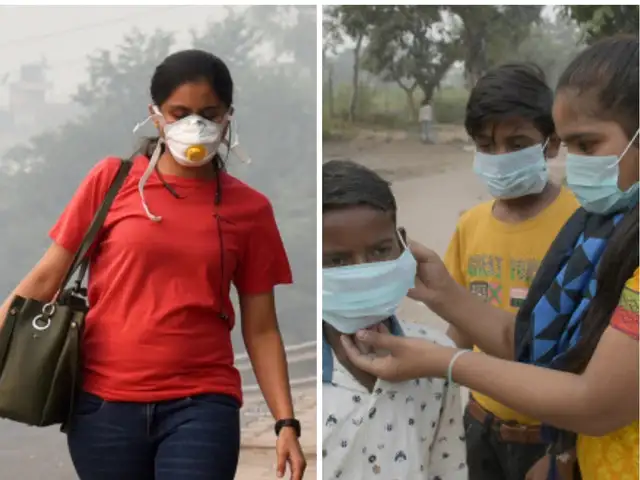
Delhi has, once again, been transformed into a gas chamber, with its residents suffering greatly.
According to the government's air quality monitor, SAFAR, the overall AQI (Air Quality Index) in the National Capital, on the day after Diwali stood at 506, touching 999 at 4 am.
The perpetual smog in the air is leading to numerous health issues, including:
- Dryness and irritation of the eyes, nose, throat, and skin
- Headache
- Fatigue
- Shortness of breath
- Hypersensitivity and allergies
- Sinus congestion
- Coughing and sneezing
- Dizziness
- Nausea
As the problem persists, we asked Dr Piyush Goyal, senior consultant, pulmonology and critical care at Gurugram's Columbia Asia Hospital, to help us decode some common mistakes that people make that may be worsening the effects of pollution.

Delhi has, once again, been transformed into a gas chamber, with its residents suffering greatly.
According to the government's air quality monitor, SAFAR, the overall AQI (Air Quality Index) in..
Read More
While exercising is an essential aspect of life, dire situations call for dire measures. Your daily morning walk may do more harm than benefit in these extreme weather conditions.
For the upcoming days, refrain from any outdoor activity to ensure for the sake of your health.
While exercising is an essential aspect of life, dire situations call for dire measures. Your daily morning walk may do more harm than benefit in these extreme weather conditions. For the upcoming da..
Read More
The air quality has deteriorated to such an extent that remaining outdoors for more than an hour can cause immediate irritation to your respiratory system.
While we can’t avoid leaving the house, it is prudent to wear mandated masks- N95/99, while stepping out.
The air quality has deteriorated to such an extent that remaining outdoors for more than an hour can cause immediate irritation to your respiratory system. While we can’t avoid leaving the house, it ..
Read More
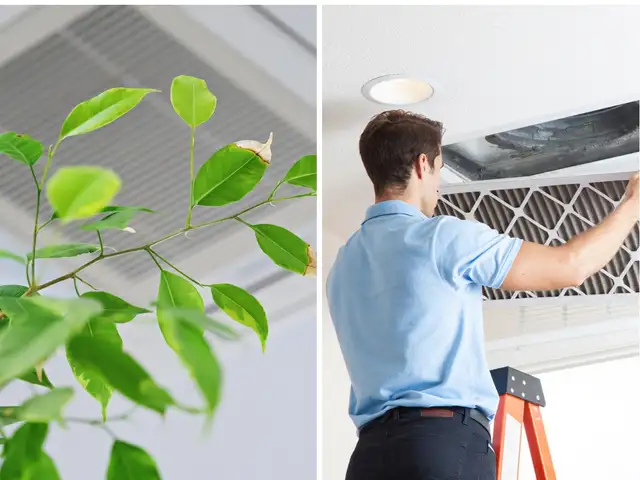
While outdoor air pollution is a grave issue, what’s worse is that indoor air too affects your respiratory system at a rapid scale. To combat this, it is important to ventilate your home, especially closed spaces such as the kitchen and washrooms.
Make sure you have an exhaust fan installed for the kitchen and bathrooms, as this helps in air recirculation, improving the air that you breathe.
While outdoor air pollution is a grave issue, what’s worse is that indoor air too affects your respiratory system at a rapid scale. To combat this, it is important to ventilate your home, especially ..
Read More
Thinking that you can avoid the pollution outdoors by maintaining bare minimum ventilation at home is bad not just for you, but also for your loved ones.
It is important to open let your house breathe. However, avoid doing so during peak pollution hours, and rather open the windows and doors between 3 pm-5 pm, as the pollutant level is generally low during this period.
Thinking that you can avoid the pollution outdoors by maintaining bare minimum ventilation at home is bad not just for you, but also for your loved ones. It is important to open let your house breath..
Read More
Certain practices, passed over from our grandmothers, can be beneficial during this period. Choosing modern remedies and discarding traditional ones isn't always the smartest choice.
Inhaling steam is an important aspect of respiratory purification as it helps in relaxing your air-passages while removing the harmful particulate substances. Try taking steam with a few drops of eucalyptus oil regularly in the evening and you’ll see the difference.
Certain practices, passed over from our grandmothers, can be beneficial during this period. Choosing modern remedies and discarding traditional ones isn't always the smartest choice.Inhaling steam is..
Read More
Maintaining one's private garden has various benefits, with air purification being one of the primary ones.
So, go all out when it comes to bringing the garden into your home. Several indoor plants are excellent air purifiers.
If you're looking for names, Aloe Vera, Ivy and Spider plants can be of great use to the respiratory system as they help purify indoor air.
Maintaining one's private garden has various benefits, with air purification being one of the primary ones. So, go all out when it comes to bringing the garden into your home. Several indoor plants a..
Sixty per cent of participants in the study used biomass cooking fuel.
"People using biomass fuel for cooking had a higher CIMT, particularly women who cooked in unventilated spaces," Otavio Ranzani, ISGlobal researcher and first author of the study, explained.
ADVERTISEMENT
"Women had a higher CIMT than men, which could be due to the fact that they spend more time in the kitchen, breathing air polluted by biomass fuel," he said.
Annual average exposure to PM2.5 was 32.7 microgrammes (mg) per cubic metre (m3), far above the maximum levels of 10 mg/m3 recommended by the Word Health Organzation (WHO).
ADVERTISEMENT
"This study is relevant for countries which, like India, are experiencing a rapid epidemiological transition and a sharp increase in the prevalence of hypertension, diabetes and obesity," said Cathryn Tonne, ISGlobal researcher and coordinator of the study said in a statement.
"In addition, the country is affected by high levels of air pollution, both ambient and indoors," Tonne said.
She said the findings highlight the need to perform more studies on air pollution in low- and middle-income countries.
The conclusions may differ considerably from studies in high income countries due to differences in population characteristics and air pollution levels and sources, Tonne noted.