Chitra Ramachandran and Vidya Murali (first and second from left)
BENGALURU: As gadgets and visits to malls take up the place of grandma’s stories for children, septuagenarian sisters Chitra Ramachandran and Vidya Murali are making sure the art of story-telling doesn’t die out.
The tech-friendly duo has co-authored several children’s books in Kannada over the years, full of illustrations and tales of heroism. The story-telling has now taken the form of a blog – Girgitlay (merrygo-round) — thanks to the insistence of their children and nephews — with stories inspired by the inscription stones of Bengaluru. Over the last few months, the sisters have spent hours thinking of plot points, settings and a perfect ending for a children’s story, based on inscriptions found on the 750CE Hebbal-Kittayya inscription stone discovered last year in Hebbal.
A civic activism project, Inscription Stones of Bangalore, started by engineer-turned-historian Udaya Kumar, has unearthed 30 inscription stones in and around Bengaluru over the last few years. The group aims to raise awareness and protect these ancient relics of history. The Hebbal-Kittayya inscription dates back to the Ganga dynasty in Karnataka and mentions the administration of Sripurusha, who ruled between 730 AD and 770 AD. Carved in early Kannada script, it pays tribute to Kittayya, who was martyred defending his land in a battle during Sripurusha’s reign.

VR, Social Media, 9/11: Bizarre Book Predictions Which Came True
1/6
By Viandra Dsouza
From virtual reality to social media, here’s a look at books that made some bizarre predictions which actually came true.
(Image: Getty)
By Viandra DsouzaFrom virtual reality to social media, here’s a look at books that made some bizarre predictions which actually came true.(Image: Getty)
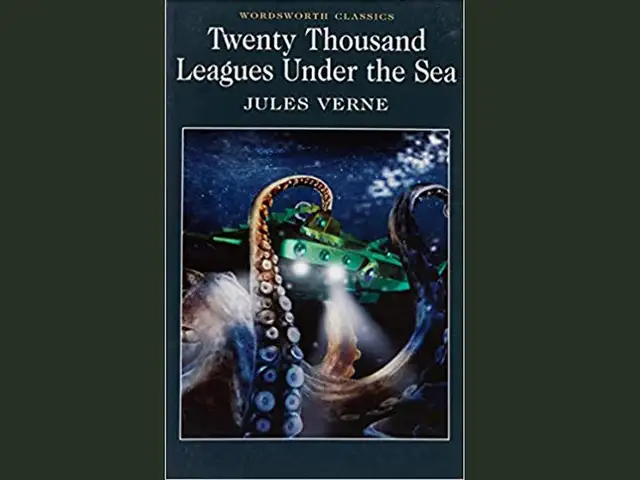
In the year 1870, Jules Verne wrote about the exploits of an electric powered submarine. It was described as “a long object, spindle-shaped, occasionally phosphorescent, and infinitely larger and more rapid in its movements than a whale”. In the book, Captain Nemo describes electricity as “a powerful agent, obedient, rapid, easy, which conforms to every use, and reigns supreme on board my vessel”. Around 90 years later, in 1964, the three-passenger submarine-Alvin was powered by lead-acid batteries bringing electric powered submarines into service.
(Image: www.amazon.com)
In the year 1870, Jules Verne wrote about the exploits of an electric powered submarine. It was described as “a long object, spindle-shaped, occasionally phosphorescent, and infinitely larger and mor..
Read More
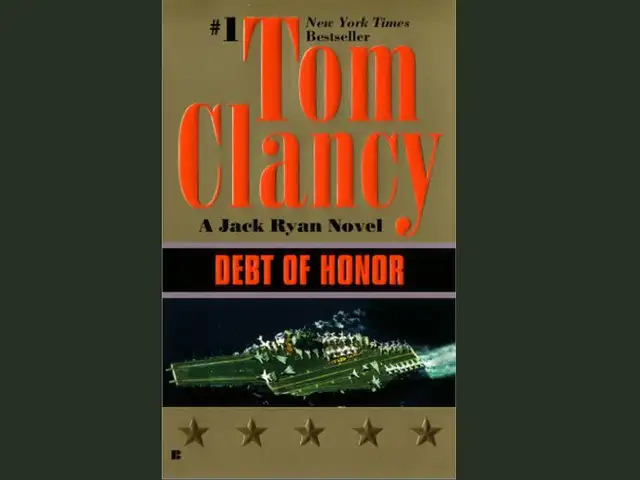
Written in 1994, author Tom Clancy imagined a scenario where an economic dispute between the United States and Japan boils over into a military conflict. Though recurring hero Jack Ryan is able to outmanoeuvre the ruling Japanese cabal, the conflict results in the death of a Japan Air pilot’s son and brother. The pilot, driven insane with grief, flies his Boeing 747 into the US capitol during a joint session of Congress. Unfortunately, nobody saw this coming on September 11, 2001 and the 9/11 report mournfully noted that “neither the intelligence community nor aviation security experts analysed systemic defenses within an aircraft or against terrorist-controlled aircraft, suicidal or otherwise”.
(Image: www.amazon.com)
Written in 1994, author Tom Clancy imagined a scenario where an economic dispute between the United States and Japan boils over into a military conflict. Though recurring hero Jack Ryan is able to ou..
Read More
The sci-fi writer, Arthur C Clarke, in this 1953 book, wrote about an alien invasion of Earth. One of the technologies mentioned in the book was a type of virtual reality that is so realistic that you can’t tell the difference between the movie and real life. “The program”, as Clarke called it, would appeal to all the senses and would allow people to be someone completely different from themselves. He also wrote that in the early 2000s, people might watch TV for three hours a day. In the era when televisions in homes were just becoming common, Clarke did correctly predict video games and virtual reality.
The sci-fi writer, Arthur C Clarke, in this 1953 book, wrote about an alien invasion of Earth. One of the technologies mentioned in the book was a type of virtual reality that is so realistic that yo..
Read More
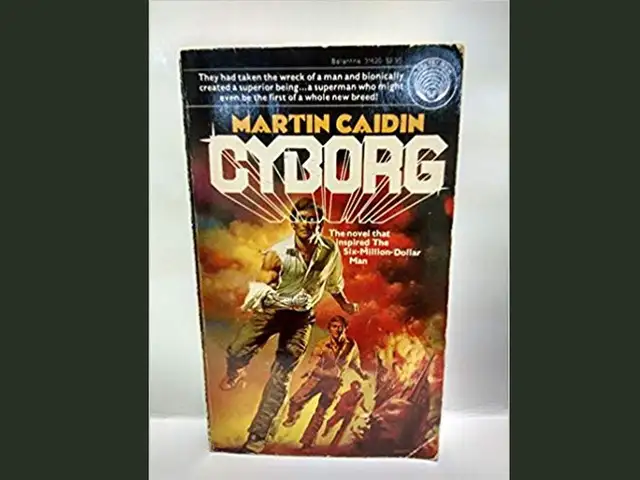
Martin Caidin, in his 1972 novel, puts his focus on a former-astronaut-turned-pilot Steve Austin, who crashed during a flight, leaving him with only one limb and blind in one eye. With the help of a team of scientists Austin has new legs, a removable eye with a camera, and a bionic arm, which makes him a “cyborg”, or a mixture of man and machine. This book managed to predict the use of bionic limbs that would enhance human capabilities. In 2013, this vision came to life when the first bionic leg implant was performed.
(Image: www.amazon.com)
Martin Caidin, in his 1972 novel, puts his focus on a former-astronaut-turned-pilot Steve Austin, who crashed during a flight, leaving him with only one limb and blind in one eye. With the help of a ..
Read More
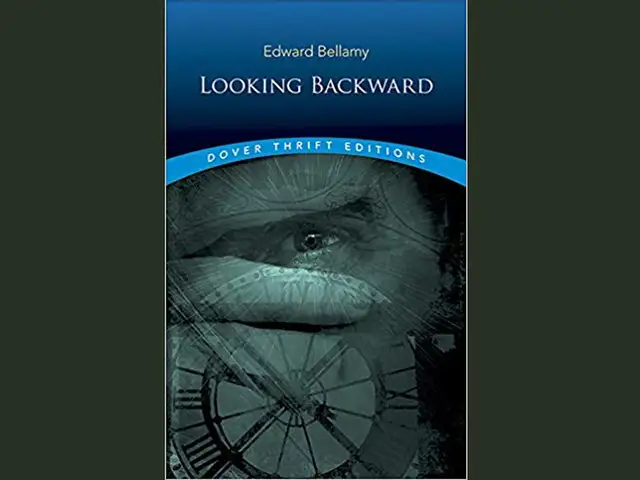
Published in 1887, Edward Bellamy described an American utopian society in Looking Backward. One element in the world that Bellamy created is a card with an allotted amount of credit, which citizens may use to make purchases. Bellamy made quite an impressive prediction about how credit cards work in the modern era, even down to the concept of one receipt for the customer and one receipt for the buyer. The book not only predicted credit cards and their usage, but it described the modern department store in great detail, envisioning it much like a warehouse that stocked all varieties of goods in great abundance. Individuals could visit these warehouses and select whatever items they liked.
(Image: www.amazon.com)
Published in 1887, Edward Bellamy described an American utopian society in Looking Backward. One element in the world that Bellamy created is a card with an allotted amount of credit, which citizens ..
While that was the extent of the description of Kittiyya on the stone, the story-teller in Ramachandran wanted to know and tell more. Armed with the few lines carved on the rock, the sisters built a fictional story around Kittayya and his heroics. “Story-writing is a great learning process. Those five lines on the stone got our imagination running and I started penning down a story in easy Kannada, while my sister drew beautiful illustrations to make it more interesting,” Ramachandran said.
This is the first of four stories the sisters have written on the blog so far, Udaya Kumar, who has been actively promoting the blog on the group’s social media page, said. Other stories include those inspired by the 1043 CE Pattandur lake inscription and the 1431 CE Kodigehalli inscription. The latest story is called ‘Master of the Mustachioed’, inspired by the 1342CE Jakkur and Ganigarahalli inscriptions.
ADVERTISEMENT
“For the Pattandur lake inscription story, we based it on a grandmother who insists there’s a stone near the lake. It goes on to teach children about conservation and adventure too,” Ramachandran said.
The blog now also has an English translation of the stories.
Judging A Book By Its Cover: Authors Who Stirred A Storm
1/6
The Bombay High Court has restrained industrialist Vijaypat Singhania from releasing his tell-all memoir. Here are other tomes that took a page out of controversy’s book.
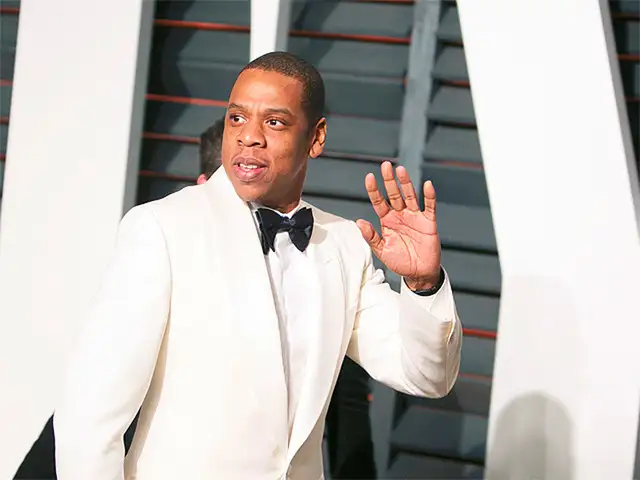

In June 2012, American rapper Jay-Z (in pic) was sued by writer Patrick White. The latter claimed that large parts of the musician’s 2010 autobiography, Decoded, was a product of plagiarism. White claimed that his laptop was stolen in 2009, a year before the book was published, and that the book contained “expressions/colours/ phrases” that co-related to his work. In fact, the book was a collection of Jay-Z’s songs and the story behind how each one was made.
(Image: AFP)
In June 2012, American rapper Jay-Z (in pic) was sued by writer Patrick White. The latter claimed that large parts of the musician’s 2010 autobiography, Decoded, was a product of plagiarism. White cl..
Read More
After Lance Armstrong (in pic) confessed to using performance-enhancing drugs, two of his fans sued him in January 2013 for lying in his two memoirs — It’s Not About the Bike (2000) and Every Second Counts (2003). Rob Stutzman and Jonathan Wheeler said they wouldn’t have bought the books if they knew they were works of fiction.
After Lance Armstrong (in pic) confessed to using performance-enhancing drugs, two of his fans sued him in January 2013 for lying in his two memoirs — It’s Not About the Bike (2000) and Every Second..
Read More
American author Augusten Burroughs (in pic) was sued by his foster family, the Turcottes, for defaming them in his 2002 memoir Running with Scissors. In his book, Burroughs describes his life after his chainsmoking mother asked her psychiatrist Dr Rodolph Turcotte to be his legal guardian so that he could attend school in Northampton, Massachusetts. The Turcottes filed a suit against him in 2005 claiming large parts of the book were untrue. These included the family condoning affairs between adults and children and keeping an electroshock machine hidden under the stairs. Burroughs settled the suit in 2007. The book was then classified as fiction instead of a memoir.
American author Augusten Burroughs (in pic) was sued by his foster family, the Turcottes, for defaming them in his 2002 memoir Running with Scissors. In his book, Burroughs describes his life after h..
Read More
Celebrated English concert pianist James Rhodes (in pic) had to fight his ex-wife in court to publish his 2015 autobiography, Instrumental: A Memoir of Madness, Medication and Music. She filed an injunction in court in October 2014 that sought to stop publication on the grounds that it would psychologically harm their 12-year-old son who had been detected with Asperger’s Syndrome. The book gave details of sexual abuse that the pianist had faced as a child. In May 2015, the court overturned the injunction, clearing the path for the publication of the book.
Celebrated English concert pianist James Rhodes (in pic) had to fight his ex-wife in court to publish his 2015 autobiography, Instrumental: A Memoir of Madness, Medication and Music. She filed an inj..
Read More
Mineko Iwasaki, the inspiration for Memoirs of a Geisha, filed a lawsuit against author Arthur Golden (in pic) in 2001. She claimed that despite being promised that her name would be kept confidential, Golden mentioned her in the novel’s acknowledgments. While Golden had told Iwasaki that he was only researching for his book when he interviewed her, the lives of many of the characters in the book closely mirrored hers. The lawsuit was settled out of court in 2003.
Mineko Iwasaki, the inspiration for Memoirs of a Geisha, filed a lawsuit against author Arthur Golden (in pic) in 2001. She claimed that despite being promised that her name would be kept confidenti..