Sipping Butterbeer in Hogwarts robes: Potterheads live the ultimate fantasy in New York
NY's long-awaited Harry Potter store opened on Thursday.
By AFP |
AFP
The flagship store was due to open last summer but was delayed because of the coronavirus pandemic.
NEW YORK: Wearing Hogwarts robes and witches' hats, hundreds of Potterheads sipped Butterbeer and posed for photos in Hagrid's giant shoes as New York's long-awaited Harry Potter store, the biggest in the world, opened Thursday.
Fans of the boy wizard queued for hours in heavy rain to be among the first inside the three-story shop in Lower Manhattan that hosts the largest collection of Potter products anywhere.
"It's really magical," said Margaret Suarez, whose boyfriend arrived at 6:00 am (1100 GMT) to hold a spot in line four hours ahead of opening.
Suarez, 30, quickly eyed a wand belonging to witch Bellatrix Lestrange to go with the patronus charm memorabilia and funko pop figures that were already in her shopping bag.
Inside the Harry Potter store. "In my heart, I'm a wizard," Suarez told AFP. "I really want to get a wand and personalize it so I can live my best fantasy," the New Yorker added.
ADVERTISEMENT
Ruben Juarez, 27, and his wife traveled from Dallas, Texas for the grand opening of the 21,000 square-foot (1,950 square meters) store that is near the Flatiron building.
"We're excited to be here. I love everything Harry Potter," said Juarez, wearing the scarlet and gold scarf of the house of Gryffindor.
Large crowds gathered outside the store throughout the morning, with even a few police officers called to ensure order was maintained, as Potterheads waited for their timed ticket entry.
Inside, fans of J. K Rowling's magical world snapped selfies in front of a red telephone box like the one that transports witches and wizards to the Ministry of Magic, and bought fizzing whizbees candy.
ADVERTISEMENT
Inside the Harry Potter store. They tried on knitted quidditch jumpers, flicked through copies of the best-selling book series in history and sampled the wizards' favorite drink at the Butterbeer bar.
"Butterbeer is like cream soda but with a kick to it. It's unlike anything, honestly," explained 21-year-old Emilee Rodriguez.
ADVERTISEMENT
The flagship store was due to open last summer but was delayed because of the coronavirus pandemic.
For 19-year-old Alexandra Ewing, the wait for her first visit to a Potter store was worth it.
"I'm having the time of my life. I'm fighting back tears this whole time, I'm loving it," she told AFP.
Lifting The Lid On A Priceless Collection: 400 Pieces Of Ancient Indian Treasures To Be Auctioned In NY
1/6
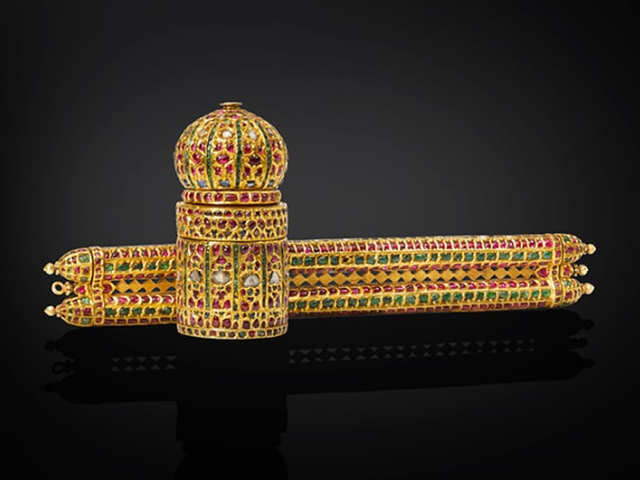
A dagger of an emperor, an ornate pen case and a 17th century necklace of the Nizam. These are among the 400 pieces of ancient Indian treasures and Mughal jewels set to go under the hammer in New York on June 19.
It is a known fact that during the reign of the Mughal dynasty, jewelled pen case and inkwell sets were presented to persons of utmost distinction. This emerald, ruby and diamond-set pen case and inkwell has the engraving of a sacred swan or hamsa under the inkwell. It is dated back to the late 16th century and is said to have originated in the Deccan region.
A dagger of an emperor, an ornate pen case and a 17th century necklace of the Nizam. These are among the 400 pieces of ancient Indian treasures and Mughal jewels set to go under the hammer in New Yor..
Read More
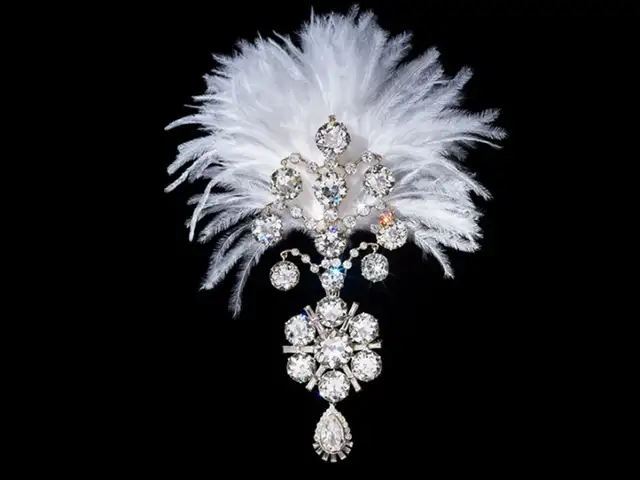
The Belle Époque diamond jigha was made in 1907 and remodelled around 1935. The ornament is set with old baguette and pear-shaped diamonds. It is made of white gold. On the reverse is a plume holder. The lower part of the ornament is detachable and can be worn as a brooch, according to the Christie’s website. The total weight of the diamonds in this turban ornament is approximately 152.60 carats.
The Belle Époque diamond jigha was made in 1907 and remodelled around 1935. The ornament is set with old baguette and pear-shaped diamonds. It is made of white gold. On the reverse is a plume holder...
Read More
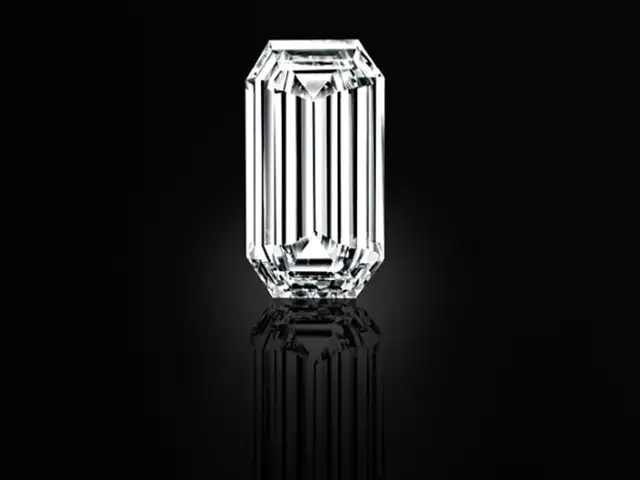
The Mirror of Paradise is a D-colour internally flawless diamond of 52.58 carats. The diamond was found in the Golconda region in South India.
Until the 1730s, India was known to be the world’s supplier of diamonds. Many of the world’s famous diamonds — the Koh-i-Noor, the Regent and the Hope diamonds — were found in the riverbeds of the Deccan region.
The Mirror of Paradise is a D-colour internally flawless diamond of 52.58 carats. The diamond was found in the Golconda region in South India.Until the 1730s, India was known to be the world’s suppli..
Read More
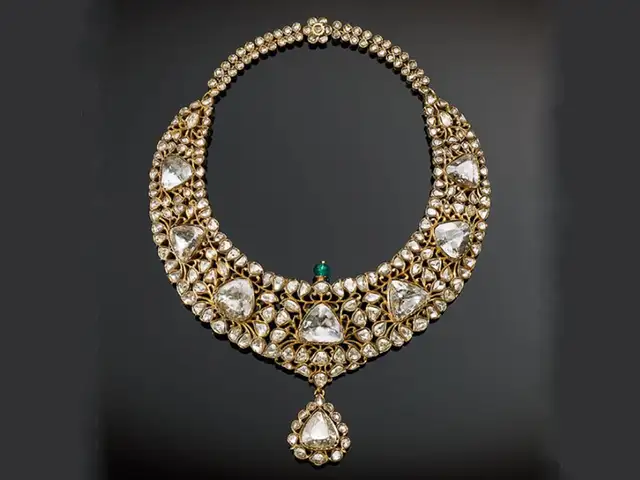
The Nizam of Hyderabad necklace is a magnificent piece from the late 19th century. It is made of gold with seven large foiled triangular diamonds, each framed in an openwork panel of kundan-set diamond leaves, says Christie’s. At front centre is a triangular diamond pendant surrounded by 12 diamond leaves, mounted on an inner edge with a melon-cut emerald bead.
The Nizam of Hyderabad necklace is a magnificent piece from the late 19th century. It is made of gold with seven large foiled triangular diamonds, each framed in an openwork panel of kundan-set diamo..
Read More
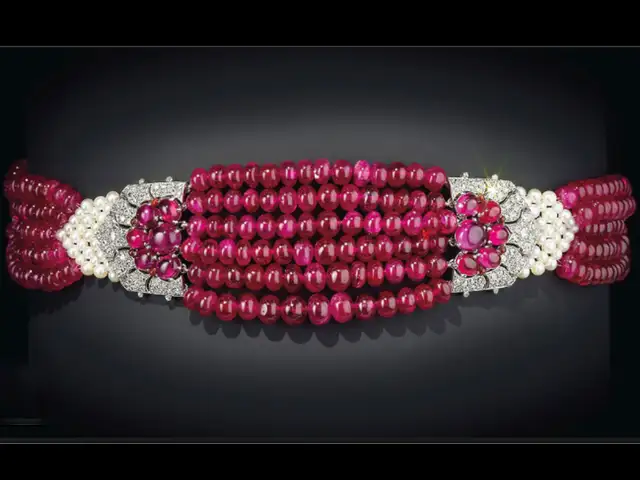
This piece of jewellery is a magnificent example of the fusion between the East and the West. The necklace was commissioned by Maharaja Bhupinder Singh of Patiala. It was created by Cartier in 1931. This ruby, pearl and diamond necklace is just one example of Maharaja Bhupinder Singh’s long relationship with the house of Cartier. It has 292 ruby beads weighing 356.56 carats, interspersed with panels of 132 threaded pearls, caught at each side with clasps of 120 diamonds and rubies set in platinum, each clasp formed of a cluster of six cabochon claw-set rubies. The necklace was restored and restrung by Cartier Tradition in 2012.
This piece of jewellery is a magnificent example of the fusion between the East and the West. The necklace was commissioned by Maharaja Bhupinder Singh of Patiala. It was created by Cartier in 1931. ..
Read More
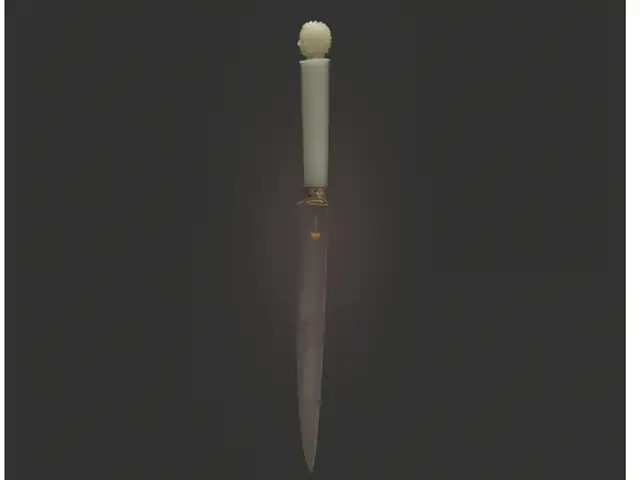
The ornate jade-hilted dagger was commissioned by Jahangir, the fourth Mughal Emperor of India, in the early 17th century. The carved youth’s head on the hilt is speculated to be based on an ivory representation of Jesus.
Upon Jahangir’s death in 1627, the blade passed on to his son and successor, Shah Jahan, who reworked the blade and added two Mughal inscriptions to it — a royal umbrella and a fish. In the 1850s the dagger was also owned by Samuel FB Morse, the creator of the eponymous code and inventor of the telegraph, who was also an art collector.
(All images: christies.com)
The ornate jade-hilted dagger was commissioned by Jahangir, the fourth Mughal Emperor of India, in the early 17th century. The carved youth’s head on the hilt is speculated to be based on an ivory re..