Should Prince Andrew be fired? Why the British monarchy needs to get serious about brand management
The royalty's resignation from public duties following a disastrous interview doesn’t quite go all the way.
By Bloomberg |
By Leonid Bershidsky
Can royalty be fired? Prince Andrew of the U.K.’s resignation from public duties following a disastrous TV interview concerning his friendship with sex offender Jeffrey Epstein doesn’t quite go all the way — but the king of Sweden, for example, recently cut five blameless grandchildren from the royal house. That’s a good practice in an age when monarchies are essentially keepers of a brand rather than rulers.
In a 2006 paper, John Balmer of the Bradford School of Management in the U.K., Stephen A. Greyser of Harvard University and Mats Urde of Lund University in Sweden argued that Europe’s constitutional monarchies function as corporate brands. This makes sense: Even when monarchs have a lot of constitutional power, as in Norway, where the king theoretically could veto any law and pick prime ministers more or less at will, it just doesn’t happen anymore. Perhaps the only monarch who does play an active political role is the king of Belgium, who constantly has to prod parties in the country’s two nearly-independent halves to form governments together. At the same time, the monarchies have a value to the nations they serve, which can be expressed in financial terms.
In 2017, the British company Brand Finance Plc attempted to compute that value for the British monarchy and put it at 67.5 billion pounds sterling ($87.4 billion). The royal family’s tangible assets accounted for 25.5 billion of that. The rest represented the net present value of revenue the Crown brings, or supposedly brings, to the U.K.: additional sales achieved with the help of Royal Warrants (which label companies as suppliers to the court) and various other royal endorsements, extra tourism revenue, even the plot lines the monarchy provides to the film and book industries and the news it generates, helping sell newspapers and raise TV ratings. Brand Finance calculated that all these contributions are worth 1.8 billion pounds a year. Compared to that, the monarchy’s cost — 82.2 million pounds in the latest financial year — doesn’t look excessive. If the monarchy were a business with as many employees as the royal family has members, currently two dozen people, it would be an extremely low compensation cost.
The U.K. monarchy, however, is among the most expensive in Europe from the taxpayers’ point of view. One can’t be quite sure about that, because the official costs of royal families are hardly ever complete. A few years ago, a leading Norwegian daily calculated that the monarchy cost Norway $55 million a year — almost twice as much as officially reported, because of hidden security and other costs. In the Netherlands, the monarchy’s official annual budget is about 60 million euros ($66 million), but some estimates of its total cost have run as high as 350 million euros a year.
ADVERTISEMENT
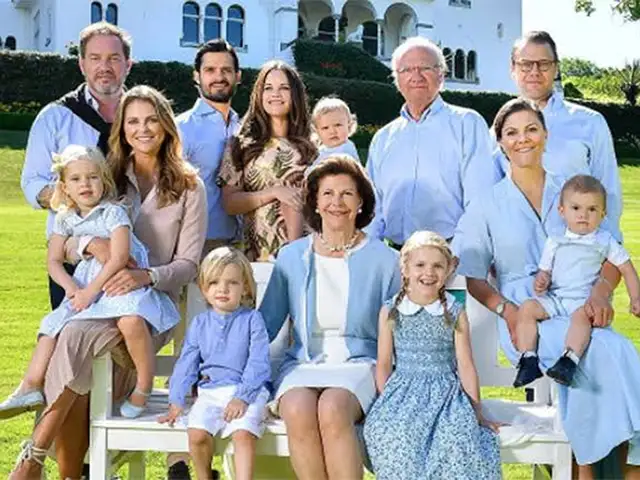
If one compares just the official numbers, though, the U.K. royal family’s most recent annual budget allocation is 15 times as high as that of the Swedish one, which gets by on about $7 million a year. Some Swedes feel even this is too much, and in response to that sentiment, King Carl XVI Gustaf last month removed the two children of Prince Carl Philip and the three children of Princess Madeleine from the list of royal house members who are entitled to compensation from taxpayer funds for performing official duties. That left the House of Bernadotte with just 10 members who receive a subsidy for public service, though the royal family counts nine more, including the five children.
In their paper, Balmer, Greyser and Urde wrote of the five “R’s” that are essential to a crown brand: royal, regal, relevant, responsive, respected. Of these five, only the first one applies to Prince Andrew: he’s royalty by birth. The other four “R’s” refer to behaviours that support the value of the brand. People aren’t born with those, and they can’t be expected to behave a certain way simply because they were born into a certain family. Pursuing these behaviours is a heavy burden. In Sweden, the parents in the two princely families clearly didn't want it for their kids.
Princess Madeleine, married to British-American financier Christopher O’Neill, wrote on Instagram that outside the royal house, her children would have “a greater opportunity to shape their own lives in the future as individuals.” Prince Carl Philip and his wife Sofia, an ex-model, wrote that their kids would enjoy “freer choices in life.”
ADVERTISEMENT
That’s probably something that should have happened to Prince Andrew, too. In the fateful interview, he said he lived “in an institution,” as though Buckingham palace was some kind of orphanage or sanitarium. It’s hard to feel sorry for him, but not everyone is suited for the role of a royal brand guardian.
ADVERTISEMENT
As my Bloomberg Opinion colleague Alex Webb wrote recently, Prince Andrew’s fall may help Prince Charles, the heir to the British throne, advance his long-standing plan to make the royal family leaner. The Swedish example shows this is quite possible. It doesn’t really detract from the reigning house’s cachet to have fewer members who serve as national symbols than there are people with royal blood in their veins. Nor does a smaller number of royals with public responsibilities affect the value of the crown brand in the way hapless royals’ misadventures can. The fewer of them, the smaller the risk to those essential “R’s.”
The U.K. doesn’t have to wait for its royal family to decide to become more like the Swedish one. The British democracy can push the monarchy in that direction by drastically cutting its budget, perhaps to the Swedish scale, and forcing it to select the worthiest members for public service.
On the other hand, if Brand Finance is right and the ability to generate plot twists and tabloid stories contributes to the royal brand value, perhaps endless scandal is a valuable part of what the British taxpayers are funding.
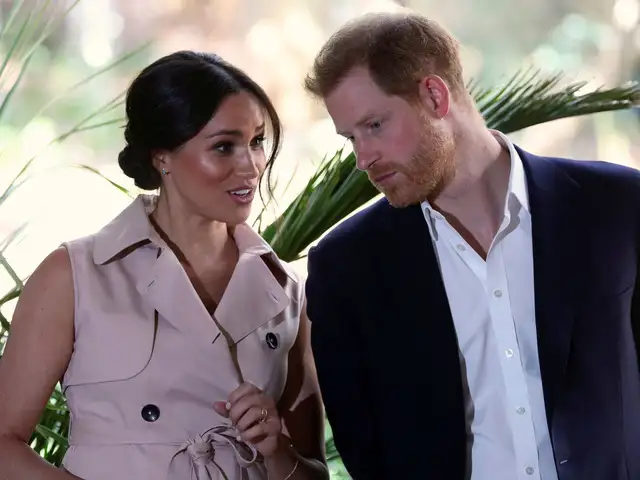
See You In Court: Prince Harry, Meghan Markle & Other Royals Who Battled It Out With Media
1/6
The Duke and Duchess of Sussex are reportedly taking legal action against two tabloids for phone hacking and the unauthorised publication of a private letter. A look at other royals who battled it out with the media.
The Duke and Duchess of Sussex are reportedly taking legal action against two tabloids for phone hacking and the unauthorised publication of a private letter. A look at other royals who battled it ..
Read More
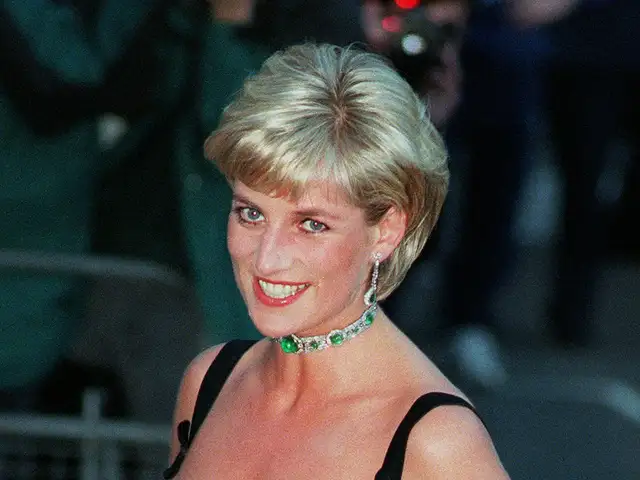
In 1993, Princess Diana sued the Mirror Group Newspapers (MGN) because the Sunday Mirror published secretly-taken pictures of the royal exercising in a gym. She also sought a permanent ban on the publication of the pictures, which showed the princess clad in a leotard and cycling shorts. The paper apologised, and an out-ofcourt settlement was reached. In addition to the apology, the paper reportedly paid Diana’s legal costs of 1 million pounds plus a fur ther 200,000 pounds to charity.
In 1993, Princess Diana sued the Mirror Group Newspapers (MGN) because the Sunday Mirror published secretly-taken pictures of the royal exercising in a gym. She also sought a permanent ban on the p..
Read More
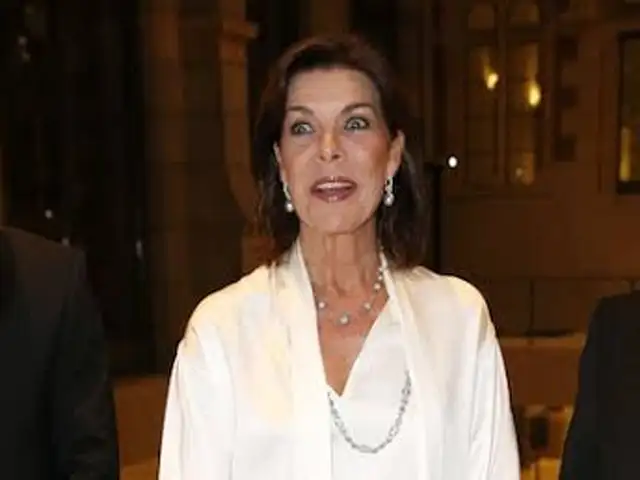
Princess Caroline is the daughter of the legendary Hollywood star Grace Kelly and Rainier III, Prince of Monaco. She had a troubled relationship with the media growing up. In 2004, Caroline, represented by Matthias Prinz, won a landmark victory in the European Court of Human Rights, which confirmed that the publishing of paparazzi photographs taken of the princess in a public place was a violation of her right to privacy. The court drew a distinction between the activities of Caroline the princess and Caroline the woman.
Princess Caroline is the daughter of the legendary Hollywood star Grace Kelly and Rainier III, Prince of Monaco. She had a troubled relationship with the media growing up. In 2004, Caroline, repres..
Read More
Following Princess Caroline’s triumph in court, the Swedish family hired Matthias Prinz to represent them in court. It has been reported that in 2004, Prinz, on behalf of the Swedish royal family and chiefly King Carl XVI Gustaf and his German-born wife Queen Silvia, sued Germany’s biggest publishers over claims of 1,588 made-up stories, including more than 500 front-page ‘exclusives’. It has been reported that Prinz filed cases of defamation and invasion of privacy, which resulted in over 23 media outlets to print replies, apologies and retractions.
Following Princess Caroline’s triumph in court, the Swedish family hired Matthias Prinz to represent them in court. It has been reported that in 2004, Prinz, on behalf of the Swedish royal family a..
Read More
Prince Al-waleed is a Saudi billionaire, investor and a member of the royal family. In 2013, Forbes estimated his fortune at around $20 billion, which, the royal claimed, was less than the amount he disclosed to the magazine. The prince filed a defamation claim in London against the editor and two journalists. The Kingdom Holding Company, founded by Prince Al-Waleed, issued a statement saying that the magazine published a “deliberately insulting and in accurate description of the business community in Saudi Arabia”. In 2015, Forbes and Al-Waleed released statements that they had settled the dispute.
Prince Al-waleed is a Saudi billionaire, investor and a member of the royal family. In 2013, Forbes estimated his fortune at around $20 billion, which, the royal claimed, was less than the amount h..
Read More
In 2012, Kate Middleton and Prince William were vacationing in the south of France when paparazzi clicked some photos of the Duchess sunbathing topless. Two French magazines published the photos. In 2017, the Duke and Duchess sued six people in connection with the scandal. The French court found the photos to be an intrusion of privacy and fined the media outlets.
In 2012, Kate Middleton and Prince William were vacationing in the south of France when paparazzi clicked some photos of the Duchess sunbathing topless. Two French magazines published the photos. I..