Self-driving cars to learn from previous experiences, navigate through icy tracks & asphalt roads
With autonomous cars generating additional data, these cars will be able to handle a wider range of conditions.
By PTI |
Agencies
Control systems for autonomous cars need access to information about the available road-tire friction.
BOSTON: Stanford scientists have developed a way for self-driving cars that to learn from previous experiences, helping the autonomous vehicles perform more safely in extreme and unknown circumstances.
The researchers tested the technology on a racetrack using two self-driving cars Niki and Shelley.
The system performed about as well as an existing autonomous control system and an experienced racecar driver, they said.
"Our work is motivated by safety, and we want autonomous vehicles to work in many scenarios, from normal driving on high-friction asphalt to fast, low-friction driving in ice and snow," said Nathan Spielberg, a graduate student at Stanford University in the US.
"We want our algorithms to be as good as the best skilled drivers -- and, hopefully, better," said Spielberg.
ADVERTISEMENT
While current autonomous cars might rely on in-the-moment evaluations of their environment, the control system these researchers designed incorporates data from recent maneuvers and past driving experiences -- including trips Niki took around an icy test track near the Arctic Circle.
Its ability to learn from the past could prove particularly powerful, given the abundance of autonomous car data researchers are producing in the process of developing these vehicles.
Control systems for autonomous cars need access to information about the available road-tire friction. This information dictates the limits of how hard the car can brake, accelerate and steer in order to stay on the road in critical emergency scenarios.
If engineers want to safely push an autonomous car to its limits, such as having it plan an emergency manoeuvre on ice, they have to provide it with details, like the road-tire friction, in advance. This is difficult in the real world where friction is variable and often is difficult to predict.
ADVERTISEMENT
To develop a more flexible, responsive control system, the researchers built a neural network -- a type of artificially intelligent computing system -- that integrates data from past driving experiences, and a winter test facility with foundational knowledge provided by 200,000 physics-based trajectories.
"With the techniques available today, you often have to choose between data-driven methods and approaches grounded in fundamental physics," said J Christian Gerdes, a professor at Stanford.
ADVERTISEMENT
"We think the path forward is to blend these approaches in order to harness their individual strengths. Physics can provide insight into structuring and validating neural network models that, in turn, can leverage massive amounts of data," said Gerdes.
The group ran comparison tests for their new system. Shelley sped around controlled by the physics-based autonomous system, pre-loaded with set information about the course and conditions.
When compared on the same course during 10 consecutive trials, Shelley and a skilled amateur driver generated comparable lap times.
Researchers loaded Niki with their new neural network system. The car performed similarly running both the learned and physics-based systems, even though the neural network lacked explicit information about road friction.
In simulated tests, the neural network system outperformed the physics-based system in both high-friction and low-friction scenarios. It did particularly well in scenarios that mixed those two conditions.
The results were encouraging, but the researchers stress that their neural network system does not perform well in conditions outside the ones it has experienced.
They say as autonomous cars generate additional data to train their network, the cars should be able to handle a wider range of conditions.
Genesis Essentia, Volvo 360c: 5 Concept Cars That May Drive The Future Of Mobility
1/6
Concept cars are the defining the future of the auto sector. Here's a round-up of 5 understated concept vehicles that may shake up the future of mobility.
(Image: Getty)
Concept cars are the defining the future of the auto sector. Here's a round-up of 5 understated concept vehicles that may shake up the future of mobility.(Image: Getty)
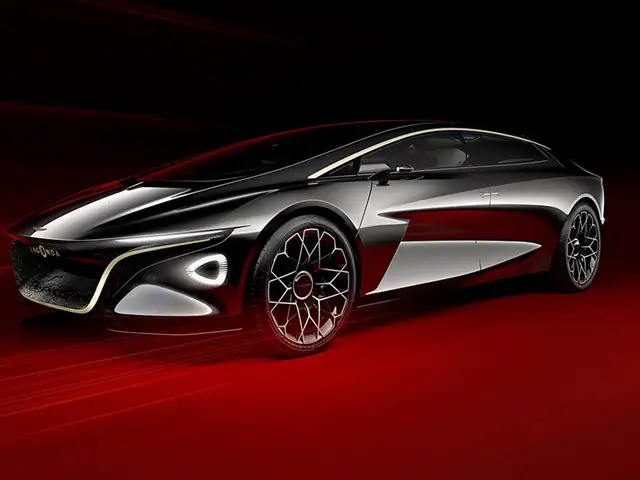
Lagonda aims to be the world’s first zero-emission luxury auto brand. By ditching traditional architecture and using electrical power, Lagonda design aims to be distinctive and luxurious without being grandiose. Production for the emission-free vehicle is planned in 2021. Two new Lagonda models by 2023 are planned for.
(Image: www.astonmartin.com)
Lagonda aims to be the world’s first zero-emission luxury auto brand. By ditching traditional architecture and using electrical power, Lagonda design aims to be distinctive and luxurious without bein..
Read More
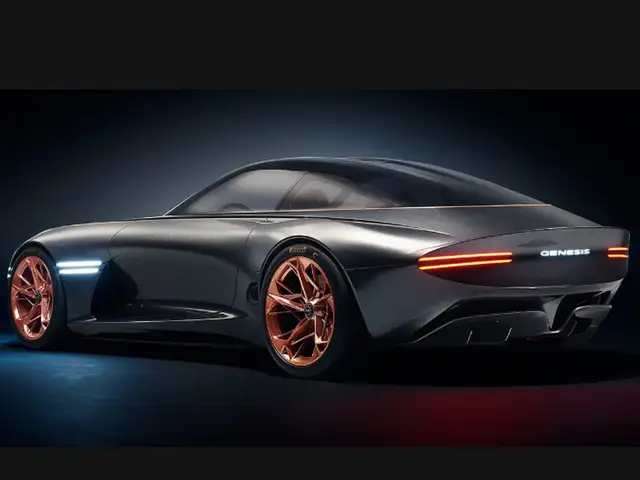
The all-electric, high-performance Genesis Essentia concept made its world debut at the 2018 New York International Auto Show. Essentia is the brand’s first battery electric vehicle and features a lightweight carbon-fibre monocoque, a multi-motor electric powertrain and a custom-tailored interior. It can accelerate from zero to 96 kmph in three seconds.
(Image: www.genesis.com)
The all-electric, high-performance Genesis Essentia concept made its world debut at the 2018 New York International Auto Show. Essentia is the brand’s first battery electric vehicle and features a li..
Read More
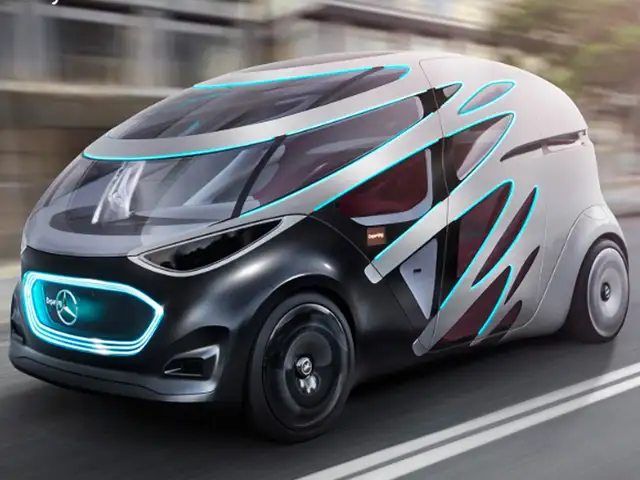
It is a new mobility concept for on-demand, comfortable and sustainable mobility by Mercedes-Benz. It has an autonomous driving platform that can be fitted as required with a cargo module for goods transportation or passenger module. It is powered by a battery-electric drivetrain for zero local emissions and noiseless mobility. Its intelligent control system can not only analyse current needs, but also learn from them.
(Image: www.mercedes-benz.com)
It is a new mobility concept for on-demand, comfortable and sustainable mobility by Mercedes-Benz. It has an autonomous driving platform that can be fitted as required with a cargo module for goods t..
Read More
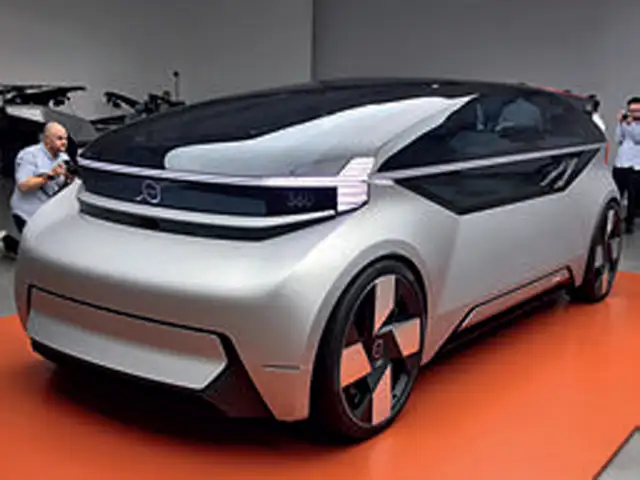
The 360 c autonomous concept is an attempt to reimagine our work-life balance and the future of cities — it is autonomous, electric, connected and safe. The concept presents four potential uses of autonomous driving vehicles — a sleeping environment, mobile office, living room and entertainment space. This represents a travel option that could rival air, bus and train services, with competitive advantages in convenience and privacy.
The 360 c autonomous concept is an attempt to reimagine our work-life balance and the future of cities — it is autonomous, electric, connected and safe. The concept presents four potential uses of au..
Read More
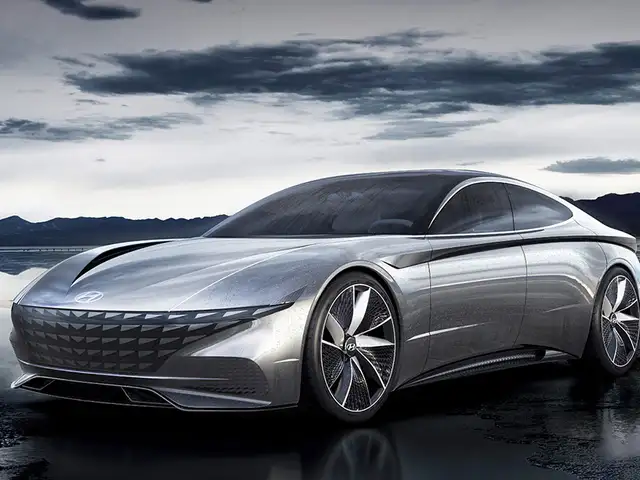
With Le Fil Rouge concept, Hyundai took a new approach called ‘light architecture’, to integrate an identity into the brand’s design heritage. Light Architecture generates a dynamic look and forward motion effect for the vehicle. The vehicle integrates the automaker’s latest approach in design, proportion, styling and technology.
With Le Fil Rouge concept, Hyundai took a new approach called ‘light architecture’, to integrate an identity into the brand’s design heritage. Light Architecture generates a dynamic look and forward ..