Roger Federer may be able to predict Rafael Nadal's moves, thanks to new algorithm
The algorithm is called Semi Supervised Generative Adversarial Network architecture.
By PTI |
Agencies
On the left is Roger Federer and on the right is Rafael Nadal in action.
MELBOURNE: Scientists say they have created an algorithm that can predict where a tennis player will hit the next ball by analysing data of thousands of shots played by Novak Djokovic, Rafael Nadal and Roger Federer in Australian Open.
The finding by researchers at the Queensland University of Technology (QUT) in Australia could lead to new ways for professional tennis players to predict their opponent's moves.
The algorithm called Semi Supervised Generative Adversarial Network architecture can also be used in virtual reality games, offering people the chance to go head-to-head with world's best players in an accurate but artificial grand slam.
The researchers created the algorithm using Hawk-Eye data from the 2012 Australian Tennis Open, provided by Tennis Australia.
Novak Djokovic at the Australian Open 2019.
They narrowed their focus to study just the shot selection of Djokovic, Nadal and Federer because they had the complete data to input into the system on how the players' shot selection changed as the tournament progressed.
ADVERTISEMENT
The researchers analysed over 3,400 shots for Djokovic, nearly 3,500 shots for Nadal and almost 1,900 shots by Federer, adding context for each shot such as whether it was a return, a winner or an error.
"After about 1,000 shots, the model has a pretty good idea of what is going on," said Simon Denman, a Senior Research Fellow at QUT.
"It needs about three matches to figure out a player's style. Once it has got those three matches it is pretty solid," Denman said.
The algorithm was mimicking the brains of the top players who were already trying to predict their opponent's next shot.
ADVERTISEMENT
While the artificial intelligent system proved successful, its biggest challenge was the unpredictability of the "Greatest Of All Time" player.
"We had an analysis of how accurate it is for those three top players -- Djokovic, Nadal and Federer," Denman said.
ADVERTISEMENT
"And it was least accurate for Federer, who is perhaps the most versatile. It struggled the most to predict him. He can do anything, so the model was more often wrong about him," he said.
The machine learning system takes into account when in the match a point is being played because the shot selection a player might make 40-love up serving for the first set is very different to the shot they may hit struggling to stay in the match deep into the fifth set.
The system can predict about 1,000 shots in 30 seconds.
"We train the model in order so that it sees the shot from first round, to the second round and third round -- so it builds on experiences like a human does," Denman said.
"We are trying to mimic what we think what the tennis player's brain might be doing," he said.
To teach the system to think like a player, the researchers create two forms of memory and a way for them to interact in making a decision.
"There is episodic memory and there is semantic memory," Denman said.
Episodic memory is effectively individual recollections. It is being able to go back and recall each individual stroke and what happened.
Semantic memory is much more abstract. It is the overall learnings that came about from many instances of the episodic memory.
"These two memories work together given an input stimulus. They each pull out something relevant from their own memories and use that to help reinforce the prediction of what's going to happen," Denman said.
In less than ten years top-level players will be able to use this sort of technique in studying the game of an upcoming opponent, he said.
Alexander ‘Sascha’ Zverev, Who Beat Federer & Djokovic, Has Tennis In His DNA
1/2
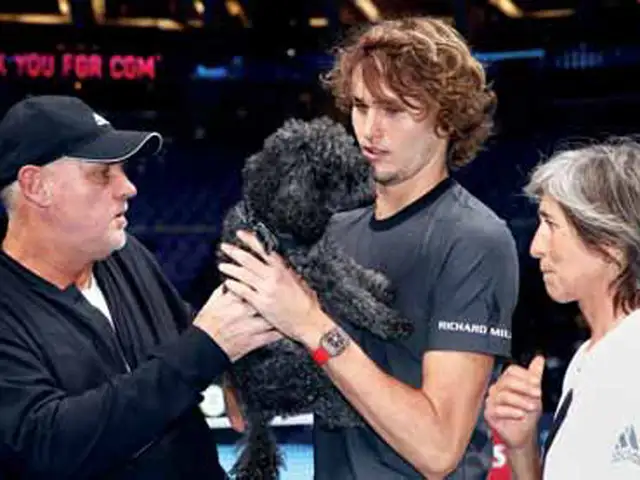
The Zverevs are perhaps the most consummate of tennis families. Alexander Sr was a tennis player who once defeated Vijay Amritraj. His wife Irina was a player too. Now both their sons, Alexander and his elder brother Mischa, are pros. Alexander Sr and Irina are Russians who played on the circuit in the 1980s. They married young — Irina was 17 — and ultimately moved to Hamburg. “Both kids sometimes used to say, ‘Last ball’, and I would have to play one hour more,” Irina said about the sweet ordeal of training her ever competitive cubs.
(In Pic from left: Alexander Sr, Alexander ‘Sascha’ Zverev, Irina Zverev)
The Zverevs are perhaps the most consummate of tennis families. Alexander Sr was a tennis player who once defeated Vijay Amritraj. His wife Irina was a player too. Now both their sons, Alexander and ..
Read More
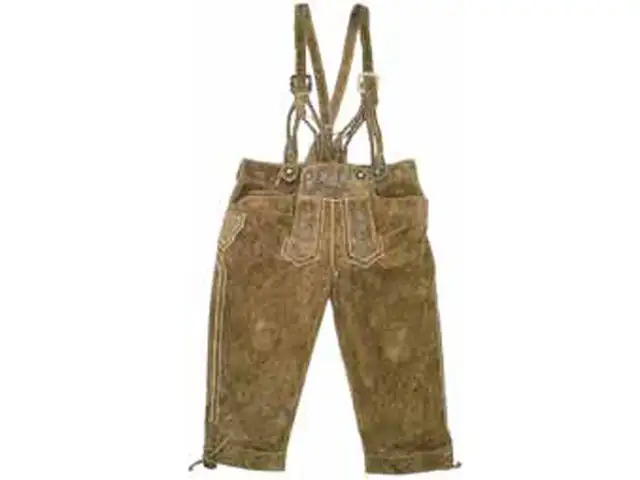
Zverev has the usual sports relatedendorsement deals. But he also has two luxe associations — one with an Italian fashion designer and another with a boutique watchmaker whose watches cost around Rs 2 crore. At times, he has to wear clothing that may not be everyone’s choice of attire. When Zverev won the title in Munich, he had to go through the local tradition of changing into a pair of lederhosen.
Zverev has the usual sports relatedendorsement deals. But he also has two luxe associations — one with an Italian fashion designer and another with a boutique watchmaker whose watches cost around Rs ..



 Rafa A Life Beyond Limits OTT release date and platform announced: When and where to watch Rafael Nadal's documentary online2026-04-30T08:54:52Z

