Rocket to success: ISRO chief believes life's biggest lessons are derived when plans go astray
K Sivan said that he was always denied his first choice throughout his academic & professional life.
By PTI |
BCCL
BENGALURU: ISRO chief K Sivan Tuesday told students that he was always denied his first choice throughout his academic and professional life.
Dr Sivan stated this to a group of students at ISRO's unique launch 'Samwad With Students' (SWS) here.
"As far as college and career goes, I was always denied my first choice. After high school, I wanted to study engineering, but ended up studying B.Sc Mathematics.
Later, I got into Engineering and wanted to join the ISRO Satellite Centre ISAC (now URSC) Bengaluru, but instead joined the Vikram Sarabhai Space Centre at Thiruvananthapuram.
At VSSC, I wanted to join the Aerodynamics group, but was part of the PSLV project instead," Dr Sivan said to a question by an eighth standard student, who wanted to know what his first choice was as a youngster.
K Sivan
ADVERTISEMENT
ISRO said in a statement that the idea behind the SWS programme was to engage youngsters across India to capture scientific temperament and inspire students, cutting across schools and colleges.
As many as 40 students and 10 teachers from select schools interacted with the ISRO chief at Anthariksh Bhavan.
The students were first briefed about the Indian space programme and their benefits to the common man during their three hour stay in the ISRO headquarters, the space agency said.
To a query from a 10th standard student on how scientists coped with failures, Dr Sivan said the biggest lessons in life are often derived when the plans go astray.
ADVERTISEMENT
Chairman ISRO, Space Commission and Secretary, Department of Space, Dr. K. Sivan in a group photograph with the students during the 'Samwad with Students' (SwS), part of the enhanced outreach programme of ISRO, in Bengaluru on January 01, 2019 "Space missions are very complex in nature and totally different from terrestrial systems. They have to work in extreme environments more often.
Our forefathers have shown us the path to take failures in our stride and take on the challenges with a positive mindset," the ISRO chief said.
ADVERTISEMENT
Students posed various questions to Dr Sivan ranging from rockets, satellites, the Chandrayaan moon mission, Gaganyaan and space applications.
Dr Sivan told students that they were going to be his biggest source of inspiration and motivation.
"With so many challenges on hand this year, I thought it is important to seek the well-wishes of students who are the future of this country, Dr Sivan said.
Next Horizon Of Science: AI To Diagnose Brain Haemorrhage, Spacecraft For Intergalactic Travel
1/6
From AI that can diagnose stroke to scientists taking antimatter for a truck ride, here’s everything exciting about technologies that are going to shape our future. (Text: Rajarshi Bhattacharjee)
From AI that can diagnose stroke to scientists taking antimatter for a truck ride, here’s everything exciting about technologies that are going to shape our future. (Text: Rajarshi Bhattacharjee)
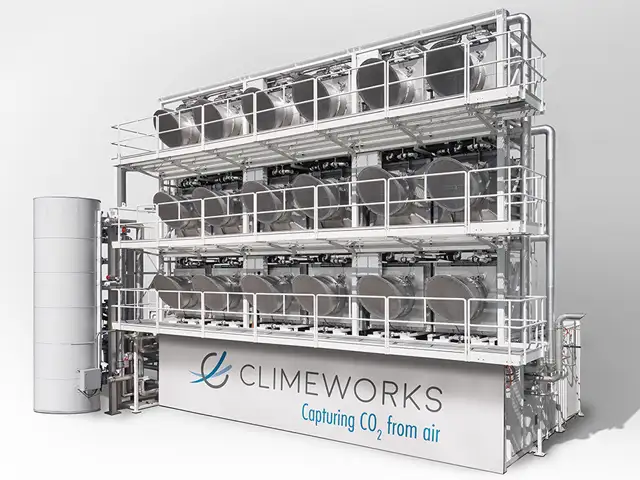
Hate carbon dioxide for heating up the planet? Switzerland has a giant machine that sucks carbon dioxide from air and performs better than plants. In essence, it’s a gigantic artificial tree. Zurichbased Climeworks AG is the world’s first ever commercial plant that can capture CO2 from the air on an industrial level. The amount (900 tonnes) of carbon dioxide the plant draws annually is approximately the same as the amount emitted by 200 cars in the same time.
(Image: www.climeworks.com)
Hate carbon dioxide for heating up the planet? Switzerland has a giant machine that sucks carbon dioxide from air and performs better than plants. In essence, it’s a gigantic artificial tree. Zurich..
Read More
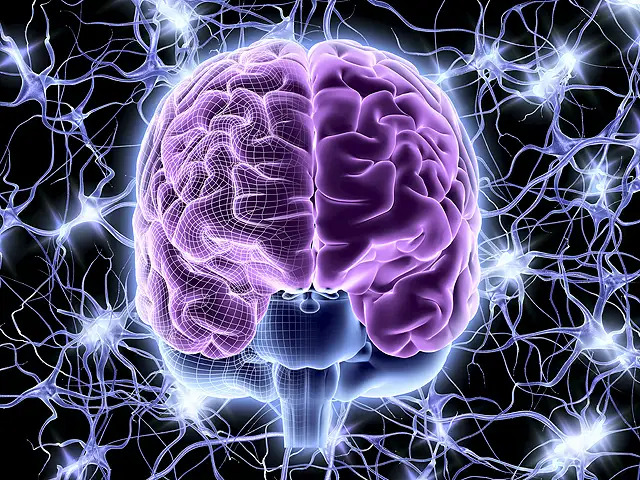
Scientists at the Icahn School of Medicine at Mount Sinai in US have developed an artificial intelligence platform that can identify disease in brain CT scans in 1.2 seconds, and diagnose a range of acute neurological illnesses, such as stroke, and haemorrhage. The study shows that the system was faster than human diagnosis. This is the first study to utilise AI for detecting acute neurologic events and demonstrate a direct clinical application.
Scientists at the Icahn School of Medicine at Mount Sinai in US have developed an artificial intelligence platform that can identify disease in brain CT scans in 1.2 seconds, and diagnose a range of..
Read More
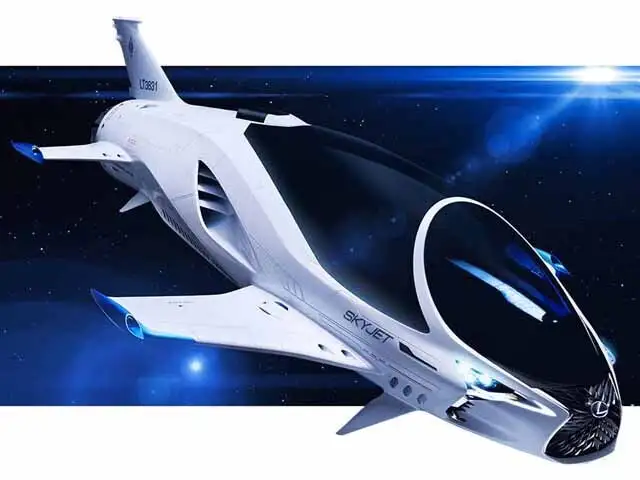
Remember the pursuit craft driven by Valerian (Dane DeHaan) in the 2017 movie Valerian and the City of a Thousand Planets? US design and technology company Lexus has a concept of the futuristic single-seat craft called Skyjet that will take the future humans on intergalactic trips. Powered by a compact fuel-cell capsule, the Skyjet will fly on clean, renewable energy for space travel, sometime around 2740.
(Image: www.lexus.co.uk)
Remember the pursuit craft driven by Valerian (Dane DeHaan) in the 2017 movie Valerian and the City of a Thousand Planets? US design and technology company Lexus has a concept of the futuristic sing..
Read More
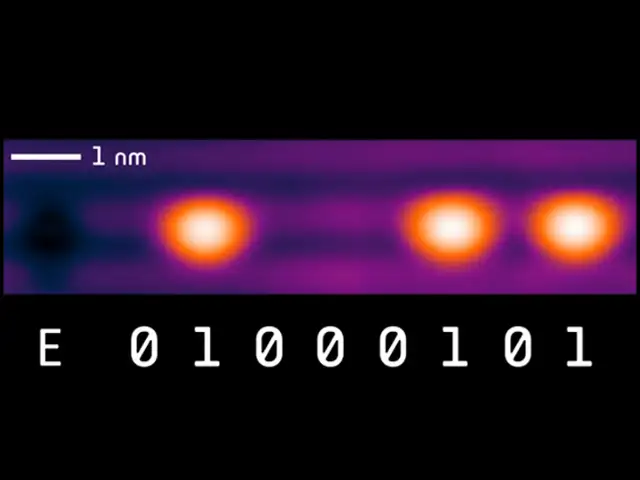
The most dense, solidstate memory in history is here. It could soon exceed the capabilities of current hard drives by 1,000 times. Scientists at the University of Alberta in Edmonton, Canada say they can use hydrogen atoms to boost storage capacity. They were able to reach a storage density of 128TB per square inch. That’s much ahead of current 10TB hard disks which have approximately 512GB per square inch.
(Image: www.ualberta.ca)
The most dense, solidstate memory in history is here. It could soon exceed the capabilities of current hard drives by 1,000 times. Scientists at the University of Alberta in Edmonton, Canada say the..
Read More
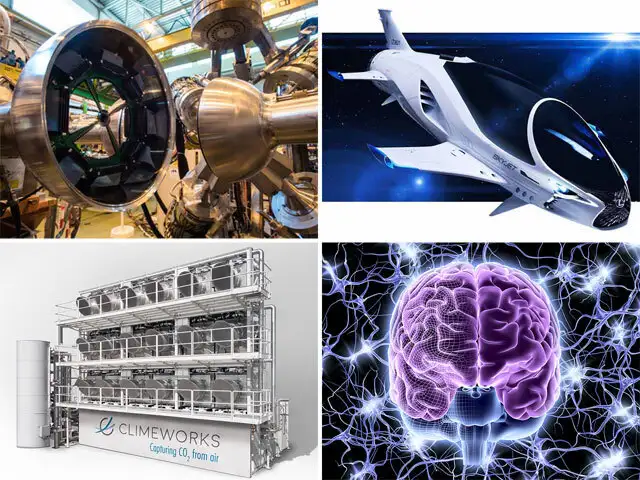
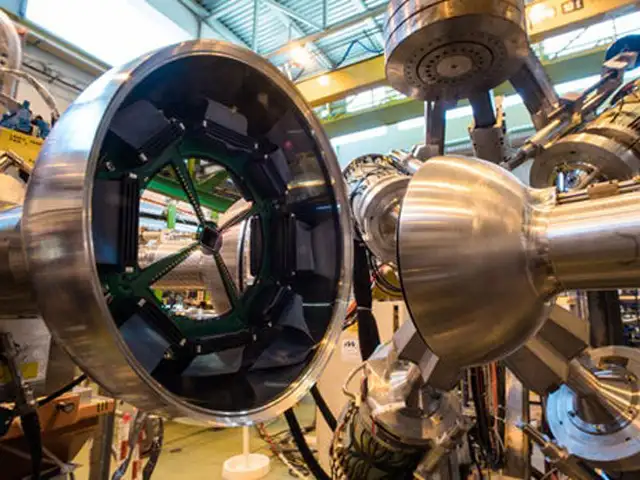
We know antimatter is highly volatile — when it comes into contact with matter, the two annihilate each other. However, physicists at CERN in Switzerland have learned to control it so well that they are now preparing to transport antimatter by truck and then use it to study the strange behaviour of rare radioactive nuclei.
(Image: Julien Marius Ordan-CERN - https://home.cern)
We know antimatter is highly volatile — when it comes into contact with matter, the two annihilate each other. However, physicists at CERN in Switzerland have learned to control it so well that they..



 He once scored 51 marks in Maths, now owns a space company worth $1.1 billion. Meet 35-year-old rocket man who gave up ISRO job2026-06-17T05:52:25Z

