It may be a mechanised arm pulling beers in a Seville bar, a dog-like dispenser of hand sanitiser in a Bangkok mall, a cooler on wheels that delivers groceries in Washington, or a vaguely humanoid greeter at a Belgian hospital that also checks you are not running a fever.
These are some of the new jobs that robots have taken on as lockdown measures have seen humans confined to their homes.
'Resistance falls away' "The moment there is a threat for humans, you should send a robot," said Cyril Kabbara, co-founder of the French start-up Sharks Robotics.
Its robot Colossus helped save Paris' Notre Dame Cathedral when flames engulfed its roof in 2019, and has been adapted to help remove lead that contaminated the site.
ADVERTISEMENT
"Four or five years ago, when we went presented the Colossus, they laughed at us. The firefighters said: 'These guys are going to take away our jobs'," said the entrepreneur.
But the Colossus has since been successfully integrated into the Paris and Marseille fire services.
"The more we advance, the more the resistance falls away," he said.
It is not just in the hygiene and medical spheres where robots have made advances.
ADVERTISEMENT
"This crisis has demonstrated that you have to have a capacity to continue activity even when a health or another type of crisis strikes," said Kabbara.
"We've had quite a few manufacturers tell us that the robots allowed them to continue operating. And if they hadn't had them, they'd be at a dead stop."
ADVERTISEMENT
While owners like robots as they can keep operations running, workers can see them as a risk to their jobs.
"Recent research suggests that the deepening recession is likely to bring a surge of labour-replacing automation," he said in a recent note for the Economist Intelligence Unit.
Hostility towards automation was tied to age and education, with the younger and less educated people most hostile towards robots. 'Robophobia' "People who suggest that automation is not taking away jobs in manufacturing, they're just wrong," said Oxford University economist Carl Frey.
He pointed to China, a country which is rapidly installing industrial robots, with 650,000 going online in 2018 alone, and which lost 12.5 million manufacturing jobs between 2013 and 2017.
The country has seen an explosion in "robophobia" during the coronavirus crisis, according to a study by Spanish university IE.
While only 27 percent of Chinese supported limiting automation before the crisis struck, the figure has doubled to 54 percent.
The Chinese are now close to the French, who at 59 percent, are the most hostile to automation.
The study also revealed that hostility towards automation was tied to age and education, with the younger and less educated people most hostile towards robots.
"Historically, technology has created a lot of jobs as well, but you see less of that happening in the digital world," said Frey.
He pointed to automakers or manufacturers like General Electric still employing many workers even after adopting automation.
"The leading techs of today are not creating so many jobs, apart from Amazon," he told AFP.
New-Age Chef & Valet Robots To Make Your Life Easy
1/7
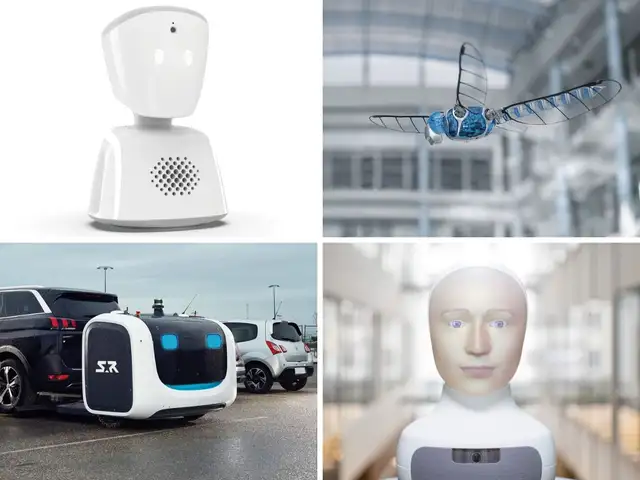
While the robotic revolution is making a splash around the world, here are a few that aim to make life easier, simulate human emotions and take us closer to the future. While the robotic revolution is making a splash around the world, here are a few that aim to make life easier, simulate human emotions and take us closer to the future.
While the robotic revolution is making a splash around the world, here are a few that aim to make life easier, simulate human emotions and take us closer to the future. While the robotic revolution i..
Read More
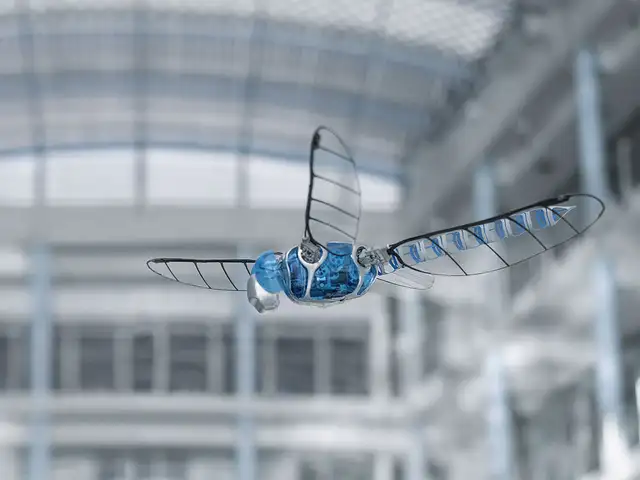
The BionicOpter was a talking point recently when Jeff Bezos tweeted a short video of himself playing with the robot dragonfly at his robotics conference MARS. The makers, Festo AG, say they have “technically mastered the highly complex flight characteristics of the dragonfly” — the robot can fly in all directions, hover in mid-air and glide without beating its wings. BionicOpter supports wireless real-time communication, a continuous exchange of information, and can identify complex events.
The BionicOpter was a talking point recently when Jeff Bezos tweeted a short video of himself playing with the robot dragonfly at his robotics conference MARS. The makers, Festo AG, say they have “t..
Read More
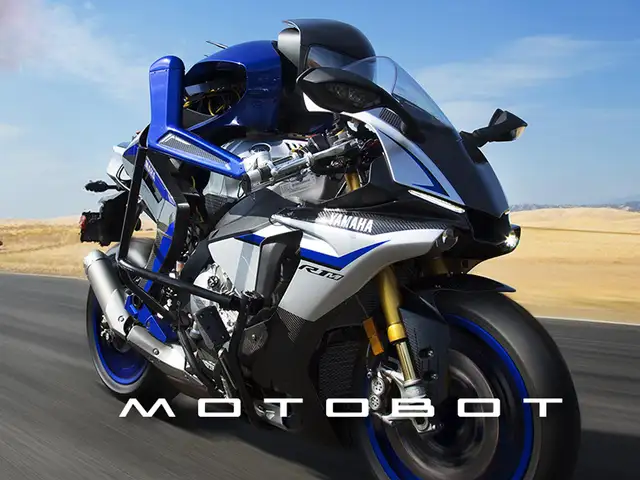
Motobot 2.0 is an autonomous motorcycle-riding robot that combines the latest in motorcycle and robotics technology to drive around a racetrack on a Yamaha YZF-R1M. The motorcycle dons a look of the classic modern aerodynamic racing two-wheeler, while the robot needs human operators only to specify how aggressively it should race. Motobot 2.0 can race at a speed of almost 200 kmph but it’s no match for Valentino Rossi yet.
Motobot 2.0 is an autonomous motorcycle-riding robot that combines the latest in motorcycle and robotics technology to drive around a racetrack on a Yamaha YZF-R1M. The motorcycle dons a look of the..
Read More
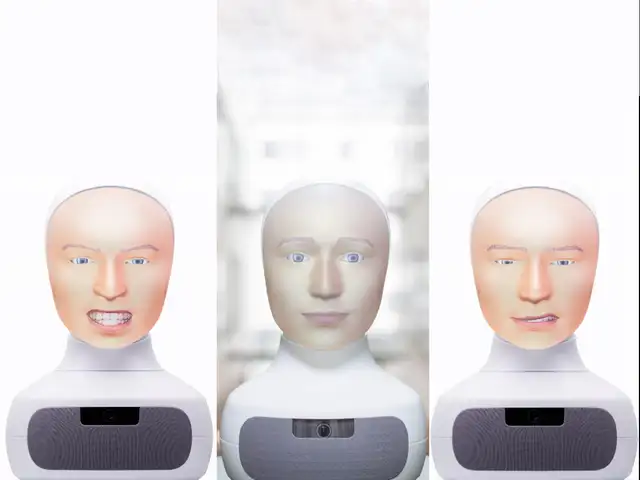
Tengai, a brainchild of Furhat Robotics, is the world’s first job interview robot that aims to take out unconscious human biases from the process. She sits on top of a table directly across the candidate she’s about to interview. Tengai has three degrees of movement freedom and can display complex expressions — blink and smile lightly as she poses her questions.
Tengai, a brainchild of Furhat Robotics, is the world’s first job interview robot that aims to take out unconscious human biases from the process. She sits on top of a table directly across the cand..
Read More
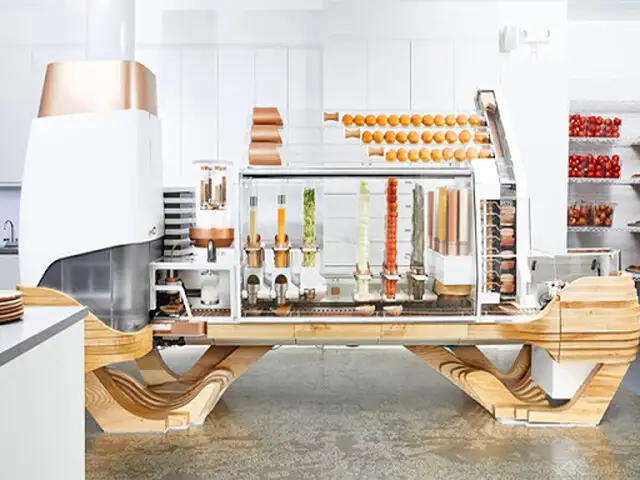
Creator, a burger restaurant that opened last year in San Francisco, is home to two sedansized robots each of which can churn out 120 burgers an hour. Each robot is reportedly equipped with 350 sensors, 50 actuators and 20 computers together which allow it to grind the meat, shape the burgers, slice the tomatoes, grate cheese and dispense mustard. The robots themselves are controlled by a machine learning algorithm.
Creator, a burger restaurant that opened last year in San Francisco, is home to two sedansized robots each of which can churn out 120 burgers an hour. Each robot is reportedly equipped with 350 sens..
Read More
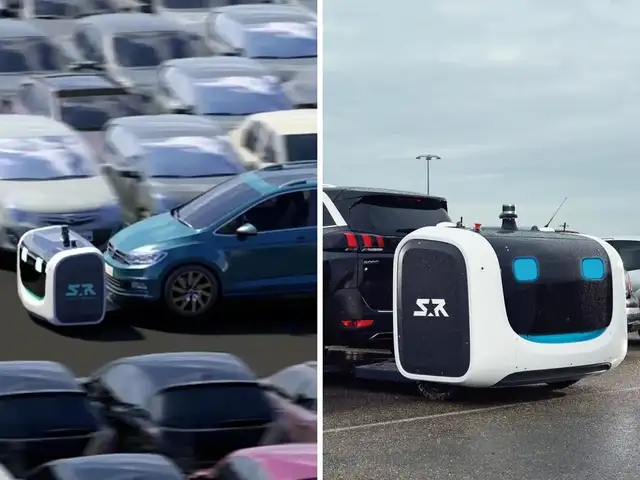
Robots are coming to take over valet parking tasks. London’s Gatwick Airport recently collaborated with Stanley Robotics to trial robots that valet park passengers’ cars. The trial will run from the second half of 2019 to early 2020 wherein passengers will have to leave their car at the airport’s ‘parking station’ without handing over keys. The robot will lift up the car and store it in a secure car park. The service will have access to users’ flight details so that the robot can bring back the car when the passenger returns.
Robots are coming to take over valet parking tasks. London’s Gatwick Airport recently collaborated with Stanley Robotics to trial robots that valet park passengers’ cars. The trial will run from the..
Read More
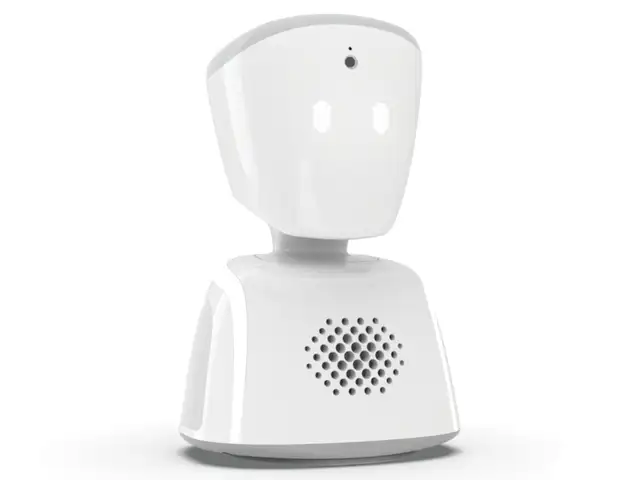
If you are unable to attend an important meeting at the office or your kid can’t be at school because of chronic illness, AV1 can be a competent proxy. Oslo-based start-up No Isolation’s AV1 is a cute-looking robot that can sit at a meeting room and live stream video and audio back to your mobile device remotely. It can help housebound sick children and elderly people keep in touch with friends and family, and thus combat loneliness.
If you are unable to attend an important meeting at the office or your kid can’t be at school because of chronic illness, AV1 can be a competent proxy. Oslo-based start-up No Isolation’s AV1 is a cu..
No one safe ? With the rapid progress made in artificial intelligence, white collar workers are increasingly at risk from automation, experts warn.
"No group of workers may be entirely immune this time around," said Muro.
That is not to say that high levels of automation cannot coexist with low unemployment. Singapore and South Korea are at the top of the rankings for deployment of robots compared to the size of the workforce and yet they enjoy low unemployment.
Nevertheless, Frey warns of rising anxiety about robots stealing jobs once the immediate fear of the coronavirus recedes.
But he doubts a worldwide movement against automation will gain traction as job losses are a local phenomenon and tend to happen in regions that have long suffered from manufacturing jobs disappearing.