Revealed! Dutch artist Rembrandt used this ingredient to give his masterpieces a 3D effect
The impasto technique uses thick paint to make features protrude from the surface.
By PTI |
Agencies
A painting by Rembrandt
LONDON: Scientists have decoded how renowned Dutch artist Rembrandt lent 3D effect to his masterpieces centuries ago, identifying a previously unknown compound that the artist used in his paintings.
Rembrandt van Rijn revolutionised painting with what is known as the impasto technique which uses thick paint to make features protrude from the surface.
The relief of impasto increases the perceptibility of the paint by increasing its light-reflecting textural properties.
Researchers from Delft University of Technology and the Rijksmuseum in the Netherlands unveiled the precise recipe that helped Rembrandt achieve this effect.
Scientists have known that Rembrandt, epitome of the Dutch Golden Age, achieved the impasto effect by using materials traditionally available on the 17th century Dutch colour market, namely lead white pigment, and organic mediums (mainly linseed oil).
However, the precise recipe was unknown.
ADVERTISEMENT
Plumbonacrite, Pb5(CO3)3O(OH)2 is the mysterious, missing ingredient of the impasto effect, researchers discovered. A painting by Rembrandt It is extremely rare in historic paint layers. It has been detected in some samples from 20th century paintings and in a degraded red lead pigment in a Van Gogh painting.
"We didn't expect to find this phase at all, as it is so unusual in Old Masters paintings," said Victor Gonzalez, scientist at the Rijksmuseum and Delft University of Technology.
"What's more, our research shows that its presence is not accidental or due to contamination, but that it is the result of an intended synthesis", he said.
ADVERTISEMENT
The European Synchrotron (ESRF) played an essential role in these findings, researchers said.
The team sampled tiny fragments from the Portrait of Marten Soolmans, Bathsheba and Susanna, three of Rembrandt's masterpieces.
ADVERTISEMENT
Using the ESRF, they quantified the crystalline phases in Rembrandt's impasto and in the adjacent paint layers, modelled the pigment crystallites morphology and size and obtained crystalline phase distribution maps at the microscale.
The samples were less than 0.1mm in size, requiring the small and intense beam delivered by the synchrotron.
The scientists analysed them on two ESRF beamlines, ID22 and ID13, where they combined High-angular Resolution X-Ray Diffraction (HR-XRD) and micro-X-Ray Diffraction (µ-XRD).
"In the past, we have already successfully used the combination of these two techniques to study lead-white based paints. We knew that the techniques can provide us with high quality diffraction patterns and therefore with subtle information about paint composition," said Marine Cotte, scientist at the ESRF.
Scribbles, Scratches And Other Abstract Pieces Of Art That Made Millions
1/6
Who says a scribble or a scratch is worthless? Check out these abstracts which sold for a fortune thanks to their minimalistic allure.
Who says a scribble or a scratch is worthless? Check out these abstracts which sold for a fortune thanks to their minimalistic allure.
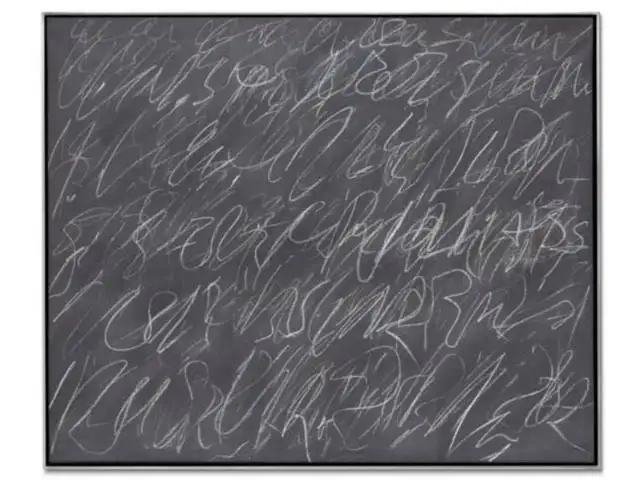
Cost: $70.5 million
What seems like chalk scribbles on a slate is actually an oil-based house paint and crayon artwork on canvas by Edwin Parker ‘Cy’ Twombly Jr, which fetched a record price for the artist in Christie’s 2014 sale. Part of Twombly’s ‘blackboard’ paintings, the 1970 artwork is inspired by his stint in Pentagon as a cryptologist. What’s interesting is the way he produced this artwork. He sat on the shoulders of a friend, who kept on walking along the length of the canvas, enabling Twombly to create fluid lines. The painting’s then owner, Audrey Irmas, a philanthropist, parted with the painting to raise funds for her foundation for social justice. Interestingly, Irmas bought the painting for $3.85 million in 1990.
(Image: www.christies.com)
Cost: $70.5 million
What seems like chalk scribbles on a slate is actually an oil-based house paint and crayon artwork on canvas by Edwin Parker ‘Cy’ Twombly Jr, which fetched a record price for the..
Read More
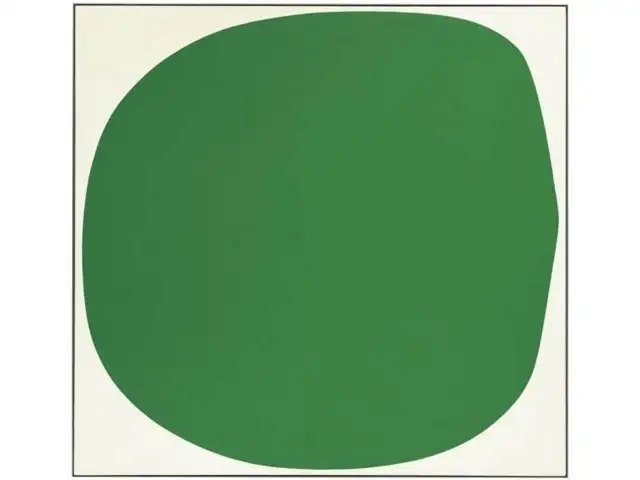
Cost: $1.65 million
Once part of the Robert and Jean Shoenberg collection, this 1961 artwork came into the market at Christie’s 2008 sale. Kelly was a camouflage artist during his stint in the army in the 1940s. He was a part of the unit known as ‘the Ghost army’ comprising artists and designers who painted objects that would misdirect enemy soldiers.
(Image: www.christies.com)
Cost: $1.65 million
Once part of the Robert and Jean Shoenberg collection, this 1961 artwork came into the market at Christie’s 2008 sale. Kelly was a camouflage artist during his stint in the army ..
Read More
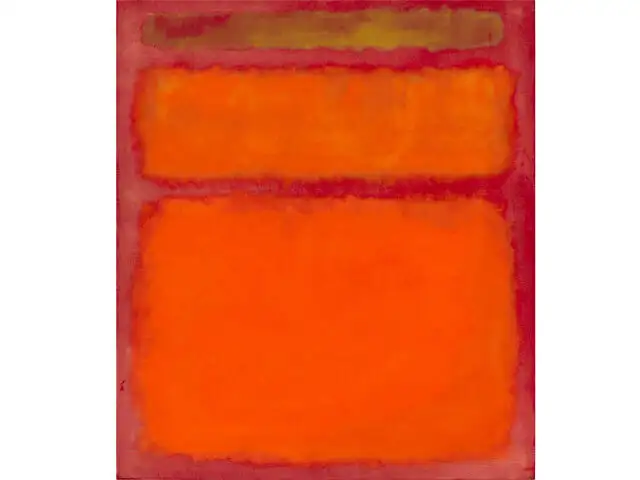
Cost: $86.88 million (including buyer’s premium)
The vibrant orange, red and yellow coloured rectangles was part of art collector David Pincus’s estate and was brought to the market by Christie’s in 2012 where its sale set the record for post war/ contemporary art at the time. Rothko’s 1961 work was in Pincus’s possession for four-and-a-half decades. The final bid was double the highest estimate of the artwork.
(Image: www.markrothko.org)
Cost: $86.88 million (including buyer’s premium)
The vibrant orange, red and yellow coloured rectangles was part of art collector David Pincus’s estate and was brought to the market by Christie’s i..
Read More
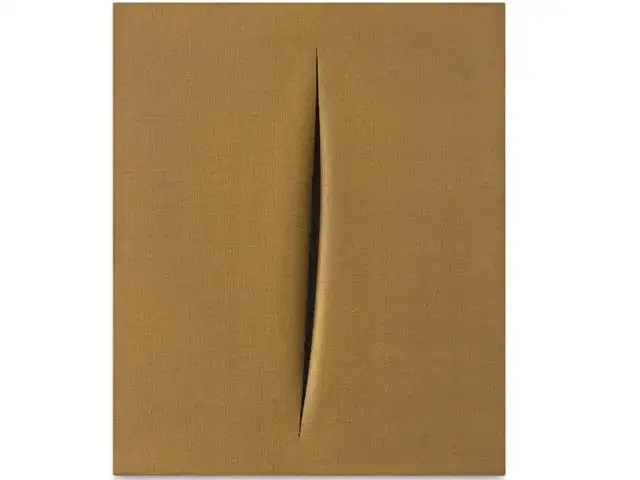
Cost: $16.2 million
The 24 sharp vertical tears on a crimson, water-painted seven- foot wide canvas was contested for about a minute and 30 seconds during Sotheby’s 2015 auction. Yet, the painting was sold below the low presale estimate of $15 million. Turns out, Fontana was inspired to paint this artwork watching Red Desert, a 1964 movie created by Michelangelo Antonioni, which won the Golden Lion in that year’s Venice Film Festival. In fact, the inscription on the back of the painting, in Italian, reads, “I returned yesterday from Venice, I saw Antonioni’s film!!!”
(Image: www.sothebys.com)
Cost: $16.2 million
The 24 sharp vertical tears on a crimson, water-painted seven- foot wide canvas was contested for about a minute and 30 seconds during Sotheby’s 2015 auction. Yet, the painting ..
Read More
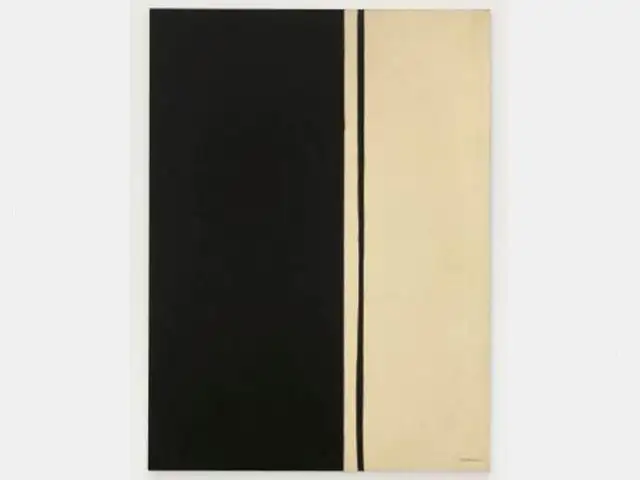
Cost: $84.16 million
Newman’s 1961 stark black palette on a pale canvas was part of Christie’s post-war and contemporary evening sale auction in 2014. Newman started dabbling in abstract expression while he was mourning the death of his younger brother George. About the painter’s black fixation, art expert Thomas Hess recalled Newman saying, “When an artist wants to change, when he wants to invent, he goes to black as it is a way of clearing the table-of getting to new ideas.” The painting is in the possession of a private collector now. Its previous owner had the painting for nearly 40 years.
(Image: www.christies.com)
Cost: $84.16 million
Newman’s 1961 stark black palette on a pale canvas was part of Christie’s post-war and contemporary evening sale auction in 2014. Newman started dabbling in abstract expression..
The analysis of the data showed that Rembrandt modified his painting materials intentionally.
"The presence of plumbonacrite is indicative of an alkaline medium. Based on historical texts, we believe that Rembrandt added lead oxide to the oil in this purpose, turning the mixture into a paste-like paint," said Cotte.
The breakthrough yields the path for the long-term preservation and conservation of Rembrandt's masterpieces.
However, the number of samples studied is not extensive enough to assess if lead white impastos systematically contain plumbonacrite.
"We are working with the hypothesis that Rembrandt might have used other recipes, and that is the reason why we will be studying samples from other paintings by Rembrandt and other 17th Dutch Masters, including Vermeer, Hals, and painters belonging to Rembrandt's circle," said Annelies van Loon, scientist at the Rijksmuseum.



 To Russia, with love: Indian contemporary art arrives at the Hermitage that houses masterpieces by Rembrandt and Raphael2026-06-07T03:56:04Z

