Rembrandt's fingerprints, Da Vinci's code: Artists & their hidden messages
Artists add details to their paintings or leave messages that are impossible to see at first glance.
By ET Bureau |
Agencies
On the left is Leonardo Da Vinci, and on the right is Rembrandt.
By Divya Verma
Often, there’s more to a picture than what meets the eye. Artists add details to their paintings or leave messages that are impossible to see at first glance. A look at some of the art secrets that were uncovered.
Can’t put a finger on it Two fingerprints believed to be those of Dutch master Rembrandt were discovered at the bottom of a 400-year-old portrait. The painting, called the ‘Study of the Head and Clasped Hands of a Young Man as Christ in Prayer’, depicts a young Jesus with his head inclined and hands clasped. The prints, thought to be impressions of the painter’s thumb, were discovered during “technical examination and restoration”, hidden underneath “overpaint and darkened varnish layers”, auction house Sotheby’s said in a statement.
A woofing cover-up Thomas Gainsborough’s ‘Blue Boy’ featuring a British youth, dressed nearly all in blue, has transfixed viewers for centuries. While historians have continued to debate the identity of this posh-looking lad for years, it turns out ‘Blue Boy’ also had a dog until Gainsborough painted it out of the picture. The furry friend was discovered in an X-ray. Gainsborough cleverly turned the front paws into rocks when he blended the rest of the canine into the landscape.
Whale of a time It was always a bit of a puzzle what the people standing on the beach were actually looking at. But a conservator working on the ‘Beach Scene’, a 17th century painting by the Dutch master Hendrick van Anthonissen, discovered the secret in 2014. A little cleaning uncovered a figure, apparently standing on the horizon. More cleaning revealed that the figure was, in fact, standing atop a beached whale that had been painted over. The repainting is thought to have occurred during the 18th or 19th centuries.
ADVERTISEMENT
Coded language The ‘Mona Lisa’, Leonardo Da Vinci’s masterpiece, has long been steeped in mystery. Even today, the identity of the woman with the beatific smile remains unknown.
In 2010, art historians from Italy revealed that by magnifying high-resolution images of Mona Lisa’s eyes, letters and numbers could be seen. According to researchers, the right eye has the letters LV, which could stand for the artist’s initials. In the left eye, there are symbols, but they are not as defined.
ADVERTISEMENT
Brush with scandal It was a little blue dress that a US President had hoped to forget, but now it has been etched in paint and is on display at The Smithsonian’s National Portrait Gallery. Artist Nelson Shanks, who painted an official portrait of Bill Clinton in 2006, had left a veiled reference to the former president’s infamous affair with Monica Lewinsky. Shank revealed, almost a decade after unveiling the painting, that the shadow cast on the mantle piece behind Clinton was by a mannequin wearing a blue dress that he had set up in his studio while working on the portrait. Lewinsky’s blue dress had become a central piece of the Clinton scandal in 1998.
ADVERTISEMENT
Scribbles, Scratches And Other Abstract Pieces Of Art That Made Millions
1/6
Who says a scribble or a scratch is worthless? Check out these abstracts which sold for a fortune thanks to their minimalistic allure.
Who says a scribble or a scratch is worthless? Check out these abstracts which sold for a fortune thanks to their minimalistic allure.
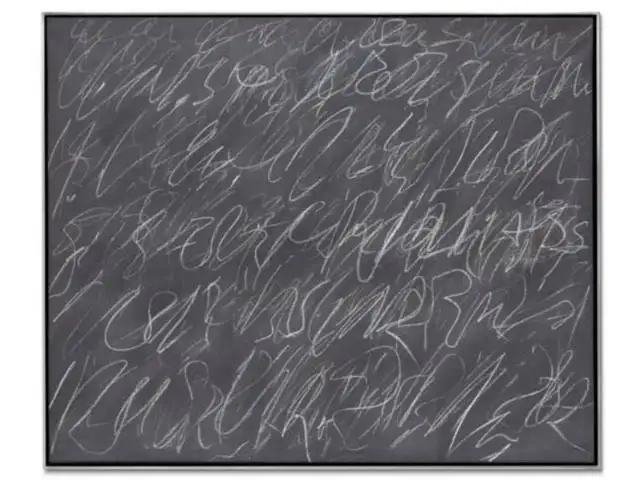
Cost: $70.5 million
What seems like chalk scribbles on a slate is actually an oil-based house paint and crayon artwork on canvas by Edwin Parker ‘Cy’ Twombly Jr, which fetched a record price for the artist in Christie’s 2014 sale. Part of Twombly’s ‘blackboard’ paintings, the 1970 artwork is inspired by his stint in Pentagon as a cryptologist. What’s interesting is the way he produced this artwork. He sat on the shoulders of a friend, who kept on walking along the length of the canvas, enabling Twombly to create fluid lines. The painting’s then owner, Audrey Irmas, a philanthropist, parted with the painting to raise funds for her foundation for social justice. Interestingly, Irmas bought the painting for $3.85 million in 1990.
(Image: www.christies.com)
Cost: $70.5 million
What seems like chalk scribbles on a slate is actually an oil-based house paint and crayon artwork on canvas by Edwin Parker ‘Cy’ Twombly Jr, which fetched a record price for the..
Read More
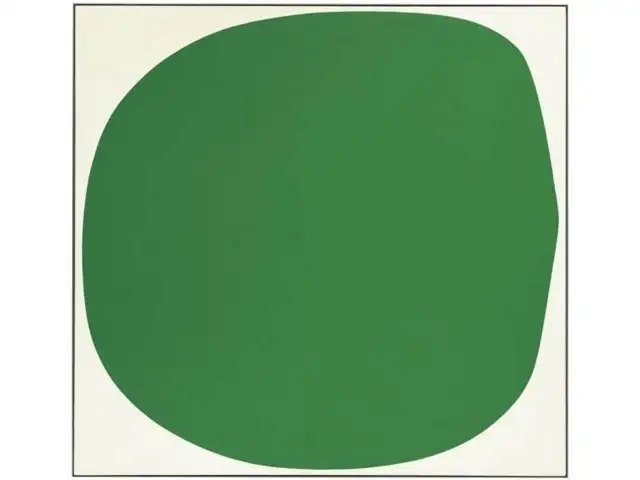
Cost: $1.65 million
Once part of the Robert and Jean Shoenberg collection, this 1961 artwork came into the market at Christie’s 2008 sale. Kelly was a camouflage artist during his stint in the army in the 1940s. He was a part of the unit known as ‘the Ghost army’ comprising artists and designers who painted objects that would misdirect enemy soldiers.
(Image: www.christies.com)
Cost: $1.65 million
Once part of the Robert and Jean Shoenberg collection, this 1961 artwork came into the market at Christie’s 2008 sale. Kelly was a camouflage artist during his stint in the army ..
Read More
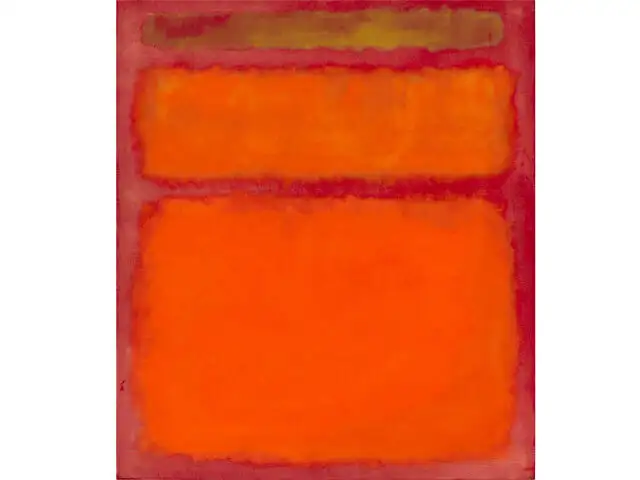
Cost: $86.88 million (including buyer’s premium)
The vibrant orange, red and yellow coloured rectangles was part of art collector David Pincus’s estate and was brought to the market by Christie’s in 2012 where its sale set the record for post war/ contemporary art at the time. Rothko’s 1961 work was in Pincus’s possession for four-and-a-half decades. The final bid was double the highest estimate of the artwork.
(Image: www.markrothko.org)
Cost: $86.88 million (including buyer’s premium)
The vibrant orange, red and yellow coloured rectangles was part of art collector David Pincus’s estate and was brought to the market by Christie’s i..
Read More
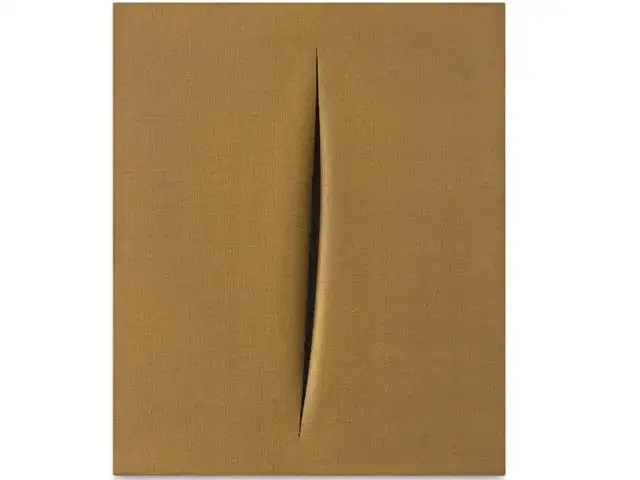
Cost: $16.2 million
The 24 sharp vertical tears on a crimson, water-painted seven- foot wide canvas was contested for about a minute and 30 seconds during Sotheby’s 2015 auction. Yet, the painting was sold below the low presale estimate of $15 million. Turns out, Fontana was inspired to paint this artwork watching Red Desert, a 1964 movie created by Michelangelo Antonioni, which won the Golden Lion in that year’s Venice Film Festival. In fact, the inscription on the back of the painting, in Italian, reads, “I returned yesterday from Venice, I saw Antonioni’s film!!!”
(Image: www.sothebys.com)
Cost: $16.2 million
The 24 sharp vertical tears on a crimson, water-painted seven- foot wide canvas was contested for about a minute and 30 seconds during Sotheby’s 2015 auction. Yet, the painting ..
Read More
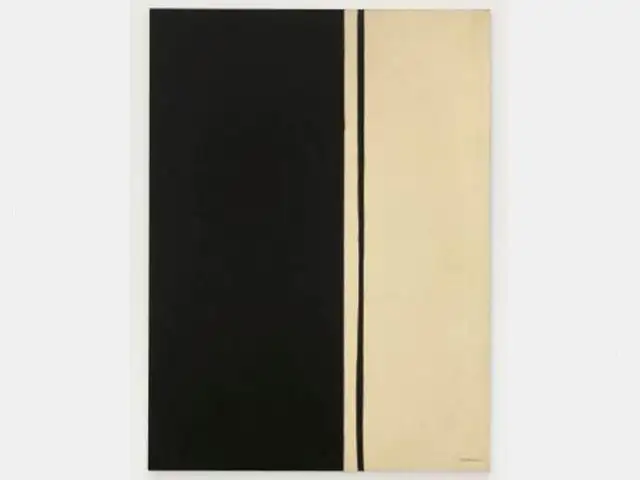
Cost: $84.16 million
Newman’s 1961 stark black palette on a pale canvas was part of Christie’s post-war and contemporary evening sale auction in 2014. Newman started dabbling in abstract expression while he was mourning the death of his younger brother George. About the painter’s black fixation, art expert Thomas Hess recalled Newman saying, “When an artist wants to change, when he wants to invent, he goes to black as it is a way of clearing the table-of getting to new ideas.” The painting is in the possession of a private collector now. Its previous owner had the painting for nearly 40 years.
(Image: www.christies.com)
Cost: $84.16 million
Newman’s 1961 stark black palette on a pale canvas was part of Christie’s post-war and contemporary evening sale auction in 2014. Newman started dabbling in abstract expression..