Ranchi woman wins £5,000 Commonwealth prize for Hindu-Muslim love story
The prize is judged by an international panel of writers, representing each of the five regions of the Commonwealth.
By NAOMI CANTON, TOI-Online | Updated:

Agencies
LONDON: A woman from Ranchi currently studying in the US has won £5,000 after her tale about a Hindu girl falling in love with a Muslim boy beat more than 5,000 entries from 49 countries to win the 2020 Commonwealth Short Story Prize.
Kritika Pandey, 29, was speechless and tearful when announced as the overall winner of the prize for "The Great Indian Tee and Snakes" at an online ceremony on Tuesday.
The prize is judged by an international panel of writers, representing each of the five regions of the Commonwealth. The award was presented by the chair of the 2020 judging panel, Ghanaian writer and editor Nii Ayikwei.
Her story tells of an unlikely friendship between a strong-willed Hindu girl who chooses to love a Muslim boy in India, even though she is not supposed to, mostly set at a tea seller’s stall. The energy of the piece of fiction derives from a few looks between a boy and a girl.
"This is an incredible moment for me. All the aspirational middles class people, like my parents, wanted me to become an engineer," Pandey said upon hearing she had won. "I went to an engineering college and I hated it. In India you can’t just stop going to college and switch if you are middle class like me, as my father only had so much money. I had to finish it. My parents couldn’t afford the kind of education they managed to provide me. They were very conservative and they are still and wanted me to marry a certain kind of guy and have a certain kind of life. I just said ‘No’. I am supposed to have had two children already and be living in India. To get this award tells me I was not wrong. I was following something leading me somewhere. I have lived with so much guilt for letting my parents down. This really made up for so much of the struggle I went through," she added.
"Messing up was never an option because so many young women back home would be told, ‘See this is why you shouldn’t get too big for your boots’," she said. "If you, like me, are a young woman from Jharkhand, then you must have immense caste and class privilege to get an education in the first place, and even if you do you would be expected to get married as soon as you finish college. I chose to read and write instead. I am honoured beyond words. I hope this helps more people trust their daughters and their dreams."
Her story has been published online in literary magazine Granta.
Pandey, a Pushcart-nominated Indian writer who is in her final year of a Master of Fine Arts at the University of Massachusetts, Amherst, had been announced the regional winner for Asia on June 2.
Ayikwei described the story as "beautifully complex". "I have no doubt you will be creating some fantastic work in the years to come," he said.
Kritika Pandey, 29, was speechless and tearful when announced as the overall winner of the prize for "The Great Indian Tee and Snakes" at an online ceremony on Tuesday.
The prize is judged by an international panel of writers, representing each of the five regions of the Commonwealth. The award was presented by the chair of the 2020 judging panel, Ghanaian writer and editor Nii Ayikwei.
Her story tells of an unlikely friendship between a strong-willed Hindu girl who chooses to love a Muslim boy in India, even though she is not supposed to, mostly set at a tea seller’s stall. The energy of the piece of fiction derives from a few looks between a boy and a girl.
"This is an incredible moment for me. All the aspirational middles class people, like my parents, wanted me to become an engineer," Pandey said upon hearing she had won. "I went to an engineering college and I hated it. In India you can’t just stop going to college and switch if you are middle class like me, as my father only had so much money. I had to finish it. My parents couldn’t afford the kind of education they managed to provide me. They were very conservative and they are still and wanted me to marry a certain kind of guy and have a certain kind of life. I just said ‘No’. I am supposed to have had two children already and be living in India. To get this award tells me I was not wrong. I was following something leading me somewhere. I have lived with so much guilt for letting my parents down. This really made up for so much of the struggle I went through," she added.
"Messing up was never an option because so many young women back home would be told, ‘See this is why you shouldn’t get too big for your boots’," she said. "If you, like me, are a young woman from Jharkhand, then you must have immense caste and class privilege to get an education in the first place, and even if you do you would be expected to get married as soon as you finish college. I chose to read and write instead. I am honoured beyond words. I hope this helps more people trust their daughters and their dreams."
ADVERTISEMENT
Her story has been published online in literary magazine Granta.
Pandey, a Pushcart-nominated Indian writer who is in her final year of a Master of Fine Arts at the University of Massachusetts, Amherst, had been announced the regional winner for Asia on June 2.
Ayikwei described the story as "beautifully complex". "I have no doubt you will be creating some fantastic work in the years to come," he said.
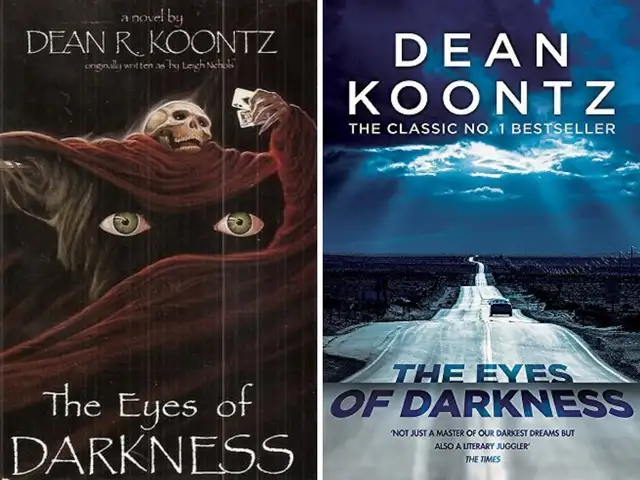
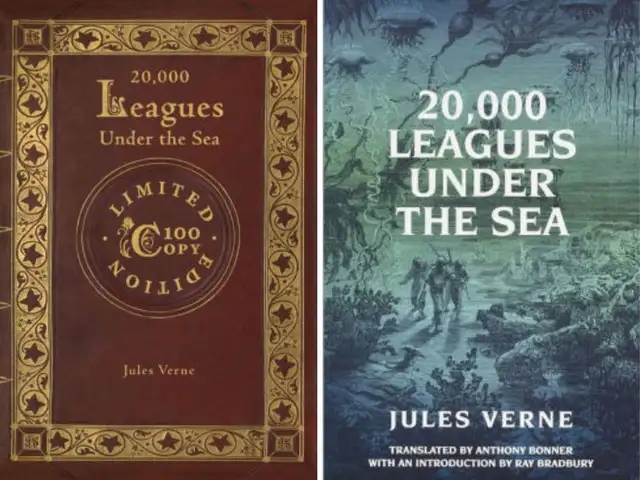
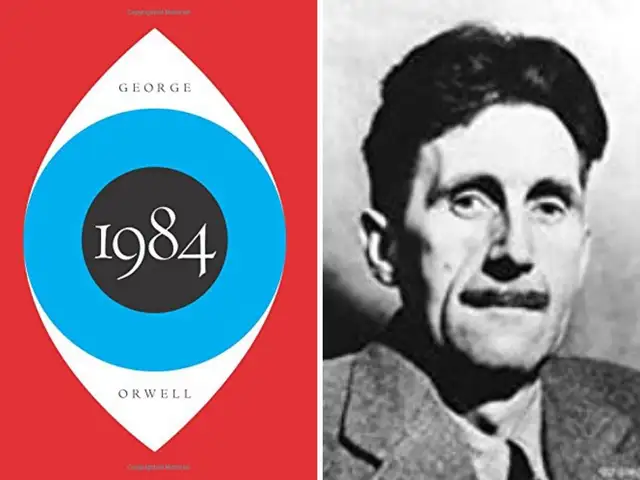
A look back at the different times when authors unleashed the Nostradamus in them and came up with something that was years ahead of its time.

ADVERTISEMENT
Download
The Economic Times Business News App for the Latest News in Business, Sensex, Stock Market Updates & More.
The Economic Times Business News App for the Latest News in Business, Sensex, Stock Market Updates & More.
ADVERTISEMENT


