The Google Sycamore system that attained quantum supremacy had a 54-qubit processor.
If data is the new oil, encryption is the engine that drives the digital economy. Everything from credit card transactions to health data stored on wearable devices is secured by cryptography. These complex algorithms, in turn, facilitate the safe use of the profusion of data generated every day.
“Our machine performed the target computation in 200 seconds and from measurements in our experiment we determined that it would take the world’s fastest supercomputer 10,000 years to produce a similar output,” the announcement said.
This feat was achieved using a 54-qubit processor, named “Sycamore” that was crafted using high-fidelity quantum logic gates. A quantum computer possesses the capability to solve problems that are beyond the ambit of modern supercomputers. However, it risks undoing extant encryption standards, bringing the engine of the digital economy to a sputtering halt.
An artist’s rendition (left) of the Sycamore and the actual Sycamore processor (right). (Credit: Google) By truncating computing time from 10,000 years to a little under four minutes, quantum computers pose an existential threat to industry standards in cryptography that were hitherto thought to be infallible in real-world conditions. Cybersecurity experts have reason to be worried.
ADVERTISEMENT
End-to-end encryption, the one employed by messaging platforms like WhatsApp, are considered secure as it is difficult to decrypt the coded message sent from one user to another if it is intercepted by hackers. Even the most sophisticated computers in use would take thousands of years to divine the required cryptographic key if it tried all possible combinations – a practice known as brute force attack.
If quantum computers were to go mainstream, the use cases for cryptography would no longer be secure. The encryption used in professional network and in WiFi routers could be cracked in a matter of moments. Email and messaging services would be compromised. Banking transaction could be subverted, putting at risk the financial details of clients.
In its most basic form, an encryption algorithm is a math problem involving very large numbers. Encryption keys are hard to crack as they comprise of thousands of bits, making it difficult to determine the correct combination in real time. But the number of possibilities is finite, meaning that these algorithms are not foolproof if the computing power to process all combinations existed.
For instance, the 256 bit version of the Advanced Encryption Standard (AES) – the standard used by WhatsApp – would encode the data into cipher text that is 2256 long. It is probabilistically unlikely that one will have to skim through the whole list of possibilities before arriving at the right combination. Even if were possible to crack the code after trying out 50 per cent of the total permutations, the time taken would be inordinately long.
ADVERTISEMENT
China’s Tianhe-2 (MilkyWay-2), which is widely regarded as one of the fastest supercomputers on the planet, would take millions of years to crack 256-bit AES encryption. This is longer than the universe’s life span, as predicted by astrophysicists. However, cryptography would be turned on its head, if instead, the universe were to unexpectedly dissolve into a cloud of dust in the time it took you to make coffee?
This could pose a big problem to the way information is exchanged on the internet. The death of the universe, in this example, is tantamount to the achievement of quantum supremacy. Traditional computers use the binary system, where each digit is encoded in 0s and 1s.
ADVERTISEMENT
Quantum computers can take up an infinite number of values between 0 and 1 using qubits or quantum bits. This implies that a large number of calculations can be made at any given point in time as each qubit can process more information that its equivalent in a classical computer.
Google has taken the lead in the quantum race, but modern cryptography could be thrown into jeopardy if such computers were to fall into the hands of malevolent actors or rogue governments. Businesses will have to devise new ways to safeguard sensitive data, with protection extending to data transmitted across a network, and that stored locally on hard disks.
Estimate of the equivalent classical computation time assuming 1M CPU cores for quantum supremacy circuits as a function of the number of qubits and number of cycles for the Schrödinger-Feynman algorithm. (Credit: Google) However, businesses have time to reorient their cybersecurity strategies given that quantum computing is still in its nascence. Quantum-proof encryption standards use algorithms that are inviolable to attack, regardless of the speed of the computer used. Most of these advanced techniques are lattice-based algorithms.
Unlike the classical encryption techniques in use today, lattice-based algorithms are impossible to crack owing to their organization in a virtual grid. The encryption key is hidden at the intersection point of a multidimensional lattice. Since the number of possibilities is infinite, quantum computers will be unable to leverage its advantage over classical computers as the number of permutations and the process of skimming through the range of possibilities is much more complex.
A rendering of lattice-based encryption. (Credit: IBM) The cryptographic key can be determined only if the attacker knows their way through the lattice, which is theoretically impossible as there is no way to compute the path. This form of tricky encryption that could stump quantum computers is currently offered by companies like SAFEcrypto and Privitar. Despite the latest breakthrough, researchers at Google are yet orders of magnitude away from attaining the computer power to crack such algorithms.
To mount a credible threat, scientists will need to fit in more qubits to the existing architecture. The Google Sycamore system that attained quantum supremacy had a 54-qubit processor. Moreover, the absence of standard libraries for lattice algorithms adds to the complexity of integrating software with quantum hardware.
While lattice-based encryption services are costly, large companies might want to consider using it to secure critical data that has a long shelf life. Transactional data that is generated in bulk every day does not arguably require that level of encryption as its value to hackers depreciates over time. The threat to national security, however, is more worrisome.
Tech Advances Prepared To Defend Earth From Asteroids, 3D Print Hearts
1/8
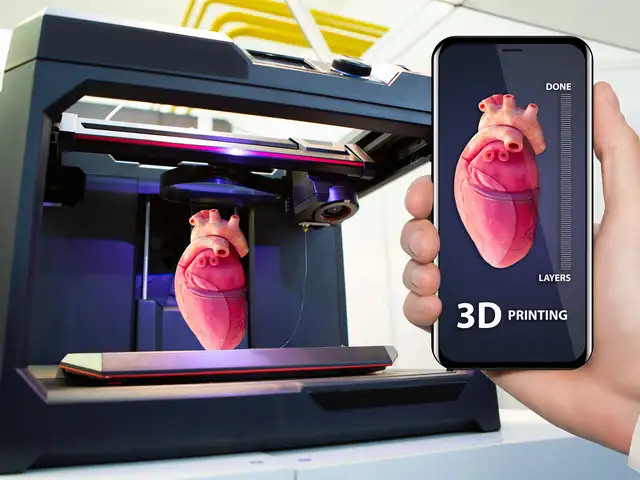
Emergence of a 3D printed heart, thermal tracking of asteroids, algorithms to forecast disruptions in nuclear fusion and more are turning science fiction into reality.
Emergence of a 3D printed heart, thermal tracking of asteroids, algorithms to forecast disruptions in nuclear fusion and more are turning science fiction into reality.
Scientists have found an ingenious way to spot tiny near-Earth objects (NEOs) early as they hurtle towards the planet. Instead of using visible light to spot incoming NEOs, researchers at NASA’s Jet Propulsion Laboratory used a characteristic of NEOs — their heat. Asteroids and comets are warmed by the sun and so glow brightly at thermal wavelengths, making them easier to spot with the Near-Earth Object Wide-field Infrared Survey Explorer (NEOWISE) telescope.
Scientists have found an ingenious way to spot tiny near-Earth objects (NEOs) early as they hurtle towards the planet. Instead of using visible light to spot incoming NEOs, researchers at NASA’s Jet ..
Read More
Scientists at the Tel Aviv University achieved a breakthrough by 3D printing a heart using the patient’s own cells. The scientists used personalised non-supplemented materials as bio-inks for 3D printing. The bio-inks do not provoke an immune response, thereby minimising complications. Scientists extracted fatty tissue from the patient and processed them to form personalised bio-inks to 3D print the heart, complete with cells, blood vessels, ventricles and chambers.
Scientists at the Tel Aviv University achieved a breakthrough by 3D printing a heart using the patient’s own cells. The scientists used personalised non-supplemented materials as bio-inks for 3D prin..
Read More
Scientists have developed a cost-effective method to allow self-driving cars to ‘see’ 3D objects in their path. Scientists from Cornell University in the US have dis-covered that a simpler method, using two inexpensive cameras on either side of the windshield can detect objects with nearly LiDAR’s (Light Detection and Ranging) accuracy and at a fraction of the cost.
Scientists have developed a cost-effective method to allow self-driving cars to ‘see’ 3D objects in their path. Scientists from Cornell University in the US have dis-covered that a simpler method, us..
Read More
Artificial Intelligence (AI) can speed up the development of clean and limitless fusion energy for generating electricity, claim researchers. A team of scientists at the US Department of Energy and Princeton University are applying deep learning to forecast sudden disruptions that can halt fusion reactions and damage the reactions. Accomplishing this feat are neural networks, layers of interconnected nodes — mathematical algorithms — that are weighed by the programme to shape the desired output.
Artificial Intelligence (AI) can speed up the development of clean and limitless fusion energy for generating electricity, claim researchers. A team of scientists at the US Department of Energy and P..
Read More
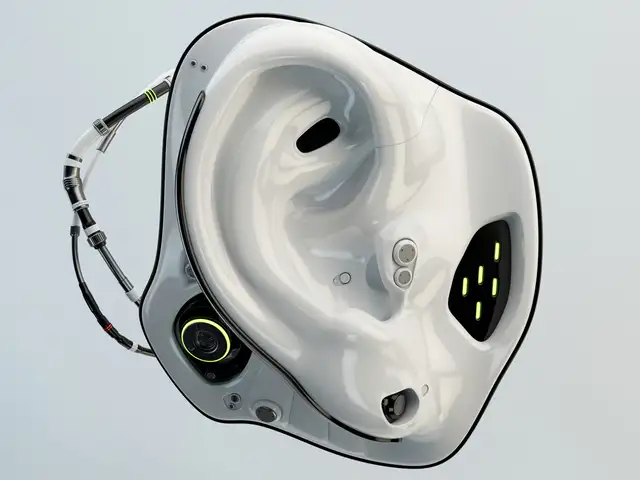
Technology that can help people suffering from dementia stay at home as long as possible could be available in the next five years. Scientists and doctors at the Imperial College London are developing an ear device that records brain activity and uses radar technology to track people’s movements at home. Sensors are also being created to remotely monitor heart rate, sleep cycles and blood pressure.
Technology that can help people suffering from dementia stay at home as long as possible could be available in the next five years. Scientists and doctors at the Imperial College London are developin..
Read More
A nasal spray of ‘love hormone’ oxytocin may help treat alcohol use disorder, according to a study. The study found that oxytocin blocks enhanced drinking in alcohol-dependent test rats. Targeting the oxytocin system may provide novel pharmaceutical interventions for the treatment of alcohol-use disorder, said researchers from the National Institutes of Health and The Scripps Research Institute in the US.
A nasal spray of ‘love hormone’ oxytocin may help treat alcohol use disorder, according to a study. The study found that oxytocin blocks enhanced drinking in alcohol-dependent test rats. Targeting th..
Read More
Researchers have developed a protein-based sensor that can detect lanthanides, the rare earth metals used in smartphones and other gadgets, in an efficient and cost-effective way. The sensor changes its fluorescence when it binds to these metals, according to a study published in the Journal of the American Chemical Society. Extracting rare-earths from the environment or from industrial samples is generally challenging and expensive.
(All images are for representative purposes only)
Researchers have developed a protein-based sensor that can detect lanthanides, the rare earth metals used in smartphones and other gadgets, in an efficient and cost-effective way. The sensor changes ..








 Horse Ridge: The powerful processor that can narrow Intel's goal to achieve quantum supremacy

