Pandemic decision-making can be overwhelming & exhausting. Psychology may have answers to the fatigue
Making decisions about risk and uncertainty is hard.
By PTI |
iStock
Answering easier questions instead of trickier ones leaves you vulnerable to cognitive biases, or errors in thought that affect your decision-making.
NEWARK: You want to sit down for an indoor dinner with friends. A couple of years ago, this was a simple enough activity that required minimal planning. However, that is not the case in today's world. Many people now face a stream of further considerations about benefits and risks.
Will I enjoy the experience? What are the potential downsides? Am I comfortable with the restaurant's pandemic-related policies? What's the ventilation like? Is it very busy there at this time of day? Am I planning to see lots of people, or people with compromised immune systems, in the near future?
This is exhausting! As scientists at the Learning and Decision-Making Lab at Rutgers University-Newark, we've noticed how many decision-making processes are affected by the pandemic. The accumulation of choices people are making throughout the day leads to what psychologists call decision fatigue - you can end up feeling overwhelmed and make bad decisions. The current pandemic can make this situation more pronounced, as even the choices and activities that should be the most simple can now feel tinged with risk and uncertainty.
Risk involves known probabilities - for example, the likelihood of losing a certain hand in poker. But uncertainty is an unknown probability - you can never really know the exact chance of catching COVID-19 by engaging in certain activities. Human beings tend to be both risk-averse and uncertainty-averse, meaning that you likely avoid both when you can. And when you can't - as during a confusing phase of a pandemic - it can be draining to try to decide what to do.
Rules are easy, decisions are hard Before the COVID-19 pandemic, most people didn't think through some basic decisions in the same way they might now. In fact, even early in the pandemic you didn't really need to. There were rules to follow whether you liked them or not. Capacity was limited, hours were restricted, or shops were closed. People were strongly urged to opt out of activities they'd normally engage in.
ADVERTISEMENT
This is evident in data we collected from university students in fall 2020 and spring 2021. One question we asked was, "What has been the hardest part of the pandemic for you?" Responses included "Not being able to see my friends and family," "Having to take classes online," "Being forced to stay home" and many other similar frustrations.
Many of our survey respondents were either not able to do things they wanted to do or were forced to do things they didn't want to do. In either case, the guidelines were clear-cut and the decisions were less of a struggle.
As restrictions ease and people think about "living with" the coronavirus, the current phase of the pandemic brings with it a new need to make cost-benefit calculations.
It's important to remember that not everyone has experienced these kinds of decisions in the same way. Throughout the course of the pandemic there have been people who did not have the luxury of choice and needed to go to work regardless of the risk. There have also been those who have taken risks all along. On the other end of the spectrum, some people continue to stay isolated and avoid almost every situation with the potential for contracting COVID-19.
ADVERTISEMENT
Those who experience the most decision fatigue are those who are in the middle - they want to avoid COVID-19 but also want to get back to the activities they enjoyed before the pandemic.
Tired Of Never-Ending Working From Home Shift? 4 Tips To Maintain A Work-Life Balance
1/6
Working from home has become the new normal as companies try to minimise disruptions and keep operations running as close to normal as possible. But with most of us working from home, the lines between "work" and "home" could become quickly blurred.
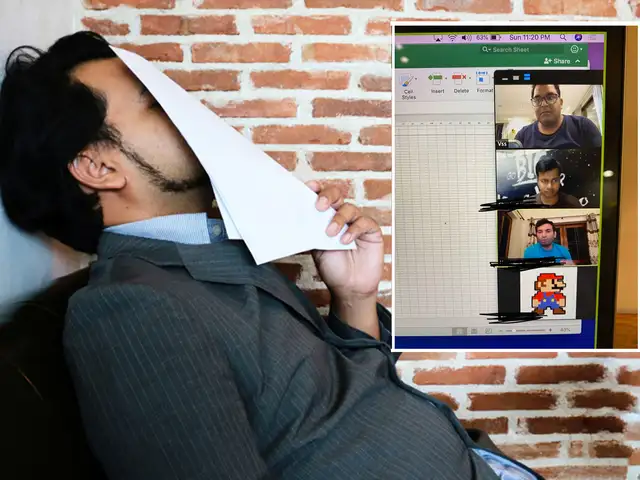
A few weeks ago, Paytm founder Vijay Shekhar Sharma took to Twitter to announce that he had been so wrapped up in Zoom meetings (inset from Sharma's Twitter account) that he forgot it was Sunday. And that seems to be the case with most entrepreneurs who are dealing with investor pressure and the stress of a looming economic slowdown.
Working from home has become the new normal as companies try to minimise disruptions and keep operations running as close to normal as possible. But with most of us working from home, the lines betwe..
Read More
In a recent media interview, Zerodha CEO Nithin Kamath (L) confessed, “I start work around 8.30 am and work till I sleep. I am definitely overworking, so are a few of my colleagues.”
“I had assumed that there would be more family time than before (but) the opposite has happened. Maybe I am spending lesser time than before because the boundary between work and personal time has disappeared. That said, daily I work out with my wife and play music with my son, and enjoy a drink with my brother and father once in a few days.”
If you find yourself in a similar situation as Kamath or Paytm's Vijay Shekhar Sharma (R), here are a few practical ways you can quickly establish boundaries.
In a recent media interview, Zerodha CEO Nithin Kamath (L) confessed, “I start work around 8.30 am and work till I sleep. I am definitely overworking, so are a few of my colleagues.”“I had assumed t..
Read More
Working from home can be invasive to your personal life. Without scheduled work hours, work can creep into your home life and just as personal errands can creep into work hours. To avoid this, start and end your workday at the same time every day. Don’t mix household chores into work hours and vice-versa.
Working from home can be invasive to your personal life. Without scheduled work hours, work can creep into your home life and just as personal errands can creep into work hours. To avoid this, start ..
Read More
Studies have shown that having a designated workspace helps put your brain into work mode and enhances productivity. If you can’t set aside a designated workspace (due to a space crunch), try to create barriers in other ways. For example, use your laptop for work calls/meetings and use your phone to check social media or chat with friends. Having different devices for different purposes will help your brain switch from work to play mode.
Studies have shown that having a designated workspace helps put your brain into work mode and enhances productivity. If you can’t set aside a designated workspace (due to a space crunch), try to crea..
Read More
A shutdown ritual is a set routine of actions that you perform at the end of each workday to finalize your day and signify that your workday is done. Cal Newport, the author of Deep Work, initiated it as a New Years’ resolution to get the most of his relaxation time.
“It has worked better than I imagined. I’ve basically eliminated stressful work-related thoughts from my evenings and weekends. This has really improved my ability to relax and focus on other things,” he wrote on his website.
Some activities you can include in your shutdown ritual are preparing a to-do list for the next day, going for a walk, signing up for an evening fitness class among others. The goal isn’t what you do but that you do something to replace and simulate your commute, which is a built-in shutdown ritual.
A shutdown ritual is a set routine of actions that you perform at the end of each workday to finalize your day and signify that your workday is done. Cal Newport, the author of Deep Work, initiated i..
Read More
One way to ensure that you’re not blurring the lines between work and home is to create a no-work zone for at least an hour before you go to bed and after you wake up. This will keep your mind ample time to properly recharge.
Research shows that what you do before you go to sleep has an impact on the quality of sleep, and your engagement, your ability to focus, the next day. Passive leisure activities, like watching TV or reading a book, were associated with better sleep than doing something like answering work emails.
One way to ensure that you’re not blurring the lines between work and home is to create a no-work zone for at least an hour before you go to bed and after you wake up. This will keep your mind ample ..
Shortcuts can short-circuit decision-making Psychologist Daniel Kahneman wrote in his book "Thinking, Fast and Slow" that "when faced with a difficult question, we often answer an easier one instead."
ADVERTISEMENT
Making decisions about risk and uncertainty is hard. For instance, trying to think through the probability of catching a potentially deadly virus while going to an indoor movie theater is difficult. So people tend to think in terms of binaries - "this is safe" or "this is unsafe" - because it's easier.
The problem is that answering easier questions instead of trickier ones leaves you vulnerable to cognitive biases, or errors in thought that affect your decision-making.
One of the most prevalent of these biases is the availability heuristic. That's what psychologists call the tendency to judge the likelihood of an event based on how easily it comes to mind. How much a certain event is covered in the media, or whether you've seen instances of it recently in your life, can sway your estimate. For example, if you've seen stories of a plane crash in the news recently, you may believe the probability of being in a plane crash to be higher than it actually is.
The effect of the availability heuristic on pandemic-era decision-making often manifests as making choices based on individual cases rather than on overall trends. On one side, people may feel fine going to a crowded indoor concert because they know others in their lives who have done this and have been fine - so they judge the likelihood of catching the coronavirus to be lower as a result. On the other hand, someone who knows a friend whose child caught COVID-19 at school may now think the risks of transmission in schools are much higher than they really are.
Furthermore, the availability heuristic means these days you think much more about the risks of catching COVID-19 than about other risks life entails that receive less media attention. While you're worrying about the adequacy of a restaurant's ventilation system, you overlook the danger of getting into a car accident on your way there.
A constant process Decisions in general, and during a pandemic in particular, are about weighing risks and benefits and dealing with risk and uncertainty.
Because of the nature of probability, you can't be sure in advance whether you'll catch COVID-19 after agreeing to dine at a friend's house. Furthermore, the outcome does not make your decision right or wrong. If you weigh the risks and benefits and accept that dinner invitation, only to end up contracting COVID-19 at the meal, it doesn't mean you made the wrong decision - it just means you rolled the dice and came up short.
On the flip side, if you accept the dinner invitation and don't end up with COVID-19, don't get too smug; another time, the outcome might be different. All you can do is try to weigh what you know of the costs and benefits and make the best decisions you can.
During this next phase of the pandemic, we recommend remembering that uncertainty is a part of life. Be kind to yourself and others as we all try to make our best choices.
(The article is syndicated by PTI via The Conversation)
World Stroke Day: Severe Headache, Extreme Fatigue & Confusion Are Common Signs; Use FAST Test At Home
1/6
Suffering from a stroke is a life-changing event.
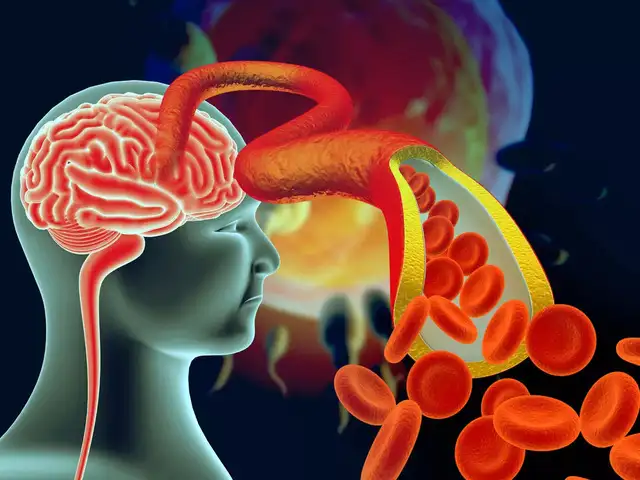
When the blood supply to part of the brain is affected, stroke occurs. The condition cuts off the supply of oxygen and nutrients to the brain, and causes the brain cells to damage or die.
There are two primary reasons for the stroke to occur – a blood vessel bursts (haemorrhagic stroke) or is blocked by a clot (ischaemic stroke which accounts for the majority of cases, almost 85 per cent).
It is the fourth leading cause of death and the fifth leading cause of disability in India.
Dr Vishal A Chafale, Consultant - Interventional Neurology at Apollo Hospitals - Navi Mumbai, shares the common signs of stroke one shouldn’t ignore.
Suffering from a stroke is a life-changing event.When the blood supply to part of the brain is affected, stroke occurs. The condition cuts off the supply of oxygen and nutrients to the brain, and cau..
Read More
Recognising signs of stroke early is an emergency and needs urgent medical attention. However, often, one may not even realise that s/he is having a stroke, mistaking the symptoms for something else and delaying in beginning the treatment.
To some, having a stroke may appear like the patient is confused. An early start of treatment can help reduce the mortality and morbidity associated with a stroke and save lives while enhancing the chances for a successful recovery.
It is, therefore, imperative to recognise the symptoms of a stroke so that the patient can be immediately moved to a hospital for timely treatment.
Recognising signs of stroke early is an emergency and needs urgent medical attention. However, often, one may not even realise that s/he is having a stroke, mistaking the symptoms for something else ..
Read More
Remember the acronym F.A.S.T. - created by The American Stroke Association - that can help any individual recognise the symptoms of a stroke early and act fast.
F stands for Face: If one side of the face droops when a person is asked to smile, it could indicate a stroke. A stands for Arm: If one arm drifts downwards when the person is asked to raise both arms, it’s a sign of a stroke. S stands for Speech: If the person’s speech is slurred or incoherent on being asked to repeat a simple phrase, it can be due to a stroke. T stands for Time: Time is precious with the patient. S/he must be taken to the hospital immediately in case any of the previous three signs are present.
Remember the acronym F.A.S.T. - created by The American Stroke Association - that can help any individual recognise the symptoms of a stroke early and act fast.F stands for Face: If one side of the f..
Read More
The symptoms of stroke depend upon part of the brain involved. The common symptoms of a stroke include sudden numbness or weakness of the face, arm, hands or leg - most often on one side of the body. This may be accompanied by confusion, incoherent speech or sudden inability to speak or understand speech.
The vision in one or both eyes may be affected. There may be sudden difficulty in walking with dizziness, loss of balance or coordination. A sudden severe headache with no known cause or a sudden onset of extreme fatigue can also indicate stroke.
The symptoms of stroke depend upon part of the brain involved. The common symptoms of a stroke include sudden numbness or weakness of the face, arm, hands or leg - most often on one side of the body..
Read More
Most patients suffer from ischemic strokes, and the best treatment is thrombolytic therapy, i.e. clot-busting drugs that dissolve the blood clots obstructing blood flow. Clot-busting drugs are best administered up to 4.5 hours after onset of symptoms. The earlier they are given, the greater the effect.
When patients show poor response for thrombolysis therapy, mechanical thrombectomy (MT) is the next step. In MT, the clot is removed from the brain artery without open surgery using catheter based techniques. This procedure is done in cathlab under local anaesthesia or general anaesthesia (only if the patient is restless or unstable).
In this procedure, catheters are inserted in the brain through the femoral artery, and the clot from the occluded artery is removed and blood supply to the brain is restored using special techniques like a stent retriever or suction device.
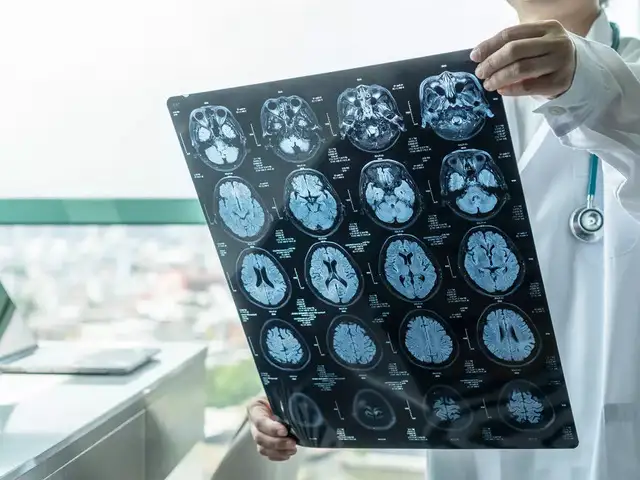
For best outcome, this procedure should be done within six hours, but in some patients, it can be done upto 24 hours if there is salvageable brain tissue - ischemic penumbra. This is established by doing MRI or perfusion study.
Most patients suffer from ischemic strokes, and the best treatment is thrombolytic therapy, i.e. clot-busting drugs that dissolve the blood clots obstructing blood flow. Clot-busting drugs are best a..
Read More
All patients with ischemic or hemorrhagic stroke should be admitted to a specialised unit with a specialised team to evaluate and extend immediate medical care for the emergency management.
Along with stroke management, it is also important to know the main cause of stroke and risk factors so that treatment can be started to prevent it. Common risk factors are uncontrolled diabetes, hypertension, dyslipidemia, smoking, obesity and sedentary lifestyle.
All modifiable risk factors should be identified and treated aggressively to prevent almost 80 per cent of stroke. For survivors of stroke, it is essential to implement rehabilitation to help the patient recover. The rehabilitation process promotes relearning of lost skills and helps the patient regain independence with improved quality of life.
All patients with ischemic or hemorrhagic stroke should be admitted to a specialised unit with a specialised team to evaluate and extend immediate medical care for the emergency management.Along with..
Business News › Magazines › Panache › Pandemic decision-making can be overwhelming & exhausting. Psychology may have answers to the fatigueText Size:AAA