Over-enthusiasm versus under-tourism

If even half a billion Indians decide to see their country, no spot will be uncrowded.

BCCL
Under-tourism hinges on people being willing to be redirected elsewhere.
PM Narendra Modi’s Independence Day appeal to Indians to visit 15 places within the country before 2022 could upset one of the major travel and leisure trends being touted around the world: under-tourism. That there is a need to deflect holidaymakers from increasingly overcrowded ‘hotspots’ goes without saying.

Popular places such as the Trevi Fountain in Rome or Rohtang Pass in Himachal Pradesh are now so overflowing with tourist hordes that their attractions are completely obscured. People end up seeing only more people and vehicles. The somewhat esoteric phrase under-tourism is obviously meant to encourage the deflection of crowds to less-frequented destinations, to spread the benefit of tourist spends as well as ease infrastructure pressures on old favourites.

Even if less than half of India takes the PM’s exhortation to heart, a billion feet will be on the move, thereby trampling under-tourism’s raison d’être. Apart from the ecological implications of such seasonal migrations, under-tourism hinges on people being willing to be redirected elsewhere.


In that context, pilgrimage spots — which attract more domestic visitors than the Taj Mahal every year — will be the hardest to decongest unless states emulate Sikkim, which has put up replicas of sacred Char Dham to make the state a one-stop salvation destination.

The Ultimate Travel Goals List: Take A Trip To India's 10 Heritage Sites This Summer
1/11
India has always treasured its perennial glory when it comes to culture and history. From man-made marvels to natural wonders, the country offers a plethora of stunning sites that should be at the top of every travelers bucket list.

Travelyaari, the leading online bus ticketing platform, shares an insight on the handpicked locations of top 10 world heritage sites listed by UNESCO.
India has always treasured its perennial glory when it comes to culture and history. From man-made marvels to natural wonders, the country offers a plethora of stunning sites that should be at the to..
Read More
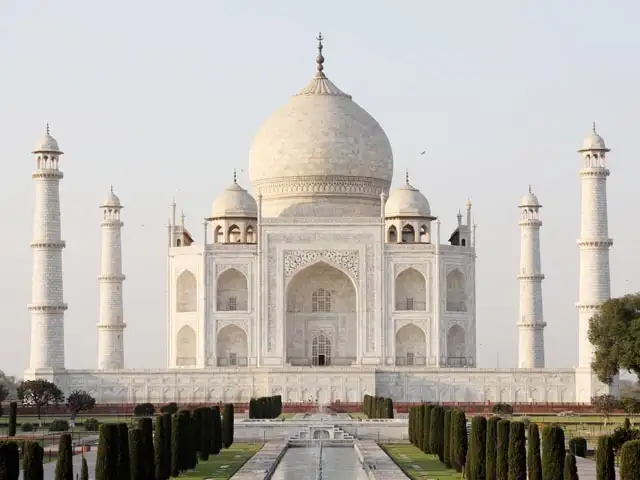
The Taj Mahal is located on the right bank of the Yamuna River in a vast Mughal garden that encompasses nearly 17 hectares, in the Agra District in Uttar Pradesh. It was built by Mughal Emperor Shah Jahan in memory of his wife Mumtaz Mahal with construction starting in 1632 AD and completed in 1648 AD, with the mosque, the guest house and the main gateway on the south, the outer courtyard and its cloisters were added subsequently and completed in 1653 AD.
The Taj Mahal is located on the right bank of the Yamuna River in a vast Mughal garden that encompasses nearly 17 hectares, in the Agra District in Uttar Pradesh. It was built by Mughal Emperor Shah ..
Read More
Located at the heart of the Himalayan range in northern India (State of Sikkim), the Khangchendzonga National Park includes a unique diversity of plains, valleys, lakes, glaciers and spectacular, snow-capped mountains covered with ancient forests, including the world's third highest peak, Mount Khangchendzonga.

(Image: www.knpsikkim.in)
Located at the heart of the Himalayan range in northern India (State of Sikkim), the Khangchendzonga National Park includes a unique diversity of plains, valleys, lakes, glaciers and spectacular, sno..
Read More
The Jantar Mantar, in Jaipur, is an astronomical observation site built in the early 18th century. It includes a set of some 20 main fixed instruments. They are monumental examples in masonry of known instruments but which in many cases have specific characteristics of their own. Designed for the observation of astronomical positions with the naked eye, they embody several architectural and instrumental innovations.
The Jantar Mantar, in Jaipur, is an astronomical observation site built in the early 18th century. It includes a set of some 20 main fixed instruments. They are monumental examples in masonry of know..
Read More
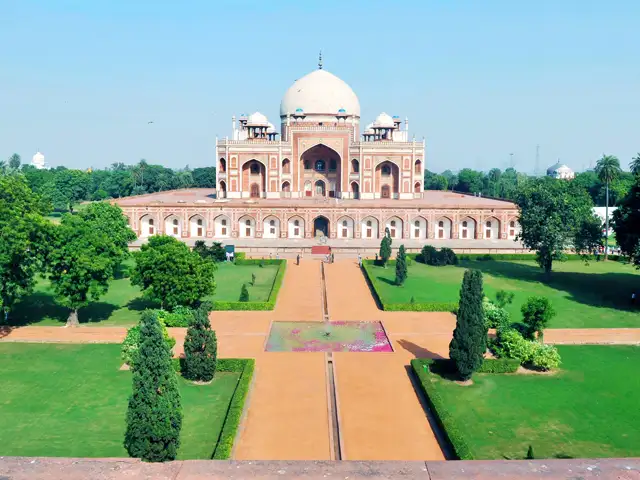
This tomb, built in 1570, is of particular cultural significance as it was the first garden-tomb on the Indian subcontinent. It inspired several major architectural innovations, culminating in the construction of the Taj Mahal.
This tomb, built in 1570, is of particular cultural significance as it was the first garden-tomb on the Indian subcontinent. It inspired several major architectural innovations, culminating in the co..
Read More
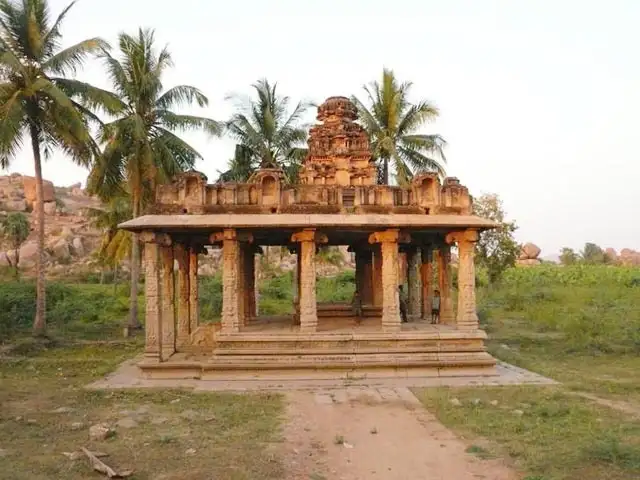
The austere, grandiose site of Hampi was the last capital of the last great Hindu Kingdom of Vijayanagar. Its fabulously rich princes built Dravidian temples and palaces which won the admiration of travellers between the 14th and 16th centuries. Conquered by the Deccan Muslim confederacy in 1565, the city was pillaged over a period of six months before being abandoned.

(Image: ©UNESCO by Francesco Bandarin)
The austere, grandiose site of Hampi was the last capital of the last great Hindu Kingdom of Vijayanagar. Its fabulously rich princes built Dravidian temples and palaces which won the admiration of t..
Read More
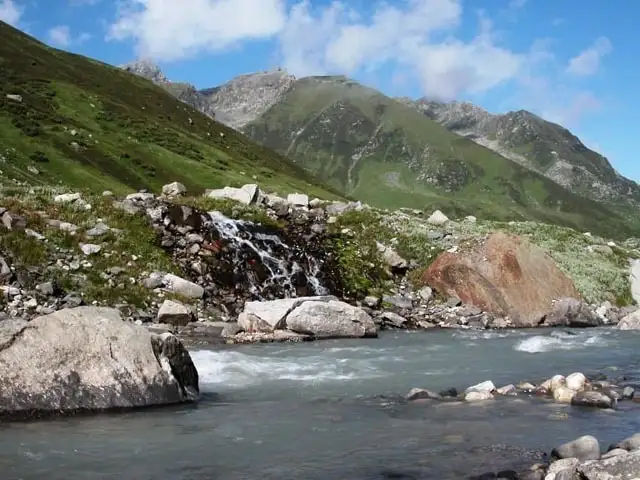
This National Park in the western part of the Himalayan Mountains in the northern Indian state of Himachal Pradesh is characterized by high alpine peaks, alpine meadows and riverine forests. The 90,540 ha property includes the upper mountain glacial and snow meltwater sources of several rivers, and the catchments of water supplies that are vital to millions of downstream users.

(Image: www.greathimalayannationalpark.org)
This National Park in the western part of the Himalayan Mountains in the northern Indian state of Himachal Pradesh is characterized by high alpine peaks, alpine meadows and riverine forests. The 90,5..
Read More
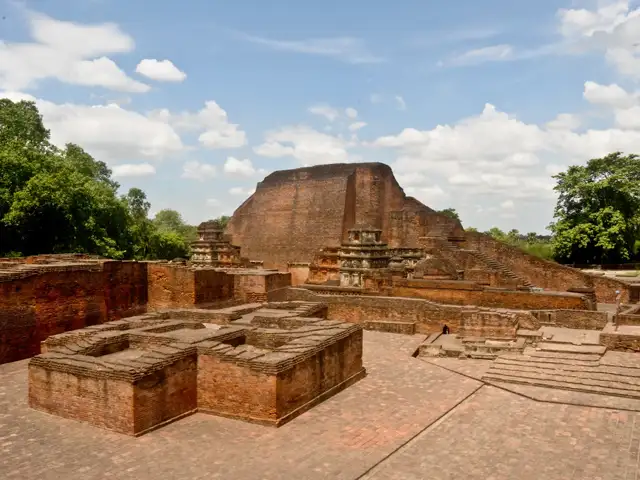
The Nalanda Mahavihara site is in the State of Bihar, in north-eastern India. It comprises the archaeological remains of a monastic and scholastic institution dating from the 3rd century BCE to the 13th century CE. It engaged in the organized transmission of knowledge over an uninterrupted period of 800 years.

(Image: ©Rajneesh Raj/www.whc.unesco.org)
The Nalanda Mahavihara site is in the State of Bihar, in north-eastern India. It comprises the archaeological remains of a monastic and scholastic institution dating from the 3rd century BCE to the 1..
Read More
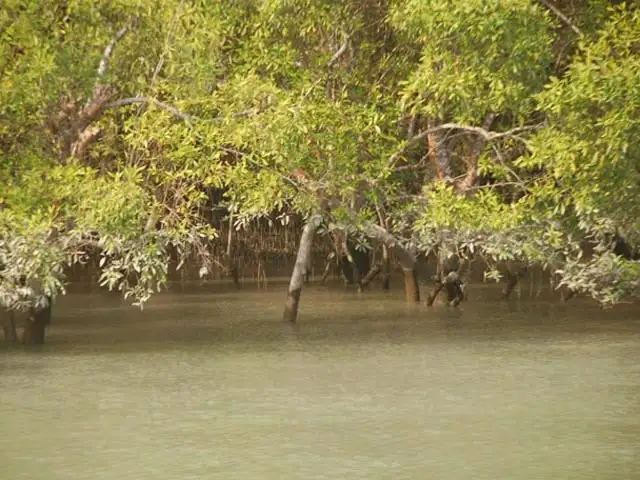
The Sundarbans covers 10,000 km2 of land and water (more than half of it in India, the rest in Bangladesh) in the Ganges delta. It contains the world's largest area of mangrove forests. A number of rare or endangered species live in the park, including tigers, aquatic mammals, birds and reptiles.

(Image: www.sunderbansnationalpark.com)
The Sundarbans covers 10,000 km2 of land and water (more than half of it in India, the rest in Bangladesh) in the Ganges delta. It contains the world's largest area of mangrove forests. A number of r..
Read More
On a hill overlooking the plain and about 40 km from Bhopal, the site of Sanchi comprises a group of Buddhist monuments (monolithic pillars, palaces, temples and monasteries) all in different states of conservation most of which date back to the 2nd and 1st centuries B.C. It is the oldest Buddhist sanctuary in existence and was a major Buddhist centre in India until the 12th century A.D.

(Image: www.asi.nic.in)
On a hill overlooking the plain and about 40 km from Bhopal, the site of Sanchi comprises a group of Buddhist monuments (monolithic pillars, palaces, temples and monasteries) all in different states ..
Read More

Download
The Economic Times Business News App
for the Latest News in Business, Sensex, Stock Market Updates & More.
READ MORE
ADVERTISEMENT

READ MORE:

LOGIN & CLAIM

50 TIMESPOINTS

More from our Partners

Loading next story
Business News › Magazines › Panache › Over-enthusiasm versus under-tourism
Text Size:AAA
Success
This article has been saved

*

+