On Rabindranath Tagore's birth anniversary, a reading list to remember the legend
While it is impossible to pick a favourite among Gurudev's works, here's a list to get you started.
By ET Online | Updated:
Agencies
Tagore passed away on August 7, 1941.
Polymath, poet, author, painter - Rabindranath Tagore left a deep impact, not just in India but across the globe. The first non-European to receive the Nobel Prize for Literature, 'Gurudev' as he came to be known was born to Debendranath Tagore, a religious reformer and member of the Brahmo Samaj, and Sarada Devi.
In addition to his several literary works, Tagore also wrote the National Anthems for, both, India and Bangaladesh.
He released his first poetry collection under the pseudonym Bhanusimha, but later went on to be published by his own name.
”His white hair flowed softly down both sides of his forehead (...) he gave an impression, to the boy I was then, o… https://t.co/2XuoRhQ9sd
Translated into English as 'The Home and the World', reportedly by Tagore's nephew Surendranath, the book is set during the time of the Swadeshi Movement and revolves around the lives of its three main characters. The story of an educated Bengali aristocrat Nikhilesh Chowdhury, his wife Bimala, and the outsider - his revolutionary friend who comes to stay in their home - Sandip Mukherjee, showed both love and freedom in a completely new light. The novel was adapted into a film in 1984 by Satyajit Ray.
Translated into English as 'Song Offerings', Tagore's collection of poems won him the Nobel Literature Prize in 1913. The first edition had an introduction William Butler Yeats.
'Shesher Kobita' (1929)
A lyrical novel set in Shillong, Shesher Kabita explores the love story between an Oxford-educated barrister Amit Ray and Labanya, who he meets in a car accident. The story, which Tagore wrote at the age of 68, is told through the exchange of love letters and poems between the two protagonists.
'Chokher Bali' (1903)
Aishwarya Rai-Bachchan and Raima Sen in a scene from the 2003 film. The novel follows the story of a young widow Binodini and her desires that affect the lives of the self-centred Mahendra and his innocent bride Asha. Tagore explores the human traits of love, friendship, ego and desire in the path-breaking novel.
It was also made into a film by Rituparno Ghosh in 2003, and features Aishwarya Rai-Bachchan as Binodini and Raima Sen as Ashalata.
ADVERTISEMENT
5 Satyajit Ray Classics That Remain Timeless
1/6
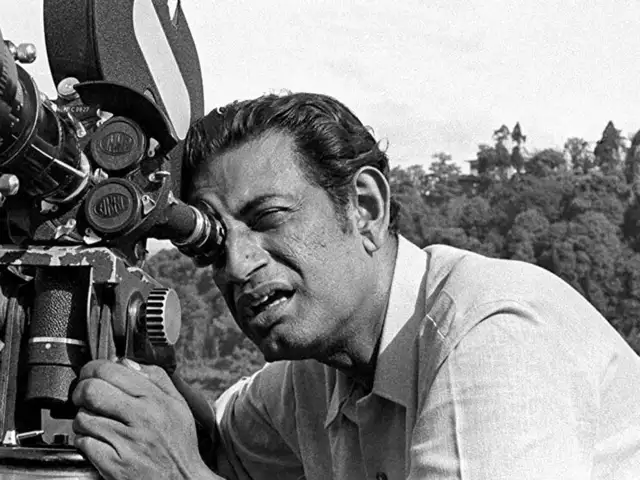
In his approximately 43 years of film-making career, Satyajit Ray donned many hats.
His contribution to India as a director, music composer, screenplay writer, illustrator and author has been remarkable.
After dedicating his life to a total of 36 movies, the Bharat Ratna awardee was also fêted with the Dadasaheb Phalke Award in 1984, among other international honours.
On his 98th birth anniversary, here are some of his greatest films that you should add to your must-watch list.
In his approximately 43 years of film-making career, Satyajit Ray donned many hats.
His contribution to India as a director, music composer, screenplay writer, illustrator and author has been remark..
Read More
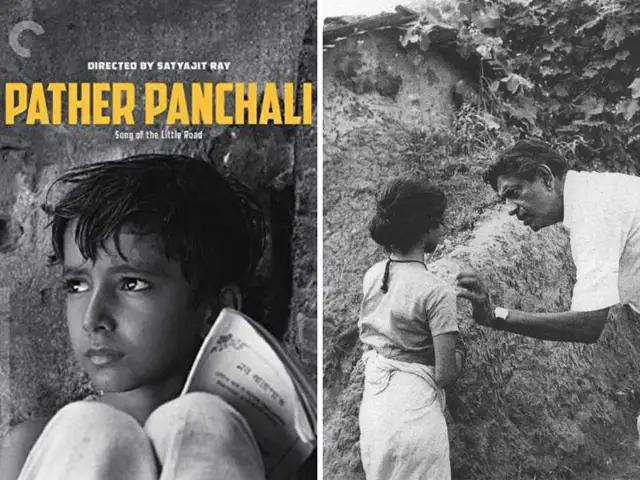
In 1955, Satyajit Ray made his directorial debut with the classic 'Pather Panchali' (Song of the Road).
Based on the novel of Bibhutibhushan Bandopadhyay, the movie shows the struggles of a character named Apu and his poor family living in a rural ancestral home. Due to the unavailability of money, Apu's family experiences joy, poverty, hunger, grief and even death.
The other movies from Apu's life are 'Aparajito' (The Unvanquished) and 'Apur Sansar' (The World of Apu), released in 1956 and 1959, respectively.
Ray's most-famous film was made on a restricted budget of merely Rs 1,50,000, and in a span of three years. This first in 'Apu' trilogy has become the only Indian movie to make it to the BBC's 100 best foreign language films list in 2018, and won the 1956 Cannes award for 'Best Human Document'.
In 1955, Satyajit Ray made his directorial debut with the classic 'Pather Panchali' (Song of the Road).Based on the novel of Bibhutibhushan Bandopadhyay, the movie shows the struggles of a character ..
Read More
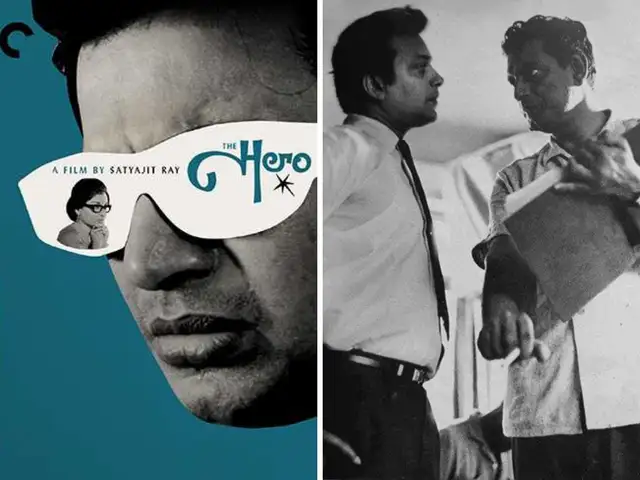
Released in 1966, 'Nayak' (The Hero) was Satyajit Ray's second original screenplay after his 1962 movie 'Kanchenjungha'.
Shot inside a train, the movie is about a 24-hour train journey where a young journalist (played by Sharmila Tagore), interviews a famous movie star (played by Uttam Kumar) for her magazine. As the story progresses, the bond between the two develops, and the journalist understands the lonely man behind his fame.
The same year, the Bengali movie bagged the Critics' Prize at the Berlin International Film Festival. It also received a National Award for the 'Best Feature Film' category in 1967.
Released in 1966, 'Nayak' (The Hero) was Satyajit Ray's second original screenplay after his 1962 movie 'Kanchenjungha'.Shot inside a train, the movie is about a 24-hour train journey where a young j..
Read More
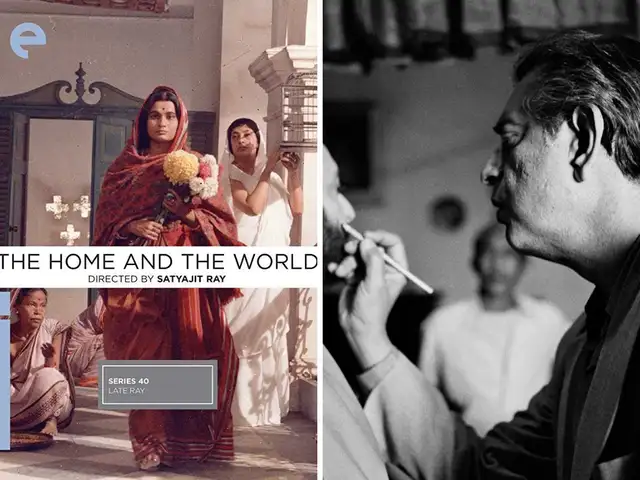
Greatly inspired by Rabindranath Tagore's novel, Satyajit Ray wanted to direct Ghare Baire (The Home and the World) for the longest time. The director had written the initial draft of the script in 1940s.
It took Ray one year to complete the film with a lot of help from his son Sandip in handling the camera as the director suffered a heart attack.
Set in 1907 during the Bengal partition, the story revolves around a love triangle, when a landowner's wife falls in love with his close friend. After the landlord finds out about it, he gives his wife the freedom to follow her heart as she should have a life inside and outside home.
The movie bagged 3 National Awards for 'Best Feature Film', 'Best Supporting Actor' - Biswajit Dutt, and 'Best Costume Design' at the 32nd National Film Awards.
Greatly inspired by Rabindranath Tagore's novel, Satyajit Ray wanted to direct Ghare Baire (The Home and the World) for the longest time. The director had written the initial draft of the script in 1..
Read More
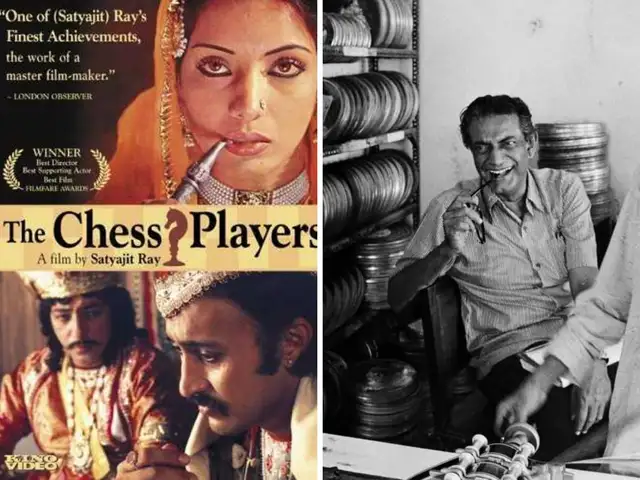
Based on writer Munshi Premchand's short story, Satyajit Ray directed 'Shatranj Ke Khilari' (The Chess Players) in 1977. It was his only Hindi film production.
Set during the eve of 1857's rebellion, the movie is about two wealthy Nawabs who get overthrown by the East India Company. The noblemen are obsessed with chess, and focus all their energies on it. More so, the men flee to a village leaving behind their families and kingdom.
Ray's first and only feature film in Hindi language had a talented star cast - Sanjeev Kumar, Shabana Azmi, Saeed Jaffrey, Farida Jalal, Amjad Khan, Victor Banerjee, Farooq Sheikh and Tom Alter. Veteran actor Amitabh Bachchan was the narrator of the movie.
Based on writer Munshi Premchand's short story, Satyajit Ray directed 'Shatranj Ke Khilari' (The Chess Players) in 1977. It was his only Hindi film production.
Set during the eve of 1857's ..
Read More
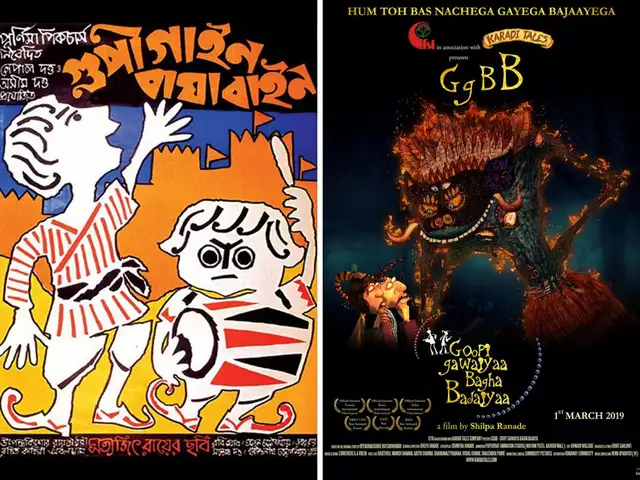
Based on a children's story by Satyajit Ray’s grandfather Upendra Kishore Roychowdhury, 'Goopy Gyne Bagha Byne' (The Adventures of Goopy and Bagha) remains an all-time classic. In this musical journey, a singer and drummer are granted with three wishes from the King of Ghosts. Ray was unable to shoot the film in colour as it was difficult for him to arrange finance.
The series also included sequels like 'Hirak Rajar Deshe' (1980) and 'Goopy Bagha Phire Elo' (1992). The latter was written by Ray himself, but was directed by his son, Sandip.
Inspired by Ray's musical fantasy after a period of 51 years, the animated-version of the film by director Shilpa Ranade released on 1 March earlier this year.
Based on a children's story by Satyajit Ray’s grandfather Upendra Kishore Roychowdhury, 'Goopy Gyne Bagha Byne' (The Adventures of Goopy and Bagha) remains an all-time classic. In this musical journe..