Now, Google & Amazon want to collect user data to help them manage home electronics
The two have collected data every time someone used a smart speaker to turn on a light or lock a door.
By Bloomberg |
Agencies
By Matt Day
As Amazon.com Inc. and Google work to place their smart speakers at the center of the internet-connected home, both technology giants are expanding the amount of data they gather about customers who use their voice software to control other gadgets.
For several years, Amazon and Google have collected data every time someone used a smart speaker to turn on a light or lock a door. Now they’re asking smart-home gadget makers such as Logitech and Hunter Fan Co. to send a continuous stream of information.
In other words, after you connect a light fixture to Alexa, Amazon wants to know every time the light is turned on or off, regardless of whether you asked Alexa to toggle the switch. Televisions must report the channel they’re set to. Smart locks must keep the company apprised whether or not the front door bolt is engaged.
This information may seem mundane compared with smartphone geolocation software that follows you around or the trove of personal data Facebook Inc. vacuums up based on your activity. But even gadgets as simple as light bulbs could enable tech companies to fill in blanks about their customers and use the data for marketing purposes. Having already amassed a digital record of activity in public spaces, critics say, tech companies are now bent on establishing a beachhead in the home.
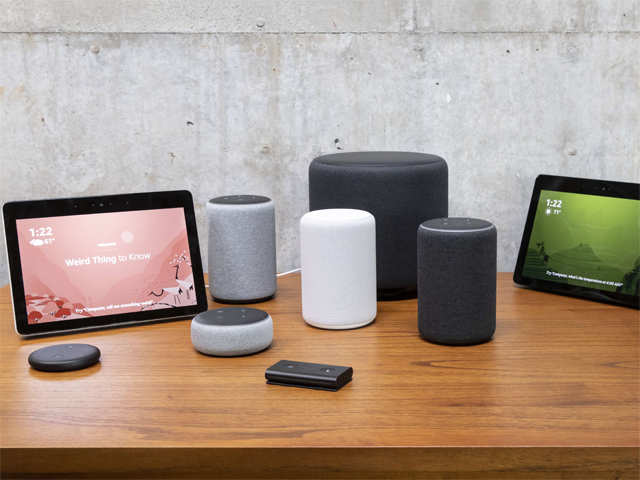
Amazon Wants To Take Over With Redesigned Echo, Smart Clocks, Microwave
1/12
Amazon caused a few gasps at its Alexa event Thursday when it revealed it had 70 things to announce.
The new products give Amazon a greater reach than ever before.
Updates to the internet giant's Alexa-infused Echo smart speakers will allow them to tend to microwave cooking and even have "hunches" regarding what users may want or have forgotten.
Alexa is even developing a personality, complete with a favorite pet or beer.
Here's a round up all of the Alexa-infused products Amazon showcased, including speakers, an in-car device and, a microwave:
Amazon caused a few gasps at its Alexa event Thursday when it revealed it had 70 things to announce. The new products give Amazon a greater reach than ever before. Updates to the internet giant's Ale..
Read More
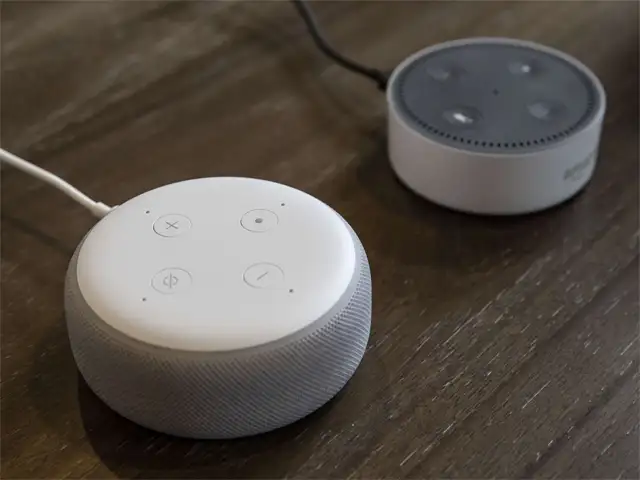
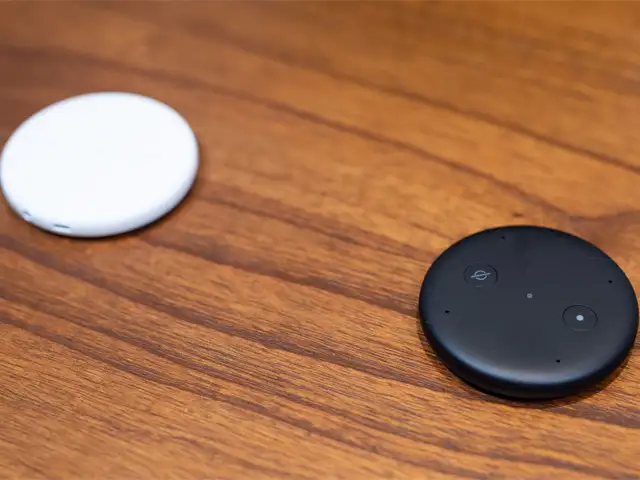
The revamped Echo Dot has a new look, with rounded edges, and packs more punch, with a 1.6-inch driver delivering 70-per cent-louder audio than the previous model.
The speaker has lower distortion and enhanced bass. It can connect to other speakers and other apps and devices over Bluetooth.
The revamped Echo Dot has a new look, with rounded edges, and packs more punch, with a 1.6-inch driver delivering 70-per cent-louder audio than the previous model. The speaker has lower distortion an..
Read More
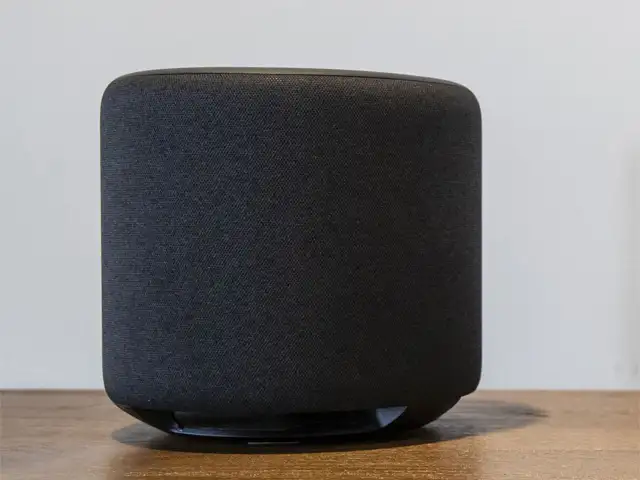
If you're craving more low-end tones from your Echo setup, you might consider the Echo Sub.
It delivers down-firing, 100W of bass through its 6-inch woofer, and you can pair it with an Echo or two to create a 2.1 stereo system.
If you're craving more low-end tones from your Echo setup, you might consider the Echo Sub. It delivers down-firing, 100W of bass through its 6-inch woofer, and you can pair it with an Echo or two to..
Read More
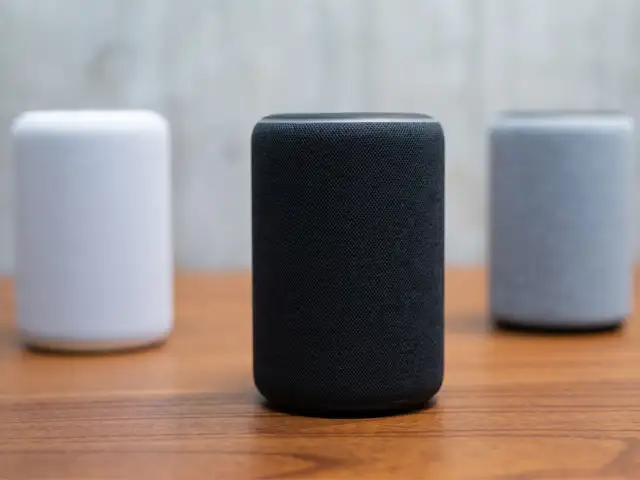
Amazon updated its Echo Plus, which includes a smart hub for a range of connected devices.
This time around, it has revamped speakers and a feature called local voice control, which lets you adjust your various smart-home devices even if your internet connection is down.
There's a temperature sensor too, so Echo Plus can tell smart thermostats to turn up the heat when it gets a little chilly.
Amazon updated its Echo Plus, which includes a smart hub for a range of connected devices. This time around, it has revamped speakers and a feature called local voice control, which lets you adjust y..
Read More
Not to be outdone by Chromecast Audio, Amazon has its own audio dongle called Echo Input, including Bluetooth, a microphone and a 3.5mm jack.
It doesn't have a speaker, so you'll need to connect it to your existing audio setup.
Not to be outdone by Chromecast Audio, Amazon has its own audio dongle called Echo Input, including Bluetooth, a microphone and a 3.5mm jack. It doesn't have a speaker, so you'll need to connect it t..
Read More
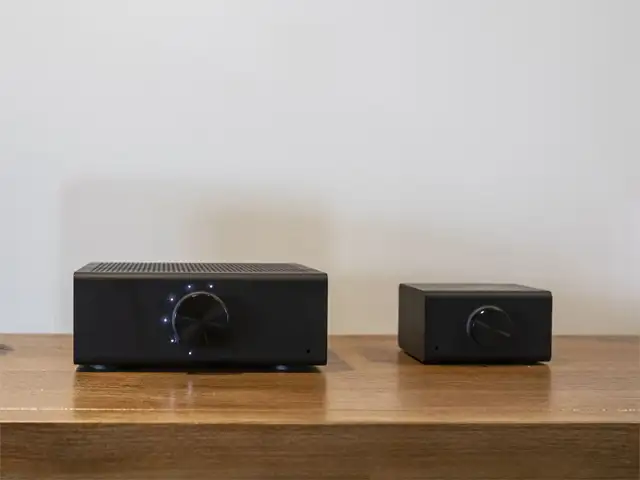
New arrivals to the Echo lineup this year, Echo Link Amp and Echo Link, are for those who are more particular than most about audio quality.
The former includes a 60W two-channel amplifier with digital and analog connectors. Echo Link, meanwhile, connects to your audio setup to stream high-fidelity music.
New arrivals to the Echo lineup this year, Echo Link Amp and Echo Link, are for those who are more particular than most about audio quality. The former includes a 60W two-channel amplifier with digit..
Read More
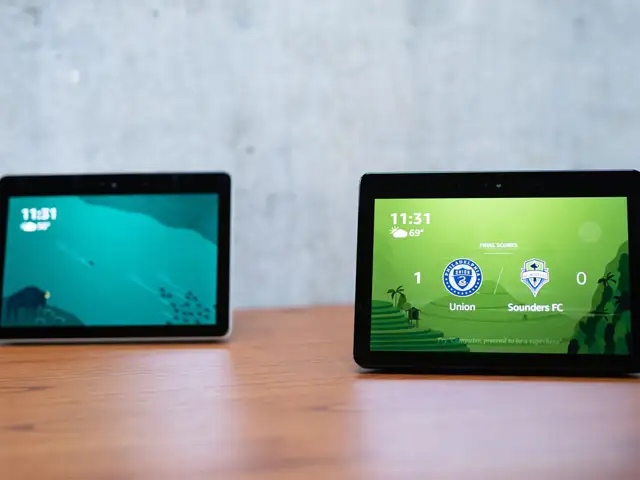
Amazon's smart display received an overhaul, as the company beefed up Echo Show with a 10-inch display alongside more powerful speakers and mics.
It has web browsers (Firefox and Amazon's Silk) this time around, along with Skype video chat support and Vevo music videos.
Amazon's smart display received an overhaul, as the company beefed up Echo Show with a 10-inch display alongside more powerful speakers and mics. It has web browsers (Firefox and Amazon's Silk) this ..
Read More
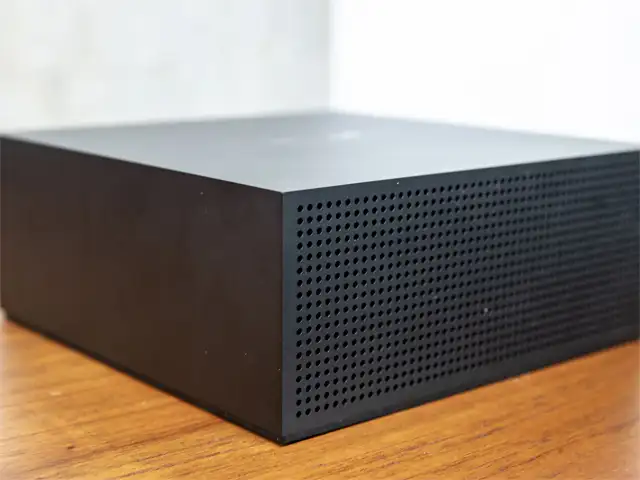
Amazon is dipping into the DVR game this year with Fire TV Recast.
It works with over-the-air networks using an antenna and will send live TV or recorded shows to Fire tablets, Fire TV, Echo Show or mobile devices. And, of course, you can use Alexa to control it.
Amazon is dipping into the DVR game this year with Fire TV Recast. It works with over-the-air networks using an antenna and will send live TV or recorded shows to Fire tablets, Fire TV, Echo Show or ..
Read More
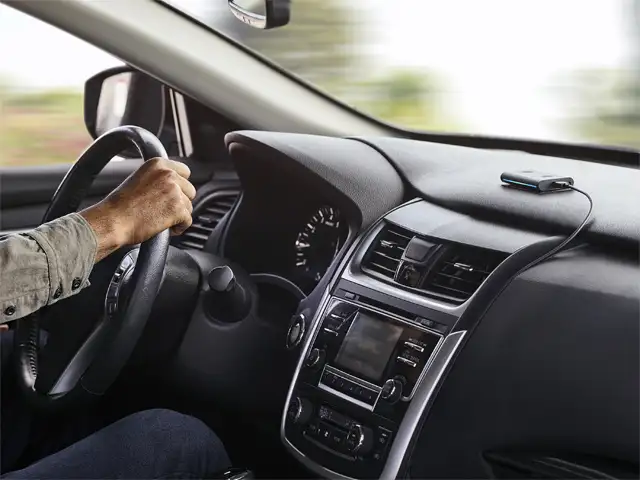
It probably shouldn't come as a surprise that Amazon wants to put Alexa in your car, even if you don't have a fancy dashboard infotainment system.
Enter Echo Auto. It's a dongle that connects to your audio system and uses a phone's cell connection (because you need internet access for Alexa to work).
Along with the conversational assistance you'd expect with Alexa, you can use Echo Auto for directions.
It probably shouldn't come as a surprise that Amazon wants to put Alexa in your car, even if you don't have a fancy dashboard infotainment system.Enter Echo Auto. It's a dongle that connects to your ..
Read More
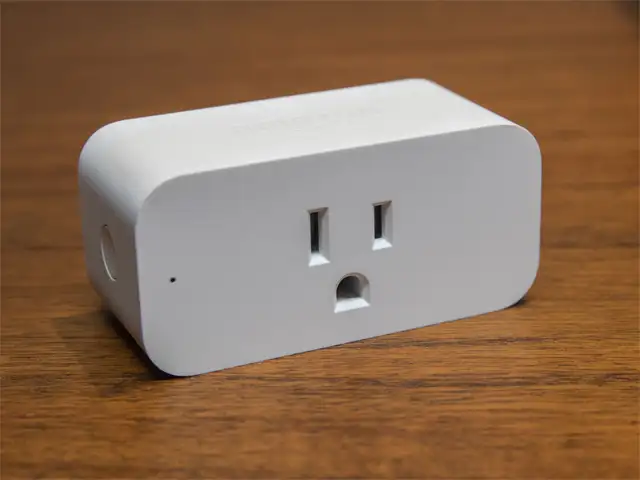
Amazon has found a way to connect Alexa to pretty much any wall-powered device using its Smart Plugs.
Once you've linked them to an Echo or the Alexa app, you can turn devices on and off, or set timers.
Amazon has found a way to connect Alexa to pretty much any wall-powered device using its Smart Plugs. Once you've linked them to an Echo or the Alexa app, you can turn devices on and off, or set time..
“You can learn the behaviors of a household based on their patterns,” says Brad Russell, who tracks smart home products for researcher Parks Associates Inc. “One of the most foundational things is occupancy. There’s a lot they could do with that.”
Some device makers are pushing back, saying automatic device updates don’t give users enough control over what data they share, or how it can be used. Public guidelines published by Amazon and Google don’t appear to set limits on what the companies can do with the information they glean about how people use appliances.
Amazon and Google say they collect the data to make it easier for people to manage their home electronics. Automatic status updates reduce the time it takes to process voice commands and lets smart-home hubs present up-to-date information on a screen or smartphone app. Greater awareness of what’s going on also lets them proactively suggest helpful uses for their voice assistants, and develop new ones.
Smart speakers are among the fastest growing categories of consumer electronics, led by Amazon’s Echo and Google’s Home devices. That’s pushed the companies and their Alexa and Assistant software deeper into debates about the tradeoffs between useful services and the harvesting of personal data. Both have had public pratfalls around privacy of voice commands, either recording private messages in error or sending them to others.
ADVERTISEMENT
The commercial success of voice assistants has bolstered dozens of companies working to build interest in internet-enabled televisions, kitchen appliances and other devices. Many people first start tinkering with connected appliances after buying a smart speaker. Surveys show about a quarter of U.S. smart speaker owners regularly use them to control something else, a percentage analysts expect to rise.
When smart speakers first hit the market, using them to command another device worked like this. After receiving the command “Alexa, turn on the light,” the software would ask the light bulb maker’s servers for the current status of the bulb. After a reply came back confirming the switch was off, Alexa would instruct the light to turn on.
ADVERTISEMENT
Now, in a push that accelerated last year, Amazon and Google are recommending—and, in some cases, requiring—that smart home makers tweak their code to reverse that relationship. Instead, the light bulb must report in to the hub with its status at all times.
“Oversharing for the sake of oversharing is probably never a good thing,” says Ian Crowe, a senior director with Logitech International S.A., a builder of computer and home electronics accessories. “We should have a good reason, and our users should agree it’s a good reason,” before sharing data. Logitech has tried to meet Amazon and Google halfway. Rather than tell smart speakers what each device connected to Logitech's Harmony remote controls were doing, Crowe says Logitech reports back with broad descriptions, specifying that a user is watching television instead of passing on information about their choice of channel, for instance.
“There are very relevant concerns about how much the system knows,” he says.
Crowe says Logitech has had conversations about status reporting with Amazon and Google, but declined to detail them. Executives at two other smart device makers, speaking on the condition of anonymity to protect business relationships, say they’ve asked for concessions from Amazon and Google related to user privacy or transparency and guarantees about use of the data, but been rebuffed.
An Amazon spokesman says the company doesn’t sell user data and doesn’t use information it gets from status reports for advertising. Status reports, he says, are designed to enable useful features for customers. He declined to comment on how long Amazon stores the data. A Google spokesman declined to comment on the company’s implementation of status updates.
Russell, the analyst with Parks Associates, calls status reporting “a bit of a Trojan Horse request.” Amazon and Google, he says, are suggesting “‘Hey, help us help you by giving us the status of your device, and make everyone’s life easier.’ But what they’re not saying is, ‘Gee, we can do a lot with that data.”
Even light fixtures, in elaborate setups, are a map of home life: When do you get home? When does the light in your child’s bedroom usually go off? What days do you burn the midnight oil?
Still, the nascent smart-home market is fiercely contested, and some critics acknowledge their worries about data collection are partly motivated by concerns that Amazon and Google will use their central position to muscle out rivals and dictate terms to the rest of the market. Moreover, some other smart-home companies themselves gather status reports, though they lack the scale or billion-dollar advertising businesses of the tech giants.
Meanwhile, plenty of companies say they are on-board with status reporting. Matt McPherson, an engineering manager with Hunter Fan Co., says that before the advent of status reports, device sometimes shut down without answering the user's command. “Do I think these guys are intentionally grabbing data in order to find some way of advertising?” he asks. “At this moment I don’t think so, but I can see something of that nature happening in the future.”
Some say Amazon and Google would do well to be more transparent by telling users, outside of the confines of lengthy privacy policies, what data they’re collecting and offering more fine-grained options for managing it. Amazon and Google let users delete accumulated smart-home data, but neither offers an option to stop collecting it from specific devices in the first place. Currently, the only way customers can disable data sharing for a specific device is to unplug it from the system.
“We know that there are consumer concerns, deeper than what’s been written about, about how much listening is really going on by any voice system,” says Martin Plaehn, who runs Control4 Corp., a builder of smart-home management tools.
People intuitively understand that by asking a voice assistant to control a device, they’re giving that company information about that action, he says. It’s less likely they know that linking a television to the system begins a process of transmitting updates when someone changes the channel or turns it on or off.
“There isn’t an implicit permission of, ‘Go ahead and take all my data whenever [something] changes,’” Plaehn says. “And we think that if the world really knew that was going on, it would create a real kerfuffle.”