Not just the elderly, young people are falling seriously ill from Covid-19 too
It’s true that risk of death climbs precipitously with age.
By Bloomberg |
BCCL
Among nearly 2,500 of the first coronavirus cases in the U.S., 705 were aged 20 to 44, according to the Centers for Disease Control and Prevention.
By Michelle Cortez, Angelica LaVito and Robert Langreth
New evidence from Europe and the U.S. suggests that younger adults aren’t as impervious to the novel coronavirus that’s circulating worldwide as originally thought.
Despite initial data from China that showed elderly people and those with other health conditions were most vulnerable, young people — from twenty-somethings to those in their early forties — are falling seriously ill. Many require intensive care, according to reports from Italy and France. The risk is particularly dire for those with ailments that haven’t yet been diagnosed.
“It may have been that the millennial generation, our largest generation, our future generation that will carry us through for the next multiple decades, here may be a disproportional number of infections among that group,” Deborah Birx, the White House coronavirus response coordinator, said in a press conference on Wednesday, citing the reports.
The data bears out that concern. In Italy, the hardest hit country in Europe, almost a quarter of the nearly 28,000 coronavirus patients are between the ages of 19 and 50, according to data website Statista.
Similar trends have been seen in the U.S. Among nearly 2,500 of the first coronavirus cases in the U.S., 705 were aged 20 to 44, according to the Centers for Disease Control and Prevention. Between 15% and 20% eventually ended up in the hospital, including as many as 4% who needed intensive care. Few died.
ADVERTISEMENT
One of those younger adults is Clement Chow, an assistant professor of genetics at the University of Utah. "I’m young and not high risk, yet I am in the ICU with a very severe case,” Chow said in a March 15 tweet. "We really don’t know much about this virus."
According to his Twitter posts, Chow had a low-grade fever for a few days and then a bad cough that led to respiratory failure. It turned out to be the coronavirus. He ended up on high flow oxygen in the ICU. When he arrived last Thursday, he was the first patient there. "Now there are many more," he tweeted.
I was the first COVID19 patient in the ICU on Thursday. Now there are many more.
Chow didn't give his age in the tweets, but his laboratory website indicates he graduated from college in 2003 and has two unruly children. He didn't respond to an email and Bloomberg was unable to independently confirm his status as a patient.
ADVERTISEMENT
It’s true that risk of death climbs precipitously with age. While there were only 144 patients over age 85, as many as 70% were hospitalized and 29% needed intensive care, according to the CDC report. One in four died, the agency said in the Morbidity and Mortality Weekly Report.
Yet emerging evidence suggests that infants and toddlers may also be at risk of severe complications. In a study of more than 2,000 young children with Covid-19 from China, published this week in Pediatrics, Chinese doctors found that about 11% of cases in infants were judged to be severe or critical, as were 7% of those in toddlers and preschoolers. While still a lower rate of severe disease than adults, it's hardly insignificant.
ADVERTISEMENT
In the White House press conference Wednesday, President Donald Trump implored younger people to stop reckless behavior, such as partying, going to the beach and hanging out at bars. Yet, as college campuses across the country close down and require students to leave, even the most conscientious young adults face a difficult choice. Finding their academic years abbreviated and graduation plans shattered, many are driving or flying home, where they risk exposing their parents and grandparents to Covid-19.
The same concerns apply to young people starting out in big cities who suddenly find themselves under pressure to head back to their hometowns. Livia Calari's father has been begging her to come home for weeks. The 25-year-old and her boyfriend live in Brooklyn, New York, and have been nervously watching the warnings from officials intensify and the city they live in shut down. But they're staying put, for now at least.
The couple has two cats they'd have to move. If they did hunker down with Calari's father in Washington, D.C., they would be asked to self-quarantine on a separate floor for two weeks. Plus, the thought of accidentally bringing the virus worries them.
“I have a lot of anxiety, maybe irrationally, about bringing it to him,” Calari said of her father, who's 65. “I would feel awful.”
After days of thinking over their options, they decided to stay in New York and re-evaluate if a lockdown gets to the point where they can’t even leave their apartment to take walks.
Empty Mecca, No Devotees At Siddhivinayak: The World Turns Into A Ghost Town Post-Coronavirus Outbreak
1/7
The COVID-19 pandemic has not only severely impacted global health but has changed how our world looks completely. Biggest metropolitan cities which were known for their fast-paced lifestyle have now come to a standstill. Well-known tourist spots and religious sites - be it the New York Times Square or the Holy Mecca - which were thronged by devotees and tourists, now lie deserted.
Several netizens have called the phenomenon ‘earth taking a break’. The images of the deserted streets appear eerily similar to a post-apocalyptic world.
Here are some images which show how the world has changed after the coronavirus outbreak.
The COVID-19 pandemic has not only severely impacted global health but has changed how our world looks completely. Biggest metropolitan cities which were known for their fast-paced lifestyle have now..
Read More
The Holy Mecca in Saudi Arabia is a site of monumental importance in Islam. The holy site, Kaaba, the cubic building which used to be surrounded by devotees offering prayers, now lies deserted.
Saudi Arabia announced on Tuesday that mosques would no longer accept worshippers for the customary five daily prayers or the weekly Friday prayer, exceptional measures intended to help limit the spread of the coronavirus.
The crowd, however, has reduced and only a small number of worshippers are performing the ritual called ‘Tawaf’ where they circumambulate the Kaaba.
The Holy Mecca in Saudi Arabia is a site of monumental importance in Islam. The holy site, Kaaba, the cubic building which used to be surrounded by devotees offering prayers, now lies deserted.Saudi ..
Read More
Italy is one of the countries besides Iran and South Korea that is the worst affected by the pandemic. The country is in a state of lockdown and most are quarantined in their homes.
For the unversed, the city of Venice is known for the popular gondola rides and its canals. A Twitter user recently posted the images of swans which have returned to the canals in the wake of reduction in traffic.
The user also shared images of ducks making an appearance in the fountains of Rome and have found a new home.
Italy is one of the countries besides Iran and South Korea that is the worst affected by the pandemic. The country is in a state of lockdown and most are quarantined in their homes.For the unversed, ..
Read More
The iconic New York Times square is known for its giant hoardings, billboards and gigantic displays. It is often thronged by a large number of tourists and New Yorkers, but amid the COVID-19 outbreak, it lies deserted.
The images look eerie particularly because New York, known as the ‘city that never sleeps’, seems to have come to a halt.
The Big Apple is also known for its nightlife, bars and restaurants, which also seem to have come to a standstill.
The iconic New York Times square is known for its giant hoardings, billboards and gigantic displays. It is often thronged by a large number of tourists and New Yorkers, but amid the COVID-19 outbreak..
Read More
The epicentre of the coronavirus outbreak, Wuhan, lies deserted even after 3 months of the outbreak. Over the last few days, drone footage from the Chinese province has surfaced, which shows the virtually empty town, with deserted streets and markets.
The scary images seem to be taken from a dystopian film and shows how the lines between the real and the reel are often blurred.
The epicentre of the coronavirus outbreak, Wuhan, lies deserted even after 3 months of the outbreak. Over the last few days, drone footage from the Chinese province has surfaced, which shows the virt..
Read More
India, too, has been hit by the coronavirus pandemic with over 166 cases and 3 deaths reported. Maharashtra, which has the highest number of cases, is also the home to Siddhivinayak Temple, which is usually crowded with devotees.
However, recently, a large number of police personnel have been deployed at the temple and the entry to the temple has been shut.
India, too, has been hit by the coronavirus pandemic with over 166 cases and 3 deaths reported. Maharashtra, which has the highest number of cases, is also the home to Siddhivinayak Temple, which is ..
Read More
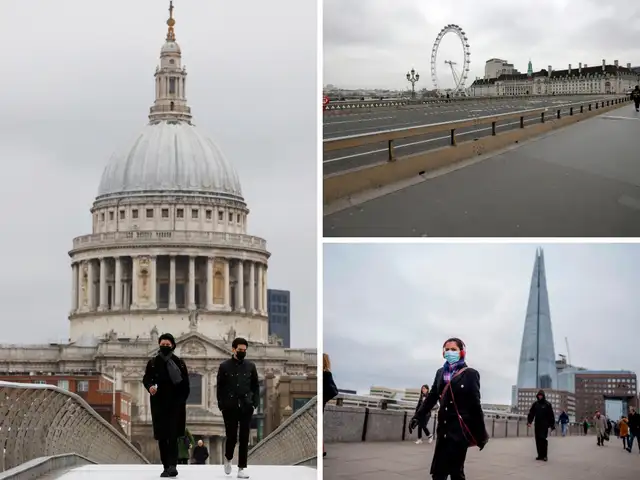
European countries, including the UK have been severely affected by the pandemic. As the authorities consider partial lockdown in London, the city and its iconic bridges no longer witness the same footfall.
The Tower bridge and Millennium Bridge lie deserted with virtually no people.
European countries, including the UK have been severely affected by the pandemic. As the authorities consider partial lockdown in London, the city and its iconic bridges no longer witness the same fo..
Stay Home Infection-fighting officials are willing to go to unusual lengths to get the word out to young people where they congregate, including on the Pardon My Take podcast from Barstool Sports – one of the most popular sports shows with younger listeners.
Anthony Fauci, the head of the National Institute on Allergy and Infectious Diseases, told the hosts how stressful the outbreak has been.
“You cannot imagine,’’ he said. “You see what happened in China, you see what’s happening in Italy. We have the virus in the United States, and we want to make sure by our efforts that we don’t have that degree of disease and suffering that we are seeing in other countries.’’
And he called on young people to embrace the effort to protect themselves and the broader population.
“No one is invulnerable, but even if you are doing very well, you have to be a very important part of our national effort to contain the outbreak,’’ Fauci said. “You are not a passive person in this. You are an important part of the active plan to contain this epidemic. We really do need you. This isn’t something that can be successful without you.”
A lot of what you hear or read about the coronavirus may be myths. WHO data busts a few common misconceptions.
A lot of what you hear or read about the coronavirus may be myths. WHO data busts a few common misconceptions.
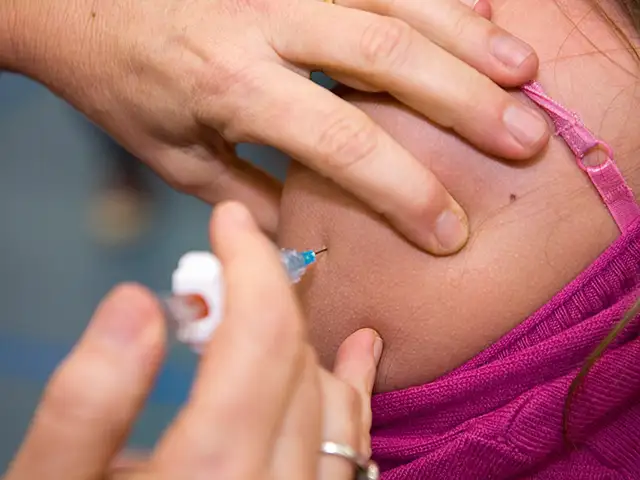
Myth: Pneumonia vaccines will protect you against coronavirus.
Reality: Vaccines against pneumonia, such as pneumococcal vaccine and Haemophilus influenza type B (Hib) vaccine, do not provide protection against coronavirus. The virus is so new and different that it needs its own vaccine. Researchers are trying to develop a vaccine against 2019-nCoV, and WHO is supporting their efforts. However, while they are not effective against 2019-nCoV, vaccination against respiratory illnesses is highly recommended to protect your health.
Myth: Pneumonia vaccines will protect you against coronavirus.
Reality: Vaccines against pneumonia, such as pneumococcal vaccine and Haemophilus influenza type B (Hib) vaccine, do not provide protec..
Read More
Myth: Ultraviolet disinfection lamp can kill the coronavirus.
Reality: UV lamps should not be used to sterilise hands or other areas of skin. Far from killing the virus, the UV radiation can actually cause skin irritation.
Myth: Ultraviolet disinfection lamp can kill the coronavirus.
Reality: UV lamps should not be used to sterilise hands or other areas of skin. Far from killing the virus, the UV radiation can actuall..
Read More
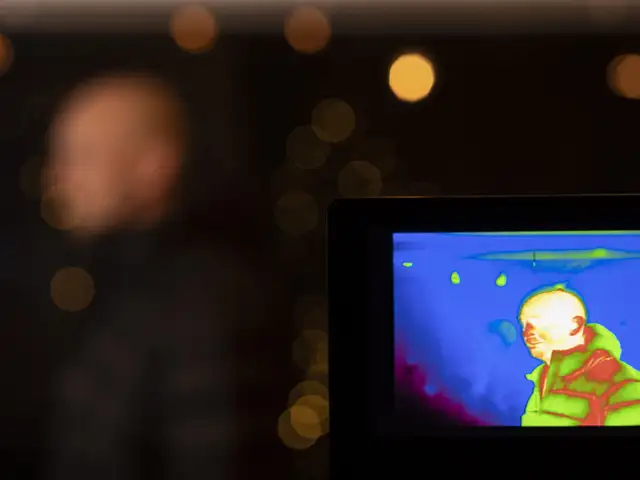
Myth: Thermal scanners can help detect infected people.
Reality: Thermal scanners are effective in detecting people who have developed a fever due to the coronavirus infection. However, they cannot detect people who are infected but are not yet sick with the fever. This is because it takes between two and 10 days before people who are infected become sick and develop a fever.
Myth: Thermal scanners can help detect infected people.
Reality: Thermal scanners are effective in detecting people who have developed a fever due to the coronavirus infection. However, they cannot ..
Read More
Myth: Spraying alcohol or chlorine all over the body kill the coronavirus.
Reality: Spraying alcohol or chlorine all over your body will not kill viruses that have already entered your body. In fact, spraying such substances can be harmful to clothes or mucous membranes (ie eyes, mouth). Be aware that both alcohol and chlorine can be used to disinfect surfaces, but they need to be used under appropriate recommendations.
Myth: Spraying alcohol or chlorine all over the body kill the coronavirus.
Reality: Spraying alcohol or chlorine all over your body will not kill viruses that have already entered your body. In fact..
Read More
Myth: Putting on sesame oil will block the coronavirus from entering the body.
Reality: Sesame oil does not kill coronavirus. There are some chemical disinfectants that can kill the 2019-nCoV on surfaces. These include bleach or chlorine-based disinfectants, solvents, 75 per cent ethanol, peracetic acid and chloroform. However, they have little or no impact on the virus if you put them on the skin or under your nose. It can even be dangerous to put these chemicals on your skin.
Myth: Putting on sesame oil will block the coronavirus from entering the body.
Reality: Sesame oil does not kill coronavirus. There are some chemical disinfectants that can kill the 2019-nCoV on sur..
Read More
Myth: Coronavirus mainly affects older people.
Reality: People of all ages can be infected by the 2019-nCoV. Older people, and people with preexisting medical conditions [such as asthma, diabetes, heart disease] appear to be more vulnerable. But WHO has advised people of all ages to take steps to protect themselves from the virus.
Myth: Coronavirus mainly affects older people.
Reality: People of all ages can be infected by the 2019-nCoV. Older people, and people with preexisting medical conditions [such as asthma, diabetes, h..
Read More
Myth: Rinsing your nose with saline will help prevent coronavirus infection.
Reality: There is no evidence that regularly rinsing the nose with saline has protected people from a coronavirus infection. But there is some limited evidence that regularly rinsing nose with saline can help people recover more quickly from a common cold. However, regularly rinsing the nose has not been shown to prevent respiratory infections.
Myth: Rinsing your nose with saline will help prevent coronavirus infection.
Reality: There is no evidence that regularly rinsing the nose with saline has protected people from a coronavirus infecti..
Read More
Myth: It’s not safe to receive letters or packages from China.
Reality: It is safe to receive letters and packages from China. People receiving packages from China are not at risk of contracting the coronavirus. From previous analysis, we know that coronaviruses do not survive long on objects such as letters or packages.
Myth: It’s not safe to receive letters or packages from China.
Reality: It is safe to receive letters and packages from China. People receiving packages from China are not at risk of contracting the..
Read More
Myth: Pets at home can spread the coronavirus
Reality: At present, there is no evidence that companion animals or pets such as dogs or cats can be infected with the coronavirus. However, it is always a good idea to wash your hands with soap and water after contact with these pets. This will protect you against various common bacteria such as E.coli and Salmonella that can pass between pets and humans.
Myth: Pets at home can spread the coronavirus
Reality: At present, there is no evidence that companion animals or pets such as dogs or cats can be infected with the coronavirus. However, it is alway..















 Nithin Kamath says 30% Zerodha accounts now belong to women investors, double since Covid2026-06-10T10:20:56Z

