Not just lungs, Covid-19 infection can affect almost all organs; may lead to stroke

A lot has been learnt about Covid-19 and accordingly strategies are being changed from time to time.

iStock
Management of such patients with other organ involvement should be as per existing guidelines of that particular complication.
NEW DELHI: Covid-19 can affect almost all organs besides the lungs and the initial symptoms may be totally unrelated to chest complaints, according to experts at AIIMS here.

They stressed that classification of cases into mild, moderate and severe categories based just on respiratory symptoms should be relooked to include other organ involvement.

Experts from the institute, including its director Dr Randeep Guleria, Dr MV Padma Srivastava, head of department of Neurology, Dr Ambuj Roy, Professor of Cardiology and Dr Neeraj Nischal, Associate Professor in the department of Medicine during their weekly 'National Clinical Grand Rounds' organised in collaboration with NITI Aayog discussed various possible extra-pulmonary complications of Covid-19.


Dr Guleria said eight months into Covid-19, a lot has been learnt and accordingly strategies are being changed from time to time.

From what we thought of as a viral pneumonia has a lot of other manifestations which are beyond the lungs, he said.

"As we have known more and more about Covid-19, we have realised it causes many extra pulmonary manifestations. This is basically of the fact that this virus enters into cell through ACE2 receptors which although are present abundantly in upper airways and lungs, they are also present in many organs and thus other organs are also affected.
ADVERTISEMENT

"We have seen many patients who presented with features which are not been predominantly pulmonary but extra pulmonary manifestations," Dr Guleria said.

He said though pulmonary manifestations continue to dominate as far as majority of Covid-19 cases are concerned, there is a significant number of patients who would present with manifestations which may be along with pulmonary manifestations or may be without pulmonary manifestations.

"We as clinicians need to have a high index of suspicion during this pandemic -- when to suspect, treat and isolate these patients so that we can provide them good quality care," he stressed.

The experts in the programme presented a number of cases in which the patients were labelled as asymptomatic or mild Covid but had serious life-threatening extra-pulmonary manifestations like stroke and heart blocks.
ADVERTISEMENT

"What started off as a viral pneumonia is now a multi-systemic disease. However, the jury is out whether SARS-COV2 is the culprit in these extra pulmonary manifestations or just an innocent bystander which happens to be at the wrong place at a wrong time," Dr Nischal said.

"So the classification of Covid-19 into mild, moderate and severe cases based only on respiratory symptoms should be relooked into to incorporate other organ involvement," he said.
ADVERTISEMENT

Dr Nischal further underlined that management of such patients with other organ involvement should be as per existing guidelines of that particular complication.

The doctor from the Medicine Department also highlighted the case of a 35-year old man who had headache and was vomiting but was found to have life threatening cortical vein thrombosis.

When tested, he was found positive for Covid-19. He was asymptomatic for Covid-19 as per existing severity guidelines, Dr Nischal said.

"There is a big spectrum of neurological manifestations which have been linked to Covid-19. In some patients, brain is involved and it may lead to clotting, resulting in stroke or can cause infection and lead to encephalitis or other complications which have nothing to do with lungs," Dr Padma said.

Dr Ambuj's team presented the case of a patient who came with a very low pulse rate, detected Covid-19 positive and required initial support with some medicines to improve heart rate.

"Normally pacemaker is put in such patients to improve their heart rate but based on experiences documented in literature, we realised some of these could be due to Covid-19, so a pacemaker was not put and her heart rate gradually improved with supportive treatment.

"Sometimes, the electrical pulse system of the heart which gives rise to heart beat can be affected in COVID-19 and it is self-limiting and improves with time. So these patients who would otherwise normally require pacemaker may not ever need it.

"However, more evidence is needed to be definitive about this as it is a new disease and limited information and experience regarding it is available as of now," Dr Roy said.
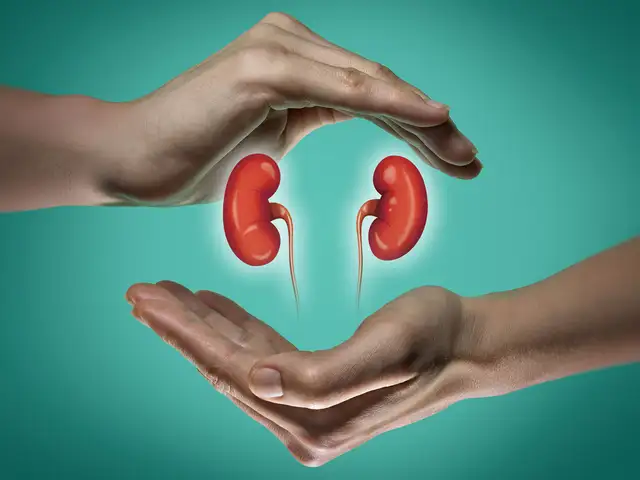
World Kidney Day: Drinking 8 Glasses Of Water Flushes Toxins And Other Myths About Renal Health
1/9

Kidneys are one of the most vital organs in the body which excrete the toxic waste products formed as a result of metabolism in the body. Kidneys also maintain the fluids and salt balance of the body, and make hormones that help produce red blood cells, promote bone health and regulate blood pressure.


Chronic Kidney Disease is the most common kidney-related ailment, and involves the gradual irreversible loss of kidney function over a period of years.


Diabetes, and hypertension are major risk factors for chronic kidney disorder which is growing rapidly amongst Indians. Other risk factors for kidney diseases include obesity, family history of kidney disease, and excessive use of pain killers, active smoking, heart disease and older age.


On World Kidney Day, Dr Vijay Kher, Chairman, Kidney and Urology Institute of Medanta Hospital, Gurugram debunked the popular myths surrounding kidney disease and renal health, and shared better prevention and management tips of the condition.
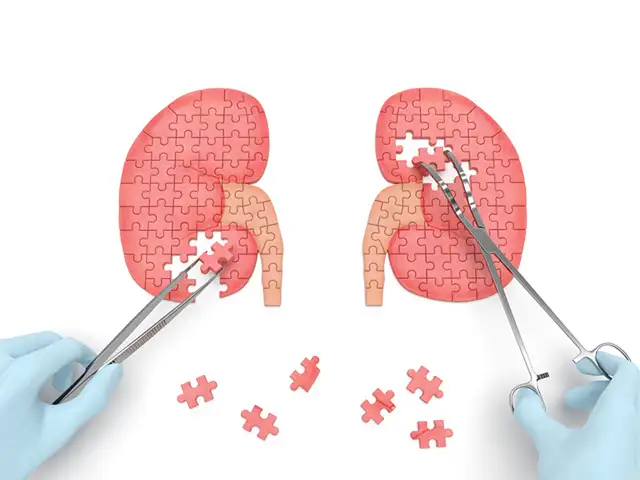
Kidneys are one of the most vital organs in the body which excrete the toxic waste products formed as a result of metabolism in the body. Kidneys also maintain the fluids and salt balance of the body..
Read More
FACT: Chronic kidney disease is usually a progressive disease. However, there are treatments that can help preserve or delay the deterioration of remaining kidney function. Incorporating healthy lifestyle changes can help improve the quality of life of patients. These include, but are not limited to, changes such as quitting smoking, consuming a well-balanced diet, engaging in regular physical activity and keeping ones blood pressure and diabetes under control.
FACT: Chronic kidney disease is usually a progressive disease. However, there are treatments that can help preserve or delay the deterioration of remaining kidney function. Incorporating healthy life..
Read More
FACT: Most of us are born with two normally functioning kidneys, but most people with one healthy kidney lead a normal life. In some cases, people may have one kidney on ground of donation or removal of one kidney due to cancer or severe infection with or without stones. A single healthy kidney can perform the essential functions of both.
FACT: Most of us are born with two normally functioning kidneys, but most people with one healthy kidney lead a normal life. In some cases, people may have one kidney on ground of donation or removal..
Read More
FACT: Common symptoms of kidney disease include swelling of the eyes and feet, frothy urine or blood in the urine. However, most kidney diseases do not show symptoms in the early stages. Thus, detecting kidney disease in early stages can only be done through screening individuals who are at high risk. These include people who are elderly and/or obese, and/or have a family history of diabetes, kidney disease or heart disease.
FACT: Common symptoms of kidney disease include swelling of the eyes and feet, frothy urine or blood in the urine. However, most kidney diseases do not show symptoms in the early stages. Thus, detect..
Read More
FACT: There is no medical evidence to support this statement. Drinking large amounts of water do not protect from kidney disease. Thirst controls the desire to drink water and should determine the amount of fluid intake. Patients who are undergoing treatment for kidney disease are often advised to drink less salt and fluids as fluid retention can cause shortness of breath, swollen ankles and increase in weight gain.
FACT: There is no medical evidence to support this statement. Drinking large amounts of water do not protect from kidney disease. Thirst controls the desire to drink water and should determine the am..
Read More
FACT: Chronic kidney disease is one of the leading causes of death, globally. According to the World Health Organization, the estimated prevalence of chronic kidney disease worldwide is 8-16 per cent in adults above 30 years of age. Stressful lifestyles and unhealthy eating habits contribute to increased incidence of diabetes, hypertension and obesity thus increasing the kidney disease risk.
FACT: Chronic kidney disease is one of the leading causes of death, globally. According to the World Health Organization, the estimated prevalence of chronic kidney disease worldwide is 8-16 per cent..
Read More
FACT: Foods with high salt and high potassium need to be restricted in patients with moderately severe kidney disease. Protein malnutrition is common in patients and one of the reasons for poor outcome of chronic kidney diseases. 50 per cent of proteins must be consumed through milk and milk products and non-vegetarian foods (high quality proteins). Regular intake of green leafy vegetables, normal spices, low salt and low potassium is recommended.
FACT: Foods with high salt and high potassium need to be restricted in patients with moderately severe kidney disease. Protein malnutrition is common in patients and one of the reasons for poor outco..
Read More
FACT: Diabetes and hypertension are two common causes of kidney disease. If these are effectively controlled, then kidney disease can be prevented. Apart from this, timely screening and early detection can also play a significant role in prevention of kidney disease, especially the ones in advanced stages. If detected early, the need for dialysis or transplant can be omitted or delayed.
FACT: Diabetes and hypertension are two common causes of kidney disease. If these are effectively controlled, then kidney disease can be prevented. Apart from this, timely screening and early detecti..
Read More
FACT: Dialysis is a method of purification of blood of waste products which are not removed because of kidney failure. Dialysis in fact does not do anything for kidney disease. Dialysis is only required when kidney function decreases to less than 15 ml/min (stage V chronic kidney disease or kidney failure) and patients cannot sustain life meaningfully. In earlier stages of chronic kidney disease, one slows down the rate of progression of kidney disease to delay or avoid the need for dialysis or kidney transplantation.
FACT: Dialysis is a method of purification of blood of waste products which are not removed because of kidney failure. Dialysis in fact does not do anything for kidney disease. Dialysis is only requi..
Read More

Download
The Economic Times Business News App
for the Latest News in Business, Sensex, Stock Market Updates & More.
READ MORE
ADVERTISEMENT

READ MORE:

LOGIN & CLAIM

50 TIMESPOINTS

More from our Partners

Loading next story
Business News › Magazines › Panache › Not just lungs, Covid-19 infection can affect almost all organs; may lead to stroke
Text Size:AAA
Success
This article has been saved

*

+