Nirmala Sitharaman and the Budget: A lady’s day out
Will she be able to drive the stress and blues away? Saturday will tell…
By ET Online |
BCCL
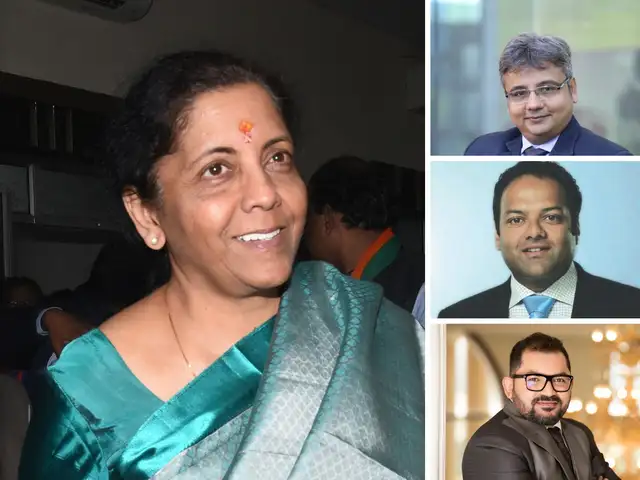
FM Nirmala Sitharaman
“Uneasy lies the head that wears a crown.”
Nirmala Sitharaman may not feel as tired as William Shakespeare’s King Henry IV. But she is certainly feeling the weight of her position as she gets ready to present her second Budget.
And understandably so.
All eyes are on whether Ms Sitharaman will be able to provide a balm for India’s troubled economic soul that has had to deal with a slowdown over the past few months. 2019 saw muted consumer sentiment with retail, auto and FMCG sectors sporting lacklustre performance. And, hence, the focus on Saturday will be entirely on the 60-year-old, and whether she will be able to make Dalal Street - that will remain open for a special trading session - smile, and reassure the bourses.
When she was appointed India’s first full-time woman Finance Minister in June 2019, she made headlines, shattering the glass ceiling in the country’s politics. From Twitter mentions to memes to funny jokes and attacks by trolls, she has had to brave it all. As her 2.7 million Twitter followers, and other members of the citizenry look to her for economic deliverance on February 1, there is chatter if she will be able to kick-start the Prime Minister’s $5 trillion dollar dream and get it rolling on the ground, away from Twitter headlines and Tik-Tok talk.
Nirmala Sitharaman currently has 2.7 million followers on Twitter.
ADVERTISEMENT
Sitharaman’s continued presence in the Big Four of the Modi 2.0 cabinet - she had first entered the inner circle of trust with her elevation as the Defence Minister in September 2017 - makes her the second woman to present the Budget in Parliament. The only other woman to have done that was Indira Gandhi, the then-Prime Minister, who had delivered the Budget speech in 1971 after Moraji Desai had resigned.
But the two-time Rajya Sabha MP has come into the position under no similar circumstances. Born in Madurai on August 18, 1959 to Narayan Sitharaman (who worked in the Railways) and Savitri (a homemaker), she studied economics at Tiruchirapalli’s Seethalakshmi Ramaswami College. She then moved to the Capital to pursue her Master's and M.Phil in the subject from the Jawaharlal Nehru University (JNU).
Before Sitharaman forayed into politics, she was part of the corporate world in the United Kingdom, where she was living with her husband Parakala Prabhakar. The two had met while studying at JNU, and tied the knot in 1986; they have a daughter, Parakala Vangmayi.
During the couple's stint in London, she worked as a salesperson at a home decor store on Regent Street, was briefly employed with the BBC World Service, and was also part of audit firm PricewaterhouseCoopers as a research manager.
ADVERTISEMENT
Sitharaman's political career began in 2008 when she joined the BJP (after having returned to India in the early 1990s), and in two years became the party's second woman spokesperson after Sushma Swaraj, fielding questions from journalists at the party headquarters and also becoming a familiar face on television debates.
Prior to taking the political plunge, she served as a deputy director of the Centre for Public Policy Studies in Hyderabad, and also started a school in the city. From 2003 to 2005, she was also a member of the National Commission for Women.
Considered a close aide of Modi and her mentor, former Finance Minister late Arun Jaitley, she has been described as a 'cautious spender' and 'not extravagant' by those who knew her during her student days.
Come Saturday, and it will be proved if the cautious Sitharaman can drive the stress and blues away, and have India back on track.
India Inc's Budget Wishlist: Tax Relief For Art Philanthropy, Boosting EV Ecosystem
1/16
All eyes are on Finance Minister Nirmala Sitharaman as she gets to roll out her second Budget on February 1.
While the main focus is to spur economic growth, India Inc bosses feel certain initiatives in this year's Budget will help various sectors like food, culture & art, real estate, fintech and automobile. Several suggestions like boosting 'Make In India' in order to generate employment, reviving consumer demand and reintroducing the subvention scheme have also been doing the rounds.
As the day nears, here are some suggestions from top business leaders.
All eyes are on Finance Minister Nirmala Sitharaman as she gets to roll out her second Budget on February 1.While the main focus is to spur economic growth, India Inc bosses feel certain initiatives ..
Read More
The Government should build on its recent push towards sustainability by prioritising the growth of the Electric Vehicle ecosystem. This can be done by promoting the creation of a strong and well-connected charging infrastructure on a pan-India level, promoting the setting up of EV battery capacity in the country and incentivising the adoption of EVs, especially for public transport buses, fleet operator cars and two- and three-wheelers.
The road connectivity must also be improved between major urban centres and tier-2/3 regions to bolster the growth of the travel and tourism sector.
The Government should build on its recent push towards sustainability by prioritising the growth of the Electric Vehicle ecosystem. This can be done by promoting the creation of a strong and well-con..
Read More
In order to generate employment, the Budget should consider further incentives for boosting 'Make In India', and look into new mechanisms to prevent whole-sale dumping of goods by many countries into India, specifically in the area of solar energy.
Given the deceleration in economic growth, the FM may be compelled to look at measures both for immediate impact and long-term growth. The Budget will have to play a fine balancing act between managing the deficit and providing a boost to flagging economic growth. Also, India's ease of doing business ranking improved last year from 77th to 63rd. The Government needs to push ahead with sustained regulatory reforms to provide a conducive business environment.
In order to generate employment, the Budget should consider further incentives for boosting 'Make In India', and look into new mechanisms to prevent whole-sale dumping of goods by many countries into..
Read More
The 2020 Budget allocation for the food industry is going to be critical, mainly due to the removal of the input tax credit on food sold in restaurants and workplaces. This step has negatively impacted the agricultural economy, ultimately having an adverse reaction to the food services industry which is a $10 billion-economy that backs $7 billion of agriculture produces. It has largely resulted in a disorganised industry, creating a lopsided structure of the entire sector as previously there was service tax and GST that claimed to have an input tax credit. The removal of Input Tax Credit and replacing it with flat-tax took away the core promise of GST, that is to eliminate the cash economy and to make sure the business of the companies help meet the expectations of the Government in ensuring transparency in the transactions.
Furthermore, it is worse when it comes to food services provider or organised caterer of any sort. When the customer is billed, he or she can claim ITC on that purchase but the service provider cannot as that is considered as a restaurant. Due to this, while the restaurants are hiking up the prices to compensate for the loss of ITC, food service providers are left high and dry. As a consequence, it reflects negatively towards the motive of helping bring about an organisational approach to agriculture produces and streamline the process. We remain optimistic that the decision of bringing back the input tax credit will be considered under the cognisance and some change is hopeful. It is also important that more focus is given to the agricultural produce so that the area substantially gets highly streamlined. The need to spur private investment and therefore to have a more predictable tax regime which can allow us to kick start our acquisitions in India is mandatory. The industry is looking forward to a revised and much predictable tax regime along with the reintroduction of the input tax credit on food sales to streamline the GST in the sector.
The 2020 Budget allocation for the food industry is going to be critical, mainly due to the removal of the input tax credit on food sold in restaurants and workplaces. This step has negatively impact..
Read More
With the increasing demand for online purchasing, more and more businesses are moving to e-store from brick and mortar stores. e-Commerce has also revolutionised the way companies are doing business. The Government should make GST obligations for both offline and online traders same to provide more clarity on policy guidelines pertaining to eCommerce.
Looking at it as a major opportunity, the Government should look to spend higher on infrastructure and rural programs, and focus on tax cuts to boost personal consumption.
With the increasing demand for online purchasing, more and more businesses are moving to e-store from brick and mortar stores. e-Commerce has also revolutionised the way companies are doing business...
Read More
The Government needs to do a tight rope walk in the 2020 Union Budget by balancing the burgeoning fiscal deficit and increasing the borrow at one end and stimulating growth at the other. The need to strike a fine balance will be a key agenda in the upcoming Budget. There are expectations of reduction in personal income tax rates to boost consumption and dividend distribution tax, and long-term capital gains tax to improve the sentiment in the capital markets. These measures will increase the disposable income in the hands of the individual, boosting the currently subdued demand and supporting the massive divestment program that is running short the target. Given the Budget constraints, the Government needs to maximise collections and spending efficiency in future.
The Government needs to do a tight rope walk in the 2020 Union Budget by balancing the burgeoning fiscal deficit and increasing the borrow at one end and stimulating growth at the other. The need to ..
Read More
The Government should bring in more business-friendly policies, and take steps to reduce regulatory compliance, thereby creating a holistic environment for the ease of doing business. Removal of MAT from SEZ and simplification of domestic sales from SEZ will give required boost to the manufacturing industry. Last but not the least, removal of capital gain from equity transaction will facilitate overall market capitalisation of stock market.
The Government should bring in more business-friendly policies, and take steps to reduce regulatory compliance, thereby creating a holistic environment for the ease of doing business. Removal of MAT ..
Read More
Fund availability has to be made for a conducive and supportive financial environment. This is because the lending fintechs are largely the ones that cater to the masses or the people who are not served by the formal financial institutions. The access to liquidity has to be eased for such fintechs. Though there are many funds which are established for the fintechs, the flow of money for the same has its own unique challenges. There has to be rationalisation of MAT tax rate along with the increase in the minimum threshold for tax exemption as many end up paying taxes despite being eligible for the tax holiday.
Fund availability has to be made for a conducive and supportive financial environment. This is because the lending fintechs are largely the ones that cater to the masses or the people who are not ser..
Read More
This year’s Budget is being eagerly awaited by all stakeholders as the need of the hour is to revive consumer demand which in turn will spur economic growth. To tackle this, a reduction in personal income-tax rates through concessions in tax slabs, and an increase in welfare spends will boost spending. With the dip in foreign investment currently impacting businesses, steps towards a healthy economy will improve foreign investor confidence and attract more international investments. To reduce the burden on business owners, the Government should initiate the simplification of various tax-related compliance and faster processing of tax refunds.
This year’s Budget is being eagerly awaited by all stakeholders as the need of the hour is to revive consumer demand which in turn will spur economic growth. To tackle this, a reduction in personal i..
Read More
There has been a downturn in the overall auto industry lately, and the challenges have directly affected the mainstream luxury car industry. The pre-owned luxury car segment is eyeing 50% growth with this year’s Union Budget. We expect the Government to align its electric mobility vision with challenges faced by automakers and auto-dealers in terms of innovation and elasticity. The automobile sector is a crucial contributor in country’s GDP. Hence, the Government must take steps to ease the implementation of Bharat Stage VI norms which may lower the demand until the public fully understands the policies.
There has been a downturn in the overall auto industry lately, and the challenges have directly affected the mainstream luxury car industry. The pre-owned luxury car segment is eyeing 50% growth with..










 3+ cr women-led enterprises registered under Udyam Portal powering growth: FM Nirmala Sitharaman2026-06-12T09:28:23Z

