New normal of the post-covid world: Professionals adjust to taller cubicles, one-way aisles
Employers in some cases are requiring workers to come back to the office.
By AP |
iStock
The desks have been reconfigured so no one sits next to anyone else, and common areas like the kitchen are closed.
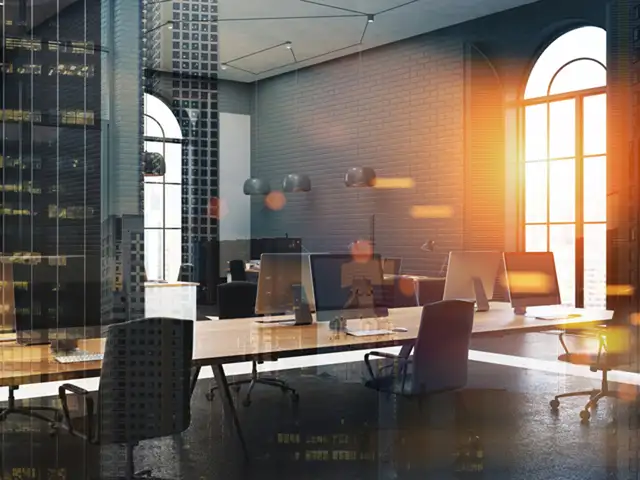
NEW YORK: Bergmeyer, a design firm in Boston, has erected higher cubicles, told employees to wear masks when not at their desks and set up one-way aisles in the office that force people to walk the long way around to get to the kitchen or the bathroom.
"The one-way paths take me a little out of the way, but it was easy to get used to," said Stephanie Jones, an interior designer with the company. "It actually gives me the opportunity to see more people and say a quick hello when I might have just walked directly to my desk before."
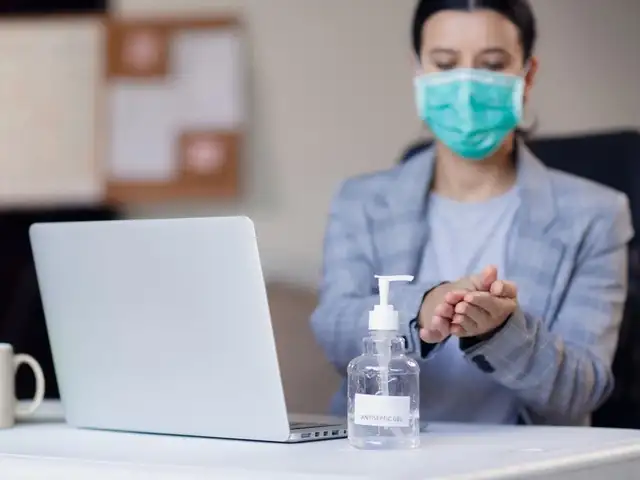
Around the U.S., office workers sent home when the coronavirus took hold in March are returning to the world of cubicles and conference rooms and facing certain adjustments: masks, staggered shifts, spaced-apart desks, daily questions about their health, closed break rooms and sanitiser everywhere.
For some at least, there are also advantages, including the opportunity to share chitchat with colleagues again or the ability to get more work done.
Employers in some cases are requiring workers to come back to the office, but most, like Bergmeyer, are letting the employees decide what to do, at least for now. Some firms say the risks and precautions are worth it to boost productivity and move closer to normal.
It is meager trend so far: Real estate trade group NAIOP Massachusetts estimated the occupancy rate for many office towers in downtown Boston at around 5%, and 10% to 20% in the suburbs. That echoes what is happening in other cities. In New York, real estate firm CBRE said the offices it manages have a 7% occupancy rate in Manhattan and nearly 30% in the suburbs.
ADVERTISEMENT
Bergmeyer began bringing people back in June in stages. It is now in Phase Three, with 60% of the staff back in the office but split into two groups: Half come in on Mondays, Wednesdays and Fridays, the other half on Tuesdays and Thursdays.
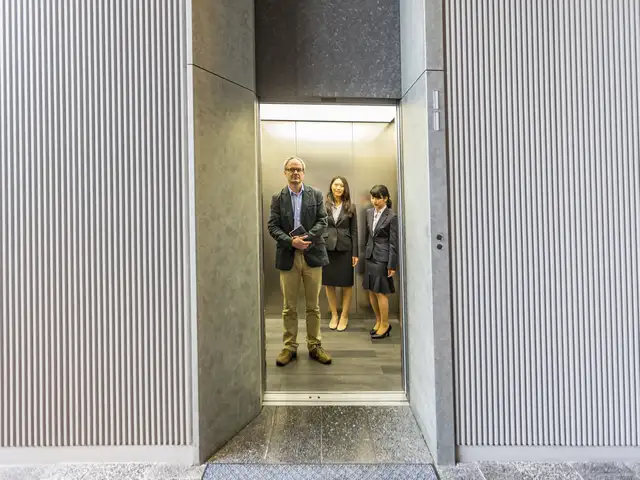
Only three or four people are allowed in the elevator at once, and building workers push the button for them. Employees are asked to report any symptoms to a human resources director who can work with them on getting tested and quarantining themselves.
Jones elected to come back in the second wave, in late June.
ADVERTISEMENT
"I found that I was surprisingly more productive than I thought I would be working from home, but ultimately decided to come back. I live alone, and I was missing the social interaction," she said.
She also missed the space in the office, her double computer monitors and other advantages.
ADVERTISEMENT
"I'm an interior designer, and I'm used to picking finishes and materials with a whole resource library here I didn't have access to," she said. "Suddenly I had to be ordering everything to my home, and it was taking over."
At first, the one-way aisles meant that those who sat just past the restrooms had to walk all the way around the office to get to them. So Bergmeyer added another path down the middle. But if you go to the kitchen, Jones said, you have to keep walking around the circle to get back to your desk.
The natural light in the office was too bright for some Zoom calls, so the company has been experimenting with audio, lighting, acoustics and backdrops in several new dedicated "Zoom rooms."
All in all, Jones said, "it's great to come back in on a part-time basis on my own terms."
Stephan Meier, a business professor at Columbia University, expressed skepticism about bringing workers back in the midst of the outbreak, which has been blamed for over 5 million confirmed infections and nearly 170,000 deaths in the U.S. Most firms have discovered that people can work effectively remotely, he said.
"The safety of your workers has to be top priority," he said.
As virus cases surge in many states, some companies have found that reopening has led to reclosing.
The Blue Sky advertising agency in Atlanta began reopening in May in stages, reconfiguring its open-plan workspace by spreading out tables, installing plastic partitions and establishing a limit of 10 people in the office at any one time out of a workforce of 25, and caps on how many could be in certain rooms.
But a surge in cases in Georgia led to another shutdown at the end of June. Now employees come in only if they absolutely need to, said Dawn Evans, human resources manager.
The one-way aisles meant that if one goes to the kitchen, s/he will have to keep walking around the circle to get back to the desk.
Kippy Castillo, an account manager at Blue Sky, was working at the office once a week before it closed again. She drove in and brought her lunch. She said the precautions around the office made her feel safe.
"I really didn't feel like we've missed a beat working from home," she said. "But it's nice to get back in the routine of being in the office." Being there, she said, "helps if you need to focus on getting work done or a certain meeting."
Steve Spinner, an accountant in Chicago, went back in June when his office started letting people return. He takes a commuter train into work and has to ride the elevator to the 27th floor. But he said for him it's the best option.
"One, I'm 51 years old, and I'm not very good at working from home. I'm not used to it," he said. "We're more productive when we are all here together, and there have been no issues or incidents, knock on wood."
Only a quarter of the 200 employees at the firm are allowed back. The desks have been reconfigured so no one sits next to anyone else, and common areas like the kitchen are closed. There are hand sanitizer stations and mask requirements.
Only three or four people are allowed in the elevator at once, and building workers push the button for them.
Spinner said the riskiest part of his day is the commute.
"Frankly when I come to the office, I'm not worried once I'm here. Everything is safe," he said. "The trains are a little more sketchy, not everyone following rules for masks and whatnot."
Office Interiors To Change Post-Lockdown: Here's What The Future Will Look Like
1/11
“For office culture to revive and survive, office spaces are looking at a pretty drastic alteration of layouts and design,” says Pankaj Poddar, the co-founder of Hipcouch, a Mumbai based Interior Design Company. He says the new normal will also see some reversal.
“We will see the reversing of very hot trends of open offices and shared desks.” While we wait for the official decrees, here’s what the rough framework is looking like so far according to Poddar.
“For office culture to revive and survive, office spaces are looking at a pretty drastic alteration of layouts and design,” says Pankaj Poddar, the co-founder of Hipcouch, a Mumbai based Interior Des..
Read More
For now, private offices have been advised to open with only between 33-55% strength in most states in India. Besides what we hope will also mean a reduced commute to work thanks to less traffic, this also allows for social distancing at the office.
For now, private offices have been advised to open with only between 33-55% strength in most states in India. Besides what we hope will also mean a reduced commute to work thanks to less traffic, thi..
Read More
Since offices will not be at maximum capacity, there is scope to ensure enough physical distance between two desks by simply skipping one in the middle. At the very least, or in addition, fitting a screen around each desk is also a good way to achieve this. Hot desking is now a no-go.
Since offices will not be at maximum capacity, there is scope to ensure enough physical distance between two desks by simply skipping one in the middle. At the very least, or in addition, fitting a s..
Read More
The way 2020 is going, it’s hard to predict anything this year with any accuracy, so we have no idea what monsoon will bring, but opening as many windows as you possibly can will increase ventilation and we suspect that a lot of offices will consider the option. Too hot? Your office may need to get a humidifier system in place to create a tougher climate for viruses.
The way 2020 is going, it’s hard to predict anything this year with any accuracy, so we have no idea what monsoon will bring, but opening as many windows as you possibly can will increase ventilation..
Read More
Meetings should be conducted in open spaces as far as possible instead of the traditional closed conference room setting. And maybe the joke about how “this meeting could have been an email” can stop being funny and actually be something to think about.
Meetings should be conducted in open spaces as far as possible instead of the traditional closed conference room setting. And maybe the joke about how “this meeting could have been an email” can stop..
Read More
Equip the entrance/lobby, dining areas, bathrooms and other public spaces within the office with sanitiser dispensers, disposable gloves and a no-touch thermometer. Add a screen to protect the reception staff and insist on extra cleaning of all spaces, especially bathrooms.
Equip the entrance/lobby, dining areas, bathrooms and other public spaces within the office with sanitiser dispensers, disposable gloves and a no-touch thermometer. Add a screen to protect the recept..
Read More
This one is a more elaborate solution than the others, but according to reports, offices in the UK are looking at replacing communal toilets with individual pods and introducing touchless doors, taps and soap dispensers.
This one is a more elaborate solution than the others, but according to reports, offices in the UK are looking at replacing communal toilets with individual pods and introducing touchless doors, taps..
Read More
A strict limit on how many people can crowd into a lift at one time may save you some of that awkward elevator silence, but it also means a longer wait every time you want to move from one floor to another. A good time to reassess your relationship with the staircase (your step counter will be a thing of pride at the end of each day!)
A strict limit on how many people can crowd into a lift at one time may save you some of that awkward elevator silence, but it also means a longer wait every time you want to move from one floor to a..
Read More
Yes, this may come to an end as well. Be prepared to carry your own water bottles, coffee mugs and cutlery to the office. A common pool of all these items is just a bad idea.
Yes, this may come to an end as well. Be prepared to carry your own water bottles, coffee mugs and cutlery to the office. A common pool of all these items is just a bad idea.
Whether this is good news to you or exactly the opposite, travelling for business will see a drastic drop, replaced instead by Zoom calls. Travelling anywhere is probably unwise for at least the next several months anyway, even as domestic flights are slowly opening up. Also, obviously don’t count on any outstation off-sites anytime soon.
Whether this is good news to you or exactly the opposite, travelling for business will see a drastic drop, replaced instead by Zoom calls. Travelling anywhere is probably unwise for at least the next..