New Indian meaning for Oxford Advanced Learner’s Dictionary words
Indian connotations for common English words and phrases form a separate genre.
By ET Bureau |

BCCL
What the wider world that delves into the just-released edition of the Oxford Advanced Learner’s Dictionary (OALD) makes of some of the 26 newly inducted candidates from India such as Aadhaar, dabba, shaadi, hartal and chawl remains to be seen, but many may be confounded by the desi avatars of current English words. Such as current.
It is most commonly used as a synonym for contemporary or a steady flow of water or air. Its more arcane meaning — flow of electricity — has been largely forgotten or only lingers in textbooks except in India where it is still the current synonym for power supply.
Of course, the OALD’s diplomatic alternate definition of ‘auntie’ and ‘uncle’ — with and without a ‘ji’ suffix — as “a polite way of addressing or referring to” an older woman/ man in South Asia is rather short of the pejorative truth.
English words and phrases with unique Indian connotations are, effectively, a separate genre that can include all those inducted this year such as mugging (as in cramming for exams), non-veg, needful, tube-light, bus stand, deemed university, rowdy-sheeter, videograph, redressal and tempo.
In that context, a prime candidate for inclusion next time is ‘setting’. After all, far from merely indicating a position, direction or place of action, at least in north India, it has become the euphemism of choice for behind-the-scenes deals.
It is most commonly used as a synonym for contemporary or a steady flow of water or air. Its more arcane meaning — flow of electricity — has been largely forgotten or only lingers in textbooks except in India where it is still the current synonym for power supply.
Of course, the OALD’s diplomatic alternate definition of ‘auntie’ and ‘uncle’ — with and without a ‘ji’ suffix — as “a polite way of addressing or referring to” an older woman/ man in South Asia is rather short of the pejorative truth.
English words and phrases with unique Indian connotations are, effectively, a separate genre that can include all those inducted this year such as mugging (as in cramming for exams), non-veg, needful, tube-light, bus stand, deemed university, rowdy-sheeter, videograph, redressal and tempo.
In that context, a prime candidate for inclusion next time is ‘setting’. After all, far from merely indicating a position, direction or place of action, at least in north India, it has become the euphemism of choice for behind-the-scenes deals.
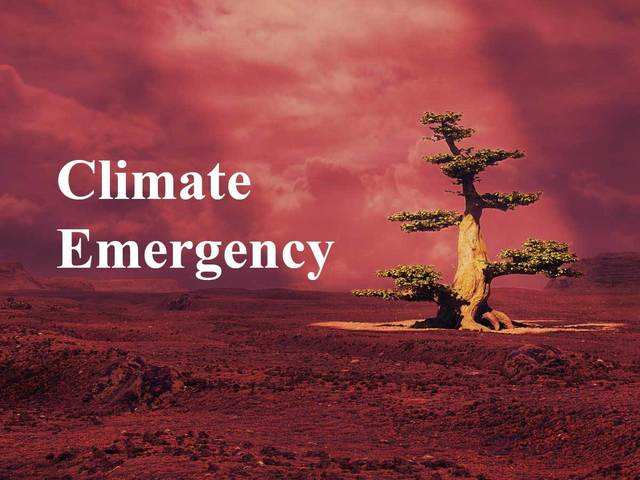
As 2019 draws to a close, Oxford Dictionary has released its word of the year. And fittingly, in a year dominated by crises relating to nature and its fury, the word of 2019 is ‘climate emergency’. The dictionary said, “Usage of the phrase ‘climate emergency’ increased steeply over the course of 2019, and by September, it was more than 100 times as common as it had been the previous year.” Which brings us to the next natural question: What was the corresponding trending word for the years gone by?




ADVERTISEMENT
Download
The Economic Times Business News App for the Latest News in Business, Sensex, Stock Market Updates & More.
The Economic Times Business News App for the Latest News in Business, Sensex, Stock Market Updates & More.
ADVERTISEMENT


