There is a space which divides the creative and the real world. The real world, which offers solid ingredients for the creative world, blends in this space and out of such a space begins the blossoming of the creative world. Treading this space is a peculiar burden. It is peculiar because one cannot escape from it if one is pure, if one heeds oneself and if one does not wither away from vanity, conformity or emotional inertia. To survive in this space one requires intense alertness. This space is not for the faint-hearted. It is also not meant for ruthless parasites. Only artists who are resolute in their determination to be true to their art or chosen vocation deserve and own this space.
Among many literary heavyweights who were born in undivided India and occupied this space, Urdu short story writer, essayist, dramatist and novelist Saadat Hasan Manto occupied this space as if he was born in it and for it only. Keeping this in mind, director Nandita Das’s recent film eponymously named 'Manto' captures this space and the moments germinating in such a space more as a compassionate witness rather than as a chronicler.
Das is acutely aware of the onerous task of presenting on screen the life of Manto who has acquired more than a cult status just like his evocative stories. Any work on Manto, like his life, is an expensive exercise in nostalgia. For those well-informed about Manto through his works and articles about him, a linear presentation of his life would be an exercise in inadequacy and dissatisfaction. And for those who are not well-versed with Manto and his body of work, a linear presentation of his life again would have bereft them of the pain and angst he felt about the plight of the powerless and hapless and his successes and failures in various capacities whether in undivided India or in Pakistan. To circumvent this, Das consciously explores Manto-ness in 'Manto' not through Manto but through almost everything associated with him. This is, perhaps, a cardinal reason the film becomes more about captivatingly authentic recreation of Manto through spaces and moments rather than about linear and chronological presentation of his life. This approach works to a considerable extent as it reduces dependence on quite a large number of tropes which make a presentation too prosaic.
Nawazuddin Siddiqui and Nandita Das while promoting 'Manto'.
This approach also provides depth to the narrative. Generally speaking, in biographical presentations, the protagonist serves as a window to the world that surrounds him or her. But in the film 'Manto', the world serves as a window to Manto. We know Manto through stories, through moments, through references, through anecdotes and most importantly through the geographies. The restoring-faith-in-humanity kind of camaraderie between film actor Shyam and Manto, which can activate the suppressed and dormant gullible and naive ‘self’ in us, the soaking in and indulgence in the warm, misty fog of cigarettes resembling question marks which provides the necessary thread of foggy thoughts through which creativity charges out, the catalyst odour of the cheap liquor, which facilitates temporary endurance of grim realities and the ability to retain humaneness and sensitivity even in the most inebriated state are a comment and reward enough to know who Manto was. This shows that how the external could also play a crucial role in bringing out the internal of a famed personality.
ADVERTISEMENT
Das’s focus on the external especially the geographies has a strong emotional basis to it. The high intensity in Manto’s love for people stemmed from his deep love and attachment he felt for the geography they inhabited. The scene where he leaves Bombay after painful realisation that communalism has found its venomous grip even on his near and dear ones, he makes a telling remark. He does not curse the city. He tells film actor Shyam, “The one rupee debt to the paanwaala (bettle nut seller) is a debt I would like to keep.” It shows that he intends to sever ties with the people but not with the city. The debt is an unfinished association which he wants to cherish because his love for people was more of a bottom-up engagement (geography and then the people) rather than a top-down involvement (people and then the geography).
Nawazuddin Siddiqui and Nandita Das while shooting for the film.
In the film, Manto’s leaving one geography (undivided India) and choosing another geography (Pakistan) unfolds like entering into a real, predictable world from a dream which held infinite possibilities of happiness and contentment. This chosen geography (Pakistan) breaks the dream to such an extent that Bombay, where interference was an aberration and to-be-oneself was not a task, attracted him more. But in this loss of geography which also spelt loss of memories and slipping away into intense nostalgia, Manto never loses his empathy. A scene where he is walking towards his house in Lahore he sees a man who owes him money represents this. Manto swiftly changes lanes to his house because he feels that the man who owes him money who is also a good man may be embarrassed to face him given his weak financial situation. Kudos to Das, she does not indulge in this scene to show the greatness of Manto. It unfolds in a very casual and non-pretentious way.
Manto’s deep attachment and obsession with geography is almost like fairytale kind of engagement. It reminds us that how genuine and natural concerns can make or break people. Perhaps, the only parallel to such deep attachment to geography and the emotional things associated with it can be found in the works of Bengali film director Ritwik Ghatak who also remained bleak and intensely affected after the partition of Bengal. The leitmotif of geographical separation in their works made it amply clear that their interest in their chosen mode of medium—whether literature or cinema—was not to create a mark or position for themselves. The immediacy of the phrase, the directness of their approaches, the crudeness of conversations, the deeply-felt angst of their characters, the helplessness of the dispossessed and the unvarnished and naked representation of the world and its affairs in their works indicated that these two stalwarts were more interested in direct communication and impact through their chosen medium rather than just evoke sympathy and compassion.
ADVERTISEMENT
They were not interested in changing the form or structure or the consciousness of their fellow creators of their times. They had a deep commitment to continuously expose how harshness and loss of sensitivity affects humanity. Some retain their humanity while some strangle it in deep moments of chaos and pandemonium. They were agog to communicate this to a larger mass of people through any platform. They also desired to be accepted in the mainstream despite their views but were largely unsuccessful when they were alive. This did not deter their spirit and instead their creativity became their obsession. Their works were the representation and answers to what has been done to them and others around them. Without resorting to any intellectual indulgence, Das has managed to convey this in a most simple and direct way.
The structure of unfolding Manto’s stories parallel to the unfolding of his personal life—primarily the juxtaposition of fiction with the fact—also shows how much Das values the viewers’ intelligence and how passionately she intends the audience to have an engagement with the subject and his works. For the viewer, this juxtaposition of fact (his personal life) with the fiction (his works) triggers a thought: what is more shocking, painful and symbolic of Manto—his personal life or his works. Maybe he was more in the moments than others around him.
ADVERTISEMENT
Another interesting facet of Das’s presentation is how she does not shy away from showing the fallible and selfish sides to Manto. This tendency to write stories at the very moment of knowing about someone’s grief or helpless situation points to the fact that he lived more in his stories than outside them. By living in his stories, he was creating an equally painful narrative in his real life. The scene when he and film actor Shyam are returning on a train after meeting his uncle whose son his killed by Muslims, we are shown Manto launching into writing a story. This shows how he valued his vocation more than the pain felt by Shyam.
Maybe he understood the pain of those affected by the partition but he chose to express his sympathy and concern through his creativity rather than resorting to vacant verbalisation of it. Even his consistent failings as a father, husband and uncle who could have been an ‘able man in crisis’ reflect a lot on what he considered his priorities. Maybe writing served as a distraction from his personal loss of geography and the memories associated with it. But heavy drinking could never be a sufficient reason for neglecting duties and responsibilities.
What makes 'Manto' a film with an enduring value is its minimalist treatment. It neither indulges in the gloomy and despairing moments in Manto’s life nor is it keenly focussed on whitewashing his failings. Unobtrusively, it is focussed on presenting the poetic quality of moments in his life--great joys in ordinary situations, esoteric conversations with close friends, intense involvement with the surroundings from within and care-a-damn candidness as a means to humour on the exterior, touching sensitivity even in inebriation and above all, his inability to be with his loved ones when needed make him as interesting as any sentient human being could be in any time of history. This saves Das from the fallacy of giving a sense of finality or completeness to the presentation. After watching the film, one experiences an immediate and intense desire to read or re-read about Manto and his works. This feeling of wanting more due to the sparse presentation of Manto and his life is one of the greatest successes of the film.
On the whole,'Manto' serves as a key to sensitise us about the world which we might have long-forgotten but which we never fail to experience around us. Because in today’s times, even though large-scale atrocities might have come down, the space in us which triggers off madness has risen considerably. It is this space Manto and his ilk intended to shrink considerably and instead create a space of tolerance and empathy in us. This is what qualifies Manto as cinema and not as a movie (following accepted norms and grammar of film-making).
Salman, SRK, Raveena: When Bollywood Got Into Trouble With The Law
1/8
A-listers have, time and again, found themselves involved in notorious acts, brazen scuffles and criminal cases.
From Salman Khan to Raveena Tandon to Sanjay Dutt, a number of celebrities, over the years, have hit the headlines for defying laws.
Let's take a look at these B-Town celebs who found themselves on the wrong side of the law.
A-listers have, time and again, found themselves involved in notorious acts, brazen scuffles and criminal cases.From Salman Khan to Raveena Tandon to Sanjay Dutt, a number of celebrities, over the ye..
Read More
Bollywood's bad boy courted controversy last year when he had 2 FIRs slapped against him for using the word "bhangi" on a public platform. However, the 'Dabangg' actor is no stranger to controversy.
In 1998, two separate cases were registered against Khan under Section 51 of the Wildlife Protection Act after he allegedly poached three chinkaras - two in Bhawad village, and one in Mathania (Ghoda Farm) during the shooting of the film 'Hum Saath Saath Hain'. Along with him, Saif Ali Khan, Neelam, Tabu, Sonali Bendre and Dushyant Singh were also named in the case.
The same year, in October, he was charged with possessing an unlicensed 0.22 rifle and a 0.32 revolver and using them to poach two black bucks at Jodhpur's Kankani village.
In September 2002, the 'Sultan' star was accused of running his car over a group of people sleeping on a sidewalk outside a bakery in Mumbai's Bandra locality.
Bollywood's bad boy courted controversy last year when he had 2 FIRs slapped against him for using the word "bhangi" on a public platform. However, the 'Dabangg' actor is no stranger to controversy. ..
Read More
Shilpa Shetty-Kundra found herself in a sticky spot for making a disparaging remark and hurting the sentiments of the Scheduled Caste community. An FIR was filed against the actor-turned-entrepreneur for her quote in an interview, "I look like a bhangi". The FIR against her alleged that she was encouraging and spreading ill-feeling among the entire society. Later the actress has posted an apology on Twitter, too.
Shilpa Shetty-Kundra found herself in a sticky spot for making a disparaging remark and hurting the sentiments of the Scheduled Caste community. An FIR was filed against the actor-turned-entrepreneur..
Read More
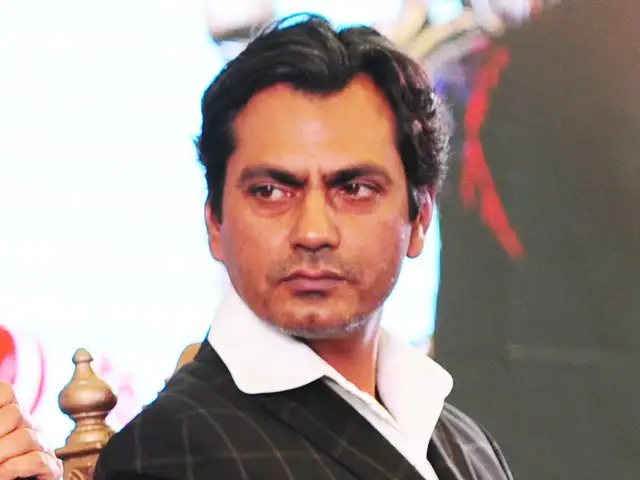
Earlier this year in March, Nawazuddin Siddiqui was accused of spying on his estranged wife and acquiring her call detail records (CDR).
Earlier this year in March, Nawazuddin Siddiqui was accused of spying on his estranged wife and acquiring her call detail records (CDR).
Shah Rukh Khan was booked for allegedly 'rioting' and 'damaging' railway property during the promotion of his film 'Raees' at Kota Railway station.
In 2002, he was caught on camera misbehaving with the Mumbai Cricket Association officials and manhandling a security personnel at the Wankhede Stadium.
Shah Rukh Khan was booked for allegedly 'rioting' and 'damaging' railway property during the promotion of his film 'Raees' at Kota Railway station.In 2002, he was caught on camera misbehaving with th..
Read More
Earlier this year, the Lingaraj Temple authorities in Bhubaneswar, filed a complaint against the actress, accusing her of shooting for an advertisement in the 'no-camera zone' inside the temple premises.
Earlier this year, the Lingaraj Temple authorities in Bhubaneswar, filed a complaint against the actress, accusing her of shooting for an advertisement in the 'no-camera zone' inside the temple premi..
Read More
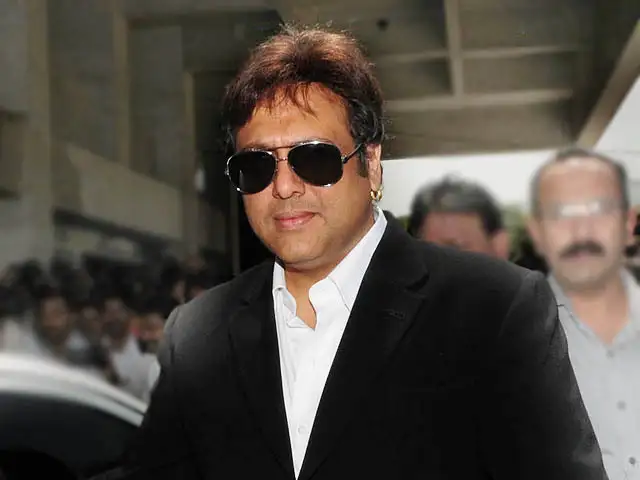
Govinda was charged with slapping a visitor on the sets of his film 'Money Hai Toh Honey Hai.' The 2008-slapping case was closed by the Supreme Court in 2017.
Govinda was charged with slapping a visitor on the sets of his film 'Money Hai Toh Honey Hai.' The 2008-slapping case was closed by the Supreme Court in 2017.
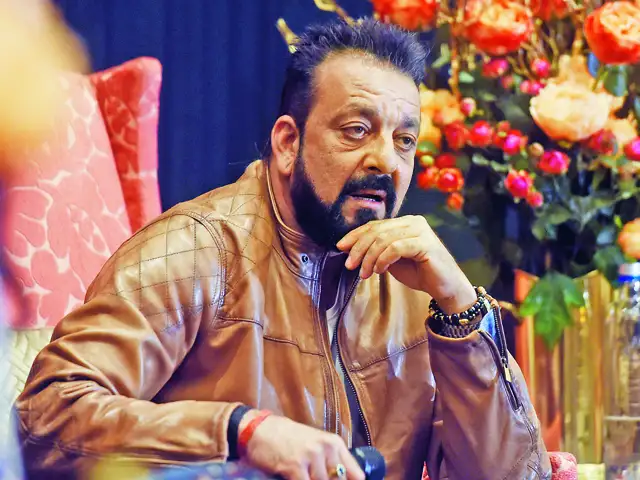
Another "Bhai" of Bollywood Sanjay Dutt virtually created history by becoming the first major film personality to be convicted and also one to complete his full jail sentence.
Despite many controversies, he finally walked out of Yerawada Central Jail, Pune in February 2016, with the halo of his larger-than-life hero image still intact.
Dutt was sentenced to five years by the Supreme Court for illegal possession of weapons after the bloody Mumbai communal carnage of Decemebr 1992-Januarry 1993 and its fallout in the form of the March 12, 1993 serial bomb blasts, India's biggest terror strike till date which left 257 dead.
Another "Bhai" of Bollywood Sanjay Dutt virtually created history by becoming the first major film personality to be convicted and also one to complete his full jail sentence.
Despite many controver..