Mirror on humanity: No time to be selfish, wear your mask even if it gets uncomfortable
People around the world have adapted to the discomfort that shows their caring side.
By AP |
iStock
In months, face masks have joined the list of don't-leave-home-without-them items for billions around the world.
SAINT-GERMAIN-EN-LAYE, FRANCE: House keys, wallet or purse, mobile phone and .... oh, yes: face mask.
Reluctantly for many, but also inexorably in the face of a deadly invisible enemy, small rectangles of flimsy yet live-saving tissue have in mere months joined the list of don't-leave-home-without-them items for billions around the world.
Not since humans invented shoes or underwear has a single item of dress caught on so widely and quickly from Melbourne to Mexico City, Beijing to Bordeaux, spanning borders, cultures, generations and sexes with almost the same Earth-shaking speed as the coronavirus that has killed more than 600,000 and infected more than 15 million.
"There has, perhaps, never been such a rapid and dramatic change in global human behaviour," says Jeremy Howard, co-founder of #Masks4All, a pro-mask lobbying group. "Humanity should be patting itself on the back."
But rarely, also maybe never, has anything else worn by humans sparked such furious discord and politicking, most notably in the United States. Did anyone on an American beach ever pull a gun on someone for wearing a bikini, as an unmasked man did on a masked shopper this month at a Florida Walmart?
As such, like other human habits, the mask has become a mirror on humanity. That so many people, with varying degrees of zeal, have adapted to the discomfort of masking their airways and facial expressions is powerful medicine for the belief that people are fundamentally caring, capable of sacrifice for the common good.
ADVERTISEMENT
From Marsha Dita, a social media freelancer in Jakarta, Indonesia, comes a view succinctly put, and increasingly widely shared: "This is not the time to be selfish."
Yet also apparent from outbreaks of fierce resistance to masks, especially in democracies, is this: Plenty of people don't like being told what to do and distrust the scientific evidence that masks curb contamination.
Cries that masks muzzle freedom have been vociferously aired at rallies in the United States, Canada and, last Sunday, in London. There, a speaker at a protest against the introduction this Friday of mandatory mask-wearing in Britain's stores argued: "People die every year. This is nothing new."
Skepticism shared by, among others, Mohammed al-Burji, a 42-year-old civil servant in Lebanon. Walking to work without a mask, violating laxly enforced rules that they be worn everywhere outside the home, he said: "There is no coronavirus, brother. They're just deceiving people."
ADVERTISEMENT
The country has reported over 3,100 infections and 43 deaths, and senior officials have made public appeals for people to stick to mask wearing and social distancing.
Masks are an unaffordable luxury for those in extreme poverty and are making painful dents in the budgets of modest families.
ADVERTISEMENT
The same human reflexes that cause people to size up each other's fashion choices, haircuts and alike on first meeting are now instinctively applied to masks, too.
In Mexico City, Estima Mendoza says she cannot help but recoil at people without masks. "I feel defenceless. On one hand I judge them and on the other I ask myself 'Why?'' Mendoza said. "As human beings, we always judge."
As a Black Muslim woman in France, Maria Dabo knows that feeling all too well. For her, the adoption of masks has had an unexpected but welcome side effect: She no longer feels such a standout in the country that has legislated to prevent Muslim women from wearing face-covering veils. With masks required in all indoor public spaces, the French far-right's long obsession with Islamic veils has been muted.
"I feel like we are a bit better understood," Dabo said. "Everyone is obliged to do the same as us, which makes me believe that God is busy teaching people a lesson, that covering up isn't religious or anything else. It's about not being a fool and protecting oneself."
Also muddying and fuelling global debate has been mixed messaging from government leaders who flip-flopped on the utility of masks and advised against their public use when stocks were so lacking that health workers cared for the sick and dying without adequate protection.
Chief among the U-turners is U.S. President Donald Trump, who first wore a mask in public only after COVID-19 had killed at least 134,000 Americans and tweeted this week that mask-wearing is a patriotic act.
Months of resistance preceded that tweet - resistance that causes head-scratching in autocratic China, which has quashed debate about how the pandemic started and was handled there.
"People in other countries ask for freedom. But they are actually losing it, because they have seen a rapid increase in infected cases," said Liu Yanhua, an insurance worker.
Even within households, masks divide. Yu Jungyul, a child-health worker in Seoul, South Korea, says she has to nag her husband to wear one, telling him: "'We have to wear masks for other people now, rather than only for ourselves.'"
In Australia, the introduction this week of mandatory face coverings in Melbourne came with a plea from the region's premier, Daniel Andrews, for masks to be incorporated into life's routines.
"Most of us wouldn't leave home without our keys, we wouldn't leave home without our mobile phone. You won't be able to leave home without your mask," he said.
Trend-setters are setting the tone, too. Fashion historian Kimberly Chrisman-Campbell, author of "Worn On This Day: The Clothes That Made History," notes that "fashions spread through emulation," and can sprint around the globe in minutes on social media. She suggests that "seeing more prominent people - like actors, models, social media personalities, or politicians - wearing them on TV or in social media would have an immense impact."
"The decision to wear a mask - or NOT wear one - also offers people the illusion of control at a time when everything seems wildly out of control," she argues. Trend-setters are setting the tone, too, for masks. Then there are the practicalities. Masks are an unaffordable luxury for those in extreme poverty and are making painful dents in the budgets of modest families. Says Wasim Abbas, a villager in Pakistan: "Some people are poor. They have not been given masks."
In heat, masks can be a torment. In Lagos, Nigeria, mask-less street trader Jibola Costello said he had to peel his off for a cool-down breather. "That's why I removed it."
And in France, fruit and vegetable seller Montassar Yoinis noticed that shoppers shun his stand if his face is uncovered. So he compensates by yelling loudly through his surgical mask: "Hello Monsieur, don't hesitate to taste the cherries!"
"It's a bit of a bother, but we have no choice," he said. "People are wary when you don't wear a mask. They don't come."
Shopping with her young kids (she was masked, they weren't), French museum worker Celine Brunet-Moret said she misses not being able to see faces and "all the emotions people have. You don't see people smiling or if they are OK or not."
"It's not the same life and it's not the normal life, so I'm thinking that we'll never get used to it, really get used to it," she said.
But across the street from the shop where Brunet-Moret was buying pungent cheese, fabric store worker Laure Estiez said venturing out without one of her growing collection of about 30 home-made masks now feels "almost unnatural." She says her new morning routine of picking colors and patterns to match her mood and outfits has "become a pleasure."
"We have a very strong capacity for adaptation," she said. "You get used to everything."
Coronavirus Can Get Children Worried: Here's How To Have The Talk
1/7
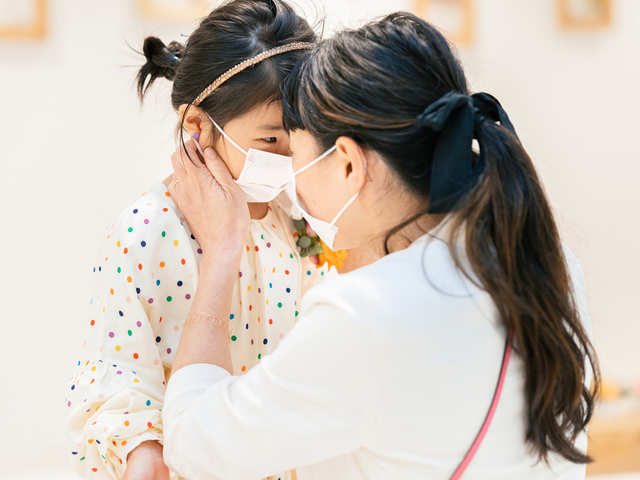
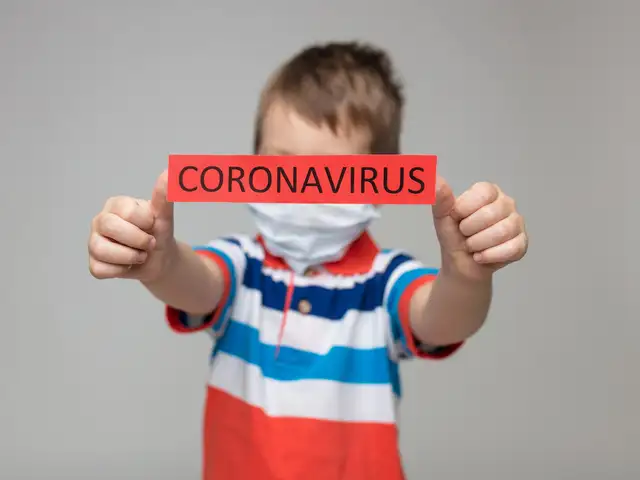
In the wake of coronavirus, several schools and colleges have been shut in many parts of the world to contain the spread of COVID-19. As public awareness and conversations around the novel virus increase, the situation can get the children anxious and worried for their family members and friends.
Parents, family members, teachers, healthcare professionals and trusted adults play a significant role in helping children make sense of what they hear in a way that is honest, accurate and minimise their fear or anxiety.
Dr Sreenath Manikanti, Senior Consultant Neonatologist & HOD Fortis La Femme Hospital, Richmond Road, Bangalore shares a few tips to help make the corona conversation easier around children.
In the wake of coronavirus, several schools and colleges have been shut in many parts of the world to contain the spread of COVID-19. As public awareness and conversations around the novel virus incr..
Read More
- Remember that children react to how and what things are said
- Children pick up cues from conversations you have with them and others
- Patiently listen to what they say, and allow them to ask questions
- Avoid using words that might blame others and lead to stigma
- Remember that the virus can make anyone sick. Avoid making assumptions about who might have COVID-19
- Pay attention to what children see, hear or read on television, radio or online
- Reduce the amount of screen time for children focused on COVID-19. Too much information on any one topic can lead to anxiety and worry
- Provide information to kids that is honest and accurate. Give information that is truthful and appropriate for the age and developmental level of the child
- Talk to children about how some stories on COVID-19 on the internet and social media may be based on rumours and inaccurate information
- Teach chilren everyday actions to reduce the spread of germs
- Stay calm and keep information simple
- Reassure children that health and school authorities are working very hard to keep everyone safe and healthy
- Teach dos and don'ts at home, schools and play areas
- Remember that children react to how and what things are said
- Children pick up cues from conversations you have with them and others
- Patiently listen to what they say, and allow them to ask qu..
Read More
- Stay 6 feet away from people who are coughing or sneezing or sick
- Cough or sneeze into a tissue or your elbow, and then throw the tissue into a closed bin
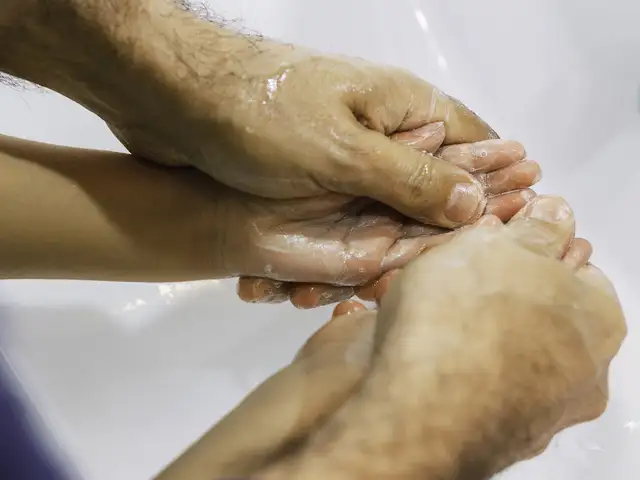
- Wash hands with soap and water for at least 20 seconds, especially after blowing nose, coughing or sneezing, after using restroom, and before eating or learning to prepare food
- If soap and water are not available, teach children to use hand sanitiser
- Stay 6 feet away from people who are coughing or sneezing or sick
- Cough or sneeze into a tissue or your elbow, and then throw the tissue into a closed bin
- Wash hands with soap and water for a..
Read More
- Avoid touching mouth, nose, eyes and face with unclean hands
- Avoid coughing or sneezing into hands
- Avoid crowded places
- Avoid touching surfaces in public places and play areas unnecessarily
- Avoid touching mouth, nose, eyes and face with unclean hands
- Avoid coughing or sneezing into hands
- Avoid crowded places
- Avoid touching surfaces in public places and play areas unnecessaril..
Read More
What is COVID-19?
- COVID-19 is the short name for 'coronavirus disease 2019'
- It is a new virus. Doctors are still learning more about it
- Recently, this virus has made a lot of people sick
- Doctors and scientists think that most people will be alright, especially kids, but some people might get very sick
- Doctors and experts are working hard to help people stay healthy
What is COVID-19?
- COVID-19 is the short name for 'coronavirus disease 2019'
- It is a new virus. Doctors are still learning more about it
- Recently, this virus has made a lot of people sick
- ..
Read More
- Practice healthy habits at home, school and play to help protect against the spread of COVID-19
- Cough or sneeze into a tissue or your elbow. If you sneeze or cough into a tissue, throw it in the dustbin right away
- Keep your hands out of your mouth, nose and eyes. This will help keep germs out of your body
- Wash your hands with soap and water for at least 20 seconds. If you don’t have soap and water, use hand sanitiser to clean the germs
- Keep things clean and hygienic
- If you have cough & fever, stay home. Just like you don’t want to get other people’s germs in your body, other people don’t want to get your germs either
- If you are old enough, you can help adults at home and school clean the things we touch the most like desks, doorknobs, light switches and remote controls
- Practice healthy habits at home, school and play to help protect against the spread of COVID-19
- Cough or sneeze into a tissue or your elbow. If you sneeze or cough into a tissue, throw it in the..
Read More
- COVID-19 can look different in different people. From what doctors have seen so far, most kids don’t seem to get very sick
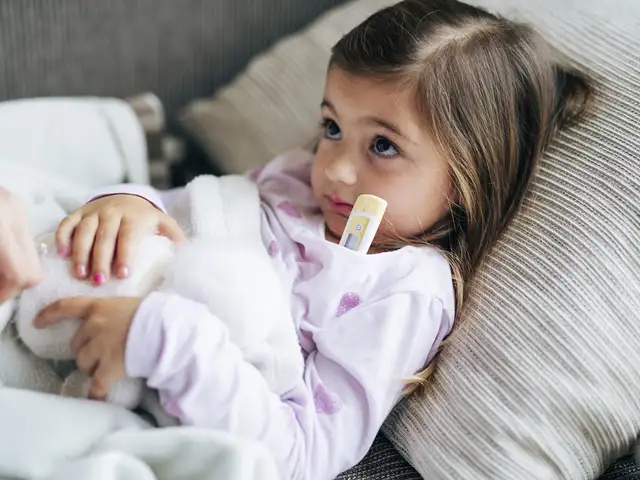
- Being sick with COVID-19 would be a little bit like having the flu. Children may get a fever, cough or have a hard time taking deep breaths
- Most people who have contracted COVID-19 don't get very sick. Only a small group of people who get it have had more serious problems
- If you suspect your child may have COVID-19, call Government of India helpline +91-11-23978046 or contact nearest healthcare facility to let them know before you bring your child in to see them
- COVID-19 can look different in different people. From what doctors have seen so far, most kids don’t seem to get very sick
- Being sick with COVID-19 would be a little bit like having the flu. Chi..