Meet Rohit Prasad: The engineer from Ranchi behind Alexa
Rohit Prasad was ranked No. 9 in Fast Company's 100 most creative people in business in 2017.
By Sujit John, TNN | Updated:

Agencies
Alexa, who is your creator? "I was invented by Amazon." That's Alexa's normal response to the question. What she doesn't reveal is that the person who breathed life into Alexa, and led the technology side of the project almost from its inception five years ago, is Rohit Prasad, an engineer from Ranchi, Jharkhand.
Prasad, together with his colleague Toni Reid who focuses on the consumer experience side, was No. 15 on Recode's list of 100 people in tech, business and media who mattered in 2017.
Jeff Bezos, Susan Fowler, Mark Zuckerberg, Tim Cook, Sundar Pichai, Elon Musk and Satya Nadella were among the 14 people ahead of him. Recode said Prasad and Reid had made Alexa a household name.
Star Trek inspired Indian techie to create Alexa
India-born Rohit Prasad was ranked No. 9 (and Reid No. 10) in Fast Company's 100 most creative people in business in 2017. Fast Company said Prasad and Reid had turned Alexa into a "category-defining consumer experience."
Prasad still has family in Ranchi and visits the city once every year-and-a-half. Last week was one of those visits. On Thursday, he spent nearly an hour talking to on phone from the Jharkhand capital. "My dad used to work for Mecon, my grandad for HEC (Heavy Engineering Corp), so I have had three generations here," he says. He's the kind who makes you feel comfortable. "I still follow The Times of India. It's my No. 1 news source for understanding what's going on in India," was the second line of the conversation. Prasad studied at DAV High School. For engineering, he had multiple offers, including from IIT-Roorkee. He chose Birla Institute of Technology (BIT), Mesra, in Ranchi. "I decided to stay closer home," he says.
He completed his electronics & communication engineering in 1997, and then went to the Illinois Institute of Technology, US, for an MS in electrical engineering, where he did novel research in low bit-rate speech coding for wireless applications. That's probably where his interest in speech recognition began.
For the next 14 years, he was at BBN Technologies, an R&D arm of defence company Raytheon. BBN was one of the founding sites of ARPANET, a predecessor of the internet.
It was also one of the leading R&D sites for speech recognition, natural language understanding and machine learning in general, and Prasad was deputy manager for that business unit, leading a multidisciplinary team of researchers, developers, and program managers on large-scale government-and commercially-sponsored projects.
In 2013, he moved to Amazon to use the same skills to try and revolutionise how customers interact with Amazon's products and services.
Captain Kirk and the crew giving voice commands, like "Give me warp speed," instead of pressing buttons or navigating a menu.
Prasad says the project involved four big challenges. One, the system must recognise speech. Two, once it recognises speech, it must make sense of the words, or what is called natural language understanding. Three, it must have enough resources to implement the user's command. And four, the capabilities have to get better each day, understand the context of the user to give the best outcome.
Prasad says the inflection point for Alexa came in 2015 when Amazon allowed third-party developers to build skills for Alexa and integrate the voice service into their apps or devices.
Suddenly, Alexa could perform innumerable tasks and be present anywhere. Amazon's marketshare for smart home speakers "where Google Home is potentially formidable" is estimated by some at 76%.
What do most use Alexa for? Music is the most popular "asking Alexa to play such-and-such song". In households that have smart devices, Alexa is used a lot to switch on lights, to switch shows on TV. "My personal favourite, since I have family in India and I"m in the States, is to communicate through the Alexa app, video call, drop in to my mother's kitchen, or when I'm travelling, drop into my kids at home," says Prasad. This last is a feature that works like an intercom among those who have Alexa devices.
Alexa's India launch was its fourth, after the US, UK and Germany. And Prasad admits India has been the most daunting. Vast diversity of accents, languages, mixed languages. "People are asking Alexa, 'weather kya hai' (what's the weather). There's plenty of this mixed language coming in. People pronounce names like Amitabh Bachchan very differently."
Prasad says Alexa tackles much of this quite effectively today, but says it will get better as it learns from more interactions. He is particularly happy with the way Alexa speaks. "It's very Indian, the accent is very neutral, it has to sound pleasant to a Tamil speaker, to a Bengali speaker, a Kannada speaker. It should not sound funny, and we have accomplished that," he says.
His current focus is to improve Alexa's core intelligence, enable her to deal with ambiguous commands and to accomplish complex tasks " like planning a vacation. 'Then it will be a lot more human like," he says.
And yes, in India, he has to deal with the frequent use of the Hindi word 'Achcha'. It often sounds so like 'Alexa', that it tends to wake up Alexa when someone uses the word. "We have taken steps to make Alexa sensitive to the difference," says Prasad.
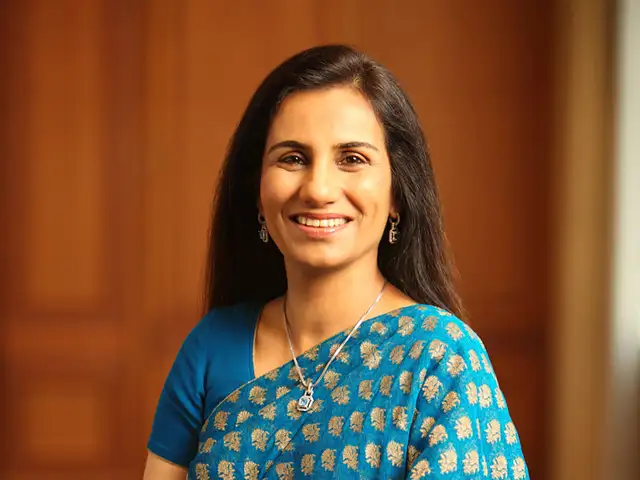
Kochhar, on her panel, emphasised on 'economic inclusion' of rural villages in India.
Prasad, together with his colleague Toni Reid who focuses on the consumer experience side, was No. 15 on Recode's list of 100 people in tech, business and media who mattered in 2017.
Jeff Bezos, Susan Fowler, Mark Zuckerberg, Tim Cook, Sundar Pichai, Elon Musk and Satya Nadella were among the 14 people ahead of him. Recode said Prasad and Reid had made Alexa a household name.
Star Trek inspired Indian techie to create Alexa
India-born Rohit Prasad was ranked No. 9 (and Reid No. 10) in Fast Company's 100 most creative people in business in 2017. Fast Company said Prasad and Reid had turned Alexa into a "category-defining consumer experience."
Prasad still has family in Ranchi and visits the city once every year-and-a-half. Last week was one of those visits. On Thursday, he spent nearly an hour talking to on phone from the Jharkhand capital. "My dad used to work for Mecon, my grandad for HEC (Heavy Engineering Corp), so I have had three generations here," he says. He's the kind who makes you feel comfortable. "I still follow The Times of India. It's my No. 1 news source for understanding what's going on in India," was the second line of the conversation. Prasad studied at DAV High School. For engineering, he had multiple offers, including from IIT-Roorkee. He chose Birla Institute of Technology (BIT), Mesra, in Ranchi. "I decided to stay closer home," he says.
He completed his electronics & communication engineering in 1997, and then went to the Illinois Institute of Technology, US, for an MS in electrical engineering, where he did novel research in low bit-rate speech coding for wireless applications. That's probably where his interest in speech recognition began.
ADVERTISEMENT
For the next 14 years, he was at BBN Technologies, an R&D arm of defence company Raytheon. BBN was one of the founding sites of ARPANET, a predecessor of the internet.
It was also one of the leading R&D sites for speech recognition, natural language understanding and machine learning in general, and Prasad was deputy manager for that business unit, leading a multidisciplinary team of researchers, developers, and program managers on large-scale government-and commercially-sponsored projects.
In 2013, he moved to Amazon to use the same skills to try and revolutionise how customers interact with Amazon's products and services.
ADVERTISEMENT
Two years ago, he was redesignated head scientist of Alexa artificial intelligence. "The journey has been exciting. If you look at five years back, talking to a device from a distance, in the midst of a lot of noise, was just science fiction. We grew up in the 'Star Trek' era, that was the inspiration for us," he says.Captain Kirk and the crew giving voice commands, like "Give me warp speed," instead of pressing buttons or navigating a menu.
ADVERTISEMENT
Touch is inefficient, says Prasad. In home automation, it means if you have to turn on the garage light, you have to find your phone, find the app, click on it, find the right light, and then get the outcome. "That's too many steps. Instead, you can just tell Alexa, turn on the garage light."Prasad says the project involved four big challenges. One, the system must recognise speech. Two, once it recognises speech, it must make sense of the words, or what is called natural language understanding. Three, it must have enough resources to implement the user's command. And four, the capabilities have to get better each day, understand the context of the user to give the best outcome.
Prasad says the inflection point for Alexa came in 2015 when Amazon allowed third-party developers to build skills for Alexa and integrate the voice service into their apps or devices.
Suddenly, Alexa could perform innumerable tasks and be present anywhere. Amazon's marketshare for smart home speakers "where Google Home is potentially formidable" is estimated by some at 76%.
What do most use Alexa for? Music is the most popular "asking Alexa to play such-and-such song". In households that have smart devices, Alexa is used a lot to switch on lights, to switch shows on TV. "My personal favourite, since I have family in India and I"m in the States, is to communicate through the Alexa app, video call, drop in to my mother's kitchen, or when I'm travelling, drop into my kids at home," says Prasad. This last is a feature that works like an intercom among those who have Alexa devices.
Alexa's India launch was its fourth, after the US, UK and Germany. And Prasad admits India has been the most daunting. Vast diversity of accents, languages, mixed languages. "People are asking Alexa, 'weather kya hai' (what's the weather). There's plenty of this mixed language coming in. People pronounce names like Amitabh Bachchan very differently."
Prasad says Alexa tackles much of this quite effectively today, but says it will get better as it learns from more interactions. He is particularly happy with the way Alexa speaks. "It's very Indian, the accent is very neutral, it has to sound pleasant to a Tamil speaker, to a Bengali speaker, a Kannada speaker. It should not sound funny, and we have accomplished that," he says.
His current focus is to improve Alexa's core intelligence, enable her to deal with ambiguous commands and to accomplish complex tasks " like planning a vacation. 'Then it will be a lot more human like," he says.
And yes, in India, he has to deal with the frequent use of the Hindi word 'Achcha'. It often sounds so like 'Alexa', that it tends to wake up Alexa when someone uses the word. "We have taken steps to make Alexa sensitive to the difference," says Prasad.

Download
The Economic Times Business News App for the Latest News in Business, Sensex, Stock Market Updates & More.
The Economic Times Business News App for the Latest News in Business, Sensex, Stock Market Updates & More.
ADVERTISEMENT


