Martin Luther's letter calling Jews 'devils incarnate' goes under the hammer, likely to fetch $300,000
The letter was written in 1543 to a top official at Berlin's St. Nicholas Church.
By PTI | Updated:
Agencies
(Image: biography.com)
BOSTON: A letter written nearly 500 years ago by Martin Luther in which he refers to Jews as "devils incarnate" during a tirade against a former ally is up for auction, but Luther scholars warn that the man responsible for the Reformation should not be called anti-Semitic.
The single-page letter, with writing on both sides, is expected to sell for at least $300,000 at the auction being conducted by Boston-based RR Auction that concludes Wednesday.
"Martin Luther items don't come to auction often, and this is in incredibly great shape for a 500-year-old letter," said Robert Livingston, RR's executive vice president.
The letter was written around September 1543 to a top official at Berlin's St. Nicholas Church in response to a letter from the official requesting Luther's interpretation of some Biblical verses by which former Luther friend Johann Agricola justified his positive treatment of Jews in what is now Germany.
In his reply, Luther tells Georg Buchholzer that he has done well to preach against the Jews and should continue to do so, ignoring Agricola, who Luther accused of being a habitual liar.
ADVERTISEMENT
"For these Jews are not Jews, but devils incarnate who curse our Lord," Luther wrote, according to RR Auction's translation.
Luther, whose Ninety-Five Theses in 1517 triggered the Protestant Reformation and seismic rift in Christianity that still exists, sympathised with Jews early on because of the poor way they were treated by the Catholic Church, said Eric Metaxas, author of the 2017 book "Martin Luther."
There is no doubt that Luther had strong negative feelings about Jews later in life when he was "cranky and sick," but Metaxas cautioned against comparing 16th century anti-Semitism with 21st century anti-Semitism.
"We don't mean what Luther would have meant by it," he said.
ADVERTISEMENT
Luther became frustrated that Jews would not convert to his version of Christianity.
"Later in his life, after he had in a sense re-presented the Christian faith the way he thought it should be presented, he was depressed and discouraged by the fact that many Jews of that era did not in fact accept this free gift of grace through Jesus," Metaxas said.
ADVERTISEMENT
Europe had a long history of mistreating Jews, said Christopher Boyd Brown, an associate professor of church history at Boston University.
"Luther plays a part in this grim history," Brown said via email. "Yet as appalling as Luther's intolerance of his Jewish contemporaries was, Luther was not an anti-Semite. His criticism of Judaism was rooted in theological disagreement over the reading of shared Scriptures, not in racial animus."
Luther denounced medieval Christian charges that Jews were responsible for the death of Jesus and was a strong voice for nonviolent religious tolerance, Brown said.
The letter, which includes a leather clamshell case, is likely to be sold to a museum or private collector who will know how to properly preserve it, Livingston said.
Lost to history until 1914, when it was discovered in the private collection of a German baron, it is being sold by a German document collector.
From 'Pink' Diamond To The World's First Microchip: Items That Failed To Sell At Auctions
1/5
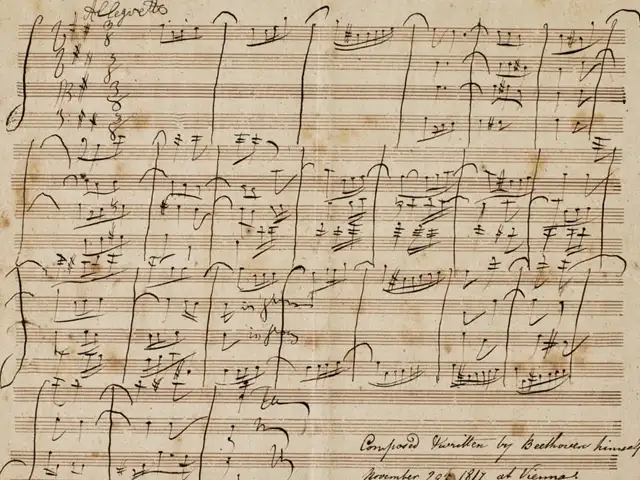
In 2016, Sotheby's had a manuscript by Ludwig van Beethoven up for auction. The single-page manuscript was described as the "Autograph manuscript of the 'Allegretto' in B minor for string quartet (WoO 210), composed for an English visitor to Vienna in 1817". It has the words "composed and written by Beethoven himself November 29, 1817 at Vienna" inscribed on it. The manuscript was expected to fetch about 200,000 pounds. The auction house made a statement that there were no takers because of a Beethoven scholar's claim that the manuscript was not authentic.
Image: Sotheby's
In 2016, Sotheby's had a manuscript by Ludwig van Beethoven up for auction. The single-page manuscript was described as the "Autograph manuscript of the 'Allegretto' in B minor for string quartet (Wo..
Read More
In 1996, Albert Einstein's earliest available manuscript in which he elaborated on his theory of relativity was auctioned by Sotheby's in Manhattan. The item, which was expected to sell for $4 million-6 million, failed to meet the minimum bid. The 72-page untitled manuscript was written in 1912, seven years after Einstein's special theory was first published.
In 1996, Albert Einstein's earliest available manuscript in which he elaborated on his theory of relativity was auctioned by Sotheby's in Manhattan. The item, which was expected to sell for $4 millio..
Read More
In 1958, Jack Kilby at Texas Instruments made the world's first microchip by hand. The second prototype of this historic chip went under the hammer in 2014, but failed to meet the reserve price. Kilby won the Nobel Prize for the creation of the microchip and his other contributions to the computing era. Christie's had estimated that the chip would bring in between $1-2 million.
Image: Christie's
In 1958, Jack Kilby at Texas Instruments made the world's first microchip by hand. The second prototype of this historic chip went under the hammer in 2014, but failed to meet the reserve price. Kilb..
Read More
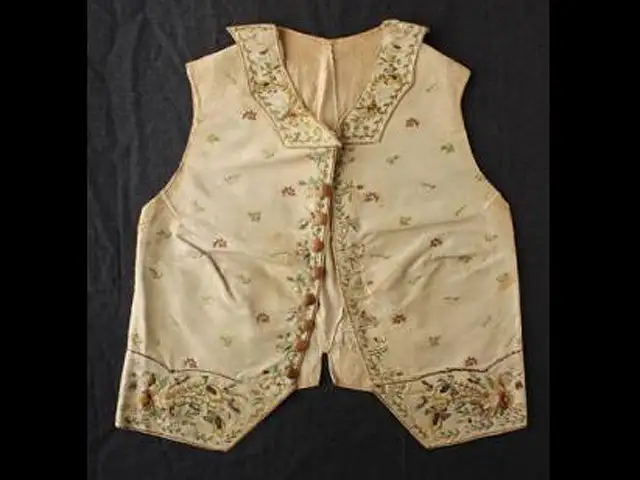
Cook was a famous explorer and was the man who claimed Australia for Great Britain in 1770, naming eastern Australia 'New South Wales'. One of Cook's wai st coat s passed through a few hands, including Australian pianist Ruby Rich who altered it to suit a woman's body. It landed up in an auction in 2017. The 250-yearold waistcoat was valued close to $1.1 million by Aalders Auctions.
Photo: Aalders Auctions
Cook was a famous explorer and was the man who claimed Australia for Great Britain in 1770, naming eastern Australia 'New South Wales'. One of Cook's wai st coat s passed through a few hands, includi..
Read More
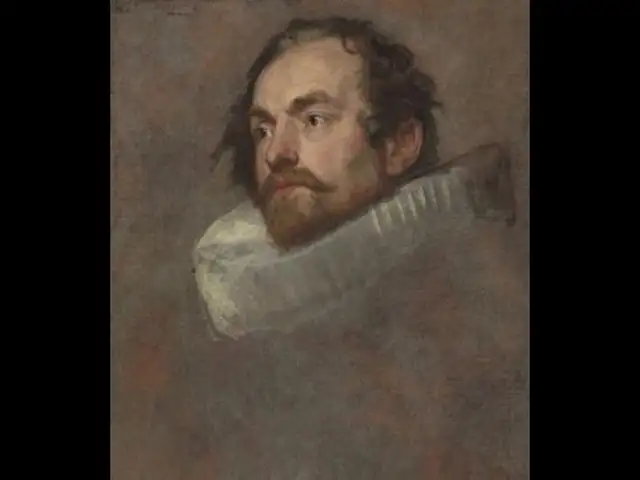
Father Jamie McLeod had bought an artwork from a small antique shop in Cheshire for £400. It later came to light that the artwork was an original Van Dyck painting. It was discovered after a television show evaluated the painting. In 2014, Christie's set an estimate of 400,000-500,000 pounds for the painting titled 'Head Study of a Man in a Ruff', which failed to sell.
Image: Christie's
Father Jamie McLeod had bought an artwork from a small antique shop in Cheshire for £400. It later came to light that the artwork was an original Van Dyck painting. It was discovered after a televisi..
Business News › Magazines › Panache › Martin Luther's letter calling Jews 'devils incarnate' goes under the hammer, likely to fetch $300,000Text Size:AAA