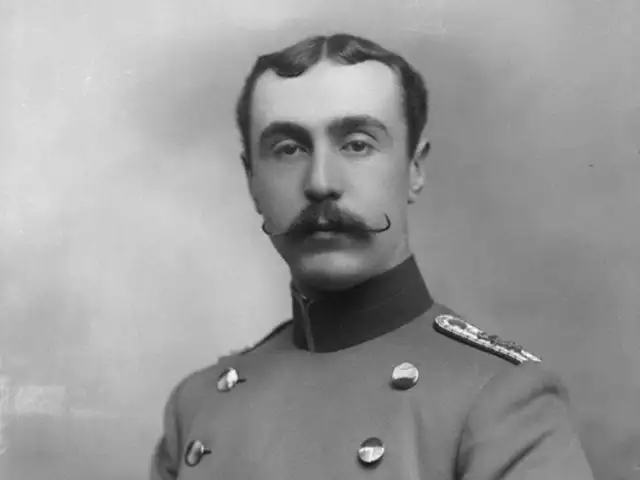
Francesca Cartier Brickell had once chanced upon a leather trunk that held a treasure trove of letters and documents. (IMAGES PROVIDED BY FRANCESCA CARTIER BRICKELL; CARTIER ARCHIVES)
A few years ago, Francesca Cartier Brickell’s family gathered to celebrate the 90th birthday of her grandfather, Jean-Jacques Cartier, at his home in South of France. At some point, the birthday boy sent her off to the cellar to fetch a bottle of champagne that he had been saving for a special occasion.
While on that errand, Brickell chanced upon a leather trunk that held a treasure trove of letters and documents. And within those pages was the story of an empire in the making, and for Brickell, a story that had to be told.
The project of documenting and researching her family’s history brought Brickell to India two years ago, as Indian royals have long been Cartier devotees. Recently, she was back. ETPanache met her in Mumbai and subsequently interviewed her over email.
You must have grown up listening to stories of how Cartier was built. When you researched the history of the company, were there any surprises? My grandfather was the last of the Cartiers to own and manage a branch of the firm [in London] before it was sold, but he had retired just before I was born. Those holidays we spent with him were often peppered with fun anecdotes — like how he fell asleep at Buckingham Palace and had to be woken up, mortified, by the Queen Mother.
I hadn’t realised how precarious the family firm had been when it was founded in 1847 [not dissimilar to many startups today], or that it depended on a series of arranged marriages that brought much-needed dowries to the table. And while I had grown up hearing about my great-grandfather Jacques, I knew far less about his two brothers, Pierre and Louis. It was fascinating to read their letters and realise that it was the combined strengths of this third generation that was so important to Cartier’s international success.
For example, Pierre, who went over to America, was an incredible networker. When he married his American wife, Elma Rumsey, in 1908, the headline of a newspaper report was ‘Heiress to wed Foreigner’. I was surprised by that. The papers didn’t even refer to the groom as a jeweller, let alone a jeweller to kings. That shows how unknown Cartier then was in America. And yet, by the 1920s, thanks largely to Pierre’s networking within New York high society, everyone from the Vanderbilts to the Astors to the Morgans shopped at the Cartier store on Fifth Avenue.
Your great-grandfather, Jacques Cartier, crafted pieces for many erstwhile maharajas in India. Did he find himself at the centre of competition between the royal houses? As far as competition between the royal houses goes, the family letters did not make much mention [of them], but I wouldn’t have expected that. The Cartiers were discreet. And, even if the Indian royal clients were buying bigger and better jewels than their neighbouring royals in a display of power or wealth, that wouldn’t have been unusual behaviour. Jacques Cartier counted many Indian royals as close friends. What more did you learn about this? Jacques was close to many of the maharajas. But he was especially close to the Maharaja of Nawanagar [Ranjitsingh Jadeja], who my grandfather always referred to as Ranji. It was a friendship that grew out of a shared appreciation and knowledge of gems. Over the years, Jacques would design some spectacular pieces for Ranji, including his favourite — a coloured diamond necklace that he referred to as the ‘realisation of a connoisseur’s dream’. Ranji, who had been educated in England and also played cricket for England, had an estate in Ballynahinch, Ireland. My grandfather remembered spending family holidays there as a child, and his absolute awe when Ranji called ahead to hold the train at the station because they were running late. Alfred Cartier, son of the founder, with his sons Louis, Pierre and Jacques. (IMAGES PROVIDED BY FRANCESCA CARTIER BRICKELL; CARTIER ARCHIVES) Were the brothers involved in the social scene, keeping track of events for possible big purchases? The Cartiers, especially Pierre, built a huge index — nowadays we would call it a database — of current and prospective clients, keeping track of engagements, marriages, births, deaths, whether in London, New York or India. Jacques would try to attend important Indian royal weddings. If he couldn’t make it, he would send a representative. Clifford North was one salesman who travelled regularly to India in the 1930s.
ADVERTISEMENT
On one trip, he was asked to visit Nepal for a royal wedding and set out in the company Rolls Royce, cases filled with sumptuous jewels, in the hope of tempting the king of Nepal into a large purchase. The problem was getting there: The rocky Himalayas proved impossible terrain for the large Rolls Royce to cross. But instead of giving up, the local guides set about taking the car apart and then carried each section (from the steering wheel, to the doors to the gear lever) over the mountains before reassembling the car on the other side. Unfortunately, even after all that effort, the king didn’t buy anything.
Jacques Cartier was especially close to the Maharaja of Nawanagar Ranjitsingh Jadeja (L). The Nawanagar necklace (R) designed by Cartier. (IMAGES PROVIDED BY FRANCESCA CARTIER BRICKELL; CARTIER ARCHIVES) How do you view luxury?
ADVERTISEMENT
For my grandfather Jean-Jacques, a back of a jewel had to look beautiful too, even if no one ever really saw it, and a cigarette box had to make just the right ‘click’ when it closed or it was sent back to the workshop and made again.
I love the example of a carved emerald necklace made for a maharaja. Those emeralds were so fragile that the craftsman tasked with setting them was given 48 hours off work beforehand, so he was relaxed. A slight shake of his hand could cause the gems to crack. Luxury doesn’t necessarily have to mean the most extravagant object. It is more about a commitment to taking the time to make something properly.
No Gay Reception For The Blue Bloods: Royals Whose Same-Sex Relationship Courted Controversy
1/6
He would support his kids if they were gay, said Prince William. But societal acceptance has never been easy for most royals in same-sex relationships.
He would support his kids if they were gay, said Prince William. But societal acceptance has never been easy for most royals in same-sex relationships.
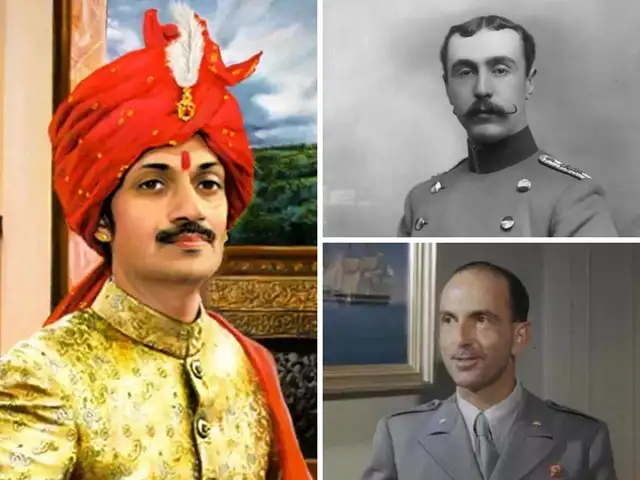
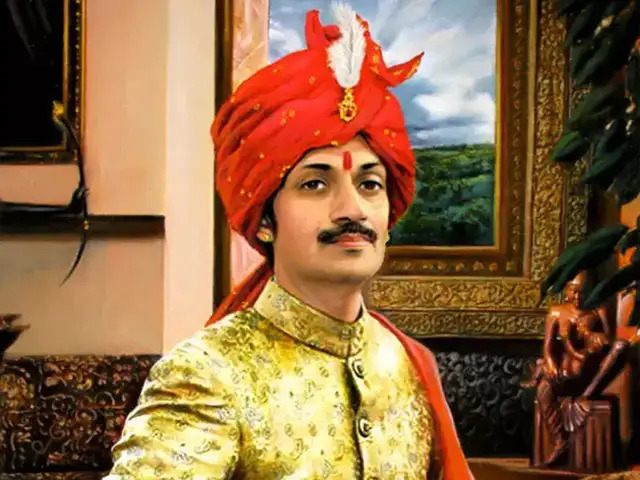
Manvendra is the son of the erstwhile Maharaja of Rajpipla in Gujarat. In 2006, Manvendra came out as gay to a Gujarati daily. Now 53, he has been accused of bringing dishonour to his royal lineage and has been ostracised from the community. In 2000, Manvendra set up a trust that works towards the prevention of HIV and AIDS.
Manvendra is the son of the erstwhile Maharaja of Rajpipla in Gujarat. In 2006, Manvendra came out as gay to a Gujarati daily. Now 53, he has been accused of bringing dishonour to his royal lineage a..
Read More
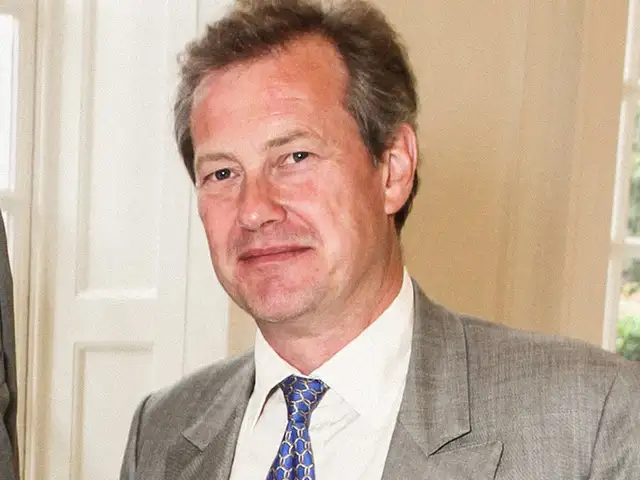
The first-ever same-sex wedding in the British royal family took place in September last year. Lord Ivar Mountbatten, a cousin of Queen Elizabeth II, married James Coyle, in a 60-person wedding. Mountbatten previously married Penelope Vere Thompson in 1994, but they divorced on amicable terms in 2011. He came out as gay in 2016. Mountbatten announced his wedding on Instagram with the caption “Well we did it finally! It was an amazing day despite the miserable British weather."
The first-ever same-sex wedding in the British royal family took place in September last year. Lord Ivar Mountbatten, a cousin of Queen Elizabeth II, married James Coyle, in a 60-person wedding. Moun..
Read More
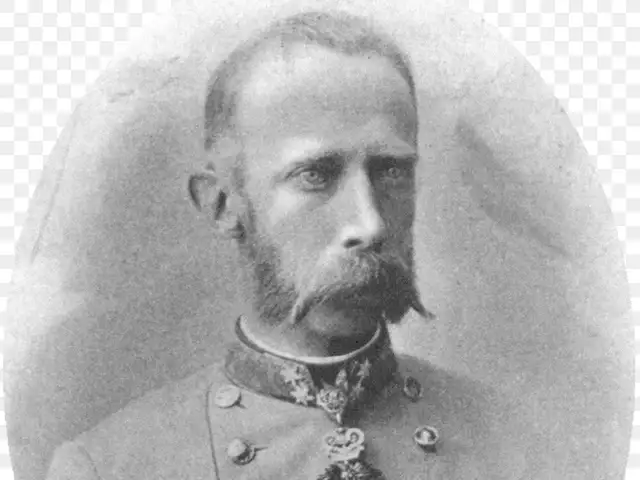
Born into the House of Habsburg, Archduke Ludwig Viktor was the younger brother of Emperor Franz Joseph I of Austria. His homosexuality was an open secret. As a result of his very public homosexuality and transvestitism, Ludwig Viktor was banished from Vienna. He retired to Salzburg and became a patron of the arts. He remained unmarried until his death in 1919.
Born into the House of Habsburg, Archduke Ludwig Viktor was the younger brother of Emperor Franz Joseph I of Austria. His homosexuality was an open secret. As a result of his very public homosexualit..
Read More
Prince Aribert was the third son of Frederick I, Duke of Anhalt, and Princess Antoinette of Saxe-Altenburg. On July 6, 1891, he married Princess Marie Louise, the granddaughter of Queen Victoria, at St George’s Chapel in Windsor Castle. However, their marriage was unhappy because of his rumoured homosexuality, and they never had children. In December 1900, the Duke of Anhalt used his prerogative as reigning Duke to annul the marriage.
Prince Aribert was the third son of Frederick I, Duke of Anhalt, and Princess Antoinette of Saxe-Altenburg. On July 6, 1891, he married Princess Marie Louise, the granddaughter of Queen Victoria, at ..
Read More
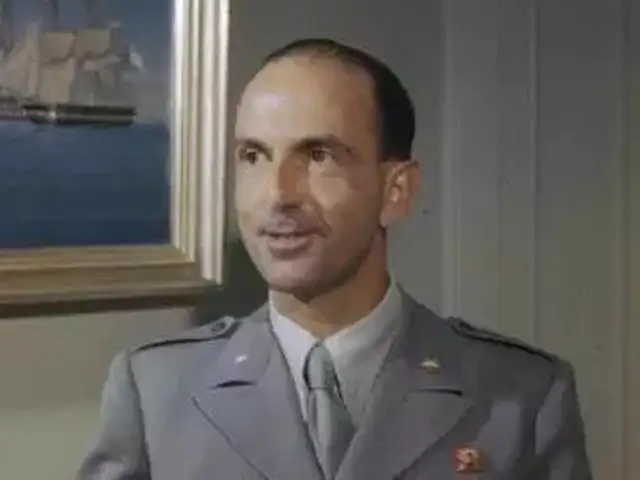
Umberto II was the last king of Italy. He was nicknamed the ‘May King’ after ruling for 34 days — from May 9, 1946, to June 12, 1946 — since he was forced to abdicate after a republican form of government was approved in a general referendum. Umberto was married to Marie José of Belgium, but it was for appearances only. It was widely reported in the newspapers that Umberto was a homosexual and his partners allegedly included Italian screenwriter Luchino Visconti and French actor Jean Marais. Reportedly, Benito Mussolini had a dossier on Umberto’s private life for blackmail purposes.
Umberto II was the last king of Italy. He was nicknamed the ‘May King’ after ruling for 34 days — from May 9, 1946, to June 12, 1946 — since he was forced to abdicate after a republican form of gover..
Business News › Magazines › Panache › Luxury doesn’t mean the most extravagant object, it's a commitment to create something proper: Francesca CartierText Size:AAA