Looking at the pandemic through gender lens: Women are facing the brunt of Covid-19 with more job cuts, less pay
The deepest recession of our lifetimes could hurt women’s economic prospects.
By Bloomberg |
iStock
Women are on the frontlines of the fight against the virus itself, making up 70% of global healthcare workers.
By Elisa Martinuzzi
It is well established by now that the deadly coronavirus is anything but a “great equalizer.” Instead, large swaths of the population are confronting threats — both to their physical and their financial well-being — that if left unchecked could deepen existing divides.
Take the gender gap. Before the pandemic struck, women already faced a century-long wait to reach parity with men, a daunting prospect that now risks becoming further out of reach if the economic disparities unleashed by the crisis are ignored. As the health emergency abates, governments, big business and investors have the opportunity to refocus their attention on previous goals, such as aiming to reach gender equality.
Women are particularly exposed to this crisis. They are on the frontlines of the fight against the virus itself, making up 70% of global healthcare workers and as much as 95% of long-term care workers, according to the Organization for Economic Cooperation and Development (OECD). But not only are women putting their lives at risk to save others — they also make up the majority of employees in parts of the economy that have been hardest hit by lockdowns. From leisure to hospitality to retail, entire industries in which women make up a greater share of the workforce have been brought to a halt. Women are also more likely to hold temporary and part-time positions, the types of jobs employers are most likely to cut first in a downturn. Across the U.S., the cost to female jobs is already visible. Across the U.S., the cost to female jobs is already visible. The latest unemployment figures show that women held 55% of the 20.5 million jobs lost last month. Women’s share of all unemployment claims filed between March and April 11 ranged from 53% in Wyoming to as high as 67% in Alabama, according to nonprofit journalism organization The Fuller Project. In Canada, too, women have made up the bulk of the layoffs.
If recent history is any guide, the deepest recession of our lifetimes could hurt women’s economic prospects for many years to come. In the aftermath of the global financial crisis, men bore the brunt of the job losses in Europe and the U.S., leading some to dub the economic contraction the “man-cession.” Male-dominated manufacturing and construction industries suffered the biggest blows.
ADVERTISEMENT
But as Aliya Hamid Rao, a sociology professor at Singapore Management University, has found, women took longer to return to work after the last downturn. That’s partly because crises tend to reinforce the idea that men are responsible for putting bread on the table whereas women take care of the family, she has said. So women typically take on a greater share of the unpaid housework, further hampering their return to, and progress in, paid employment. Rao’s study of professionals showed that even when men were unemployed and their female partners were the ones working full time, men still would not shoulder a greater portion of household chores.
Early indications on the divisions of household labor in the pandemic era show not much is changing. According to a survey of 2,200 Americans, carried out during the April lockdown for the New York Times, 70% percent of women said they are now either solely or mostly responsible for housework, and 66% said they are handling childcare, in line with analysis from before the pandemic. Though men in the recent survey disagreed — only 20% said their partners are mostly responsible for the unpaid household labor — research has shown women typically report these estimates more accurately.
Governments so far have been rightly preoccupied by tending to the immediate health needs of their populations and their financial survival. From household checks to loans and grants to companies, the scale of the fiscal responses we’re seeing around the world are without precedent. Companies too have mostly sought to shield their employees from unnecessary exposure to the virus, with the majority of office jobs relocating to homes and some firms also pledging not to cut staff. Women typically take on a greater share of the unpaid housework, further hampering their return to, and progress in, paid employment. But as countries begin planning their exits from lockdown, both policymakers and corporate leaders have to acknowledge and address the economic struggles women face.
ADVERTISEMENT
To begin with, there should be a simple but effective re-evaluation of how we value female-dominated healthcare work, beyond calls to show our appreciation with rounds of hand-clapping. The financial conditions of health and social workers in some countries are in need of improvement. In Portugal and Spain, pay for nurses fell after the sovereign debt crises of the early 2000s and have only slowly recovered, according to the latest OECD data. The same study shows that pay for nurses in the U.K. rose just 5% between 2010 and 2017, while inflation rose about 15%. The industry needs higher pay. For instance, the Institute for Public Policy Research, a think tank, argues U.K. health employees should receive Covid-19 bonuses, as well as better statutory sick pay and a higher real living wage.
As governments shift from handing out financial lifelines to restarting and rethinking their economies, they could tie aid to goals of sustainability, such as improving the balance of women in companies’ leadership.
ADVERTISEMENT
Notwithstanding the clear benefits of having diverse leadership, women in the U.S. and the U.K. still make up fewer than 30% of board members and 10% of CEOs among the biggest companies. At a time in which inequity threatens to undermine societies, closing the leadership gender gap is more important than ever. And gender-diverse boards are more likely to steer their firms to look after stakeholders, not just shareholders.
Financial support to firms could also be tied to improving the conditions of precarious workers, such as temporary employees and freelancers, who can slip through the cracks of social security and are less likely to receive on-the-job training. Women make up about 40% of the total wage employment but 57% of part-time employees, according to the International Labour Organization.
Governments could also partner with investors to channel funds into small- and medium-sized companies led by women — which struggle at the best of times to secure financing. In some of the world’s biggest economies, the U.K. and Germany for example, women lead fewer than one in five SMEs. Supporting women in running their own businesses would help enable more of them to work and lift the quality of their employment. Women account for only 30% of the tech workforce on average across the Group of Seven countries. Leaders will have to invest in retraining as well, to create more opportunities for women. Many who lost their jobs in this crisis might not be able to return to a similar role. The retail sector is already being decimated, and the continuing shift to automation will hurt factory workers and salespeople alike. Offering training in digital skills, and encouraging studies in science, technology, engineering and mathematics, will empower women across the employment spectrum. Women account for only 30% of the tech workforce on average across the Group of Seven countries, and representation in leadership roles is even thinner.
At the very least, policymakers should ensure that women are equally represented in their decision-making. In Italy, one of the European countries that has been hardest hit by the pandemic, the government has faced pressure to add more women to its committees of experts that advise on the health crisis and reopening the economy. The most powerful group, the government’s technical and scientific committee, for months consisted of just men before the government announced on Tuesday it would add women to the 20-strong committee.
CEOs of large corporations, for their part, have the chance to show that they actually mean what they say when they wax lyrical about their companies’ broader purpose in society, beyond making money for their shareholders. As they plan how to return to office life, there will be fresh opportunities to root out existing gender biases. For example, work cultures demanding face time and long, rigid hours can disproportionately derail women’s career advancement and earnings. Flexible working hours, the ability to work from home and more malleable career paths would help to narrow the gender gap as we emerge from the pandemic — and allow women to produce more than we did before.
Opportunities to make a difference abound. If farsighted leaders are willing to view their responses to the pandemic through a gender-tinted lens, they have the chance to transform a massive disruption into a truly equalizing force.
Pay Gap No More: Nations That Rate High On Gender Equality
1/4
Iceland has become the first country in the world to force companies to prove they pay all employees the same — irrespective of gender, sexuality, or ethnicity. While the North Atlantic island leads the pack, here are other nations that rate high on the gender equality scale.
Iceland has become the first country in the world to force companies to prove they pay all employees the same — irrespective of gender, sexuality, or ethnicity. While the North Atlantic island leads ..
Read More
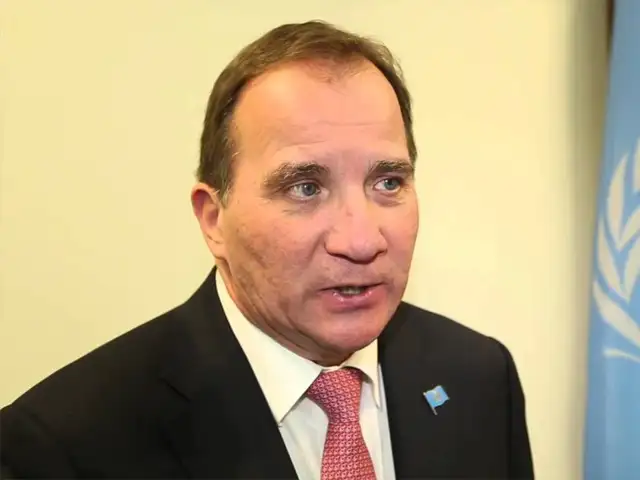
Seeing a large number of women in parliament is considered a rare sight in a number of countries. But not Sweden. The nation has among the highest percentages of women in parliament in the world (44.7 per cent) while the other Nordic countries are almost as successful. Sweden has always been in the top five on the Global Gender Gap Report since its inception.
In Pic: Prime Minister of Sweden Stefan Löfven.
Seeing a large number of women in parliament is considered a rare sight in a number of countries. But not Sweden. The nation has among the highest percentages of women in parliament in the world (44...
Read More
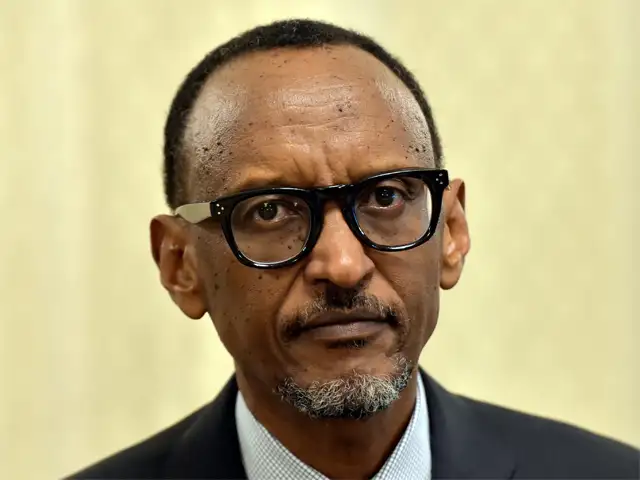
Many are surprised that Rwanda often features above France or America on the gender equality list, but after the 1994 genocide, Rwanda has strongly promoted equal rights for men and women. The areas that see the most equality are politics and economy. Rwanda has topped the global list of countries with the most female political parliamentarians for more than a decade.
In Pic: President of Rwanda Paul Kagame.
Many are surprised that Rwanda often features above France or America on the gender equality list, but after the 1994 genocide, Rwanda has strongly promoted equal rights for men and women. The areas ..
Read More
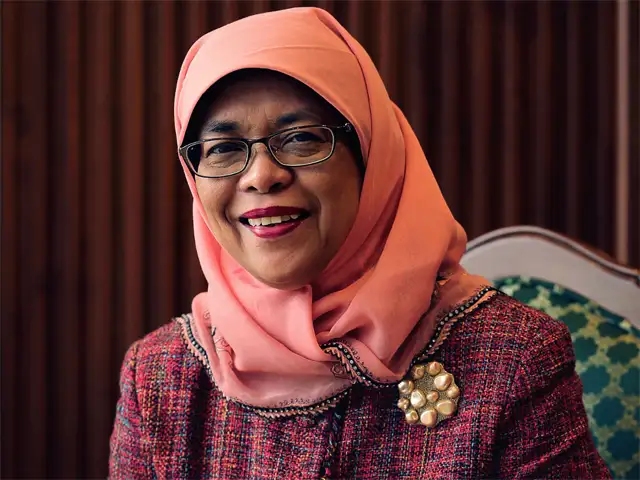
This tiny country makes it to the list in Asia because of the increase in women’s salaries relative to men’s. It got its fi rst woman president — Halimah Yacob — last year. However, it is one of the worst performing countries on the sex ratio at birth indicator.
In Pic: Halimah Yacob is the first female
president of Singapore.
This tiny country makes it to the list in Asia because of the increase in women’s salaries relative to men’s. It got its fi rst woman president — Halimah Yacob — last year. However, it is one of the ..
Business News › Magazines › Panache › Looking at the pandemic through gender lens: Women are facing the brunt of Covid-19 with more job cuts, less payText Size:AAA