Living in a polluted city can reduce your lifespan by over 4 years
Around 75% of the global population live in areas where particulate pollution exceeds the WHO guideline.
By PTI |
ThinkStock Photos
WASHINGTON: People in India would live an average 4.3 years longer if the country met the global guidelines for particulate pollution, according to a study which found that effect of pollution on life expectancy is worse than HIV/AIDS, cigarette smoking, and even terrorism.
According to the new Air Quality Life Index (AQLI), developed by researchers at University of Chicago in the US, particulate air pollution cuts global average life expectancy by 1.8 years per person.
The AQLI establishes particulate pollution as the single greatest threat to human health globally, with its effect on life expectancy exceeding that of devastating communicable diseases such as tuberculosis and HIV/AIDS, behavioural killers like cigarette smoking, and even war.
Critically, the AQLI reports these results in tangible terms that are relatable for most people.
"Around the world today, people are breathing air that represents a serious risk to their health. But the way this risk is communicated is very often opaque and confusing, translating air pollution concentrations into colors, like red, brown, orange and green," said Michael Greenstone, a professor at Energy Policy Institute at the University of Chicago (EPIC).
The Smog Can Choke You: Eat These Five Foods To Protect Yourself
1/6
Changing weather and a thick layer of smog can result in various kinds of illnesses like common cold, sore throat, ceaseless cough and other respiratory problems.
While staying hydrated and working out is a must, one must consume the right foods to boost their immunity.
Dolly Kumar, founder and director at Gaia, and a wellness enthusiast, shares benefits of five foods that help build immunity and keep you healthy in the changing season.
Changing weather and a thick layer of smog can result in various kinds of illnesses like common cold, sore throat, ceaseless cough and other respiratory problems.
While staying hydrated and working ..
Read More
Bugged with a sore throat and the medicines just don't work? Rich in vitamins, minerals and antioxidants, honey is proven to have a soothing effect on sore throat.
Grate half a ginger, add a spoonful of honey, and voila! You have the perfect home-made remedy for sore throat.
A spoonful of honey in warm water is one of the perfect ingredients to solve many health problems like high blood pressure, blood purification, etc.
Bugged with a sore throat and the medicines just don't work? Rich in vitamins, minerals and antioxidants, honey is proven to have a soothing effect on sore throat.
Grate half a ginger, add a spoonfu..
Read More
Neem has blood purifying properties which helps clear toxins and impurities from the blood. It also helps boost the immune system while cooling down the body, internally.
Neem also possesses both anti-bacterial and anti-fungal properties that help keep the skin clean, radiant and healthy.
Neem has blood purifying properties which helps clear toxins and impurities from the blood. It also helps boost the immune system while cooling down the body, internally.
Neem also possesses both an..
Read More
The best way to keep yourself nourished from the inside is to indulge in a bowl of oats. Rich in dietary fibre and protein, oats are a low-calorie food that keeps you fuller for longer.
Oats also help manage cholesterol levels, maintain healthy body weight, and reduce the risk of blood sugar and diabetes.
The best way to keep yourself nourished from the inside is to indulge in a bowl of oats. Rich in dietary fibre and protein, oats are a low-calorie food that keeps you fuller for longer.
Oats also he..
Read More
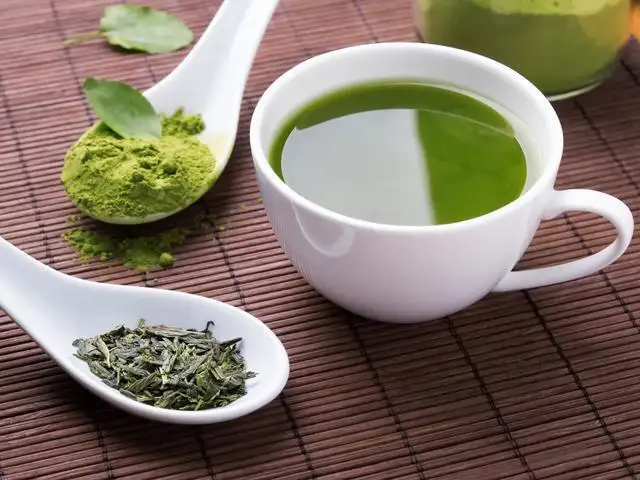
Reach out for a warm cup of green tea and give your body the best detox it needs.
Green tea contains various powerful anti-oxidants and nutrients that regulate blood sugar, improve brain function and enhance metabolism.
This 'super-drink' also has essential minerals, bioactive compounds and fat-burning qualities that helps you stay in shape.
Reach out for a warm cup of green tea and give your body the best detox it needs.
Green tea contains various powerful anti-oxidants and nutrients that regulate blood sugar, improve brain function an..
Read More
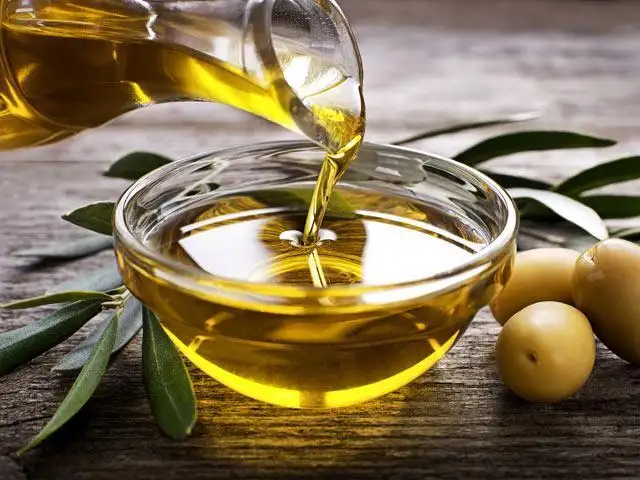
Olive oil is rich in mono-saturated fatty acids and has a light texture that works as a great alternative to regular cooking oil.
Packed with anti-oxidants, it also reduces the risk of cancer, type 2 diabetes, cardiovascular diseases and breast cancer.
Olive oil is rich in mono-saturated fatty acids and has a light texture that works as a great alternative to regular cooking oil.
Packed with anti-oxidants, it also reduces the risk of cancer, type ..
"My colleagues and I developed the AQLI, where the 'L' stands for 'life,' to address these shortcomings. It takes particulate air pollution concentrations and converts them into perhaps the most important metric that exists: life expectancy," he said.
The AQLI is based on a pair of studies that quantify the causal relationship between long-term human exposure to particulate pollution and life expectancy.
Seventy-five percent of the global population, or 5.5 billion people, live in areas where particulate pollution exceeds the WHO guideline.
The AQLI reveals that India and China, which make up 36 per cent of the world's population, account for 73 per cent of all years of life lost due to particulate pollution.
ADVERTISEMENT
On average, people in India would live 4.3 years longer if the country met the WHO guideline - expanding the average life expectancy at birth there from 69 to 73 years.
Invest In The Right Masks, Consumer Immunity-Boosting Foods: Tips To Stay Healthy As Delhi Chokes
1/6
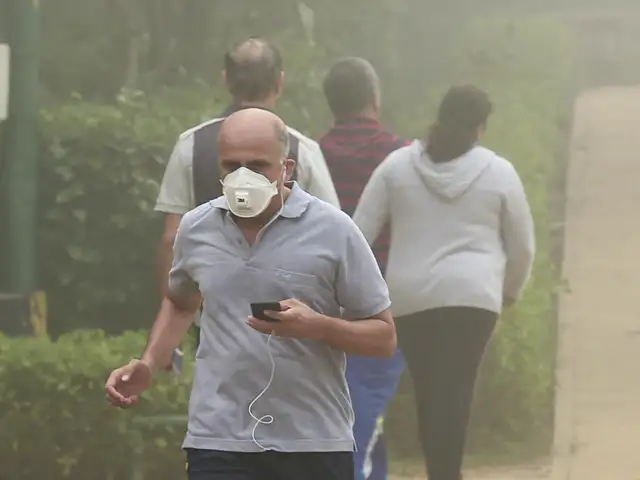
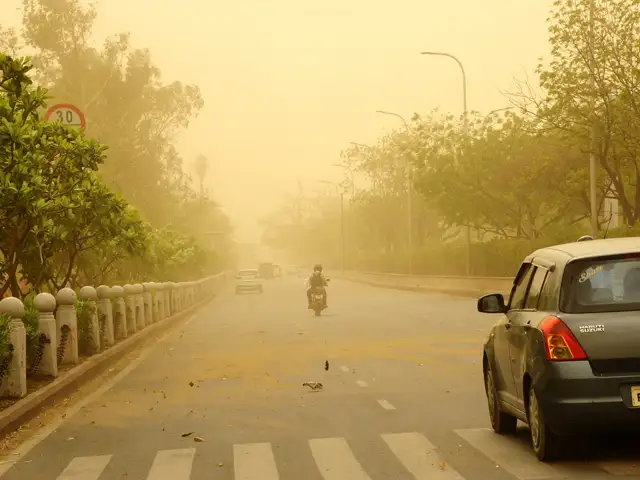
The past week has seen hazardous air quality levels in India's National Capital. Delhi has been covered in a thick layer of haze and dust, compromising the health of its residents.
As air quality worsens, a health emergency has been declared in Delhi - schools are closed, cars on the roads have been reduced with the 'odd-even' scheme, and construction has been halted.
The current crisis, that led Delhi CM Arvind Kejriwal to describe the National Capital as a 'gas chamber', has turned into the worst in three years. Smog levels have exceeded those of Beijing by more than three times, according to a report in news agency AFP.
Fourteen Indian cities including the capital are among the world's top 15 most polluted cities, according to the World Health Organization.
Even as environmentalists and residents call for measures to fight the pollution, there are some precautions that you need to take to stay safe during such severe conditions.
The past week has seen hazardous air quality levels in India's National Capital. Delhi has been covered in a thick layer of haze and dust, compromising the health of its residents. As air quality w..
Read More
Small dust particles can lead to moderate to severe respiratory conditions like hay fever, common cold, cough, eyes and throat irritation, asthma, dust pneumonia chronic obstructive airways disease (COAD) and emphysema. It is advisable to spend more time indoors, rather than venturing out unnecessarily. Do keep the doors and windows closed as much as possible.
Small dust particles can lead to moderate to severe respiratory conditions like hay fever, common cold, cough, eyes and throat irritation, asthma, dust pneumonia chronic obstructive airways disease..
Read More
The quality of air takes a deep dip during and after the dust storms. The miniscule dust particles that include pollens, heavy metals, arsenic, fertilizers, virus, bacteria, salts, sulphur and pesticides can easily enter the lungs. People with respiratory problems and allergies face a lot of difficulty during this time. Health experts suggest wearing a mask both indoors and outdoors. Avoid the basic surgical and comfort masks. Opt for N95/N99/FFP3 or 'NIOSH Approved' that filter out more than 95% of particles (larger than 0.3 microns).
The quality of air takes a deep dip during and after the dust storms. The miniscule dust particles that include pollens, heavy metals, arsenic, fertilizers, virus, bacteria, salts, sulphur and pest..
Read More
Sticking to the right dietary plan is one of the most crucial things to do during dust storms. The weather can lead to various illnesses like common cold, tiredness, sore throat, irritation in eyes and nose, ceaseless cough, wheezing and other respiratory problems.
To keep yourself safe and boost immunity in the changing season, plan your diet properly and include gooseberries, flaxseed oil, hot soups, olive oil, vitamin C-rich fruits and vegetables, vitamin E-rich diet, omega-3 diet, honey, garlic, neem, oatmeal, green tea, carrot juice, and pineapple extract.
Stay hydrated, opt to drink lukewarm water, and working out regularly to stay healthy.
Sticking to the right dietary plan is one of the most crucial things to do during dust storms. The weather can lead to various illnesses like common cold, tiredness, sore throat, irritation in eyes a..
Read More
No matter how many precautions you take, the indoor air quality is bound to get impacted by the outside air. If it becomes too oppressive, it makes sense to invest in an air purifier that helps remove up to 99.99% pollutants.
When deciding to buy an air purifier (starting from Rs 10,000), avoid ionizers and UV light-based air purifiers as they produce ozone. Always look for high-efficiency particulate air (HEPA) filter. The size of the room, the device placement, air changes per hour (ACH), and clean air delivery rate (CADR) are few factors that determine the efficiency of the air purifier.
No matter how many precautions you take, the indoor air quality is bound to get impacted by the outside air. If it becomes too oppressive, it makes sense to invest in an air purifier that helps rem..
Read More
Ensure that children, elders and ill people stay at home, and are well hydrated. Keep a constant check on their health and look for flu-like symptoms. If the condition persists for long or gets severe, visit a doctor immediately.
Ensure that children, elders and ill people stay at home, and are well hydrated. Keep a constant check on their health and look for flu-like symptoms. If the condition persists for long or gets sev..
In the US, about a third of the population lives in areas not in compliance with the WHO guideline. Those living in the country's most polluted counties could expect to live up to one year longer if pollution met the WHO guideline.
ADVERTISEMENT
Globally, the AQLI reveals that particulate pollution reduces average life expectancy by 1.8 years, making it the greatest global threat to human health.
By comparison, first-hand cigarette smoke leads to a reduction in global average life expectancy of about 1.6 years. Other risks to human health have even smaller effects: Alcohol and drugs reduce life expectancy by 11 months; unsafe water and sanitation take off 7 months; and HIV/AIDS, 4 months.
Conflict and terrorism take off 22 days. So, the impact of particulate pollution on life expectancy is comparable to that of smoking, twice that of alcohol and drug use, three times that of unsafe water, five times that of HIV/AIDS, and more than 25 times that of conflict and terrorism.
How Australia, Sweden Are Paying Taxes To Curb Pollution
1/5
By Shannon Tellis
With China levying a hefty environmental tax on businesses and public institutions that discharge pollutants in a bid to curb pollution by 2020, let’s take a look at some other countries that are also taxing their way to a better world.
By Shannon Tellis
With China levying a hefty environmental tax on businesses and public institutions that discharge pollutants in a bid to curb pollution by 2020, let’s take a look at some other cou..
Read More
Sweden boasts of the highest carbon tax in the world — a record $168 per tonne of carbon dioxide in 2014 — leading plant owners to switch from fuel oils to biofuels. Sweden’s carbon emissions dropped 7 per cent between 1990 and 2010 and are estimated to drop even further in 2018.
Sweden boasts of the highest carbon tax in the world — a record $168 per tonne of carbon dioxide in 2014 — leading plant owners to switch from fuel oils to biofuels. Sweden’s carbon emissions dropped..
Read More
In 1997, the Costa Rican government levied a 3.5 per cent carbon tax on gasoline and used the income to fund their unique ‘payments for ecosystem services’ (PES) program, which compensated over 8,000 landowners for growing forest cover. In a bid to be carbon neutral by 2030, the country’s government also passed an incentive package in 2017 which included lowered taxes for electric vehicles.
In 1997, the Costa Rican government levied a 3.5 per cent carbon tax on gasoline and used the income to fund their unique ‘payments for ecosystem services’ (PES) program, which compensated over 8,000..
Read More
Australia became the first country in the world to introduce a taxpayer-funded Emissions Reduction Fund (ERF). The ERF is a voluntary scheme that incentivises businesses to reduce emissions and adopt cleaner energy in exchange for a proportion of the fund. Since 2014, the scheme has secured 191.7 million tonnes of emission reductions at a cost of AUD 2.28 billion.
Australia became the first country in the world to introduce a taxpayer-funded Emissions Reduction Fund (ERF). The ERF is a voluntary scheme that incentivises businesses to reduce emissions and adopt..
Read More
According to the Dutch packaging decree of 2005, producers and importers of packaged goods are responsible for collecting and recycling of their waste. With this in mind, the Netherlands introduced a tax on carbon-based packaging in 2008 to encourage business to meet the country’s recycling targets. However, a report by the ministry of infrastructure and environment proved the tax to be ineffective and it was abolished in 2013.
According to the Dutch packaging decree of 2005, producers and importers of packaged goods are responsible for collecting and recycling of their waste. With this in mind, the Netherlands introduced a..
"While people can stop smoking and take steps to protect themselves from diseases, there is little they can individually do to protect themselves from the air they breathe," Greenstone said.
"The AQLI tells citizens and policymakers how particulate pollution is affecting them and their communities and reveals the benefits of policies to reduce particulate pollution," he said.