Listen up, pet lovers: Kittens too need early training to make them feel welcome & comfortable
Just like dogs, cats need support to adjust to living alongside us.
By PTI |
Getty Images
Simple forms of training can be good for the well-being of cats.
NOTTINGHAM: The pandemic fuelled a rise in first-time pet owners and people adopting puppies and kittens. While even inexperienced owners expect a new puppy will need some training, people rarely think the same applies to kittens.
But just like dogs, cats need support to adjust to living alongside us. Simple forms of training can be good for their well-being.
Compared to dogs, cats share different historic relationships with humans. Cats have never been selectively bred to enhance their ability to cooperate and communicate with us, or perform working roles such as herding, hunting or guarding. But research shows they can recognise and respond to our subtle social cues and be trained to perform similar tasks to dogs.
However, it's unlikely we would need a cat to "walk nicely" on a lead, or settle quietly at the pub. And cats typically need less support than dogs to master toilet training - providing the right litter tray is usually sufficient.
But we are missing a trick if we only think about training pets to make our lives easier. Myself and colleague Daniel Cummings of animal charity Cats Protection would argue that there are many possible benefits to the cat also. In a rehoming shelter, for example, training can be a useful tool to increase a cat's exploratory behaviours, positive reactions to people and maybe even their chances of being adopted.
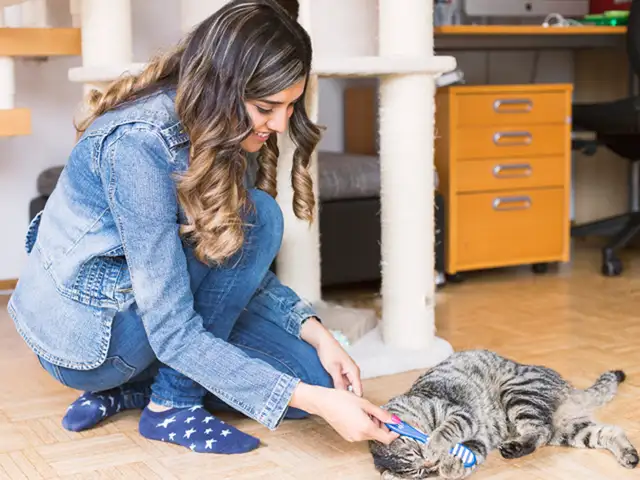
At home, we can use simple techniques to help cats with things like feeling comfortable in a cat carrier, getting used to car journeys, as well as tolerating being groomed and receiving basic health examinations and treatments. Such training can also help cats cope better with visits to the vet.
ADVERTISEMENT
What works Cats are not born with an innate affinity towards humans and must be exposed to gentle, warm handling from two weeks old so they can learn we are friend rather than foe. There is limited evidence that younger cats are more attentive to our social cues, which could mean they are more amenable to training. Kittens should also be played with using cat wands or fishing rod toys so that they learn not to attack our hands or feet.
Punishments such as shouting, rough handling or using a water spray can induce stress and compromise the quality of owner-cat relationships. Always use positive reinforcement (such as treats and praise). This is not only the most effective way to train pets, but it's also better for their well-being.
Reward-based techniques can be an excellent way to teach a cat to enter a carrier on their own or sit calmly whilst we deliver their flea treatment. Some very friendly food motivated cats may enjoy being taught to give a high five, or to sit or spin. But cats are often less motivated than dogs to pay attention to us, or do what we are asking, especially in situations where they don't feel comfortable. These factors may explain the high drop-out rates in studies that involve training cats to attend to human social cues.
ADVERTISEMENT
It's important that we make sure the cat is somewhere they feel at ease when we undertake any training with them. Always ensure the cat has the option to walk away or end the session when they want and try to give them a break if they seem uncomfortable. Signs to look for include the cat turning their head away, nose licking, head shaking, a raised paw, sudden bouts of self-grooming, looking hunched or tense, a twitching or thumping tail and rotated or flattened ears.
Here's how to teach your cat to enter a carrier and settle in five easy steps:
ADVERTISEMENT
1. Lure them onto a blanket In a place where your cat already feels safe, teach him or her to settle on a blanket. Do this by luring the cat onto the blanket using food.
Reward the cat for staying on the blanket with more treats, petting or verbal praise, depending on what your cat likes most. Feed treats at nose height to encourage them into a sit position, then feed treats at ground height to encourage the cat to crouch and then eventually lay on the blanket.
2. Introduce the carrier Once your cat has mastered step one, place the blanket on the bottom of a carrier with the lid removed. Repeat the same luring and rewarding steps.
3. Take it slowly When your cat is happily resting on the blanket in the carrier, place the lid on top of the carrier (without attaching the door) and repeat the luring and rewarding process.
4. Let your cat set the pace After your cat has happily entered the carrier and settled inside, place the door on the carrier but keep it open to start with, so that he or she doesn't suddenly feel trapped inside. Allow them to exit the carrier when they want and use treats to encourage them back in. In small movements, start to close the door slightly then open it again, each time giving the cat a treat. Build this up slowly until the door can be fully closed (for only a few seconds at first) while the cat is still comfortable. Feed the cat treats through the closed door.
5. Almost there Work towards the cat being in the carrier with the door closed for longer periods, adding a few extra seconds each time. Keep rewarding the cat by popping treats through the sides or door of the carrier, gradually increasing the time between each treat delivery. Each training session should last no more than a few minutes in total, and some cats may prefer only one session a day. It might take lots of sessions and many days or weeks before this final step is complete.
(The article has been shared by PTI via The Conversation)
Get Your Pets Monsoon-Ready: 'How To' Guide For Cat & Dog-Parents
1/6
The monsoon are all set to arrive and while it can be a welcome break from the heat for our furry friends, it comes with its own set of precautions. Devanshi Shah, CEO of PetKonnect, shares pet care tips for the rainy weather.
The monsoon are all set to arrive and while it can be a welcome break from the heat for our furry friends, it comes with its own set of precautions. Devanshi Shah, CEO of PetKonnect, shares pet care ..
Read More
Avoid taking your pets out for a walk or to play when it’s raining hard or looking stormy. The aim here is to try and keep your pets coat and paws dry. The level of moisture in this weather can lead to infection, bad odouror even the inflammation of the paws.
Avoid taking your pets out for a walk or to play when it’s raining hard or looking stormy. The aim here is to try and keep your pets coat and paws dry. The level of moisture in this weather can lead ..
Read More
The monsoon is breeding season for ticks and that’s a real problem. Do consult your vet about the best anti-tick shampoos and collars for your pet. You need to also be careful of fleas and germs. When taking your dog out for a walk, ensure they don’t play in or sip from stagnant puddles of water. These puddles can often have contaminated water, which if consumed can lead to vomiting, diarrhea, abdominal pain or even loss of appetite! If you see such signs consult your vet immediately to take quick action. What is advisable is to make your pet wear a raincoat andto keepthem close.
The monsoon is breeding season for ticks and that’s a real problem. Do consult your vet about the best anti-tick shampoos and collars for your pet. You need to also be careful of fleas and germs. Whe..
Read More
In this weather food has a tendency to spoil quicker than usual. Most vets will advise you to nurture a balanced and nutritional diet. Try and ditch the packaged food and work towards preparing homemade meals for your pet. Try to cook in smaller batches so you quick fresh food more often.
In this weather food has a tendency to spoil quicker than usual. Most vets will advise you to nurture a balanced and nutritional diet. Try and ditch the packaged food and work towards preparing homem..
Read More
Many pets enjoy getting wet in the rain, and so you could possibly plan to let them have their fun on a day when you’re planning to bathe them! For those pets who don’t enjoy this weather, keep them busy in the house and maybe use your balcony for games or going to the bathroom.
Many pets enjoy getting wet in the rain, and so you could possibly plan to let them have their fun on a day when you’re planning to bathe them! For those pets who don’t enjoy this weather, keep them ..
Read More
Drying your pet off when they return from outdoor sessions is a must when they return wet. Extra care must always be taken to dry paws as they contain sweat glands through which the passage of the infection will be quicker. Keeping pets on a tight leash is also advisable, as loud cloud bursts or thunder can cause them to run off in a panic.
Drying your pet off when they return from outdoor sessions is a must when they return wet. Extra care must always be taken to dry paws as they contain sweat glands through which the passage of the in..





 Italian proverb of the day: 'The hasty cat gave birth to blind kitten.' Life lessons on patience, careful decisions and why rushing often leads to mistakes2026-06-14T18:16:13Z

