Is your kid getting enough vitamin D? Doctors recommend an hour of 'sun time' for it
Diet provides less than 10% of vitamin D; 90% is synthesised in the skin with sunlight exposure.
By Apoorva Puranik, ET Bureau |

Getty Images
Doctors say that lack of exposure to sunlight main cause for deficiency of key nutrient in children.
BENGALURU: Numerous studies show that over 80% of Indians suffer from deficiency of vitamin D, which is vital for the absorption of calcium in the body. Deficiency of this crucial vitamin among children is pushing doctors to prescribe for them compulsory play time in the sun .
“One of the major reasons for low vitamin D levels among children is the lack of exposure to sunlight. Parents have become overprotective and want to see their kids in the safety of their homes,” Dr Parimala Thirumalesh, senior consultant – neonatal & paediatrics, at Aster CMI Hospital, Bengaluru, says. “I ask parents to slot a compulsory play time of one hour in the sun. It makes a big difference.”
The Indian Council of Medical Research says diet provides less than 10% of vitamin D; close to 90% is synthesised in the skin with sunlight exposure.
Krishna and Gayatri Bhagwat, parents to 12-year-old twins in Noida, took their sons to a doctor after they both complained of aching backs and weakness. After testing, they found that their serum 25(OH)D level was less than 12 nmol. Children with levels below 25 nmol are deficient in vitamin D. “The doctor prescribed vitamin D supplements and one hour of compulsory sun exposure in the morning. Three months later, both their levels rose,” Gayatri says. They have also stopped dropping their kids to school in cars, opting for the school bus service instead.

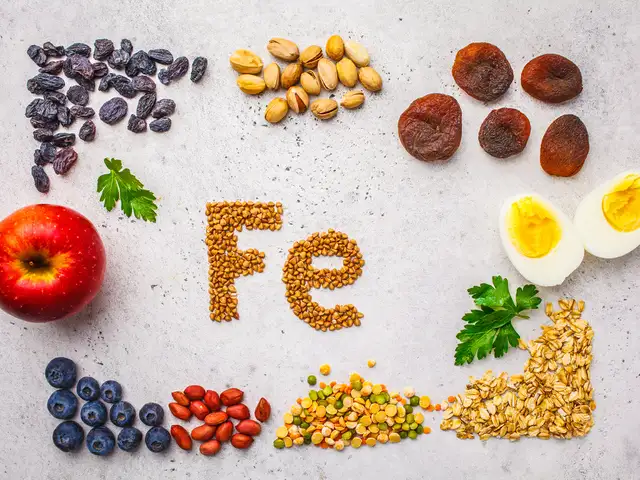
Too busy to prioritise what you eat? It just needs a conscious thought before eating any meal and basic understanding of different kinds of food and nutrients like Vitamin C, Vitamin A, iron, calcium, protein, energy and folic acid.
It is important to consume food that can provide good nutrition for a healthy lifestyle.
The Indian dietary guidelines recommend that a balanced diet should provide around 50-60% of total calories from carbohydrates, preferably complex carbohydrates, about 10-15% from proteins, and 20-30% from both visible and invisible fats. A balance diet should also provide vitamins and minerals along with dietary fibres and antioxidants.
Dr Rajan Sankar, Senior Advisor - Nutrition at Tata Trusts, shares what one needs to eat to get started.
Shrinking playgrounds in schools and lack of open spaces in cities mean there is minimal direct exposure of the skin to sun. Moreover, children are being overscheduled with classes and tuition after school, keeping them out of the sun. “Children are kept busy through the day and get no playtime. Schools are built in cramped areas, where there are no playgrounds. How will they get enough sunlight?” says Dr Gautam Kodikal, paediatric orthopaedician, Apollo Spectra Hospital.
The data concurs. Of the 62,007 elementary schools in Bengaluru, more than 22,000 do not have playgrounds, as per the Department of Public Instruction. The figures are not encouraging in other cities either – of the 1,203 primary schools in Mumbai, only 567 have a playground, while a state government report says 15% of schools in New Delhi function without one. Over the last few years, Dr Kodikal has found himself prescribing 45 minutes of play time in the sun almost every day for kids.
While the medical community and researchers have been sounding warning bells, there are no standardised recommendations regarding routine supplementation in schools or fortification of foods with vitamin D. “In industrialised countries, doctors are even seeing the resurgence of rickets, the bone-weakening disease that had been largely eradicated through vitamin D fortification,” says Dr Prasad Kulkarni, executive director of Serum Institute of India.
BENGALURU: Numerous studies show that over 80% of Indians suffer from deficiency of vitamin D, which is vital for the absorption of calcium in the body. Deficiency of this crucial vitamin among children is pushing doctors to prescribe for them compulsory play time in the sun .
“One of the major reasons for low vitamin D levels among children is the lack of exposure to sunlight. Parents have become overprotective and want to see their kids in the safety of their homes,” Dr Parimala Thirumalesh, senior consultant – neonatal & paediatrics, at Aster CMI Hospital, Bengaluru, says. “I ask parents to slot a compulsory play time of one hour in the sun. It makes a big difference.”
The Indian Council of Medical Research says diet provides less than 10% of vitamin D; close to 90% is synthesised in the skin with sunlight exposure.
Krishna and Gayatri Bhagwat, parents to 12-year-old twins in Noida, took their sons to a doctor after they both complained of aching backs and weakness. After testing, they found that their serum 25(OH)D level was less than 12 nmol. Children with levels below 25 nmol are deficient in vitamin D. “The doctor prescribed vitamin D supplements and one hour of compulsory sun exposure in the morning. Three months later, both their levels rose,” Gayatri says. They have also stopped dropping their kids to school in cars, opting for the school bus service instead.
It is important to consume food that can provide good nutrition for a healthy lifestyle.
The Indian dietary guidelines recommend that a balanced diet should provide around 50-60% of total calories from carbohydrates, preferably complex carbohydrates, about 10-15% from proteins, and 20-30% from both visible and invisible fats. A balance diet should also provide vitamins and minerals along with dietary fibres and antioxidants.
Dr Rajan Sankar, Senior Advisor - Nutrition at Tata Trusts, shares what one needs to eat to get started.







ADVERTISEMENT
Shrinking playgrounds in schools and lack of open spaces in cities mean there is minimal direct exposure of the skin to sun. Moreover, children are being overscheduled with classes and tuition after school, keeping them out of the sun. “Children are kept busy through the day and get no playtime. Schools are built in cramped areas, where there are no playgrounds. How will they get enough sunlight?” says Dr Gautam Kodikal, paediatric orthopaedician, Apollo Spectra Hospital.
The data concurs. Of the 62,007 elementary schools in Bengaluru, more than 22,000 do not have playgrounds, as per the Department of Public Instruction. The figures are not encouraging in other cities either – of the 1,203 primary schools in Mumbai, only 567 have a playground, while a state government report says 15% of schools in New Delhi function without one. Over the last few years, Dr Kodikal has found himself prescribing 45 minutes of play time in the sun almost every day for kids.
While the medical community and researchers have been sounding warning bells, there are no standardised recommendations regarding routine supplementation in schools or fortification of foods with vitamin D. “In industrialised countries, doctors are even seeing the resurgence of rickets, the bone-weakening disease that had been largely eradicated through vitamin D fortification,” says Dr Prasad Kulkarni, executive director of Serum Institute of India.
Download
The Economic Times Business News App for the Latest News in Business, Sensex, Stock Market Updates & More.
The Economic Times Business News App for the Latest News in Business, Sensex, Stock Market Updates & More.
Related Articles
 Sunscreen blocks 95% vitamin D? Doctor shares 11 eye-opening facts you should know about vitamin D2026-02-19T09:54:11Z
- From vitamin D to iron, doctor reveals 10 vitamin supplements that may do more harm than good2026-01-30T17:24:14Z
- Top Foods Rich in Vitamin D That Can Help Enhance Your Health and Immunity2025-12-17T09:21:47Z
ADVERTISEMENT


