Thomas Friedman, Pulitzer prize-winning American journalist and author, believes that 2007 was the tipping point for the world. But now, just ahead of 2018, he's also concerned about the power of monopolistic tech giants.
Excerpts from an interview.
What, according to you, is the super story of the world?
There is a through line in all of my columns. The meta argument I present is that the faster the world gets, the more everything slow and old matters. All the stuff that matters today is all the stuff that you cannot download. It's all that you need to upload the old-fashioned way. Examples would include good parenting, good teaching for students, good governance, a good spiritual leader to congregate.
Why is it that important? Because when our power gets this amplified and we are this interconnected, what everyone thinks, feels and believes matters. Because I can now touch you farther, faster, deeper, cheaper than before. As can you. Are we all embracing the golden rule: do unto others as you wish them to do unto you? Every culture and faith has their version of this. It matters more than ever now.
If you have kids, you know there are no filters. They can either go to porn or to physics. The internet is just an open sewer of untreated, unfiltered information. There are diamonds and rubies in there. But there are also rusty cans, broken glasses and crooked nails. So, if you aren't building the internal software into your kids to filter those two out, then we are in big trouble.
ADVERTISEMENT
In your latest book, you speak about us being in an age of dizzying acceleration. What have been the five key changes that have brought us to this point?
Well, I can't reduce it down to just five. But what I do in the book is point to the year 2007. The iPhone came out in 2007. Cloud was born in 2007. Hadoop came out in 2007. That's big data by algorithm. VMware [a subsidiary of Dell Technologies that provides cloud computing] went public in 2007. It enables any operating system to work on any computer so that enabled cloud computing.
Android came out in 2007. The Kindle came out in 2007. So, I would argue that there was a huge step up in 2007. And when it did, it changed different kinds of powers. It changed the power of one.
ADVERTISEMENT
So, what one person can do today as a maker or breaker is unlike anything we've seen before. President Trump can sit at home and tweet to a billion people without an editor or filter. What's really scary is that the head of ISIS can do that too. The power of machines has changed. Machines are acquiring all five senses. We've never lived in a world like this before.
The power of flows has changed. Ideas flow and change and circulate so fast that we have gone from a world of walls to a world of webs. You want to be in touch with the flow now — the flows of ideas, innovation, education, trade. That's how you get rich, not by hoarding stocks.
ADVERTISEMENT
We are living in a world where the winner takes all, especially with tech companies like Facebook and Google dominating the landscape...
There is a concern to that. These are big behemoths: Alibaba, Tencent, Google, Facebook, Amazon, Twitter and Netflix. They can just buy up any competitor and absorb it now. Facebook sees Instagram. Buys it. We don't yet fully understand the monopolistic, innovation implications of this.
On one hand, [there is] so much benefit from Google. I could never write my books without Google. I could never live without Google. Yet Google's so big, that there cannot be a competitor. So it's a real tension in all of us. We are going to have to figure out the right regulatory policies for these giant systems. They are bigger than governments. They can stomp out anybody.
You've spoken about the curiosity quotient plus passion quotient being greater than the intelligence quotient. How does one apply this when hiring?
NR Narayana Murthy, Friedman and Nilekani (Image: BCCL)
More and more businesses are finding a way to hire not only on the basis of pedigree but on the basis of what you can do. Most businesses don't care about what you know. They only care about what you can do with what you know. Those are two different things. They are finding ways to actually test that. What you know today will be outdated in a week or a year. But are you a life-long learner? That's why one of my teachers says, "Never ask a kid today what you want to be when you grow up. Only ask them how you want to be." Do you have an agile learning mindset? Learning is so much more important than knowing when change happens fast.
People who can combine STEM (science, technology, engineering, and math) and relate it to humans will have the highest paying jobs. Steve Jobs was brilliant at this. He was not the best programmer. But he combined empathy and enough STEM to invent this baby [pointing to his iPhone].
Jobs didn't have the image of being the most empathetic leader…
I knew Steve very well. He was a friend of mine. And we all have our personality quirks. But he had a remarkable emotional quotient. He was not empathetic in all the right ways. He had a real sense of excellence and he wouldn't accept anything else. He was tough on all the right things.
Are we living in a post-truth world, where the ability to spin a narrative over social media makes successful leaders?
I'll confess something. I'm not on Facebook and I never look at Twitter. If you come to me and say, "I have a new book out. Tom will you tweet about it?", I give it to my secretary. She tweets. I have no idea how to. So, if people are building their reputation in those places, I don't know about it. And if you are tweeting about me, I don't know about that either. I'm not the least bit interested in what someone says about me in 140 characters. My philosophy is that I'm always onto the next thing.
From Arundhati Roy to George Saunders: Here is the 2017 Man Booker Prize Longlist
1/14
The longlist for the £50,000 Man Booker Prize was announced yesterday.
This year’s list of 13 books was selected by a panel of five judges: Baroness Lola Young (Chair); literary critic, Lila Azam Zanganeh; Man Booker Prize shortlisted novelist, Sarah Hall; artist, Tom Phillips and travel writer, Colin Thubron.
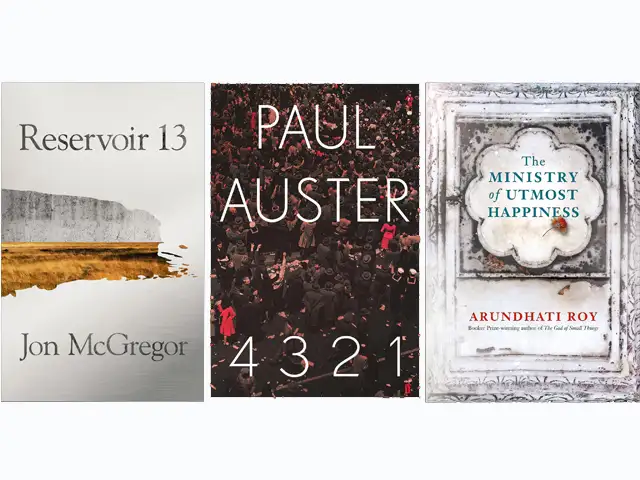
The list was chosen from 144 submissions and includes works by author Arundhati Roy, Zadie Smith, Colson Whitehead, and George Saunders among others.
The Man Booker Prize for Fiction was first awarded in 1969. The award is open to writers of any nationality, writing in English and published in the UK.
Here are the 13 novels that have made it to this year's longlist:
The longlist for the £50,000 Man Booker Prize was announced yesterday.
This year’s list of 13 books was selected by a panel of five judges: Baroness Lola Young (Chair); literary critic, Lila Azam Za..
Read More
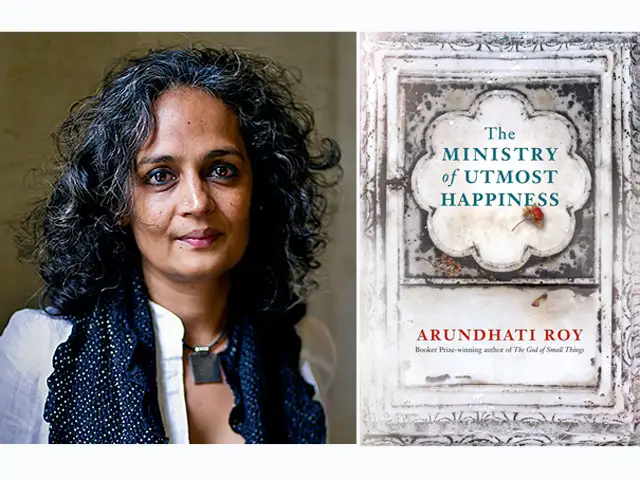
Arundhati Roy's latest novel, 'The Ministry of Utmost Happiness', dives into the complexities of the dispute between India and Pakistan over Kashmir. The novel demonstrates on every page the author's storytelling gifts.
Arundhati Roy is an Indian writer who is also an activist and focuses on issues related to social justice and economic inequality.
Her novel 'The God of Small Things', won the Man Booker Prize for Fiction in 1997.
Roy was featured in the 2014 list of Time 100, the 100 most influential people in the world.
Arundhati Roy's latest novel, 'The Ministry of Utmost Happiness', dives into the complexities of the dispute between India and Pakistan over Kashmir. The novel demonstrates on every page the author's..
Read More
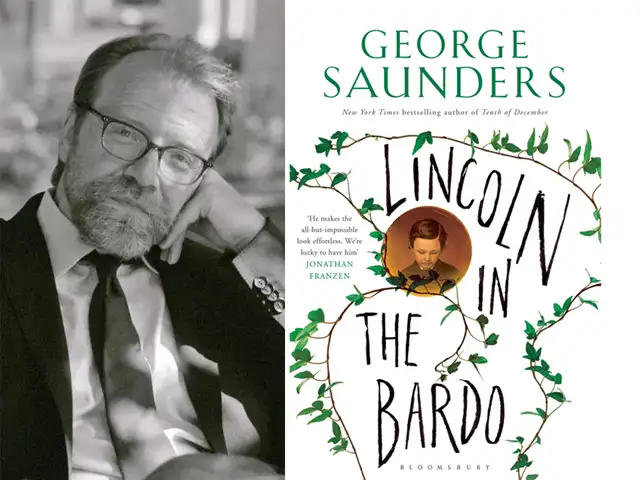
The captivating first novel by George Saunders talks about Abraham Lincoln and the death of his eleven-year-old son, Willie, at the dawn of the Civil War.
George Saunders is an American writer of short stories, essays, novellas and children's books.
Saunders won the National Magazine Award for fiction in 1994, 1996, 2000, and 2004, and second prize in the O. Henry Awards in 1997.
In 2013, he won the PEN/Malamud Award and was a finalist for the National Book Award. Saunders's 'Tenth of December: Stories' won the 2013 Story Prize for short-story collections and the inaugural (2014) Folio Prize.
The captivating first novel by George Saunders talks about Abraham Lincoln and the death of his eleven-year-old son, Willie, at the dawn of the Civil War.
George Saunders is an American writer of sh..
Read More
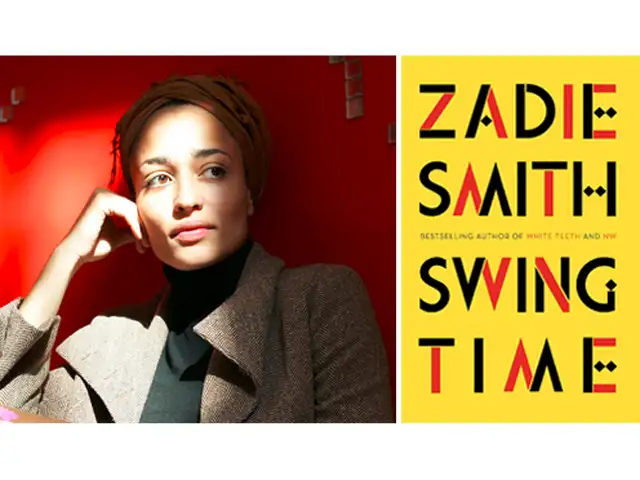
Zadie Smith's 'Swing Time' is a dazzlingly energetic and deeply human coming-of-age story about friendship and music and stubborn roots.
The English novelist, essayist, and short story writer was included on Granta's list of 20 best young authors in 2003 and 2013.
Smith has won the Orange Prize for Fiction and the Anisfield-Wolf Book Award in 2006 and her novel 'White Teeth' was included in Time magazine's list of the 100 best English-language novels from 1923 to 2005.
Zadie Smith's 'Swing Time' is a dazzlingly energetic and deeply human coming-of-age story about friendship and music and stubborn roots.
The English novelist, essayist, and short story writer was in..
Read More
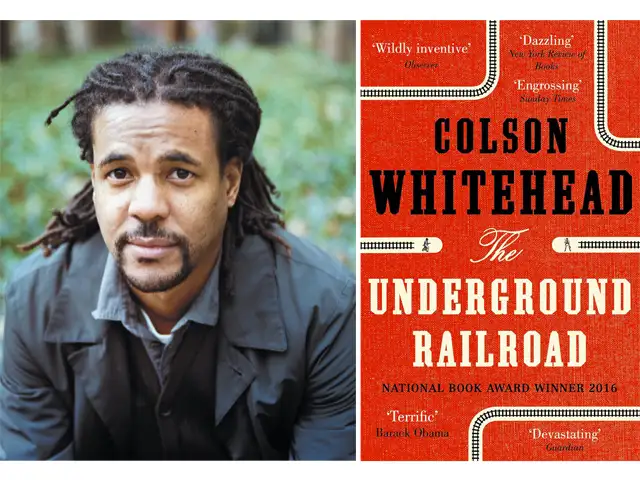
Colson Whitehead’s Pulitzer prize winner brilliantly re-creates the unique terrors for black slaves in the pre-Civil War era.
'The Underground Railroad' is the sixth novel by the American author.
The novel has received a number of awards, including the 2017 Pulitzer Prize for Fiction and the 2016 National Book Award for Fiction.
The previous book to win both the Pulitzer and the National Book prizes was The Shipping News, by E. Annie Proulx, in 1993.
Colson Whitehead’s Pulitzer prize winner brilliantly re-creates the unique terrors for black slaves in the pre-Civil War era.
'The Underground Railroad' is the sixth novel by the American author.
T..
Read More
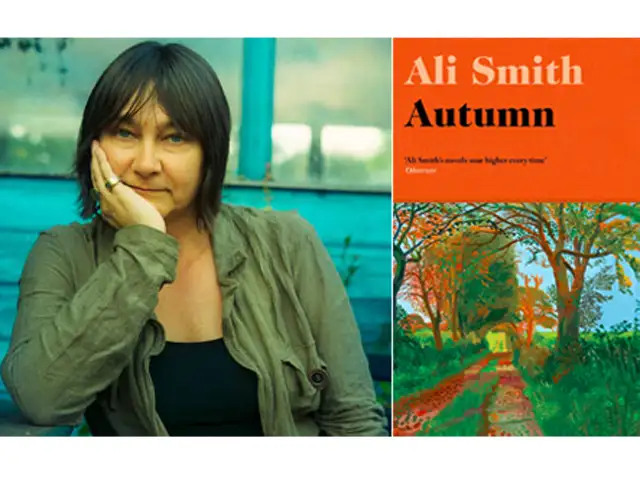
'Autumn' is the first installment in Ali Smith's novel quartet 'Seasonal': four standalone books, separate yet interconnected and cyclical (as the seasons are), exploring what time is and how we experience it in our ways with narrative.
The 54-yr-old Scottish author published her first book, 'Free Love and Other Stories', in 1995 and won the Saltire First Book of the Year award and Scottish Arts Council Book Award.
Author Sebastian Barry, who's book, 'Days Without End' is also part of this year's longlist, has described her as 'Scotland's Nobel laureate-in-waiting'.
'Autumn' is the first installment in Ali Smith's novel quartet 'Seasonal': four standalone books, separate yet interconnected and cyclical (as the seasons are), exploring what time is and how we expe..
Read More
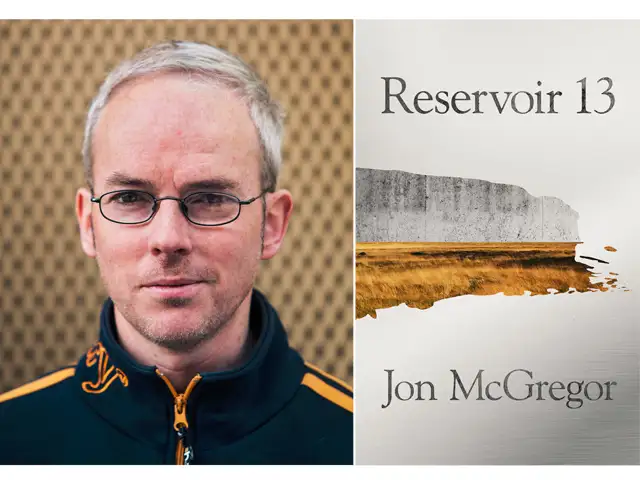
Author Jon McGregor's novel, 'Reservoir 13', tells the story of many lives haunted by one family's loss.
Jon McGregor is a British novelist and short story writer.
In 2002, his first novel, 'If Nobody Speaks of Remarkable Things', was longlisted for the Booker Prize as its youngest contender. His second novel, 'So Many Ways to Begin', was longlisted for the Booker Prize in 2006. This is his third nomination.
In 2012, his third novel was awarded the International Dublin Literary Award.
Author Jon McGregor's novel, 'Reservoir 13', tells the story of many lives haunted by one family's loss.
Jon McGregor is a British novelist and short story writer.
In 2002, his first novel, 'If Nob..
Read More
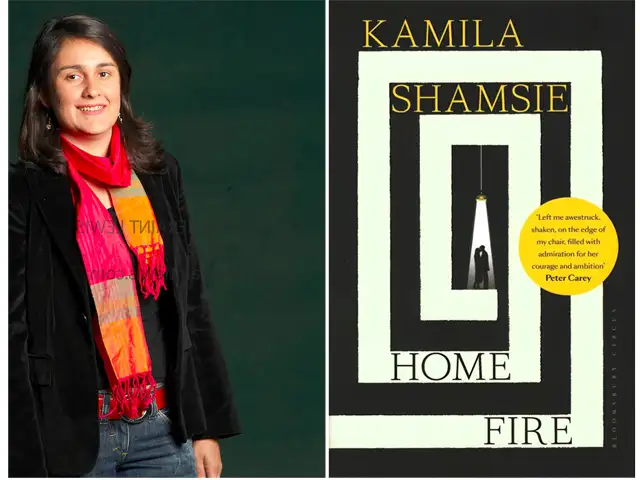
'Home Fire' is a nuanced, searing, and exceedingly timely novel about love and loyalty, ideology and identity.
Kamila Shamsie is a Pakistani novelist who writes in the English language. Shamsie wrote her first novel, 'In The City by the Sea', while still in college, and it was published in 1998.
In 2010, Shamsie won an Award from the Anisfield-Wolf Book Awards. In 2013 she was included in the Granta list of 20 best young British writers.
'Home Fire' is a nuanced, searing, and exceedingly timely novel about love and loyalty, ideology and identity.
Kamila Shamsie is a Pakistani novelist who writes in the English language. Shamsie wrot..
Read More
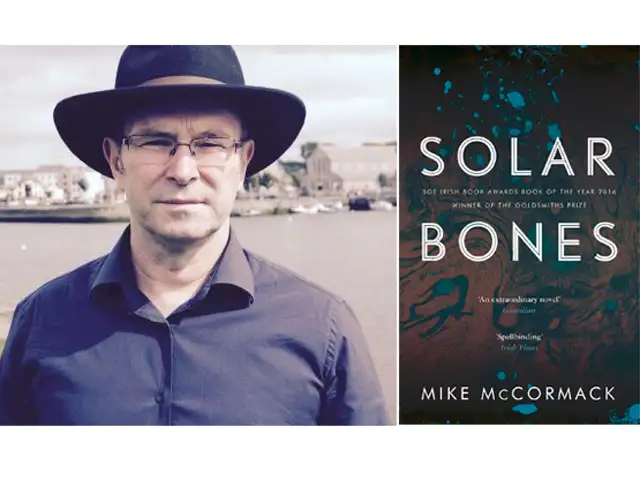
Funny and strange, Mike McCormack’s ambitious and other-worldly novel, 'Solar Bones', plays with form and defies convention.
A beautiful and haunting elegy, this story of order and chaos, love and loss captures how minor decisions ripple into waves and test our integrity every day.
Mike McCormack is an Irish novelist and short story writer. He has published two collections of short stories and three novels.
In 1996, he was awarded the Rooney Prize for Irish Literature for Getting It In the Head. In May 2016, Solar Bones won the Goldsmiths Prize.
Funny and strange, Mike McCormack’s ambitious and other-worldly novel, 'Solar Bones', plays with form and defies convention.
A beautiful and haunting elegy, this story of order and chaos, love and l..
Read More
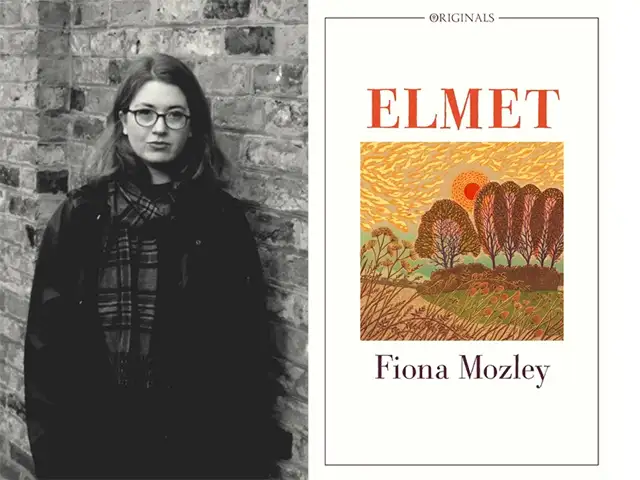
'Elmet' is New York-born author Fiona Mozley’s first novel, currently scheduled for November publication.
It narrates the story of a troubled family living in a remote copse in Elmet (the name of the ancient Britton kingdom in what is now the West Riding).
'Elmet' is New York-born author Fiona Mozley’s first novel, currently scheduled for November publication.
It narrates the story of a troubled family living in a remote copse in Elmet (the name of th..


 Donald Trump could achieve a historic Middle East peace deal, says Thomas Friedman who backed Joe Biden