In coronavirus era, Queen says we'll find new ways to stay in touch
The 93-year-old monarch sent out a message of support and expressed her gratitude to the scientific and medical community.
By PTI |

AFP
LONDON: Britain's Queen Elizabeth II on Thursday left Buckingham Palace in London for Windsor Castle after all her appointments were cancelled in view of the coronavirus pandemic, which has now claimed 137 lives across the UK – rising from 104 in a day.
In a statement issued to coincide with her move out of London, the hotspot of the country's coronavirus outbreak, the 93-year-old monarch sent out a message of support and expressed her gratitude to the scientific and medical community for their hard work through a period of "great concern and uncertainty".
"Many of us will need to find new ways of staying in touch with each other and making sure that loved ones are safe. I am certain we are up to that challenge," read the Queen's statement, which reiterated that she and the royal family "stand ready" to play their part.
"We are enormously thankful for the expertise and commitment of our scientists, medical practitioners and emergency and public services; but now more than any time in our recent past, we all have a vitally important part to play as individuals – today and in the coming days, weeks and months," she said.
The Queen, who is joined by her 98-year-old husband Prince Philip at Windsor, has lived through the Second World War and seemed to make a reference to that war-time era in her message encouraging community spirit.
She said: "We are all being advised to change our normal routines and regular patterns of life for the greater good of the communities we live in and, in particular, to protect the most vulnerable within them.
"At times such as these, I am reminded that our nation's history has been forged by people and communities coming together to work as one, concentrating our combined efforts with a focus on the common goal."
The Queen, who turns 94 on April 21, is set to be based at Windsor Castle in south-east England for an extended period following consultation with her medical experts and the UK government.
Her regular "audiences" with the Prime Minister, Boris Johnson, are set to continue for now but Buckingham Palace said that as a "sensible precaution and for practical reasons", a number of other changes are being made to the rest of her diary.
"Her Majesty will move to Windsor Castle for the Easter period on Thursday 19th March, one week earlier than planned. It is likely the Queen will stay there beyond the Easter period," the palace announced earlier this week.
A planned State Visit by the Emperor and Empress of Japan in the coming months has been cancelled along with a string of other engagements, including the annual Garden Parties held in the palace grounds.
In a statement issued to coincide with her move out of London, the hotspot of the country's coronavirus outbreak, the 93-year-old monarch sent out a message of support and expressed her gratitude to the scientific and medical community for their hard work through a period of "great concern and uncertainty".
"Many of us will need to find new ways of staying in touch with each other and making sure that loved ones are safe. I am certain we are up to that challenge," read the Queen's statement, which reiterated that she and the royal family "stand ready" to play their part.
"We are enormously thankful for the expertise and commitment of our scientists, medical practitioners and emergency and public services; but now more than any time in our recent past, we all have a vitally important part to play as individuals – today and in the coming days, weeks and months," she said.
The Queen, who is joined by her 98-year-old husband Prince Philip at Windsor, has lived through the Second World War and seemed to make a reference to that war-time era in her message encouraging community spirit.
She said: "We are all being advised to change our normal routines and regular patterns of life for the greater good of the communities we live in and, in particular, to protect the most vulnerable within them.
ADVERTISEMENT
"At times such as these, I am reminded that our nation's history has been forged by people and communities coming together to work as one, concentrating our combined efforts with a focus on the common goal."
The Queen, who turns 94 on April 21, is set to be based at Windsor Castle in south-east England for an extended period following consultation with her medical experts and the UK government.
Her regular "audiences" with the Prime Minister, Boris Johnson, are set to continue for now but Buckingham Palace said that as a "sensible precaution and for practical reasons", a number of other changes are being made to the rest of her diary.
"Her Majesty will move to Windsor Castle for the Easter period on Thursday 19th March, one week earlier than planned. It is likely the Queen will stay there beyond the Easter period," the palace announced earlier this week.
ADVERTISEMENT
A planned State Visit by the Emperor and Empress of Japan in the coming months has been cancelled along with a string of other engagements, including the annual Garden Parties held in the palace grounds.
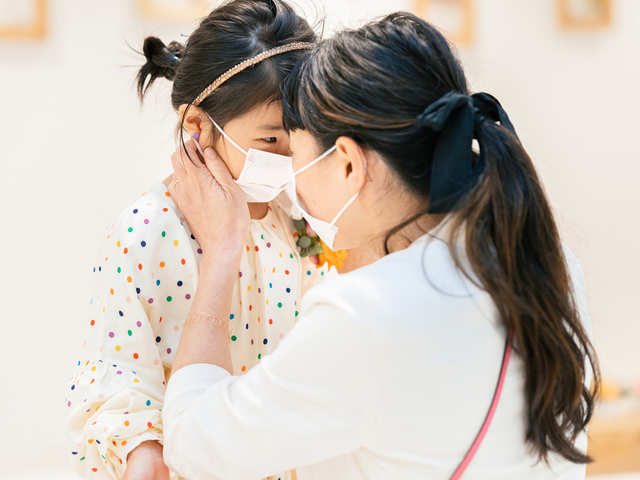
In the wake of coronavirus, several schools and colleges have been shut in many parts of the world to contain the spread of COVID-19. As public awareness and conversations around the novel virus increase, the situation can get the children anxious and worried for their family members and friends.
Parents, family members, teachers, healthcare professionals and trusted adults play a significant role in helping children make sense of what they hear in a way that is honest, accurate and minimise their fear or anxiety.
Dr Sreenath Manikanti, Senior Consultant Neonatologist & HOD Fortis La Femme Hospital, Richmond Road, Bangalore shares a few tips to help make the corona conversation easier around children.







ADVERTISEMENT
Download
The Economic Times Business News App for the Latest News in Business, Sensex, Stock Market Updates & More.
The Economic Times Business News App for the Latest News in Business, Sensex, Stock Market Updates & More.
ADVERTISEMENT


