How a guerrilla campaign made history by pushing mental health into Cong, CPM’s election manifestos
A campaign called 'Bridge the Care Gap' has been lobbying political parties to commit to the implementation of the Mental Healthcare Act and the National Mental Health Policy.
Rahul Gandhi (C), President of Congress party, his mother and leader of the party Sonia Gandhi and former Prime Minister Manmohan Singh (R) display copies of their party's election manifesto.
On April 2, Rahul Gandhi, Sonia Gandhi, and other senior Congress leaders unveiled the party's manifesto for the Lok Sabha elections. The Congress website crashed with a huge spike in traffic. Most analyses of the manifesto focused on the usual themes - the party's universal basic income scheme NYAY, and its vision for jobs and farmers.
Not many noticed a clause in a section called "Samman" ("Dignity") in the manifesto document:
"Congress promises to implement the National Mental Health Policy, 2014 and the Mental Health Care Act, 2017 in letter and spirit. We will ensure that mental healthcare professionals are appointed in all public district hospitals and that mental healthcare services are provided in such hospitals."
On March 28, the CPI (M) manifesto had also pledged to implement the Rights of Persons with Disabilities Act and the National Mental Health Care Act, "supported by adequate budgetary allocations".
The twin developments were hailed as historic by the mental-health community on Twitter.
Great News!! #BridgeTheCareGap advocacy scores another success! �� Congress @INCIndia includes implementation of Nat… https://t.co/Feg0PT2DUw
Leading vernacular daily Anandabazar talks about #BridgetheCareGap campaign and inclusion of M H in CPI M manifesto… https://t.co/hy5rHtJu3C
— Anjali Mental Health (@AnjaliMHR) 1553925474000
Why is this a big moment? For starters, India is among the world's most depressed countries. According to the National Mental Health Survey 2016, 13.7% of Indians suffer from some form of mental illness over their lifetime. And to cater to this massive population, there are fewer than 4,000 psychiatrists.
Rampant mental illness isn't just a social problem. It comes with crippling economic costs. In 2012, INR 10,000 crore was the estimated cost of outpatient treatment for mental illness. India leads the world in suicides among 15-29-year-olds, a scourge in which mental illness plays a big hand (see graphic below). In 2014, the short-term burden of suicides was estimated at INR 3,488 crore. Mental illness is also the largest contributor to the burden of non-communicable diseases in India - at more than a trillion dollars.
In 2017, India got the landmark National Mental Healthcare Act that takes a rights-based approach to mental healthcare. But while the mental-health movement acquired momentum in almost all circles of society, the political class has continued to show a jarring lack of sensitivity. Politicians still routinely invoke mental illnesses and intellectual disabilities to insult their opponents. Healthcare at large became a hot election issue thanks to big-bang schemes like Ayushman Bharat. But in this year's interim Union budget, the allocation for the National Mental Health Programme was cut from an already paltry INR 50 crore to a pitiable INR 40 crore.
ADVERTISEMENT
It would seem that even as India got busy fashioning itself as a strong, aggressive state, its most vulnerable struggled for dignity.
Two national political parties committing to support mental health in their poll manifesto promises a significant shift in the narrative.
ADVERTISEMENT
It also reflects the growing clout of the youth as a vote bank. Non-mainstream issues like environment and mental health resonate better with the youth, making them attractive as poll promises for political parties.
"Mental health has been ignored for a long time, to the extent that until recently it was considered a taboo," Angellica Aribam, former national general secretary of the National Students Union of India, the Congress's student wing, tells ET Online. "I am happy the Congress party has recognised the need for the implementation of a comprehensive mental health policy. This is a much welcome step. Hopefully this would be the beginning of a change in the worldview towards the subject."
Bridge the Care Gap: the makings of a guerrilla campaign Behind this achievement is the quiet, sustained work of a loose federation of activists, mental-health workers who are also mental-illness survivors, and, ultimately, political good Samaritans with personal connections to the cause.
The improbable plan was set in motion in July 2018 by Dr Soumitra Pathare and Rajvi Mariwala.
"We were convinced that mental health needed to become a political issue, otherwise it was not going anywhere," says Pathare, who is director at the Pune-based Centre for Mental Health Law and Policy and one of the architects of India's ground breaking Mental Health Care Act, 2017.
"We wanted to build a cross-sectoral alliance. We were not asking people to join any organisation. It is an informal federation of organisations and individuals. Ratnaboli Ray (founder of Anjali, an organisation that works for mentally ill women) got involved. Ketki Ranade (chair of health and mental health at the School of Sciences and Social Sciences, Tata Institute of Social Sciences) got involved. Next, we wanted a simple, minimum agenda that everyone could agree upon. So we decided to push for the implementation of the new Act and the mental health policy."
Over 40 organisations active in mental health, gender rights, disability rights, and other fields have supported the Bridge the Care Gap campaign, including Anubhuti Trust, Sangath, The Banyan, and The Live Love Laugh Foundation.
"Everything we have managed has been organic," says Pathare. "You spread the word around. You ask friends. Somebody knows somebody. You use that as a thread to climb up the ladder and reach the people who are actually making the manifestos. It is all of us pooling our individual contacts in various places. It has been a guerrilla operation."
Along with lobbying politicians, the Bridge the Care Gap team has been running a public-advocacy campaign, urging citizens to declare that their vote will be influenced by a party's commitment to mental health. The campaign has sought to create buzz through in-person interviews with parties prior to drafting their manifestos, radio interviews with stakeholders, video-documentaries on first-person accounts from user-survivors, etc.
"We don't care which political party signs up," says Mariwala, director of the Mariwala Health Initiative, a mental-health advocacy and funding body backed by Marico chairman Harsh Mariwala. "We want all of them. We will keep on pushing."
Pathare says most parties were open to listening about the campaign, though some didn't put it in their manifestos after promising they would. Efforts are still on to find a foot through the door in the BJP.
"The government is anyway supposed to implement the National Mental Healthcare Act and the mental health policy. So the additional effort required is zero," Pathare argues. "When the Act came in the Parliament, every single party voted for it. We are only asking them to implement it now."
A logical step Activists believe until politicians are made to realise that the mentally ill population is an important constituency that can translate into votes - like cancer or tuberculosis patients - real change on the ground is impossible.
"The only language parties understand is that this constituency could deliver a lot of votes," Pathare says.
To be fair, key functionaries in both the Congress and the CPI (M) would have been empathic to the cause. Rajeev Gowda, convener of the Congress manifesto committee, is an academic and a member of the National Institute of Mental Health Sciences (NIMHANS) in Bengaluru. CPI (M) leader Brinda Karat is also a prominent face of the equal-rights movement.
Also, there is a statistical reason supporting a mental-health campaign makes sense for the Congress and CPI (M). Three of the 10 states that top the suicide charts in India are Congress-ruled. These include Chattisgarh, Madhya Pradesh, and Karnataka (where Congress is the largest party but the chief minister is from JD (S)) - all states that it wrested from the BJP in last year's assembly polls.
For the CPI (M), Kerala and West Bengal are the most important states, and once again these states show up on the dubious list of India's suicide hot spots.
Even as the campaign basks in the early wins, there is the risk that the mental-health movement will get politicised and the agenda might get hijacked by other interests. The campaign has also not found favour with a section of the mental-health community that opposed the Mental Healthcare Act. Finally, everything will come undone unless whichever government comes to power pledges substantially more funding to fight mental illness.
But Pathare is unfazed. "Getting space in the manifestos is in itself a big step towards reducing stigma," he says. "But it is just the first step. In the next five years we have to hold parties to their promises. This could mean building some sort of observatory to maintain pressure and accountability and see how much of the commitment is really being delivered. We are also working with individual states (since health is a state subject). All this will be vital to keep the momentum going."
It remains to be seen whether the ruling party at the Centre and regional parties in various states see the logic that the Congress and CPI (M) have seen.
Poll-Pourri: Sunny Deol, Urmila & Other Stars Who've Joined Politics
1/20
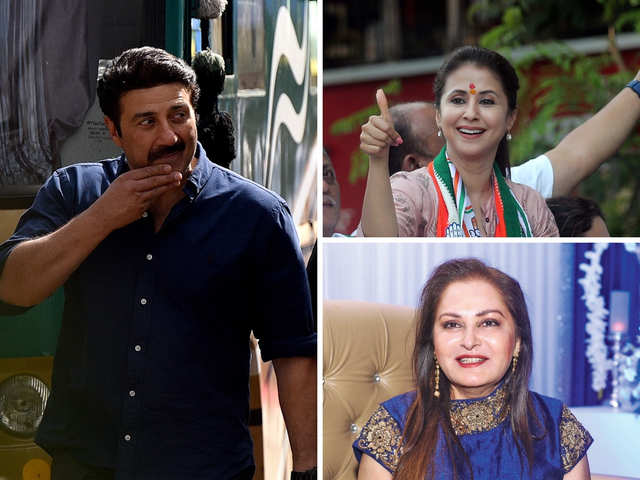
It's counting day today and all eyes are on the political scoreboard. From seasoned to the newbies, a bunch of stars are trying their luck at the polls today. Actor-producer Sunny Deol, Urmila Matondkar and Gautam Gambhir are hoping to score on their debuts today.
Here are some film stars who have dabbled in politics over the years.
It's counting day today and all eyes are on the political scoreboard. From seasoned to the newbies, a bunch of stars are trying their luck at the polls today. Actor-producer Sunny Deol, Urmila Mat..
Read More
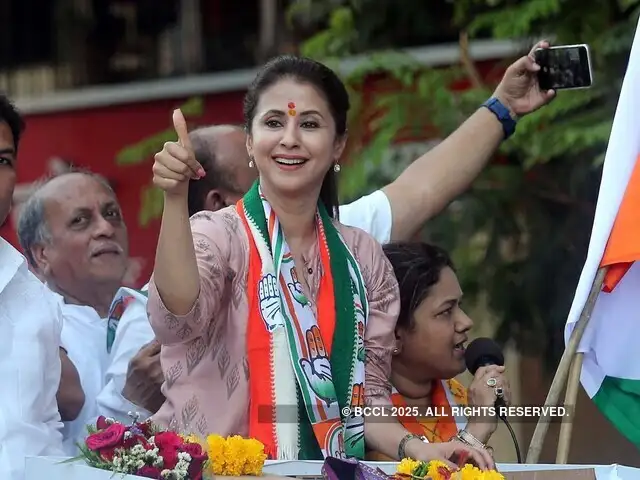
Weeks before the 17th Lok Sabha elections kicked off, actress Urmila Matondkar shook hands with the Indian National Congress (INC). The 45-year-old actress was welcomed in the party by Congress chief Rahul Gandhi.
The 'Rangeela' actress, who is contesting from the Mumbai North constituency against BJP MP Gopal Shetty, is hoping to score a victory.
Weeks before the 17th Lok Sabha elections kicked off, actress Urmila Matondkar shook hands with the Indian National Congress (INC). The 45-year-old actress was welcomed in the party by Congress chi..
Read More
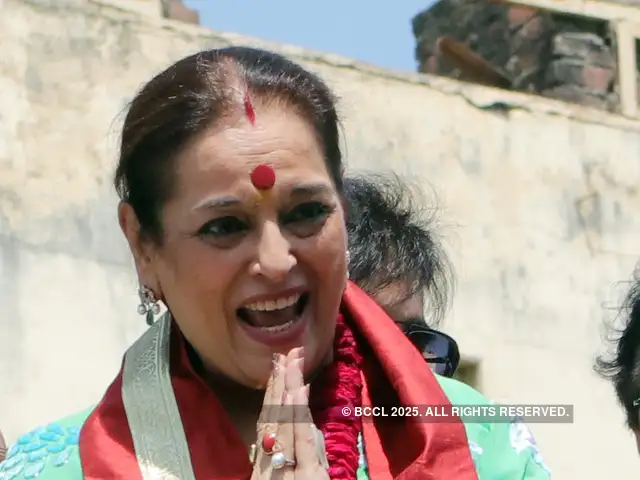
Actress Poonam Sinha, wife of actor Shatrughan Sinha, became a part of the SP in April this year. The 69-year-old is trying her luck against BJP leader and Home Minister Rajnath Singh from Lucknow.
Actress Poonam Sinha, wife of actor Shatrughan Sinha, became a part of the SP in April this year. The 69-year-old is trying her luck against BJP leader and Home Minister Rajnath Singh from Lucknow.
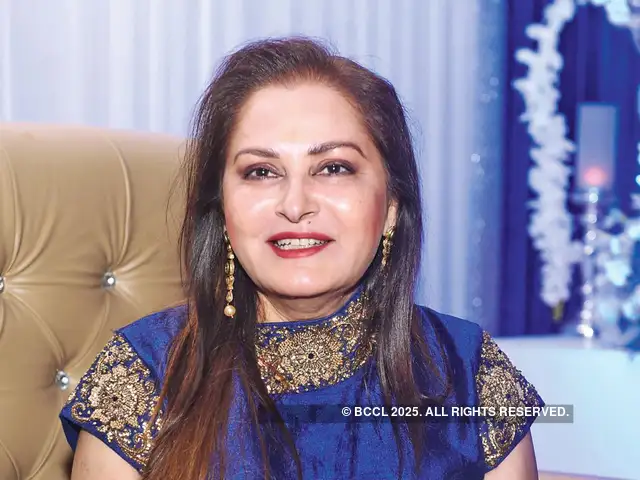
Actress-turned-politician Jaya Prada's ongoing political career kicked off in 1994 when she joined the Telugu Desam Party (TDP). In 2004, the 57-year-old became a part of the Samajwadi Party (SP). However, in 2010, she was expelled due to anti-party activities.
In March this year, Prada joined BJP. She is set to take on her friend-turned-foe, SP's Azam Khan, from Rampur today.
Actress-turned-politician Jaya Prada's ongoing political career kicked off in 1994 when she joined the Telugu Desam Party (TDP). In 2004, the 57-year-old became a part of the Samajwadi Party (SP). ..
Read More
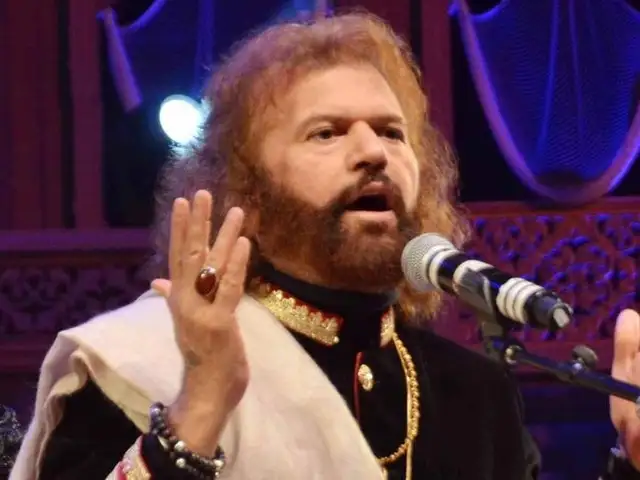
Singer Hans Raj Hans first stint with politics was in 2009 when he joined the Shiromani Akali Dal (SAD). He resigned from the party in 2014. Two years later, in 2016, he joined the Congress party. However, he did not feel welcome in the Rahul Gandhi-led party. In the same year, he switched to the BJP.
In the 17th Lok Sabha polls, the singer is competing against Congress's Udit Raj from North-west Delhi.
If he proves victorious today, he will be one of the leading Dalit faces from the party.
Singer Hans Raj Hans first stint with politics was in 2009 when he joined the Shiromani Akali Dal (SAD). He resigned from the party in 2014. Two years later, in 2016, he joined the Congress party. ..
Read More
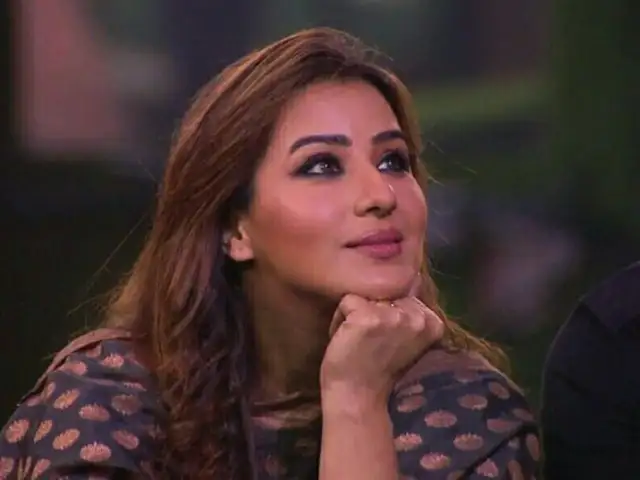
'Bhabiji Ghar Par Hai' actress Shilpa Shinde joined the Indian political scene this year. Before confirming the news, she had to face heavy trolling on social media.
Few weeks later, the 41-year-old confirmed that she was keen on contesting the elections on a Congress ticket from Mumbai.
The 'Bigg Boss 11' winner's fate in politics will be decided today.
'Bhabiji Ghar Par Hai' actress Shilpa Shinde joined the Indian political scene this year. Before confirming the news, she had to face heavy trolling on social media.
Few weeks later, the 41-year..
Read More
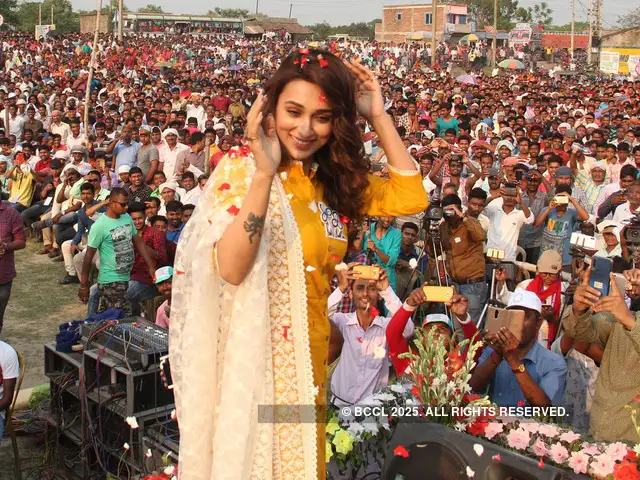
Bengali actress Mimi Chakraborty debuted in the Indian political scene this year. The 30-year-old contested elections from Jadavpur constituency on a Trinamool Congress ticket (TMC).
Today's results could either mark the beginning of her political career or put it to an end to it altogether.
Bengali actress Mimi Chakraborty debuted in the Indian political scene this year. The 30-year-old contested elections from Jadavpur constituency on a Trinamool Congress ticket (TMC).
Today's res..
Read More
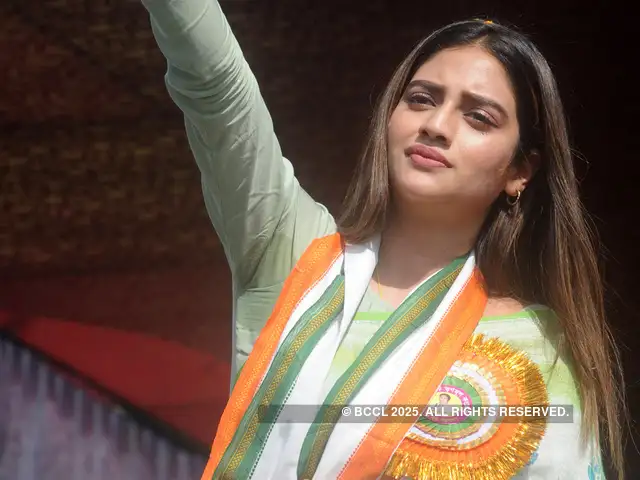
Another popular star of Bengali cinema who walked into the political world is Nusrat Jahan.
The 28-year-old contested Lok Sabha elections from the Basirhat constituency in South Bengal.
Now, the results will tell if the actress is set to embark on a political career or not.
Another popular star of Bengali cinema who walked into the political world is Nusrat Jahan.
The 28-year-old contested Lok Sabha elections from the Basirhat constituency in South Bengal.
Now, ..
Read More
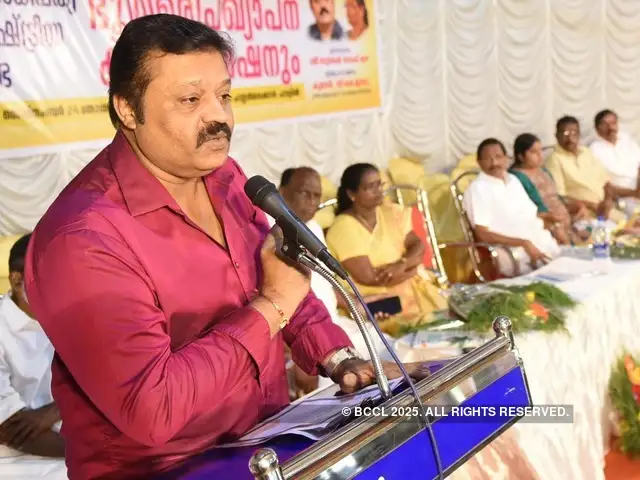
Malayalam star Suresh Gopi has had a rather long political career starting from his college days itself.
The 60-year-old, who was an active member of the Communist Party of India (Marxist) (CPIM), was sworn as an MP for the Rajya Sabha in 2016. Later in the same year, Gopi joined the BJP.
This year, Gopi contested from Thrissur constituency. Today's poll results will tell what's next on the actor's to-do list.
Malayalam star Suresh Gopi has had a rather long political career starting from his college days itself.
The 60-year-old, who was an active member of the Communist Party of India (Marxist) (CPIM..
Read More
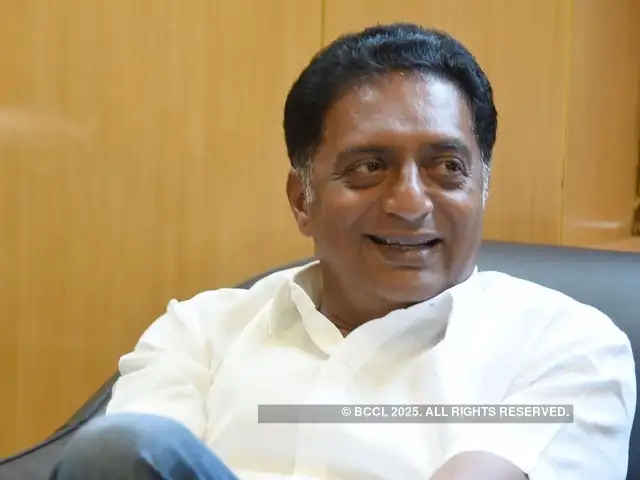
Actor, director and producer Prakash Raj stepped into the world of politics in 2017. The 54-year-old initiated a political movement with the hashtag #justasking after the assassination of journalist Gauri Lankesh.
This year, the 'Dabangg 2' actor contested as an independent candidate from Bengaluru central. He was pitted against Congress's Rizwan Arshad.
Going by the results, the actor is currently trailing in his constituency.
Actor, director and producer Prakash Raj stepped into the world of politics in 2017. The 54-year-old initiated a political movement with the hashtag #justasking after the assassination of journalis..