Heritage gets a tech upgrade: Digital archiving giving Gateway of India, Mysore Palace a new lease of life
The 3D scan project shows how imaging technology is throwing open the portals of history.
By ET Bureau | Updated:
Getty Images
More than a century after it was erected, the Gateway of India continues to attract thousands of visitors each day.
By Rohan Abraham
The 3D scan project for the Gateway of India shows how imaging technology is throwing open the portals of history.
The advent of superior imaging technology has helped local bodies around the world archive and document monuments, thereby helping in their preservation. Recently, field work was underway at the Gateway of India.
“The project of making 3D scans of the Gateway of India is beneficial for creating an accessible digital database of the monument, ensuring its protection and the formulation of comprehensive conservation policies,” said Tejas Garge, directorate of archaeology and museums, Government of Maharashtra.
The Gateway of India's proximity to the sea has made it vulnerable to discolouration and dampness. Digital preservation More than a century after it was erected, the Gateway of India continues to attract thousands of visitors each day. However, the ravages of time are beginning to leave a mark on the basalt edifice.
ADVERTISEMENT
Its proximity to the sea has made it vulnerable to discolouration and dampness. “The salt spray emanating from the shore has eroded the quality of the building’s rock façade. The stairwell that leads up to the dome is also in need of repair,” said Christopher Dang, field director, CyArk, a global non-profit working on digital preservation of monuments.
Image processing The exercise, led by a two-member CyArk team, was undertaken through aerial surveys using drones, terrestrial laser scanning and photogrammetry. The scattered images collected will be stitched together to create a holistic rendering that provides an accurate panoramic replica of the original image.
“Since the introduction of drone laws in India, it is no longer feasible for us to operate one independently. Moreover, the site happens to be near sensitive military installations. So, we had to partner with a domestic company, Quidich Innovation Labs, to collect aerial shots,” said Avidan Fernandes, field capture specialist, CyArk. The next project for CyArk is the Mysore Palace. Democratising culture
ADVERTISEMENT
Digital tourism is yet to pick up in a big way, but Dang believes that archival footage of monuments can help in restoration.
“If certain parts of a monument, such as a door, needs replacement, then the authorities can refer to the digital archive before engaging a fabricator to create a replica,” he said.
ADVERTISEMENT
The digital archives are mostly published online, under a public license. Some of the monuments that have been preserved by CyArk are also available on the Google Arts and Culture app, whereby users can take a digital tour of the premises using virtual reality headsets.
The next project for Dang is the Mysore Palace, and the local body in charge of its preservation is in the process of acquiring government permits for the team to use sophisticated imaging devices at the site. The final rendering of the Gateway of India is expected to be completed by May 2019. Old buildings are not invincible, and digital archiving may yet give them a new lease of life.
The Ultimate Travel Goals List: Take A Trip To India's 10 Heritage Sites This Summer
1/11
India has always treasured its perennial glory when it comes to culture and history. From man-made marvels to natural wonders, the country offers a plethora of stunning sites that should be at the top of every travelers bucket list.
Travelyaari, the leading online bus ticketing platform, shares an insight on the handpicked locations of top 10 world heritage sites listed by UNESCO.
India has always treasured its perennial glory when it comes to culture and history. From man-made marvels to natural wonders, the country offers a plethora of stunning sites that should be at the to..
Read More
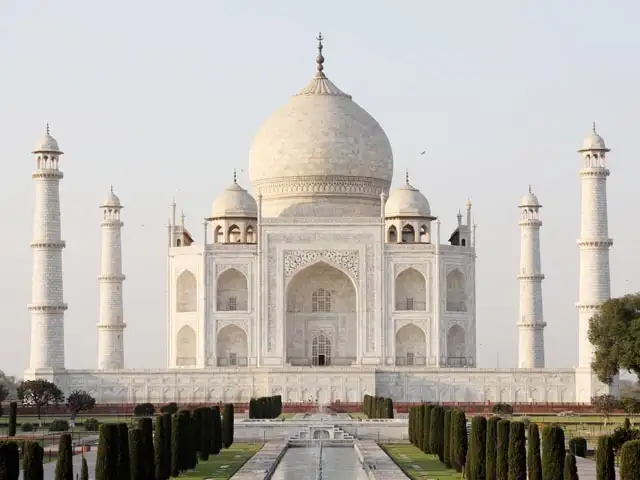
The Taj Mahal is located on the right bank of the Yamuna River in a vast Mughal garden that encompasses nearly 17 hectares, in the Agra District in Uttar Pradesh. It was built by Mughal Emperor Shah Jahan in memory of his wife Mumtaz Mahal with construction starting in 1632 AD and completed in 1648 AD, with the mosque, the guest house and the main gateway on the south, the outer courtyard and its cloisters were added subsequently and completed in 1653 AD.
The Taj Mahal is located on the right bank of the Yamuna River in a vast Mughal garden that encompasses nearly 17 hectares, in the Agra District in Uttar Pradesh. It was built by Mughal Emperor Shah ..
Read More
Located at the heart of the Himalayan range in northern India (State of Sikkim), the Khangchendzonga National Park includes a unique diversity of plains, valleys, lakes, glaciers and spectacular, snow-capped mountains covered with ancient forests, including the world's third highest peak, Mount Khangchendzonga.
(Image: www.knpsikkim.in)
Located at the heart of the Himalayan range in northern India (State of Sikkim), the Khangchendzonga National Park includes a unique diversity of plains, valleys, lakes, glaciers and spectacular, sno..
Read More
The Jantar Mantar, in Jaipur, is an astronomical observation site built in the early 18th century. It includes a set of some 20 main fixed instruments. They are monumental examples in masonry of known instruments but which in many cases have specific characteristics of their own. Designed for the observation of astronomical positions with the naked eye, they embody several architectural and instrumental innovations.
The Jantar Mantar, in Jaipur, is an astronomical observation site built in the early 18th century. It includes a set of some 20 main fixed instruments. They are monumental examples in masonry of know..
Read More
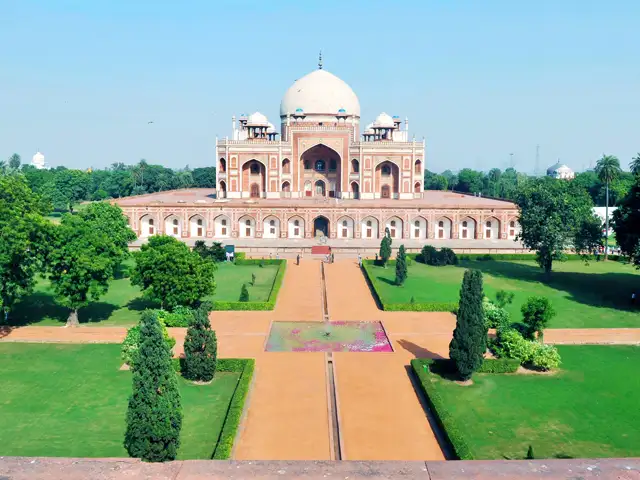
This tomb, built in 1570, is of particular cultural significance as it was the first garden-tomb on the Indian subcontinent. It inspired several major architectural innovations, culminating in the construction of the Taj Mahal.
This tomb, built in 1570, is of particular cultural significance as it was the first garden-tomb on the Indian subcontinent. It inspired several major architectural innovations, culminating in the co..
Read More
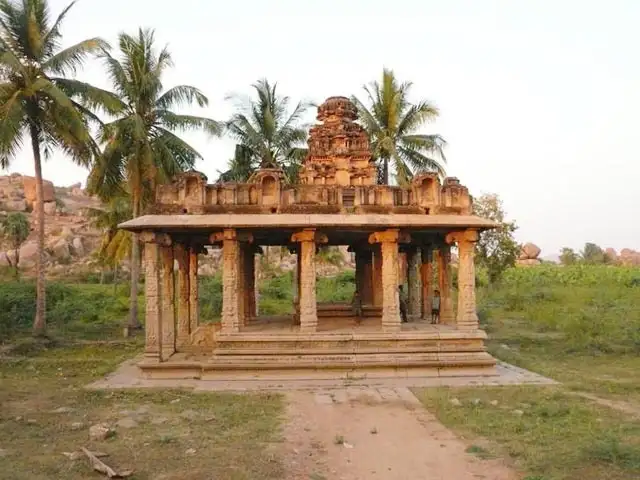
The austere, grandiose site of Hampi was the last capital of the last great Hindu Kingdom of Vijayanagar. Its fabulously rich princes built Dravidian temples and palaces which won the admiration of travellers between the 14th and 16th centuries. Conquered by the Deccan Muslim confederacy in 1565, the city was pillaged over a period of six months before being abandoned.
The austere, grandiose site of Hampi was the last capital of the last great Hindu Kingdom of Vijayanagar. Its fabulously rich princes built Dravidian temples and palaces which won the admiration of t..
Read More
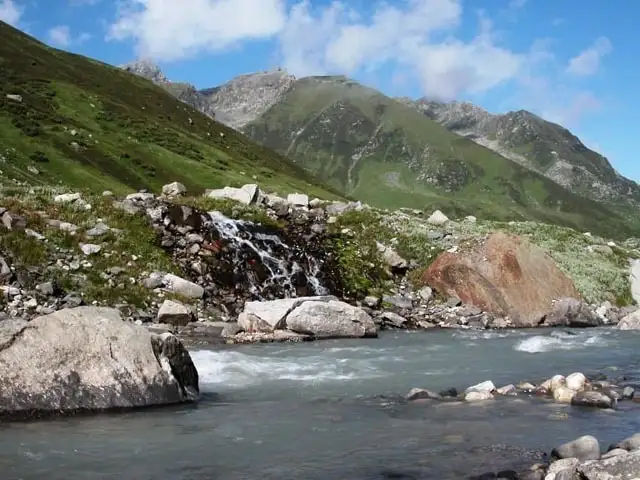
This National Park in the western part of the Himalayan Mountains in the northern Indian state of Himachal Pradesh is characterized by high alpine peaks, alpine meadows and riverine forests. The 90,540 ha property includes the upper mountain glacial and snow meltwater sources of several rivers, and the catchments of water supplies that are vital to millions of downstream users.
(Image: www.greathimalayannationalpark.org)
This National Park in the western part of the Himalayan Mountains in the northern Indian state of Himachal Pradesh is characterized by high alpine peaks, alpine meadows and riverine forests. The 90,5..
Read More
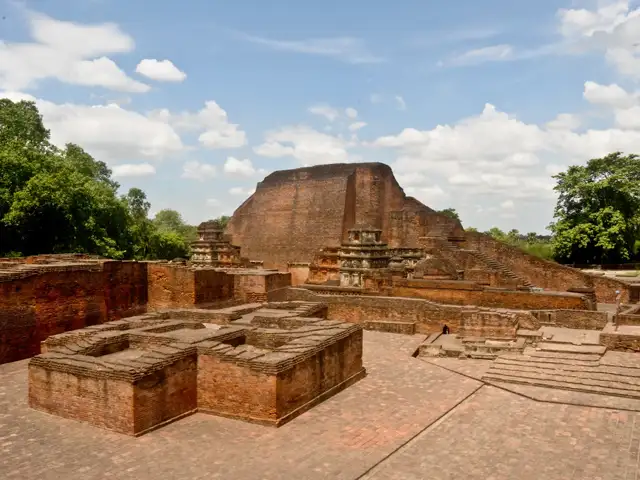
The Nalanda Mahavihara site is in the State of Bihar, in north-eastern India. It comprises the archaeological remains of a monastic and scholastic institution dating from the 3rd century BCE to the 13th century CE. It engaged in the organized transmission of knowledge over an uninterrupted period of 800 years.
The Nalanda Mahavihara site is in the State of Bihar, in north-eastern India. It comprises the archaeological remains of a monastic and scholastic institution dating from the 3rd century BCE to the 1..
Read More
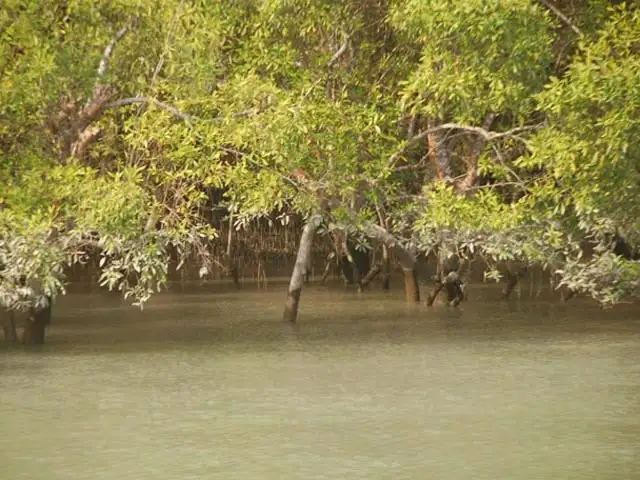
The Sundarbans covers 10,000 km2 of land and water (more than half of it in India, the rest in Bangladesh) in the Ganges delta. It contains the world's largest area of mangrove forests. A number of rare or endangered species live in the park, including tigers, aquatic mammals, birds and reptiles.
(Image: www.sunderbansnationalpark.com)
The Sundarbans covers 10,000 km2 of land and water (more than half of it in India, the rest in Bangladesh) in the Ganges delta. It contains the world's largest area of mangrove forests. A number of r..
Read More
On a hill overlooking the plain and about 40 km from Bhopal, the site of Sanchi comprises a group of Buddhist monuments (monolithic pillars, palaces, temples and monasteries) all in different states of conservation most of which date back to the 2nd and 1st centuries B.C. It is the oldest Buddhist sanctuary in existence and was a major Buddhist centre in India until the 12th century A.D.
(Image: www.asi.nic.in)
On a hill overlooking the plain and about 40 km from Bhopal, the site of Sanchi comprises a group of Buddhist monuments (monolithic pillars, palaces, temples and monasteries) all in different states ..
Business News › Magazines › Panache › Heritage gets a tech upgrade: Digital archiving giving Gateway of India, Mysore Palace a new lease of lifeText Size:AAA