BENGALURU: Built in the 1930s, the Opera House on Brigade Road was a popular entertainment venue in the British Cantonment for ballroom dances, theatre performances and Broadway-like operas. The vintage building, once characterised by fine wooden floors, huge chandeliers and a large dance floor, subsequently fell into disuse. Until Tuesday, when Samsung Electronics announced that the heritage structure has been turned into the company’s biggest experience centre ever.
This development comes at a time when another heritage structure — the 83-year-old Janatha Bazaar on KG Road — is facing the threat of being razed to the ground.
Bengaluru's Opera House after adaptive reuse Conservation experts believe that the government has to apply the ‘adaptive reuse’ philosophy to Janatha Bazaar. The small shops that exist could be allowed to continue while the remaining space could be used efficiently, said Meera Iyer, convenor, Indian National Trust for Art and Cultural Heritage, who has filed a PIL opposing its demolition.
She suggested reuse possibilities: an incubator space for startups or high-end retail stores. “The rear of the building has a lovely space where cultural events can be held. Even a museum connected to the building’s past or the city would be good.”
Conservation architect Sridevi Changali said adaptive reuse calls for sensitive design adaptation. “Altering the fabric of the building to an extent that it affects its character is a no-no. In Opera House wooden sun-shades are added at the bottom of the main façade archway. But this has been sensitively done, in good taste.” Another challenge, she explained, would be to decide on functionality of the space by accommodating essentials like public toilets.
ADVERTISEMENT
Oscars Of The Natural World: 20 New Sites Join The UNESCO Heritage Club
1/21
Essentially the Oscars for sites that are naturally beautiful or culturally significant, the UNESCO World Heritage List is revaluated every year.
This week, the World Heritage Committee made 21 new choices during a meeting in Krakow, Poland.
The World Heritage Committee decided which of 33 nominated sites were worthy of being named the World Heritage Sites.
Eventually, 20 new places were added to the list, including the City of Yazd in Iran and Lake District in the UK.
Essentially the Oscars for sites that are naturally beautiful or culturally significant, the UNESCO World Heritage List is revaluated every year.
This week, the World Heritage Committee made 21 new ..
Read More
Located at over 2000 metres above sea level, the capital of Eritrea developed from the 1890s onwards as a military outpost for the Italian colonial power.
After 1935, Asmara underwent a large scale programme of construction, applying the Italian rationalist idiom of the time to governmental edifices, residential and commercial buildings, churches, mosques, synagogues, cinemas, hotels, etc.
Located at over 2000 metres above sea level, the capital of Eritrea developed from the 1890s onwards as a military outpost for the Italian colonial power.
After 1935, Asmara underwent a large scale ..
Read More
The use of a local limestone shaped the construction of the old town of Hebron / Al-Khalil during the Mamluk period between 1250 and 1517.
The centre of interest of the town was the site of Al mosque -Ibrahim (the tomb of the Patriarchs) whose buildings are in a compound built in the 1st century CE to protect the tombs of the patriarch Abraham (Ibrahim) and his family.
This place became a site of pilgrimage for the three monotheistic religions: Judaism, Christianity and Islam.
The use of a local limestone shaped the construction of the old town of Hebron / Al-Khalil during the Mamluk period between 1250 and 1517.
The centre of interest of the town was the site of Al mosqu..
Read More
The Khomani Cultural Landscape is located at the border with Botswana and Namibia in the northern part of the country, coinciding with the Kalahari Gemsbok National Park.
The large expanse of sand contains evidence of human occupation from the Stone Age to the present and is associated with the culture of the formally nomadic Khomani San people and the strategies that allowed them to adapt to harsh desert conditions.
They developed a specific ethnobotanical knowledge, cultural practices and a worldview related to the geographical features of their environment.
The Khomani Cultural Landscape is located at the border with Botswana and Namibia in the northern part of the country, coinciding with the Kalahari Gemsbok National Park.
The large expanse of sand c..
Read More
Modern humans first arrived in Europe 43,000 years ago during the last ice age.
One of the areas where they took up residence was the Swabian Jura in southern Germany.
Excavated from the 1860s, six caves have revealed items dating from 43,000 to 33,000 years ago.
Among them are carved figurines of animals (including cave lions, mammoths, horses and cattle), musical instruments and items of personal adornment.
Modern humans first arrived in Europe 43,000 years ago during the last ice age.
One of the areas where they took up residence was the Swabian Jura in southern Germany.
Excavated from the 1860s, six..
Read More
The Assumption Cathedral is located in the town-island of Sviyazhsk and is part of the monastery of the same name.
Situated at the confluence of the Volga, the Sviyaga and the Shchuka rivers, at the crossroads of the Silk and Volga routes, Sviyazhsk was founded by Ivan the Terrible in 1551.
The Assumption Cathedral is located in the town-island of Sviyazhsk and is part of the monastery of the same name.
Situated at the confluence of the Volga, the Sviyaga and the Shchuka rivers, at the..
Read More
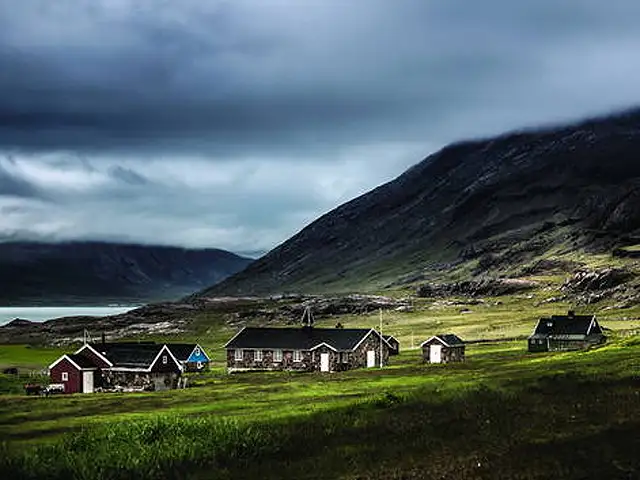
Kujataa is a sub-arctic farming landscape located in the southern region of Greenland.
It bears witness to the cultural histories of the Norse hunters-gatherers who started arriving from Iceland in the 10th century and of the Norse farmers, Inuit hunters and Inuit farming communities that developed from the end of the 18thcentury.
Despite their differences, the two cultures, European Norse and Inuit, created a cultural landscape based on farming, grazing and marine mammal hunting.
Kujataa is a sub-arctic farming landscape located in the southern region of Greenland.
It bears witness to the cultural histories of the Norse hunters-gatherers who started arriving from Iceland in ..
Read More
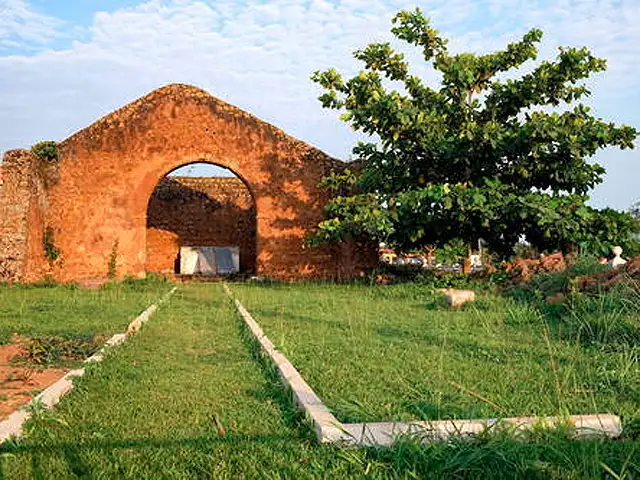
The town of Mbanza Kongo, located on a plateau at an altitude of 570 metres, was the political and spiritual capital of the Kingdom of Kongo, one of the largest constituted states in Southern Africa from the 14th to 19thcenturies.
The historical area grew around the royal residence, the customary court and the holy tree, as well as the royal funeral places.
Mbanza Kongo illustrates, more than anywhere in sub-Saharan Africa, the profound changes caused by the introduction of Christianity and the arrival of the Portuguese into Central Africa.
The town of Mbanza Kongo, located on a plateau at an altitude of 570 metres, was the political and spiritual capital of the Kingdom of Kongo, one of the largest constituted states in Southern Africa ..
Read More
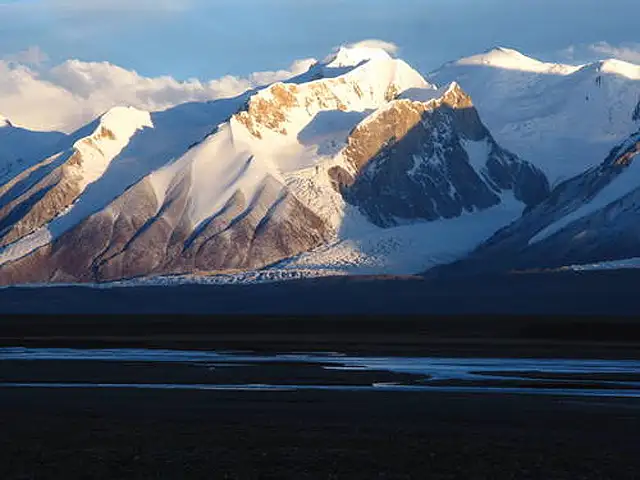
Qinghai Hoh Xil, located in the north-eastern extremity of the Qinghai-Tibetan Plateau, is the largest and highest plateau in the world.
This extensive area of alpine mountains and steppe systems is situated more than 4,500 m above sea level, where sub-zero average temperatures prevail all year-round.
The site’s geographical and climatic conditions have nurtured a unique biodiversity.
Qinghai Hoh Xil, located in the north-eastern extremity of the Qinghai-Tibetan Plateau, is the largest and highest plateau in the world.
This extensive area of alpine mountains and steppe systems is..
Read More
The archaeological site of Sambor Prei Kuk, “the temple in the richness of the forest” in the Khmer language, has been identified as Ishanapura, the capital of the Chenla Empire that flourished in the late 6th and early 7th centuries CE.
The vestiges of the city cover an area of 25 square kilometres and include a walled city centre as well as numerous temples, ten of which are octagonal, unique specimens of their genre in southeast Asia.
Decorated sandstone elements in the site are characteristic of the pre-Angkor decorative idiom, known as the Sambor Prei Kuk Style.
The archaeological site of Sambor Prei Kuk, “the temple in the richness of the forest” in the Khmer language, has been identified as Ishanapura, the capital of the Chenla Empire that flourished in th..
Heritage buildings will always be at risk in the absence of legislation, pointed out researcher-historian Poornima Dasharathi. “Villa Pottipati in Malleswaram was an excellent example of adaptive reuse until its new-generation owners lost the sense of connect with it and razed it. Unless the Heritage Regulation Bill or heritage cell is in place, old buildings will continue to be destroyed.”
Urban planner Naresh Narasimhan called for a change in the administrative mindset. “The government is looking at heritage like a real-estate developer and ignoring its social significance. Departments need to let go of this need to make profits. The Revised Master Plan 2031 should not allow FSI.”