Have you put on weight lately? Here's why it is normal during winter
Your exposure to sun triggers the weight gain.
By PTI |

TORONTO: Need another reason to bask in the sunshine? Fat cells just beneath our skin shrink when exposed to the blue light emitted by the Sun, a study has found, explaining why we tend to gain more weight in winters.
"When the Sun's blue light wavelengths - the light we can see with our eye - penetrate our skin and reach the fat cells just beneath, lipid droplets reduce in size and are released out of the cell. In other words, our cells don't store as much fat," said Peter Light, professor at University of Alberta in Canada.
"If you flip our findings around, the insufficient sunlight exposure we get eight months of the year living in a northern climate may be promoting fat storage and contribute to the typical weight gain some of us have over winter," said Light, senior author of the study published in the journal Scientific Reports.
The finding is only an initial observation and that pursuing exposure to sunlight is not a safe or recommended way to lose weight, Light said.
"For example, we don't yet know the intensity and duration of light necessary for this pathway to be activated," he said.

"Maybe this mechanism contributes to setting the number of fat cells we produce in childhood - thought to stay with us into adulthood," Light said.
The researchers made the discovery while investigating how to bioengineer fat cells to produce insulin in response to light to help Type 1 diabetes patients.
"We noticed the reaction in human tissue cells in our negative control experiments, and since there was nothing in the literature, we knew it was important to investigate further," said Light.
Based on the finding, the fat cells we store near our skin may be a peripheral biological clock, said Light.
"It's early days, but it's not a giant leap to suppose that the light that regulates our circadian rhythm, received through our eyes, may also have the same impact through the fat cells near our skin," he added.
"When the Sun's blue light wavelengths - the light we can see with our eye - penetrate our skin and reach the fat cells just beneath, lipid droplets reduce in size and are released out of the cell. In other words, our cells don't store as much fat," said Peter Light, professor at University of Alberta in Canada.
"If you flip our findings around, the insufficient sunlight exposure we get eight months of the year living in a northern climate may be promoting fat storage and contribute to the typical weight gain some of us have over winter," said Light, senior author of the study published in the journal Scientific Reports.
The finding is only an initial observation and that pursuing exposure to sunlight is not a safe or recommended way to lose weight, Light said.
"For example, we don't yet know the intensity and duration of light necessary for this pathway to be activated," he said.
ADVERTISEMENT
However, he added the novel discovery opens up new avenues of future scientific exploration which could some day lead to pharmacological or light-based treatments for obesity and other related health issues such as diabetes."Maybe this mechanism contributes to setting the number of fat cells we produce in childhood - thought to stay with us into adulthood," Light said.
The researchers made the discovery while investigating how to bioengineer fat cells to produce insulin in response to light to help Type 1 diabetes patients.
"We noticed the reaction in human tissue cells in our negative control experiments, and since there was nothing in the literature, we knew it was important to investigate further," said Light.
ADVERTISEMENT
Based on the finding, the fat cells we store near our skin may be a peripheral biological clock, said Light.
"It's early days, but it's not a giant leap to suppose that the light that regulates our circadian rhythm, received through our eyes, may also have the same impact through the fat cells near our skin," he added.
Download
The Economic Times Business News App for the Latest News in Business, Sensex, Stock Market Updates & More.
The Economic Times Business News App for the Latest News in Business, Sensex, Stock Market Updates & More.
Related Articles
 No weight gain, but her wedding ring no longer fits, and shoe size rises from 5 to 7. Top doctor says hormonal disorder could be the reason2026-04-23T12:36:02Z
- 84 matches, 2 months of IPL 2026, midnight hunger: Nutritionist shares simple diet tips to avoid weight gain2026-03-22T08:17:03Z
- Unexplained weight gain or tiredness? Your body could be warning about stress induced serious health condition2025-12-23T17:03:59Z
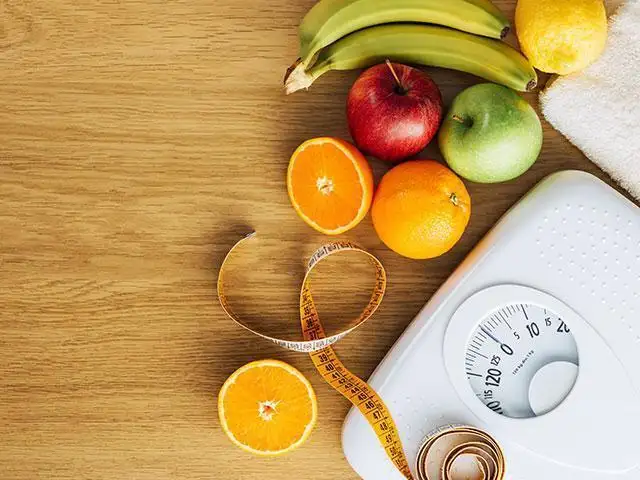
While we should make all efforts to stick to a fitness regimen, snacking on certain fruits can keep away those unwanted kilos and keep the immune system strong too.
Here are the picks by Ayush Rekha:






ADVERTISEMENT


